

Support La Cotorra on Patreon
Access exclusive content, special perks, and closer connection with us.
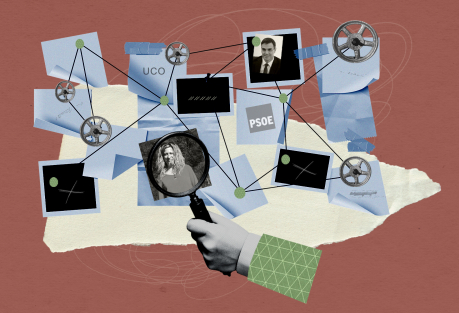
As parliamentary elections approach, Spanish politicians are making increasingly aggressive use of one of the most sensitive issues in public life — the fight against corruption. The verbal battles between the ruling Socialists under Prime Minister Pedro Sánchez and members of the People's Party are playing out against a backdrop of high-profile trials involving both left and right. Reports from international organisations and rankings — which show Spain's corruption situation worsening year on year — are adding fuel to the fire.
La Cotorra examined the roots of political corruption in Spain and whether the situation is genuinely as catastrophic as local politicians claim.
Spanish parliamentary elections must be held no later than 22 August 2027, with municipal elections in May serving as a dress rehearsal. Against this backdrop, as Spanish media note, the issue of corruption has become the principal weapon of political combat — "the most frequent subject of press briefings and the most convenient 'you're one too' comeback."
In recent weeks, both left and right have been trading accusations. On 24 April, Prime Minister Pedro Sánchez declared that corruption in Spain ended in 2018, when the Spanish Socialist Workers' Party (PSOE) came to power after six and a half years of People's Party (PP) rule under its then-leader Mariano Rajoy.
The PP takes the opposite view, equating "Sanchismo" (the style of government under Sánchez) with corruption itself. "The only thing comparable to your corruption is your incompetence," PP leader Alberto Núñez Feijóo threw at Sánchez in late April.
Upcoming regional elections in Andalusia, scheduled for 17 May, are adding to the tension. PP Secretary General Miguel Tellado predicted that Socialist candidate María Jesús Montero, whom he described as "steeped in corruption," would "die politically" on that day.
Other parties are not holding back either. The far-right Vox, though close to the PP, sees no difference between the Feijóo and Sánchez parties on this issue — claiming that both have built a corrupt system and profited from it for decades.
There is a kernel of truth in this: in the period 2000–2020, the two parties together accounted for 75.8% of all political corruption cases (40.5% PP, 38.3% PSOE, the rest involving both parties in the same case). But this largely reflects the fact that no other political forces have held power for any significant length of time.
In broad terms, corruption can be considered a feature of Spain's political system as a whole. It is important to stress, however, that this refers to the conduct of politicians and senior officials, public procurement, the awarding of contracts, and the like — not everyday low-level corruption.
Nobody has ever had to put a €50 note on the table to get a doctor to prescribe antibiotics, a municipal official to process a registration, or a court to speed up a case. Teachers are not given gifts to push up the grades of students who fall short of a pass. And you hear less and less the question "receipt or no receipt?" when having your car repaired or getting small building work done at home. These practices, common in other countries, simply don't exist here.
Cristina Monge, Professor of Political Science at Madrid's Complutense University (UCM), in a column for El País
This spring, Spanish media have been providing their audiences with a constant reminder that political corruption in Spain is far from eradicated — not merely through articles, but through live text coverage of court hearings.
The most high-profile episode has been the case involving Pedro Sánchez's wife, Begoña Gómez. The investigation was initiated in 2024 based on a complaint from Manos Limpias ("Clean Hands"), an organisation with links to right-wing political forces. On 13 April, judge Juan Carlos Peinado, having concluded the investigative phase of the criminal proceedings, recommended sending the case to trial.
The charges centre on Gómez's activities at Madrid's Complutense University (UCM). The investigation alleges that she used her status as the prime minister's wife for career advancement — launching a master's programme despite not having a completed university degree. Questions also surround her interactions with the programme's private sponsors: meetings held at the prime minister's official residence, the Palacio de la Moncloa. The court will also examine whether Gómez broke the law by signing letters of recommendation for a consortium of companies belonging to entrepreneur Juan Carlos Barrabés, who simultaneously taught at her faculty (in 2020-2021, those companies received contracts from the state body Red.es, under the Ministry of Economy). A further episode concerns the alleged "unlawful appropriation of a trademark" — software developed with UCM funding and subsequently registered in Gómez's name.
On 20 April, prosecutors requested a sentence of 24 years in prison for Sánchez's wife. The trial is not expected to begin before the first half of 2027, and the opposition will almost certainly attempt to use it in the election campaign.
The Socialists' problems don't end there. April saw the so-called "Koldo case" enter an active phase — named after its central figure, Koldo García, former adviser to ex-transport minister José Luis Ábalos. Prosecutors allege that García used his connections to lobby on behalf of the company Soluciones de Gestión, which rapidly secured government contracts to supply face masks during the COVID-19 pandemic. García, whose court examination is scheduled for 14 May, faces up to 19 years in prison. The question of what role the minister played is central: prosecutors are seeking 24 years for him, arguing that operations of this scale could not have been carried out without the minister's knowledge. The court will also examine whether Pedro Sánchez himself was aware of the scheme.
On 28 May, the trial begins for the prime minister's brother, David Sánchez, who is accused of having received a specially created position at the municipal council of Badajoz in 2017, when his brother had not yet become prime minister but was already leading PSOE.
But the current opposition is not without sin either. On 6 April, substantive hearings began in the Operación Kitchen case. The main defendant is former Interior Minister Jorge Fernández Díaz, who faces up to 15 years in prison. The case concerns illegal surveillance carried out between 2013 and 2015 against then-party treasurer Luis Bárcenas. According to investigators, an informal unit was created within the Interior Ministry — funded from secret reserves — with the task of seizing compromising material related to the Gürtel case.
That was a landmark case in the history of modern Spain. It emerged that the People's Party had maintained a parallel, illegal set of accounts. The "black ledger" was fed by kickbacks from businesspeople in exchange for access to government contracts in regions controlled by the party. The funds were used to renovate the party's Madrid headquarters, finance campaigns, and personally enrich officials.
The trials resulted in dozens of convictions (the scheme's architect, businessman Francisco Correa, was sentenced to 51 years and 11 months). The political fallout was equally dramatic: the scandal was a direct cause of the collapse of Mariano Rajoy's government — after a vote of no confidence on 1 June 2018, the Socialists came to power.
Political corruption in Spain is not a phenomenon of recent decades. As far back as the seventeenth century, the Venetian ambassador Giovanni Cornaro wrote that the Spanish state was "the most perfect that ancient legislators could have imagined, but over time it has been filled with abuses": "From the poor to the rich — all devour the royal treasury: some in small morsels, the nobility in great mouthfuls, and the grandees on a truly fantastical scale."
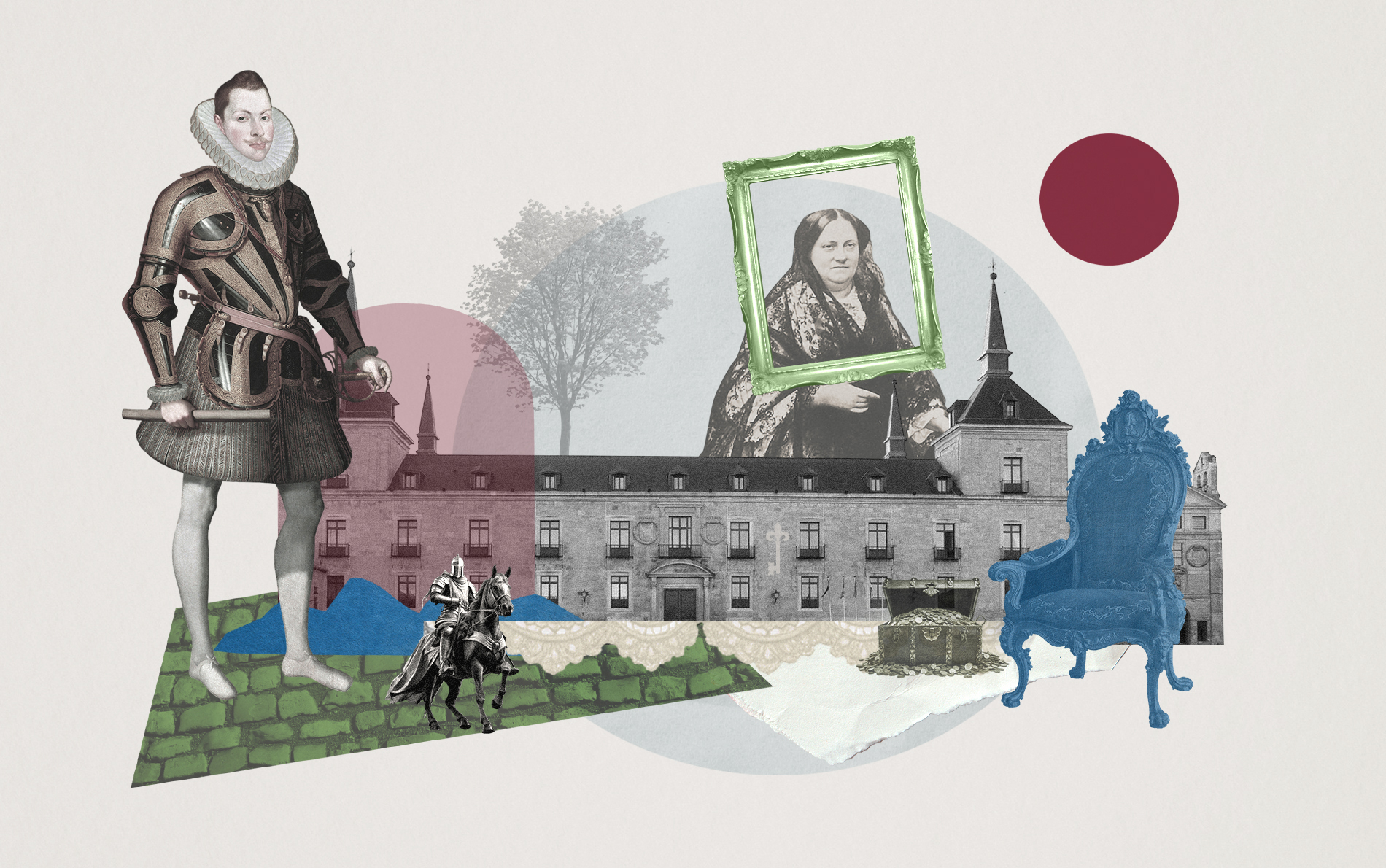
Historians single out the reign of Philip III (1598–1621) as a particularly telling period. Its symbol is the Duke of Lerma, who became famous for the following scheme: he bought land in Valladolid, persuaded the monarch to move the capital there, sold the land, bought property in Madrid (which had by then lost some of its lustre), and then convinced the king to move the capital back.
In the nineteenth century, historian Gerald Brenan observed that the relationship between politics and business had become systemic, with power directly intervening in economic projects. María Cristina de Borbón — regent from 1833 to 1840 during the minority of her daughter Isabella II — was involved in dubious transactions and speculation. It was said that there was not a single industrial project in which she did not have a financial interest. This discredited the monarchy and — among other factors — contributed to the revolution of 1868 and the overthrow of Isabella II.
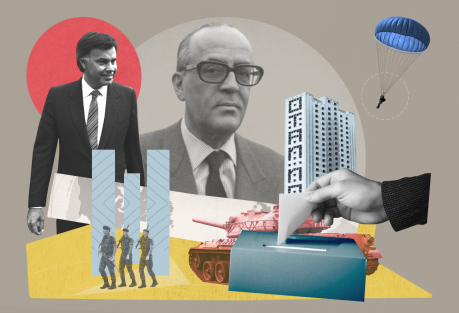
Corruption remained part of the political system in the twentieth century, first under dictator Miguel Primo de Rivera, then under Francisco Franco. Only in the interval between these periods — during the Second Republic (1931–39) — was there a genuine effort to build more effective governance and combat corruption (one example being the Straperlo affair).
Under Francoism, a model of resource distribution based on personal connections and loyalty to the regime became entrenched. A characteristic example is the 1969 Matesa affair, involving fraud in the receipt of state subsidies. But that case was not about the restoration of justice — it was an expression of conflict between Falangist and technocratic factions within Franco's regime.
With the transition to democracy, corruption did not disappear. Scandals emerged under the Socialist government of Felipe González (1982–1996) — notably the case of Juan Guerra, brother of the then-deputy prime minister. According to the author of "Corrupt Spain," Jaume Muñoz Jofre, that case marked the emergence of a characteristically Spanish figure — the fixer, the person who knows the political machinery and sets in motion chains of connections that end in bribes and illegal enrichment.
Between 1988 and 1990, an illegal scheme also operated within PSOE to raise additional funds for election campaigns (the Filesa case). This, in Muñoz Jofre's view, was an example of parties beginning to seek illegal sources of funding because legal ones were no longer sufficient.
Under PP Prime Minister José María Aznar (1996–2004), corruption did not disappear — it scaled up. Major regional scandals also emerged in this period, including the ERE case — a system of illegal distribution of public funds in Andalusia that operated under Socialist governments from 1999 to 2011.
A key factor in the early 2000s was the construction boom, which created fertile conditions for corrupt practices, giving rise to specific forms of abuse: "pharaonic urban construction projects" including "lavish and unnecessary works (airports without planes, ring roads without cars)" for which officials received kickbacks.
The scandals reached even the most prominent figures of the establishment. One example is the legendary President of the Generalitat of Catalonia (1980–2003), Jordi Pujol, who in 2014 admitted that his family had for decades held large sums in an Andorran bank without declaring them to Spanish tax authorities. The case is still ongoing: on 27 April, a court exempted the 95-year-old Pujol from attending proceedings, but seven of his children and other defendants remain on trial.
And no account of corruption would be complete without the Instituto Noos case, in which a member of the royal family — Iñaki Urdangarin, son-in-law of Juan Carlos I — found himself in the dock in 2011. Using his status and connections, he constructed a scheme of inflated contracts between his NGO Instituto Noos and regional authorities. Charges were also brought against Urdangarin's wife, Princess Cristina, though she was only ordered to repay €136,950 to the treasury. Urdangarin himself was sentenced in 2018 to 5 years and 10 months in prison. The political reverberations were enormous: the case was one of the unspoken but key reasons for King Juan Carlos I's abdication in 2014.
International organisations confirm that corruption in Spain has been and remains a serious problem. Telling evidence comes from a memorandum prepared by Council of Europe rapporteur on the issue, Tekke Panman. The newspaper ABC in late April summarised this document, which had come into its possession. It identifies systemic shortcomings: insufficient independence of the judiciary and the public prosecutor's office, inadequate comprehensive regulation of lobbying, and the absence of a central coordinating body (anti-corruption responsibilities are currently split across seven separate agencies).
The Sánchez government plans to create an Independent Agency for Public Integrity — a single body to coordinate anti-corruption policy. However, as El Confidencial reported, the project remains far from realisation.
Similar concerns have been raised by the European Commission, the OECD, the Group of States Against Corruption (GRECO), and private research institutes and NGOs. The Swedish V-Dem Institute, for example, found in 2025 that political corruption in Spain had increased by 178% since Sánchez came to power. The country has moved from 23rd to 14th place in the institute's index (a higher position indicates a higher level of corruption) and now ranks among the most corrupt OECD members, alongside Mexico, Turkey, Hungary, and Colombia.
The trend is confirmed by Transparency International. In the most recent Corruption Perceptions Index (CPI), published in February 2026, Spain ranked 49th out of 182 countries and territories. The situation is not yet catastrophic: among the 27 EU member states, Spain sits 17th, ahead of Italy, Poland, and Greece, among others. But the downward trajectory is clear. 49th place is the country's worst result since the current methodology was introduced in 2012 — a fact that undermines investor confidence and ultimately affects economic growth.
When asked why corruption persists in Spain, experts offer several complementary explanations.
"New political regimes cannot completely break with the past; historical legacy is a decisive factor in corruption," argues economist and historian Francisco Comín in the academic paper "Budget and Corruption in Modern Spain (1808–2017): Lessons from History." Experts particularly emphasise the role of the Franco period.
This was a country where not only public contracts were awarded through personal connections: tobacco kiosks were handed to friends of the regime, administrative positions went to regime loyalists, and even doctors' and teachers' jobs depended on political loyalty. What was rewarded was not competence but allegiance. Corruption to gain access to power was therefore not condemned — it was the norm. For this reason, in Spain some actions that would cause a scandal elsewhere are viewed less critically.
Entrepreneur and writer María Álvarez, in a column for El Diario
The transition to democracy was not accompanied by a full replacement of the elites. The "pact of forgetting" helped avoid upheaval that might have led to new civil conflicts, but it entrenched the continuity of established practices — including corrupt ones.
Another cause is the perception of electoral victory as a blank cheque to control public resources. All key positions immediately pass to "one's own people." In many cities in other EU countries, a general election results in the replacement of just two or three officials. In the average Spanish city, the salaries of hundreds of people depend on which party wins the vote.
As Professor of Political Science Víctor Lapuente notes, "if you map the level of politicisation of senior appointments against indicators of corruption and transparency, the correlation is very high": nobody will report their boss or object to questionable appointments when they understand that their career depends on loyalty.
The solution lies in moving towards a city-manager model — professional administrators with no party obligations — whose terms of office at different levels of government do not coincide with the electoral calendar.
As lawyer Miriam González has noted, "the most corrupt countries are those with the most bureaucratic barriers and hyper-regulation." Spain's governance system has replaced trust with total control. Bureaucratic barriers make legitimate routes to obtaining licences or permits so opaque that citizens and businesses are forced to seek intermediaries or rely on personal connections (such as asking the prime minister's wife to write a letter of recommendation). Here,e Spain would do well to look to the leaders in governance quality — the Nordic countries, which have reduced bureaucracy to a minimum.
Corruption takes root where the real risk of punishment is low. "Cases of misappropriation of public funds occurred in governments when politicians had such power that they believed judges would never reach them," noted the author of "Corrupt Spain," Jaume Muñoz Jofre. The number of corruption-related cases opened in Spain each year is large — but probably not large enough to act as a genuine deterrent.
Professor of Political Science and Public Administration at King Juan Carlos University in Madrid, Manuel Villoria, calls a developed civil society "a key element in the fight against corruption": "It is capable of demanding accountability, monitoring, and driving change. Without it, politicians stop following the rules." Spain, the expert believes, still has considerable ground to cover on this front.
In Spain, personal connections and relationships have historically taken precedence over universal rules for many people. Around 40% of Spaniards admit to having used personal contacts to access public services — services they were generally entitled to anyway, but which personal connections allowed them to obtain without queuing. This cronyism, which entrenches informal mechanisms of access to resources, is perceived not as wrongdoing but as a form of mutual assistance.
Research demonstrates the existence in Spain of a phenomenon of "weak electoral punishment" for corruption. A paradox is evident: according to opinion polls, corruption is one of the issues Spaniards are most concerned about, yet there is no clear link between scandals and shifts in party ratings. Some describe this as a state of "political cynicism."
Spaniards display a partisan bias: they judge corruption cases differently depending on which party committed them. Voters also tend to forgive corruption if they regard it as the lesser evil compared to other qualities they value in a politician — such as the ability to get things done. This finds expression in the phrase "roba, pero hace" — "he steals, but he delivers" — particularly common in Latin America.
Court case materials, which reproduce dialogues between both sides of corrupt transactions, help illuminate the mindset of those involved. The arguments run roughly as follows: a single deal can set "yourself, your children, and twenty generations more" up for life; declining to take advantage of the opportunity is not a sign of integrity but "idiocy," since someone else will always agree to it. "People will think you're doing it anyway," said one bribe-giver. The logic being: if you're going to be seen as corrupt regardless, you might as well have something to show for it. "You're a fool. You're the only honest mayor in Spain," a businessman told one town official in a recorded exchange.
There is one further factor, identified by writer Arturo Pérez-Reverte: "Put even the most honest people in the world in power — I'm not talking about an individual, I'm talking about a group — and over time it will begin to rot a little, to dip into the common pot and so on, because that is human nature. Human nature means ambition, lust, the desire for warmth, satisfaction, comfort, a car, convenience, a Jaguar in the garage… It always wins out."
The fundamental task of the state is to create conditions in which all these factors are held in check by multiple barriers. And for now, Spanish authorities are managing that challenge with mixed results.
Related Articles

Why Feeding Kids in Spain Means Surrendering to Sugar — A Russian Mum's View from Valencia
At the playground, treats fly between families faster than you can track them, and restaurant kids' menus rarely stretch beyond chips and nuggets. But after years in Valencia, one mother is rethinking what really matters.
Beyond Paella: Discovering All i Pebre, Valencia’s Best-Kept Culinary Secret
Deep in the heart of the Albufera wetlands, the fishing village of El Palmar preserves a traditional, rich garlic and wild eel stew that tourist traps completely miss
Loading…
Loading…