

Support La Cotorra on Patreon
Access exclusive content, special perks, and closer connection with us.
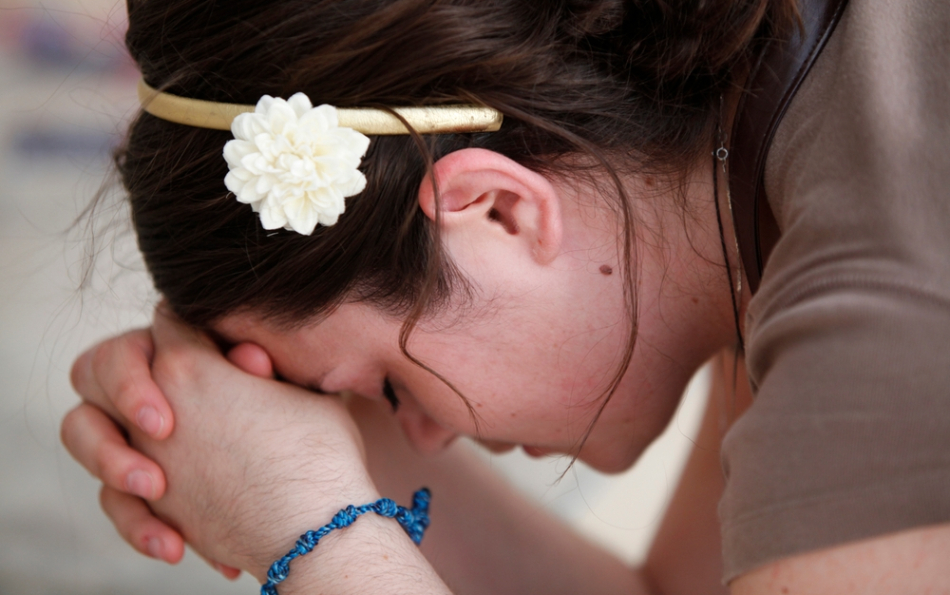
With the arrival of Holy Week (Semana Santa), the streets of Spanish cities are once again filled to the brim with crowds watching solemn religious processions. Yet, behind the facade of centuries-old traditions lie radical changes. On one hand, Spain is steadily secularising: today, less than 20% of the population describe themselves as practising Catholics. On the other hand, Catholicism is evolving, absorbing innovation, becoming fashionable (thanks in no small part to Rosalía and other influencers), and attracting a segment of the youth seeking answers to existential questions. La Cotorra explores the paradoxes of 21st-century Spanish religiosity.
The streets of Spanish cities are once again engulfed in thick clouds of incense, and the air vibrates with the beat of drums and the sound of trumpets. Semana Santa has begun—Holy Week, one of the most spectacular and emotional celebrations in the Spanish calendar. Every day for a week, processions reenact various scenes from the Gospels: from Jesus’ entrance into Jerusalem on Palm Sunday (Domingo de Ramos) to Easter Sunday (Domingo de Resurrección), which falls on 5 April this year.
The roots of Holy Week in its current form date back to the late Middle Ages. In the 16th century, lay brotherhoods began to appear in the cities of Castile, Aragon, and Andalusia, often organised by profession around craft and trade guilds. Their members pursued three goals:
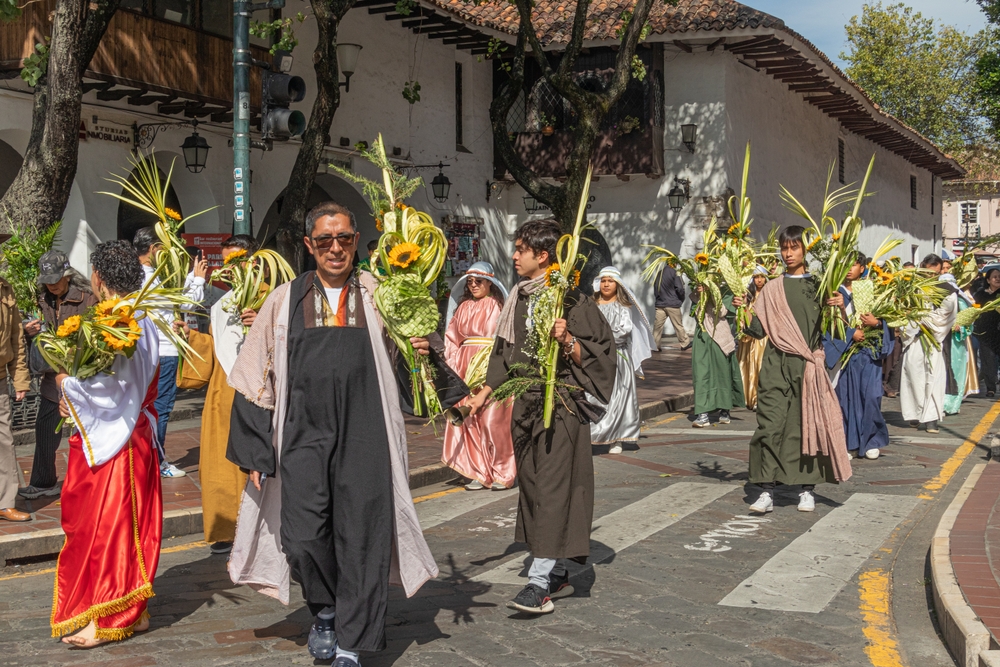
The latter—taking the form of processions with a gradually evolving visual language—became a kind of "Bible for the illiterate," a vivid demonstration of the transition "from sorrow to joy."
Holy Week Glossary
Spanish Holy Week is as diverse as Spain itself. In Andalusia, processions are met with applause and joyful cries. Conversely, the atmosphere in Castile and León is described as one of "silence, asceticism, and restraint," dominated by a stern medieval mood.
For many Spaniards, Holy Week is a vital piece of their identity, primarily because participation in processions fosters a sense of belonging to a generational chain: the grandfather participated, the father participated, and the son will too. Even if a person moves away or becomes less religious, the link to "their" Semana Santa often remains. Analysing this, Spanish anthropologists point to several levels of a collective "we": local (neighbourhood and brotherhood), municipal ("we, the people of Seville"), and national (Semana Santa as a part of Spanish culture).
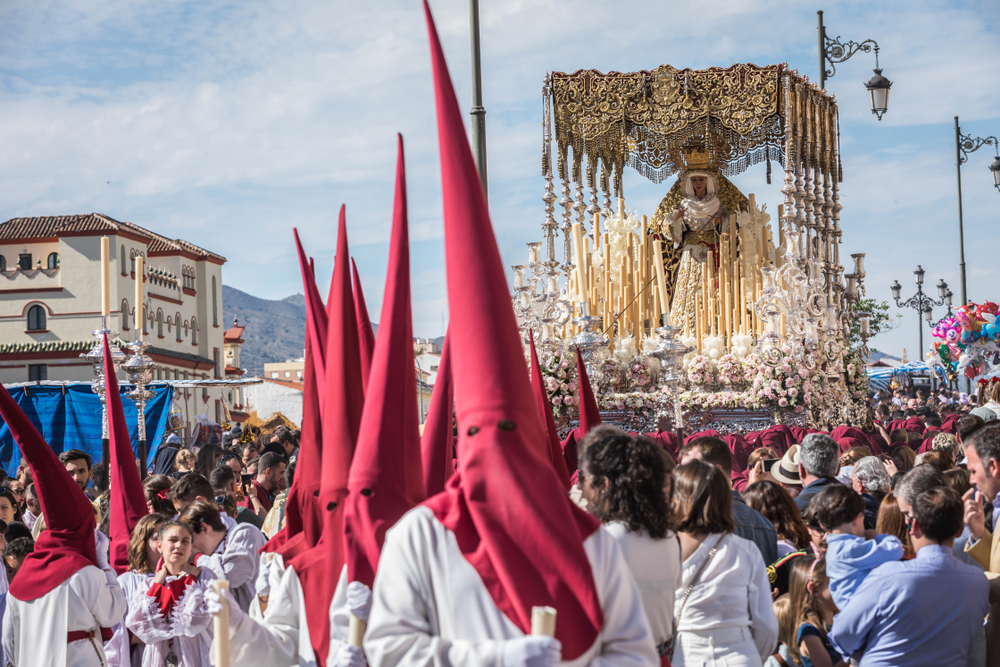
In 2017, the Spanish government added Holy Week to the list of "Representative Manifestations of Intangible Cultural Heritage." Simply put, it was recognised that this is not just a religious holiday, but a living tradition of national scale. The focus here is not on objects—statues or robes—but on the transmission of living practice: procession routes, chants, and roles within the brotherhoods.
However, strict adherence to tradition is now accompanied by innovation. For example, many brotherhoods actively use social media—Facebook, Instagram, TikTok, and X—to share preparation updates, show behind-the-scenes footage, and attract new members.
Furthermore, in the 21st century, Semana Santa has become a major media event. Regional TV channels host highly popular live broadcasts. In 2023, more than 3.2 million residents in Andalusia (out of 8.7 million) tuned into these broadcasts at some point. Meanwhile, online streaming is growing; many processions can now be watched in "slow TV" format—watching for hours as the platforms float slowly through the streets.
Finally, tourism is inevitably transforming the face of Holy Week. Semana Santa is Spain's key tourist season between Christmas and the summer holidays. Celebrations in several cities hold official status as National or International Tourist Interest events.
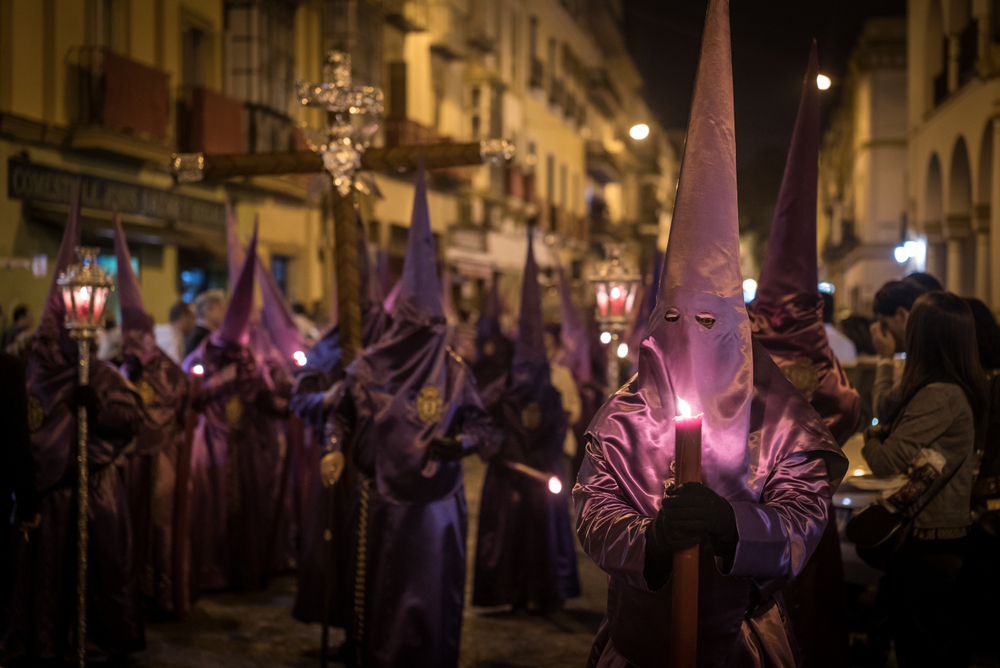
The numbers are record-breaking. In April 2025, Spain received 8.6 million foreign tourists, a 10.1% increase compared to the same month in 2024. However, this has downsides. As early as 1936, poet Federico García Lorca complained: "In recent years—strictly for commercial reasons—they have begun to organise processions devoid of the seriousness and poetry that distinguished the old Holy Week of my childhood."
For some, the processions are a vivid display of religiosity. For others, a cultural tradition. For others, an economic resource. It is the culmination of centuries of history.
Christianity entered Roman Spain in the 1st and 2nd centuries AD. In 1492, the Reconquista ended, and Spain became an unequivocally Catholic state. The situation began to shift in the liberal 19th century, with the Second Spanish Republic (1931–1939) proclaiming the separation of church and state. The subsequent Francoist regime (1939–1975) elevated Catholicism to a state ideology ("National Catholicism"). After Franco's death, the 1978 Constitution established Spain as a non-denominational state.
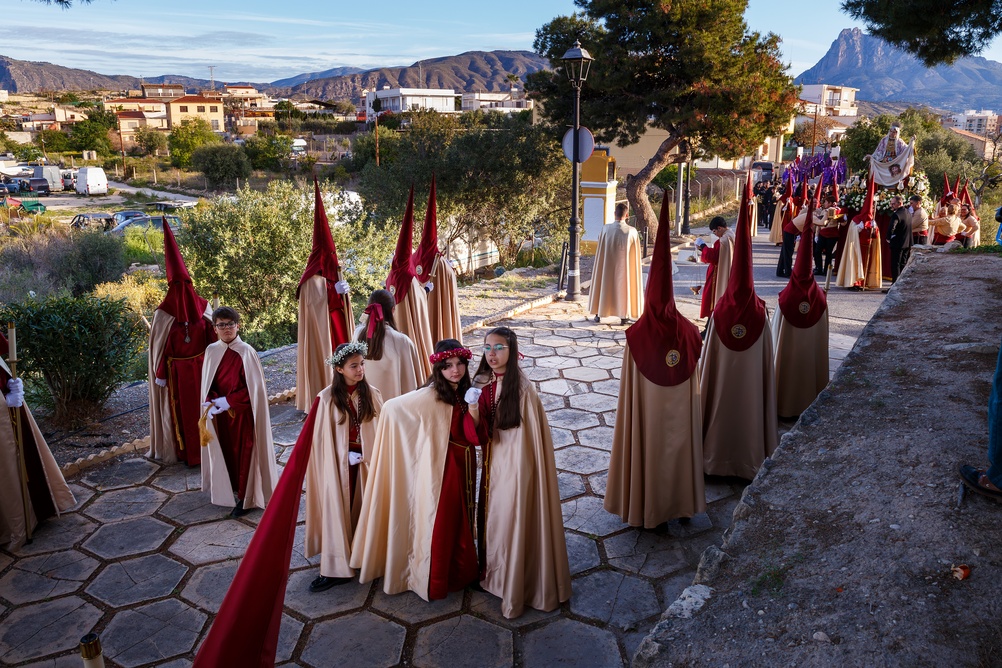
Spain has become the first traditionally Catholic country to legalise a range of liberal social norms directly contradicting Vatican positions. Abortion, same-sex marriage, and euthanasia were all legalised despite episcopal resistance and with broad public support.
The number of Catholics is falling. In 1970, 96% of Spaniards identified as Catholic. By April 2025, according to CIS data, only 55.4% did so (18.8% practising and 36.6% non-practising). In 2024, only 17% of adults identified as Catholic while attending services at least once a month.
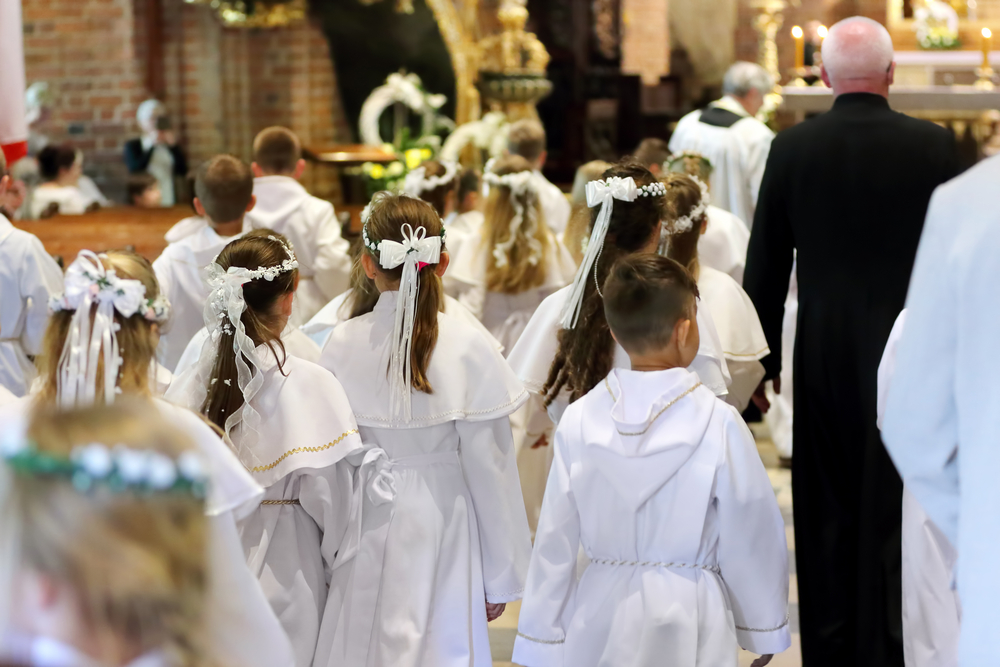
Paradoxically, tax contributions to the Church have hit record highs. In the 2024 tax campaign, the Church received an unprecedented €429.3 million. This is because, while the percentage of taxpayers opting to support the Church is falling (now at 30-31%), wage growth and inflation mean the nominal value of those contributions continues to rise.
The Church is attempting to engage the youth, primarily via the internet. One of Spain’s most popular podcasts is religious: 10 Minutes with Jesus consistently ranks in the Spotify Top 100. On TikTok and Instagram, Catholic influencers share their lives with hundreds of thousands of followers.
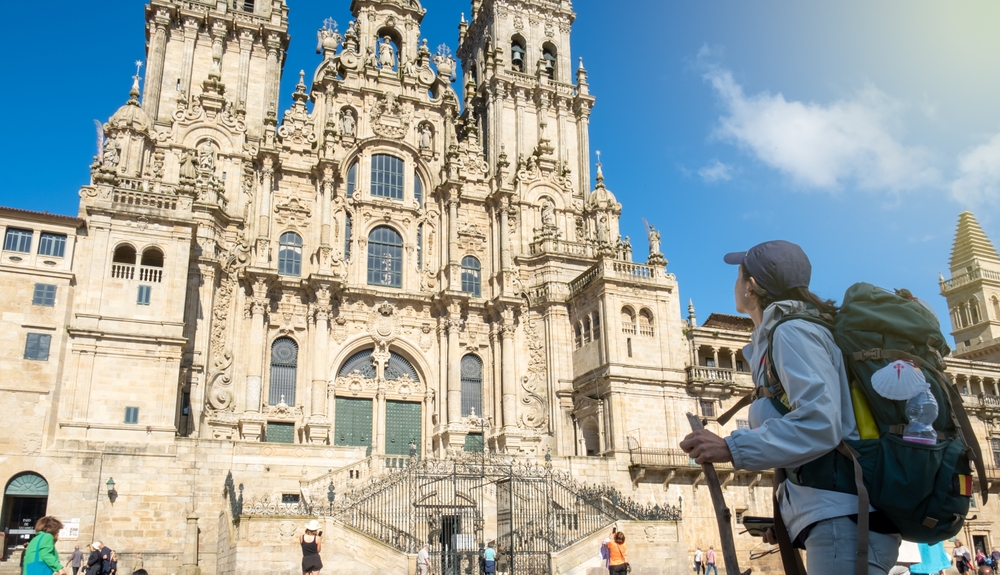
A striking example of what researchers call "Cool Catholicism" (el catolicismo cool) is the Effetá retreats—two-day smartphone-free meetings for 18–30-year-olds focused on personal stories of overcoming trauma and depression through faith. Even more significant is the Hakuna movement, which integrates faith into leisure; members pray together and then drink beer at parties, projecting an image of a successful and spiritual life.
Perhaps the most visible phenomenon is the use of Catholic aesthetics in pop culture. In 2021, rapper C. Tangana and singer Nathy Peluso sparked controversy by dancing a passionate bachata inside Toledo Cathedral.
But the biggest superstar built on Catholic aesthetics is Rosalía. From her 2017 song based on 16th-century monk San Juan de la Cruz to her latest album Lux (a reference to fiat lux), her work is saturated with religious imagery. In interviews, she has spoken of an existential void that only a divine space could fill.
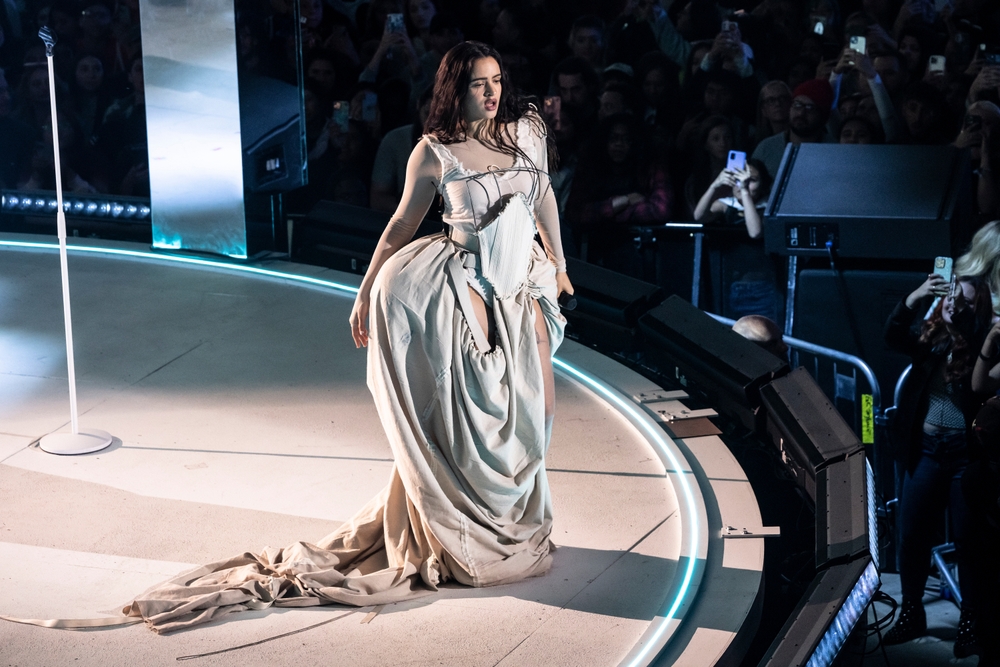
Despite these trends, there is no evidence of a return to traditional religiosity. For many Zoomers, wearing a cross is a form of counter-cultural rebellion. Professor Jörg Stolz argues that using sacred symbols in pop culture without the Church's sanction is a sign of the "decline of religious authority."
The 2025 "Religion and Belief Barometer" noted that 40% of respondents had meditated in the last year, 22% practised yoga, and only 20% had read the Bible. Furthermore, while only 15% of people under 24 say religion gives meaning to their lives, 55% said the same about their pets.
During Semana Santa, the massive platforms continue to float through the streets. The tradition seems unshakable, but the people carrying titare are no longer the same Spaniards they were a few decades ago.
Related Articles
Why Feeding Kids in Spain Means Surrendering to Sugar — A Russian Mum's View from Valencia
At the playground, treats fly between families faster than you can track them, and restaurant kids' menus rarely stretch beyond chips and nuggets. But after years in Valencia, one mother is rethinking what really matters.
Why Is Spain So Corrupt? A Brief History and Eight Reasons the Problem Won't Go Away
With parliamentary elections approaching, corruption has become Spain's hottest political weapon. But the phenomenon is neither new nor simple — it stretches back centuries and involves structural, cultural, and psychological factors that no government has yet managed to fix.
Beyond Paella: Discovering All i Pebre, Valencia’s Best-Kept Culinary Secret
Deep in the heart of the Albufera wetlands, the fishing village of El Palmar preserves a traditional, rich garlic and wild eel stew that tourist traps completely miss
Loading…
Loading…