




Support La Cotorra on Patreon
Access exclusive content, special perks, and closer connection with us.
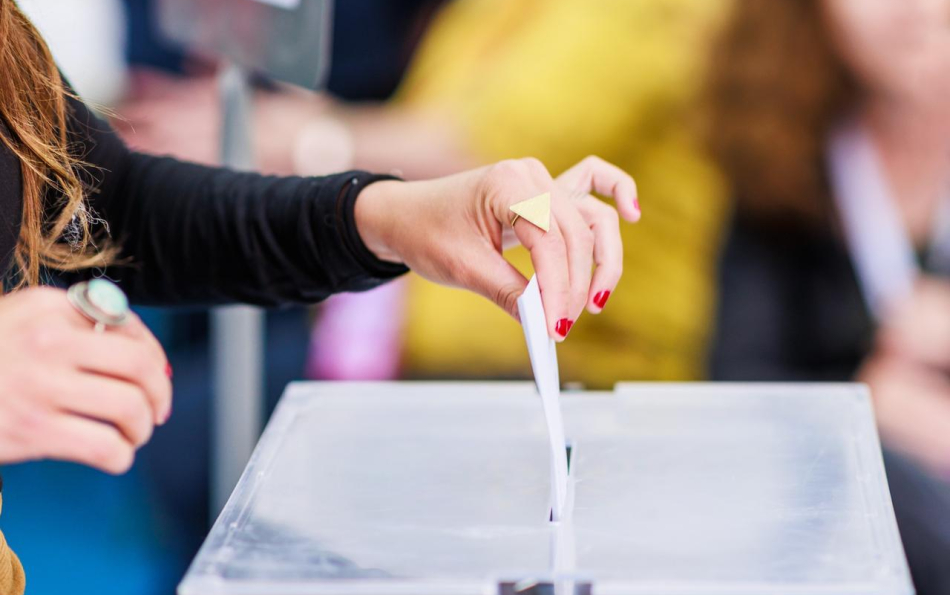
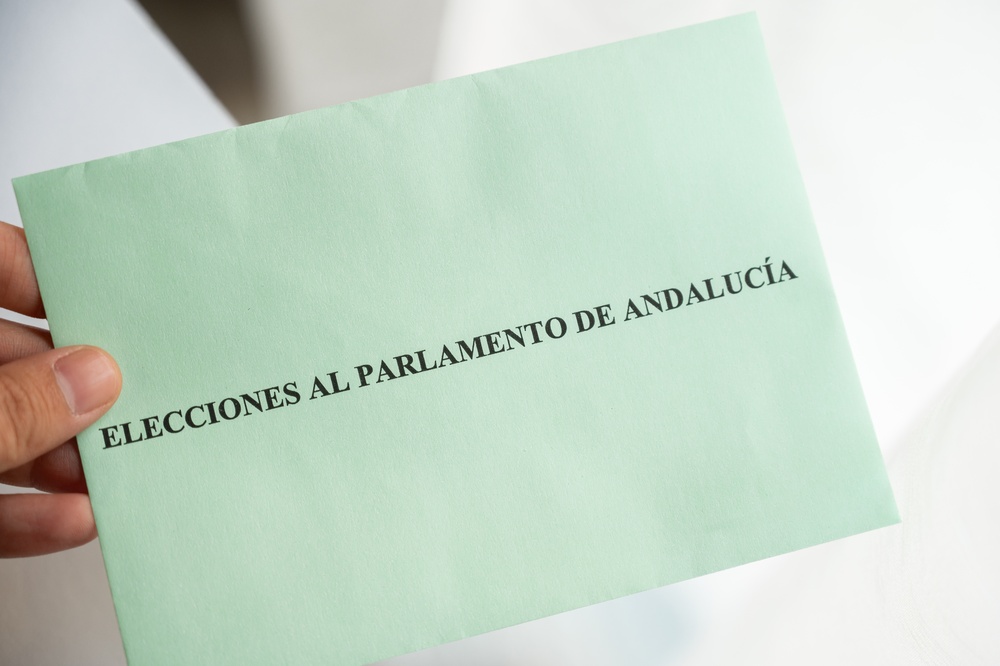
In the Andalusian parliamentary elections held on 17 May, the right-wing People's Party won the most votes (around 41.6%), taking 53 of the 109 seats. That falls short of a majority government, so the PP will now need to negotiate an alliance with the far-right Vox — even though during the campaign the Andalusian branches of the two parties displayed considerable disagreements.
Elections in Andalusia — Spain's most populous and second-largest autonomous community, and for decades the Socialists' greatest stronghold — always draw keen attention. But this time the anticipation was particularly intense, which was reflected in turnout: 64.8%, up 6.5 percentage points on the 2022 election. As Spanish media noted, the People's Party turned the regional vote into a kind of "first round" of the general election planned for 2027. For the Socialists, who have governed Spain for eight years under Prime Minister Pedro Sánchez, the coming national campaign will be extremely difficult.
By 1 May, the streets of Andalusian cities were plastered with campaign posters from the 25 parties and three coalitions that entered the race. The two main national forces — the People's Party (PP) and the Spanish Socialist Workers' Party (PSOE) — were not the only visible presences. Also conspicuous — at least in Córdoba, where La Cotorra's correspondent was based during the campaign — were posters for parties whose names many locals would struggle to place: the Party for Animals and the Environment (PACMA), or the Spanish Phalanx of the Juntas of the National Syndicalist Offensive (Falange Española de las JONS).
The latter name is well known, though strictly in a historical context — it refers to the party founded by José Antonio Primo de Rivera in 1934, which survived until 1937 and espoused Spanish nationalism, national syndicalism, and fascism. Today's Falangists condemn "migratory invasion," demand that Spain "stop being a puppet of transnational corporations," and promise to build a prosperous state "against the interests of Spain's enemies." "We are neither left nor right," declared their posters, printed in red and black.
It was precisely this left-versus-right confrontation that sat at the centre of the election. The right-wing PP had controlled Andalusia since January 2019 and was determined to extend its period in power. The Socialists, in national government since June 2018, found themselves in opposition in Andalusia — a reversal of the situation that had prevailed beforehand, when the PSOE held Andalusia (continuously since 1978) and the PP governed nationally.
The results turned out to be mixed for the People's Party. It confirmed its status as the country's most popular political force, with around 41.6% of the vote — but that represented a fall of roughly 1.5 percentage points on the 2022 result. It was enough for only 53 seats, while an outright majority requires at least 55 (in 2022, the PP won 58).
As a result, for the first time in Andalusia, the decisive vote now lies with the far-right Vox (13.8%; 15 seats; +1 seat on 2022), which will be able to dictate terms to the People's Party.
The PSOE recorded its worst result in Andalusia in electoral history (22.7%; 28 seats; -2 seats). The left-wing coalition Por Andalucía won 6.3% (5 seats, the same as in 2022).
Another left-wing force — Adelante Andalucía, which espouses Andalusian nationalism, advocates a federal Spain, and supports socialism, feminism, anti-neoliberalism, and environmentalism — made the most impressive surge in percentage terms: from 4.6% and 2 seats in 2022 to 9.6% and 8 seats. Pollsters had not predicted this.
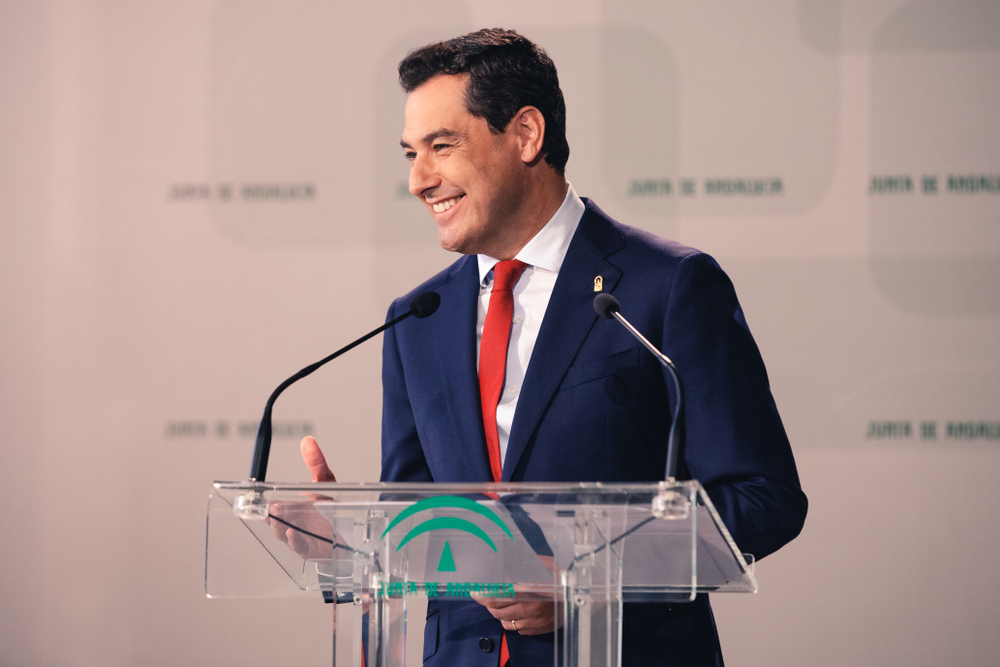
As early as the first rally of the campaign — in Seville on 30 April — the head of the Andalusian government and regional PP leader Juan Manuel ("Juanma") Moreno Bonilla set out his central message. He called on residents to vote "for stability, security, and a steady course based on freedom." He promised to sustain economic development and continue creating jobs — an area in which the regional authorities have had tangible results: Andalusia's unemployment rate has historically been well above the national average, but by April 202,6 the gap had narrowed to 3.83 percentage points, a historic low.
Moreno also pledged to fight for full control over tax collection and independence from Spain's central government. "We want to be equals with Catalonia and the Basque Country," he said.
Throughout the campaign, the politician made clear that staying in power was only the minimum objective — the PP was aiming to repeat the 2022 result and win an absolute majority. Yet from the outset, a coalition with Vox seemed perfectly plausible, especially given the results of several recent regional elections. In late April, the PP had only managed to form governments in Aragón and Extremadura after difficult negotiations with Vox that required the centrists to make unwelcome concessions. In particular, Vox aggressively pursues a migration agenda and promotes a "national priority" principle in the allocation of benefits and social housing.
Moreno distanced himself from radical rhetoric, cultivating an image of a moderate centrist. The Andalusian PP's manifesto stated, for instance, that numerous studies confirm the contribution of migrants to economic growth, job creation, and the sustainability of Spain's pension system. The party stressed that legalised migrants "are an active part of the economy" and help finance public services. The manifesto also argued that migration "does not overload Andalusia's labour market," given that the region continues to face a shortage of workers.
"Vox is good at inventing effective slogans, but above any slogan stands the law — the Statute of Autonomy of Andalusia, which is binding and cannot be violated," Moreno commented on the "national priority" idea.
"Thank you for your candour," Vox leader Santiago Abascal wrote ironically on social media after the PP manifesto was published. "Moreno has made himself clear. He is in favour of Andalusians being last in their own land. Vox's principle: Locals first," added the Andalusian Vox leader Manuel Gavira.
Within Vox, the Socialists seemed barely worth mentioning. "The left has no chance whatsoever — that is beyond doubt. What 17 May decides is whether we will continue with a cabinet like Moreno Bonilla's, which prefers not to speak about Andalusians' problems, or whether Andalusia will follow the path of other regions of Spain. I mean what happened in Extremadura, what happened in Aragón, and what will happen in Castile and León," Gavira told El Confidencial, pointing to the regional coalition deals between the two right-wing parties.
"The PSOE only loses elections when it already believes it has lost them [...] In this election, there is a fight, and we are going to win it," insisted Pedro Sánchez at the Socialists' first campaign event. He and former prime minister José Luis Rodríguez Zapatero (2004–2011) came personally to support the PSOE's candidate for head of the Andalusian government — María Jesús Montero, a native of Seville who had served as Spain's first deputy prime minister until March 2026.
The PSOE made clear from the outset that the campaign would focus above all on two key issues. The first was healthcare, which is no coincidence. For many years, Andalusians' primary concern had been unemployment, but in December 2025, pollsters recorded a seismic shift: healthcare problems rose to the top of the regional agenda. Surveys conducted that spring confirmed the trend. Even among Andalusian PP voters, an absolute majority — 51% — regarded the state of the public health service as the most pressing problem.

Montero promised to "legislate to eliminate waiting lists for GPs, specialists, and operations" and to halt the gradual "privatisation of public clinics." "17 May is a referendum in defence of the public health service, a referendum in defence of the public sector, because it is the public sector that guarantees that any person, regardless of income, race or origin, will be able to receive treatment," she said.
One of the opposition's main lines of attack was the cancer screening scandal. Late last year, it emerged that at a Seville hospital,l more than 2,000 women who had undergone breast cancer screening and received "inconclusive" or "ambiguous" results had neither been informed nor called back for follow-up. Some only found out two years later. For several, the delay had been critical: by the time they were re-examined, the tumour had progressed. In debates, Montero called it the most serious case of negligence in the history of Andalusia's health service. Moreno acknowledged "a failure in the protocol."
Statistical data on Andalusia's healthcare can be read in different ways depending on one's political sympathies. The left-leaning outlet Eldiario.es set out in detail how the public health system had "noticeably deteriorated since the People's Party government took office in Andalusia in 2019." For example, in 20,24 only 14.4% of patients received primary care within the first 48 hours of presenting (compared to 51.7% in 2018) — the second-worst figure across Spain's 17 autonomous communities. In December 2025, 100.3 patients per 1,000 residents were awaiting an appointment with a specialist, with an average wait of 136 days in 14th place among all autonomous communities. At the same time, 23.5 patients per 1,000 residents were on a surgical waiting list, with an average wait of 173 days — the worst figure in Spain.
The centre-right ABC countered: public health spending per capita in Andalusia had risen by 63% since 2013, when Montero herself left the post of Health Minister; in 2025, the region left last place on that measure for the first time in decades. And from the fact that only 22% of the population has private health insurance (the national average is 26%), ABC drew the conclusion that 78% of the population is choosing the public system, despite it being the top concern among residents. The paper did not address whether the region's income levels might have something to do with that.
Speaking about the health service, Moreno referred to the heavy legacy of decades of Socialist rule and promised a comprehensive reform: "We want to create a more transparent, more flexible model, capable of integrating digitalisation and artificial intelligence."
In recent months, the regional government had already introduced a series of healthcare measures: an emergency plan allowing doctors to work evenings voluntarily, improving working conditions and extending coverage in hard-to-reach areas; a plan to increase the number of operating theatres; and agreements with private clinics to take on more routine operations and diagnostic procedures (which the left interpreted as "privatisation of the public health service"). None of it proved sufficient to fundamentally improve the situation — or at least public perceptions of it.
In one speech, María Jesús Montero made an effective bridge from the first key issue to the second. "When those who look after our health cannot themselves live with dignity, the whole of society is put at risk," she said, recounting how some staff at the Costa del Sol hospital in Marbella are forced to sleep in their cars owing to a shortage of affordable housing.
The problem, of course, affects far more than healthcare workers. Andalusia ranks fourth among Spain's autonomous communities for the pace of rental price growth (behind Castilla-La Mancha, the Canary Islands, and Catalonia). According to a report on rental housing in Spain in 2025 published by the property portal Fotocasa, by the end of 2025, rental prices in Andalusia had risen 7.3% year-on-year — the eleventh consecutive annual increase.
Montero promised to build 100,000 units of social housing in Andalusia over the next six years. As ABC noted, however, "since Sánchez came to power in June 2018, he has promised to build 261,000 homes across Spain, yet even the most optimistic estimates suggest that at most 18,000 units have actually had their keys handed over." The Andalusian government claims that not a single one of those units has been built in its region in the past six years.
The failure to build housing is what Moreno considers "the fundamental problem." "Andalusia has a shortage of around 90,000 housing units to meet the needs of new households, while fewer than 8,000 are built each year. We need to stimulate private initiative — otherwise the problem cannot be solved," he told El Mundo. He also pointed beyond Spain's borders: "Materials became more expensive because of the pandemic, the war in Ukraine, geopolitical tensions — and all of this affects housing affordability [...] An apartment that cost €180,000 seven years ago can now cost €280,000 in the same location on the same plot."
This issue matters to Andalusians no less than the state of the health service. A large majority of residents support three key measures: restricting licences for tourist apartments, introducing rent caps in particularly strained areas, and expanding state-backed schemes to help young people buy their first home. These measures enjoy cross-party support, though backing is considerably higher on the left. Local politicians would have had to grapple with housing, whatever the election outcome.
Of course, the campaign covered far more than these two issues. The under-resourcing of the police and Civil Guard also came up, prompted by a May incident off the coast of Huelva in which two Civil Guard officers died while pursuing a speedboat carrying a smuggler, and Montero unwisely described it as "a workplace accident."
There was also debate about the train crash near Adamuz, which killed 46 people and injured more than 100. Here it was Moreno who put his foot wrong: his criticism of the national government only prompted calls from the victims' association not to politicise the tragedy.
Corruption was also mentioned, though not prominently: Moreno said there was little point, because "99% of the population already knows that corruption is the very essence of the Socialist Party and Sánchez's government."
The same issues will dominate the national election campaign (which must take place no later than 22 August 2027). In that sense, the 17 May vote was a dress rehearsal for 2027. "If Mr Sánchez gets a bad result, it is more than likely that he will begin thinking about the upcoming elections and new strategies, because the space (around the PSOE — La Cotorra) will have narrowed in a very damaging way for him and his interests," said the Andalusian PP leader on the eve of polling day. Now, in the wake of the Socialist defeat, there is every opportunity to put that theory to the test.
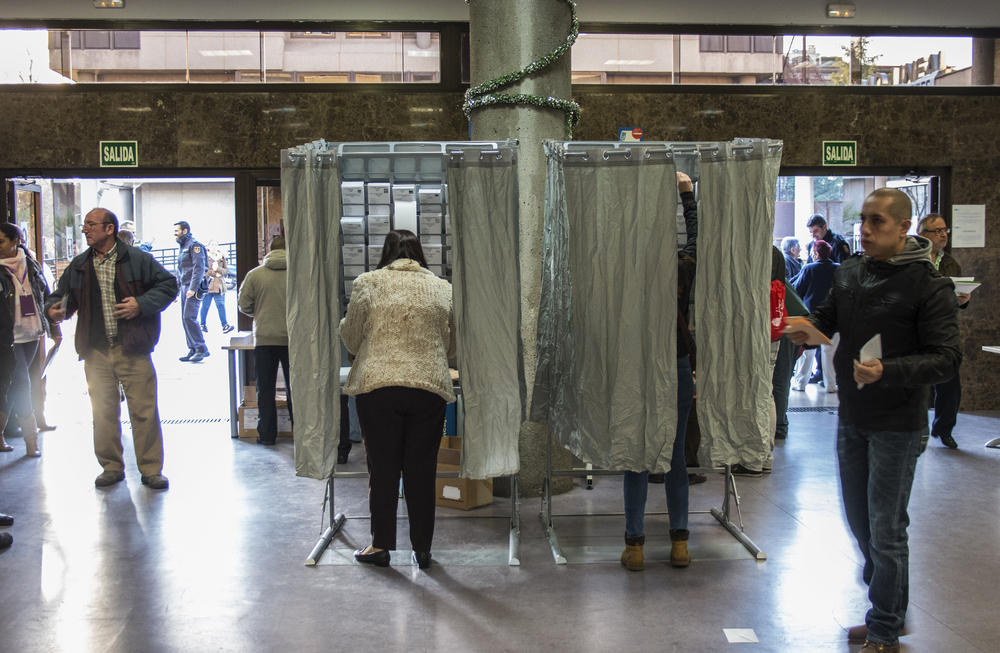
All the signs point to the right winning at the national level, too. According to the polling aggregator Electocracia, the People's Party can expect 133–135 seats (they currently hold 137), while Vox is preparing for a sharp surge: from 33 seats to 61–62. Together, that is no fewer than 194 seats, well above the absolute majority of 176. The PSOE and their current partners Sumar can together expect only 122–124 seats.
Of course, after the 2027 election, the PP and Vox will still need to agree on a coalition, which will almost certainly require the PP to drift closer to the far-right flank. But they will probably find a way: too much will be at stake.
Related Articles

Why Feeding Kids in Spain Means Surrendering to Sugar — A Russian Mum's View from Valencia
At the playground, treats fly between families faster than you can track them, and restaurant kids' menus rarely stretch beyond chips and nuggets. But after years in Valencia, one mother is rethinking what really matters.

Why Is Spain So Corrupt? A Brief History and Eight Reasons the Problem Won't Go Away
With parliamentary elections approaching, corruption has become Spain's hottest political weapon. But the phenomenon is neither new nor simple — it stretches back centuries and involves structural, cultural, and psychological factors that no government has yet managed to fix.
Beyond Paella: Discovering All i Pebre, Valencia’s Best-Kept Culinary Secret
Deep in the heart of the Albufera wetlands, the fishing village of El Palmar preserves a traditional, rich garlic and wild eel stew that tourist traps completely miss
Loading…
Loading…