






Support La Cotorra on Patreon
Access exclusive content, special perks, and closer connection with us.
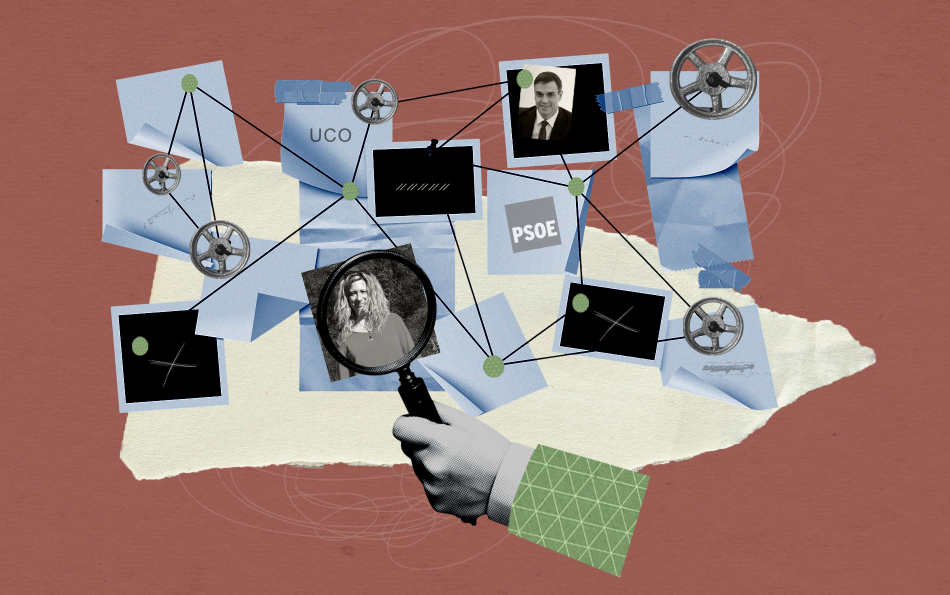
A story is rapidly unfolding in Spain that the media are already comparing to "Watergate" — perhaps the most famous political scandal in history, which ended in 1974 with the resignation of US President Richard Nixon. His fate, the Spanish opposition believes, should now be repeated by the prime minister, socialist Pedro Sánchez. The reason lies in the details revealed during the investigation into his ally Leire Díez's case. The prosecution is convinced that, within the ruling Spanish Socialist Workers' Party (PSOE), Díez coordinated the work of certain shadow structures that tried to influence the course of court proceedings linked to the socialists, both ongoing and potential. Unlawful methods were used in the process.
Answers to the main questions about the scandal, and about where it might lead, in his piece by La Cotorra.
This week, National Court judge Santiago Pedraz lifted the secrecy order on part of the case files concerning former PSOE activist Leire Díez. She is known across Spain as the fontanera. The literal translation is plumber. But in this case, it's political slang.
As a politics lecturer at King Juan Carlos University (Madrid) has explained, a fontanero is an operative who coordinates intra-party processes and handles conflict resolution among allies. In short, they ensure discipline within the party. But the word also denotes people who don't shy away from illegal or "dirty" operations. A rough possible translation into Russian is "fixer." The use of this term has been criticised by actual plumbers, united in the professional confederation CONAIF: they believe such a metaphor damages the reputation of a socially important profession.
Leire Díez was a plumber in the political sense of the word. The first scandal broke back in May 2025, when it emerged that Díez was connected to an alleged PSOE operation to discredit Lieutenant Colonel Antonio Balas — head of the economic crime unit of the Civil Guard's Central Operational Unit (UCO). Díez tried to find compromising information about Balas to put pressure on the UCO.
The Central Operational Unit is a special judicial police body within the Civil Guard. Its task is to investigate and suppress the most serious forms of crime, both within Spain and internationally. In particular, UCO agents investigate cases concerning corruption, drug trafficking, money laundering, murder and kidnapping, crimes against Spain's historical heritage, and cybercrime.
UCO reports form the basis of several cases involving people in the circle of Prime Minister Pedro Sánchez. La Cotorra wrote about them in detail in May. That said, new scandals have occurred since then. For example, the court brought charges against a close ally of Sánchez, former Spanish prime minister (2004–2011), José Luis Rodríguez Zapatero. He is suspected of involvement in financial irregularities connected to €53 million in state support allocated in 2021 to the airline Plus Ultra.
The Leire Díez case landed back on the front pages of Spanish newspapers after UCO agents carried out searches at the PSOE central office in Madrid on 27 May. According to the media, UCO staff were looking for documents that might be connected to payments made to the socialist Díez in an attempt to derail court proceedings affecting the PSOE and the Sánchez government.
A few days later, on 3 June, no less explosive news appeared. The central episode in the body of information released by Judge Pedraz is the testimony of former UCO chief General Rafael Yuste. The testimony essentially indicates that the senior leadership of the Civil Guard (within which, as a reminder, the UCO operates) was, to a certain extent, guided in its work by political considerations.
Thus, the reaction of the now-former director of the Civil Guard, Leonardo Marcos, to a UCO report on the case of David Sánchez — Pedro Sánchez's brother — became known. David ended up at the centre of an investigation into possible irregularities in obtaining a post in the administration of the province of Badajoz.
The investigation is examining whether the post in the administration was specially created or adapted for a particular person, David Sánchez. If this is confirmed, it could constitute a serious breach of the procedures for public selection for a state position.
According to Rafael Yuste, on 12 July 20,24 his superior, at a specially convened meeting, called the UCO report prepared on this matter "speculative and malicious." The superior ordered the document to be reworked so that the new version contained "nothing (against David Sánchez — La Cotorr).
Rafael Yuste also stated that the second-in-command in the Civil Guard hierarchy at the time — General Manuel Llamas — ordered UCO agents not to "act proactively" but to "stay out" of matters of political significance." In cases affecting the government or its circle, the initiative was to remain solely with the judges, not the UCO. These instructions from Llamas were issued on 16 July 2024 at a meeting that was also attended by UCO staff.
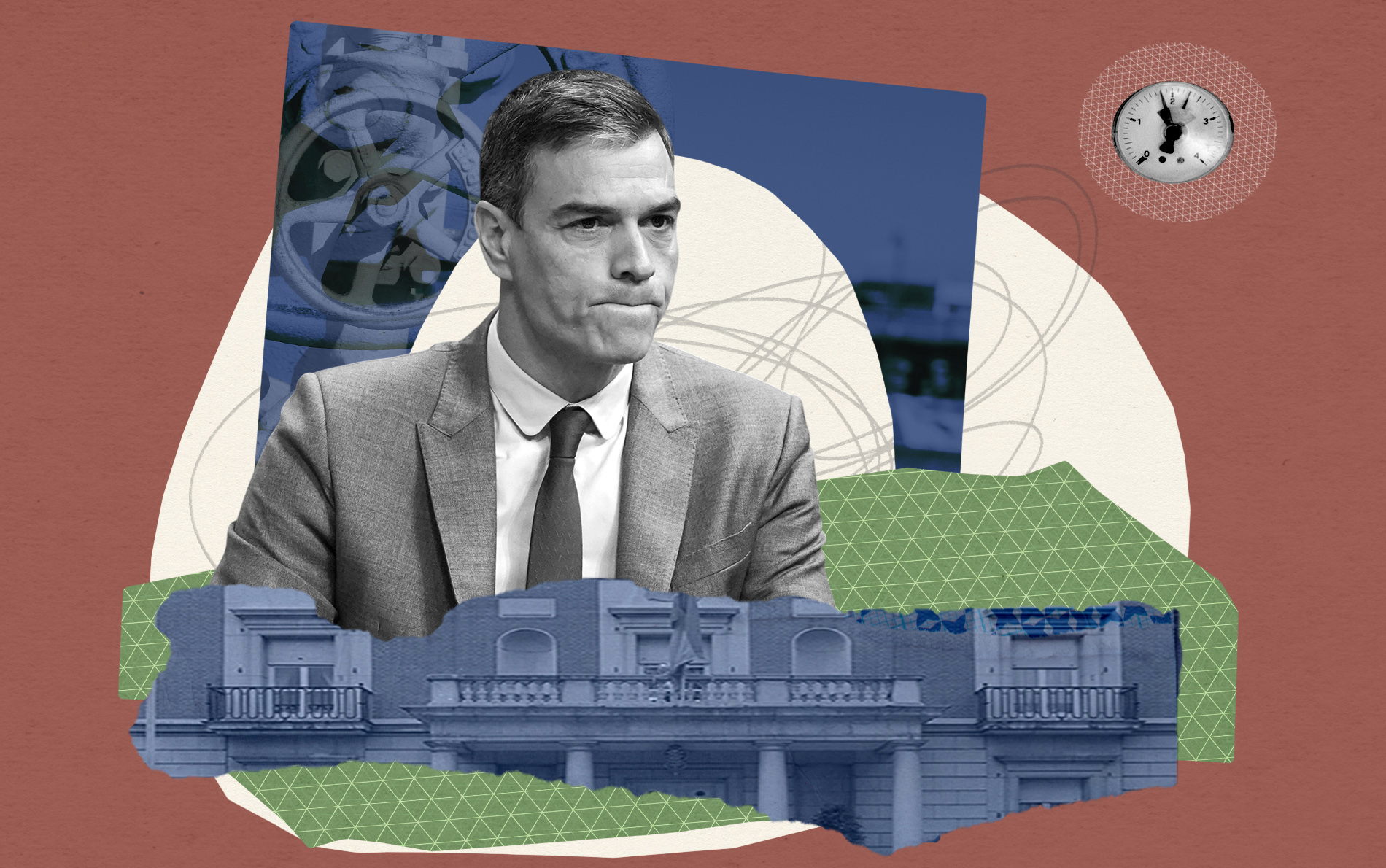
The investigation suggests that this scheme came into operation after Pedro Sánchez's "five days of reflection" in April. This refers to the prime minister's reaction to the criminal accusations levelled against Begoña Gómez, the prime minister's wife. She was suspected of using her status for career advancement and of several other improprieties. Pedro Sánchez called those accusations politically motivated, but at the same time stated: "I urgently need to answer the question for myself of whether it is worth it, despite the mud into which the right and the far right are seeking to turn politics. Should I continue to lead the government or give up this high honour?" In the end, having thought it over, he decided to remain in the prime minister's seat after all.
A separate strand of the story concerns the current director of the Civil Guard, Mercedes González. On 3 June, it emerged that Leire Díez had been in contact — in person and by phone — with González, and through her had tried to put pressure on the UCO. Investigators believe it was precisely these contacts that resulted in internal reviews of the UCO's work.
Overall, it is reported that Leire Díez coordinated large-scale shadow activity within the PSOE. According to the investigation, she, together with accomplices (the most senior of whom is former PSOE secretary for organisational affairs Santos Cerdán), tried to influence the course of court proceedings, paid informants, and leaked information into the public domain against judges, prosecutors, and law enforcement officers. And all of this, it is alleged, was generously financed by the PSOE: expenditure of €188,000 has been documented.
The key question now is: did Pedro Sánchez know about all of this? References to him are frequently found in Leire Díez's correspondence obtained by the investigation. More precisely, a certain "El One" — "number one" — appears throughout.
The socialists have tried to distance themselves from the scandal. The secretary for organisational affairs, Rebeca Torró (successor to Santos Cerdán — La Cotorra), called the published documents "the sum of the individual acts of fraudsters, opportunists, and the aggrieved, who used the PSOE's name in vain and deceitfully — to the great regret of the PSOE itself." She also called on "no one to doubt the honesty and transparency of this party."
Spain's interior minister, Fernando Grande-Marlaska, meanwhile, focused on defending Civil Guard director Gonzále, speaking of her "impeccability and honesty." He also claims that he "of course knew of no actions that could have been aimed at undermining the work" of the UCO and similar structures. "If I had known, I would not have tolerated it," the minister assured on 4 June.
Meanwhile, as the outlet The Objective noted, under the law, internal reviews in the Civil Guard are opened by order of the director, with the minister's mandatory knowledge. So at the very least, Grande-Marlaska must have known about this.
The right-wing opposition and the media sympathetic to it are, meanwhile, raising the stakes in the game as high as possible. "Among the many cases casting a shadow over the government, this is the most serious […]. The government appears as a key participant in a scheme operating against the state from within the state […]. The scale of the damage this does to institutions and to the trust of citizens is unacceptable," the newspaper El Mundo fumed in an editorial titled "The Ministry of the Sewer," calling on the minister and the director of the Civil Guard to resign.
El Confidencial, another outlet with a right-wing leaning, even compared everything happening these days to "Watergate" — the investigation into the unlawful actions of US Republicans that ultimately led to the resignation of President Nixon.
Each new revelation is more shameful than the last. Those who asked for power in the name of clean government used it to create a criminal organisation.
It's worth recalling that Pedro Sánchez became prime minister in 2018 after a vote of no confidence in the People's Party's Mariano Rajoy amid a major corruption scandal — the Gürtel case. While still a candidate for prime minister, the socialist leader delivered an impassioned speech about how "corruption destroys faith in institutions and, even more so, in politics."
Now mirror-image accusations are being directed at the PSOE leader. The deputy head of the far-right party Vox, Ignacio Garriga, expressed hope that "in the coming days or hours" charges will be brought against the prime minister personally: "All the roads of corruption lead to 'number one' in the government."
Against the backdrop of numerous corruption scandals, the opposition is testing the waters on the possibility of bringing a vote of no confidence against the Sánchez government. For a vote to be admitted to consideration, it must be tabled by at least one-tenth of the deputies, i.e., 35 people. There will be no problem with this. However, for the initiative to succeed, an absolute majority of votes is needed — 176 out of 350. The People's Party currently has 137 seats, and Vox has 33. In total — 170.
The right will therefore need additional votes. Alberto Núñez Feijóo has called on the Catalan and Basque nationalist parties (with seven and five seats, respectively) to back him. In exchange, he promises to call early elections immediately after a successful vote of no confidence (under the law, a new prime minister can serve until the end of the original term, i.e. until July 2027 — La Cotorra).
But no positive reaction has followed. At least, not yet. The regional political forces have long-standing grievances against the People's Party. For example, the secretary-general of the Catalan party Junts per Catalunya, Jordi Turull, ironically suggested that if Feijóo has a "serious proposal," he should travel to Waterloo, Belgium, and discuss it with the party's head, Carles Puigdemont. Puigdemont is the former head of Catalonia wh,o in 2017 (when the People's Party was in power in Spain — La Cotorra,)organisedd a referendum on the independence of that autonomous community, andwass thenforced too flee the country toavoid criminal prosecutionn and live in exile in Belgium.
The right's eagerness for early elections is understandable. The first poll conducted after the search of the PSOE headquarters recorded a drop in the socialists' popularity: 25.4% and 103–105 seats (down 2.2 points in two months). The right-wing bloc together gains more than 200 seats: the People's Party on 31.2% and 134–136 seats, and Vox on 18.9% and 67–69 seats, double its current 33.
That said, it's worth bearing in mind that there is almost no flow of people from the socialists to the People's Party: only 5.3% of those who voted for Sánchez in 2023 are ready to backFeijtthe bulklk of the disillusioned move into the undecided category — already one in five among PSOE voters. And the party is confident that their favour can still be won back.
Related Articles

Why Feeding Kids in Spain Means Surrendering to Sugar — A Russian Mum's View from Valencia
At the playground, treats fly between families faster than you can track them, and restaurant kids' menus rarely stretch beyond chips and nuggets. But after years in Valencia, one mother is rethinking what really matters.

Why Is Spain So Corrupt? A Brief History and Eight Reasons the Problem Won't Go Away
With parliamentary elections approaching, corruption has become Spain's hottest political weapon. But the phenomenon is neither new nor simple — it stretches back centuries and involves structural, cultural, and psychological factors that no government has yet managed to fix.
Spain Approves Sweeping Anti-Tobacco Law Banning Smoking on Cafe Terraces, Beaches, and at Festivals
The bill overhauls 2005 regulations, introducing a direct ban for minors, equalising vapes with traditional cigarettes, and enforcing 15-meter smoke-free perimeters around public venues
Loading…
Loading…