



Support La Cotorra on Patreon
Access exclusive content, special perks, and closer connection with us.
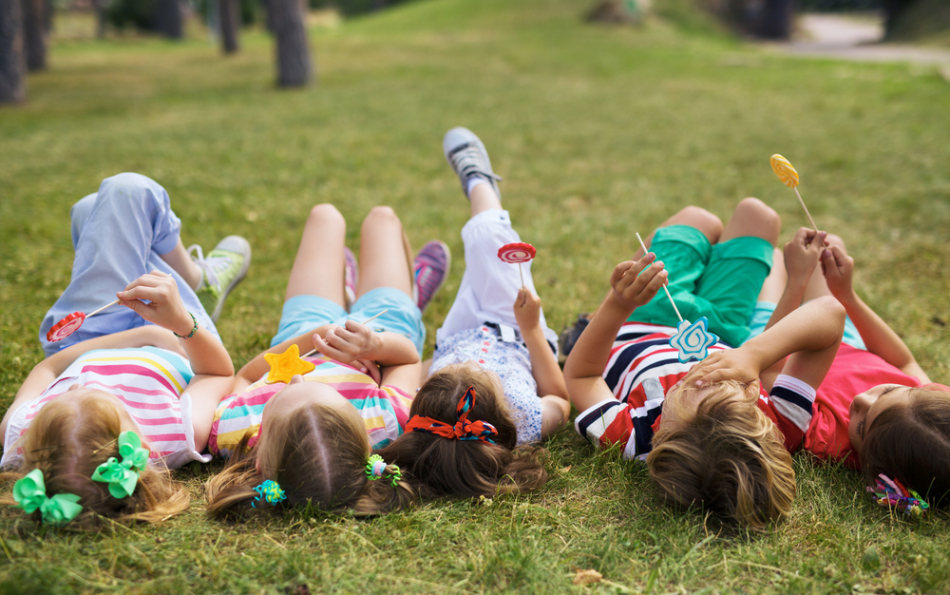
We arrive at the playground after school, and within ten minutes, my four-year-old is tearing around in circles, eyes bulging, simultaneously chewing a jelly sweet and a biscuit while clutching a lollipop in his hand. Then someone gives him some jelly sweets coated in sugar. Then chewing gum. Then a wafer with chocolate, or without chocolate.
And all of this happens so fast that sometimes I don't even manage to work out whose parent has just treated my child.
I stand in the middle of the square with a banana nobody wants in my backpack and realise that the choice, essentially, is small: either don't go out at all, or resign myself to it.
Because it's impossible to explain to a small child why all his friends are eating sweets while he has to think about a balanced diet.
At some point, I caught myself thinking: it seems that to feed children properly in Spain, you simply have to stop leaving the house.
Any ordinary walk very quickly turns into a sugar bacchanalia.
Let me say straight away that I can't judge all Spanish families. This is purely my experience of living in Valencia as a mother of two children, four and eleven years old. We diligently integrate, spend a lot of time in parks, at school events, city festivals, and children's spaces.
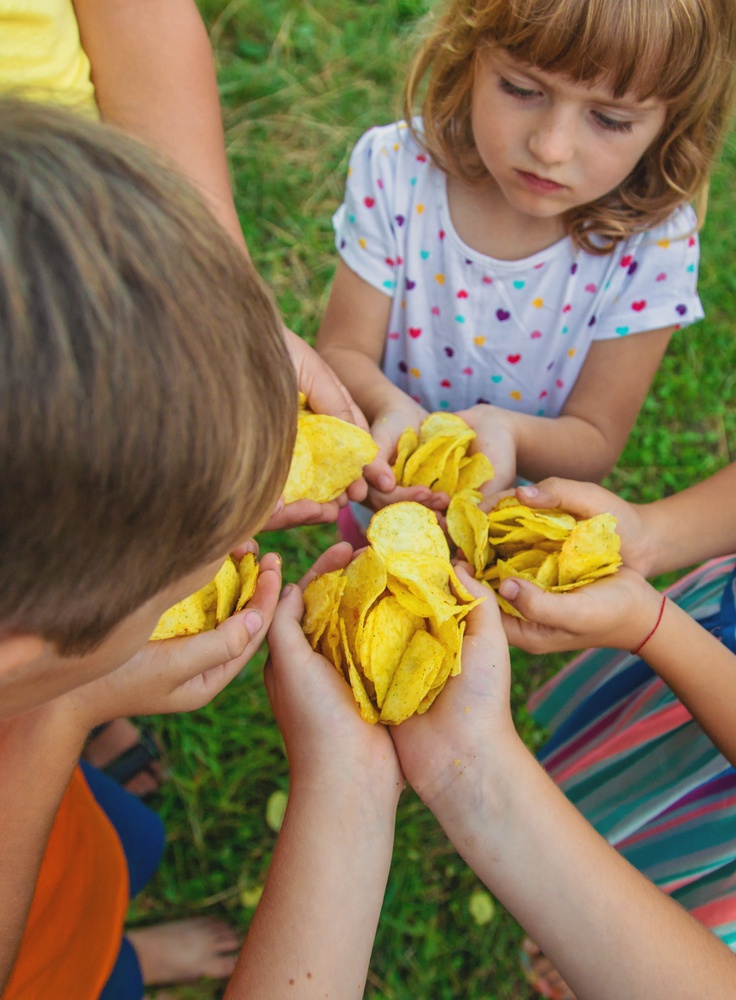
The picture at our playground usually looks like this: the parents are spread out around the perimeter, most with a bag of snacks. The children run from one adult to another and gradually collect the assortment of a small supermarket — or rather, those very shelves of crisps and treats that I always try to walk past.
This isn't about treating a child once a week. It looks like the norm.
And this is where my inner contradiction begins. If you look at what Spanish families eat at home, the picture is quite different. Lentils, beans, fish, vegetable stews, salads, olive oil, seasonal produce — that very Mediterranean diet that paediatricians recommend. In many families, children eat far more fish, vegetables, and legumes than their peers in other countries. Perhaps this is precisely why the Spanish take a more relaxed view of sweets, since they are seen not as the basis of the diet but as a way to delight a child.
The healthiest after-school snack option I occasionally see is a jamón sandwich.
Every time I come across a child with an apple or a mandarin in a container, I want to go up to their mum and exchange phone numbers — as though we're members of a closed club of responsible parents.
Although more often, even a lovingly sliced apple goes back into mum's bag half-eaten, because a friend offers a treat. Food in Spain is a way of socialising: adults connect over paella, and children gobble down biscuits together. One opens a bag of jelly sweets, and within two minutes, everyone around is eating them. From a nutritionist's point of view, this may look questionable, but from a child's point of view,w it's simply a way of being part of the group.
A friend of mine has a son with an allergy. She honestly tried to forbid him from eating the sweets the other children offered. They lasted two days. For two days, the child stood on the playground and cried because everyone around was eating,g and he wasn't allowed. In the end, nd she gave up, and now she too comes with her wholegrain biscuits for the whole of our courtyard, to at least somehow make up for the acid-coloured sweets.
I've never been a mother who feeds her children exclusively superfoods. My children have ice cream in summer, cakes on holidays, and treats for no reason. But over several years of living in Valencia, I suddenly realised that sweets and ultra-processed food here are a fully fledged part of children's social life.
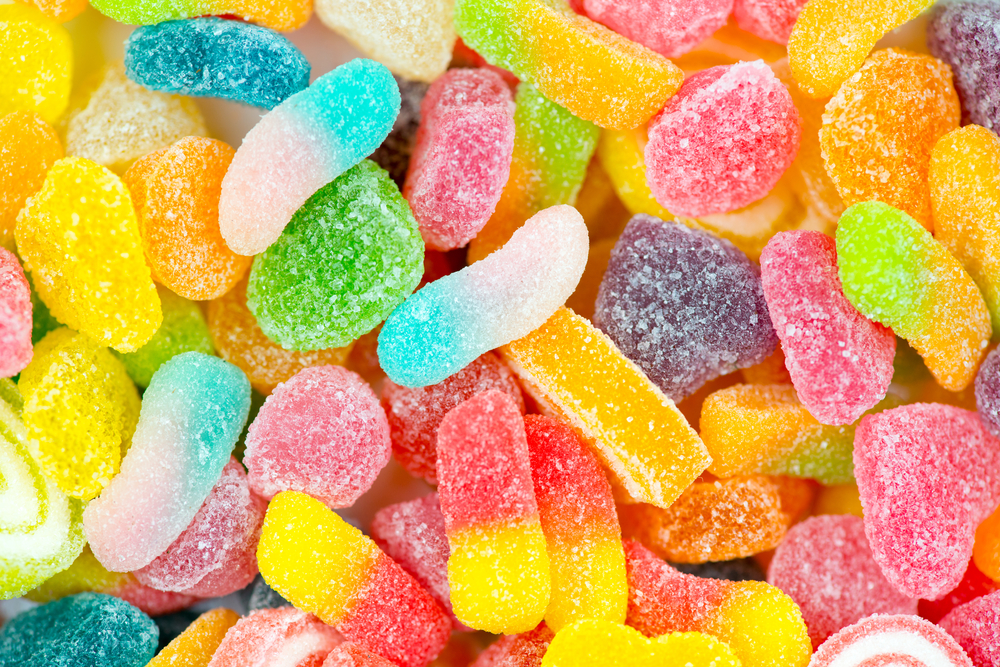
It all begins at school. Any event — a birthday or a calendar holiday — automatically means mountains of sweets. Usually, it's biscuits made with palm oil, jelly sweets coated in sugar, acid-coloured gummies, and cupcakes with no expiry date.
Many Russian-speaking parents clearly worry about this. In the culture in which many of us grew up, it's taken for granted that a responsible mother should know by heart the list of the most harmful E-numbers. We study the ingredients of products, make sure our children don't eat with dirty hands, and generally approach matters of nutrition with far more anxiety. Spanish parents usually take a broader view of the situation: if a child eats well on the whole at home, moves about a lot, and grows up in a calm atmosphere, an extra sweet at a party, taken with a not entirely clean hand, doesn't seem like a catastrophe to them.
Although, to be fair, things have become noticeably better in school canteens in recent months. Spain recently adopted a new school catering regulation, and now children must be offered fruit and vegetables every day, fish at least once a week, and legume and vegetable dishes several times a week. Processed meat, such as sausages and cold cuts,s has been limited to twice a month; industrial pizza and other ultra-processed food can now be served a maximum of once a month, and sugary drinks are gradually being removed altogether, replaced with water.
In our school menu, the changes happened in a flash: there are fewer endless croquettes, sausages, and cutlets the colour of overcooked beetroot. Lentils, fish, proper vegetable side dishes, and fruit appear more often.
But step outside the school, and the sugar is right there again.
A particular pain point is the children's menu in restaurants, if we're talking about ordinary establishments, without Michelin stars or a booking made a week in advance.
You come to a beautiful place where adults are served fresh fish, salads, grilled vegetables, you open the children's menu — and there it is: chips, nuggets, a low-grade burger, and at best pasta with tinned tomato sauce.
That's it.
It's simpler and cheaper that way, and parents seem to be left with no choice but to accept that it's children, specifically, who are offered all the most dubious things a cook can make.
Recently, we went as a whole family to the Port Aventura amusement park and decided to have lunch at one of the popular family establishments. For the adults — normal food; for the children — an eleven-euro menu consisting of chips and a burger you could seemingly hammer nails in with. Even the children wouldn't eat it. One of those rare cases when you want to write an angry review — and perhaps I still will.
And the most upsetting thing isn't even that it's unhealthy. It's that it's simply completely tasteless.
At the same time, it's often impossible to choose something for a child from the adult menu: either the sauces and spices are too complex, or the combinations are strange. You can't just order a plain cutlet with rice. Or chicken without sauce.
And yet the adults themselves have learned to look after themselves: many Spaniards exercise regularly, organic food shops are on every corner, and bakeries offer pastries made with proper sourdough. So why are children treated so unfairly?
I've asked myself this question more than once.
But the longer you live in Spain, the harder it becomes to view this solely through the lens of healthy eating.
Between a parent who calmly allows their child an extra lollipop and an anxious mother who furrows her brow studying the ingredients of a biscuit, I find it increasingly hard to take the side of the latter.
The Spanish built an astonishing amount around the family. Children are constantly hugged, admired, indulged, joked with, and danced with; grandparents come to collect them. And sweets are given not because "anything to stop the whining," but out of a sincere desire to bring joy.
Many foreigners, having lived here for several years, gradually begin to take a more relaxed view of such things. The Spanish philosophy of parenting is generally arranged a little differently. Here, far more attention is paid to the child being happy than to everything always being perfectly correct.
Although I'd still like to see more apples and mandarins on playgrounds instead of endless jelly sweets. And I still get downright angry when I see yet another "children's menu."
The banana in my backpack, though, still travels along on every walk. As a symbol of parental optimism.
Related Articles
Emigrating with Kids: A Child Psychologist on Choosing Schools And Helping Teens Adapt
How do you pick a school after moving abroad? Do children really adapt so easily? La Cotorra asked child psychologist Svetlana Pron about everything from "I'm not going!" tantrums to bullying and withdrawn teenagers
Why Is Spain So Corrupt? A Brief History and Eight Reasons the Problem Won't Go Away
With parliamentary elections approaching, corruption has become Spain's hottest political weapon. But the phenomenon is neither new nor simple — it stretches back centuries and involves structural, cultural, and psychological factors that no government has yet managed to fix.
The Best Schools in Valencia: State, Semi-Private, Private, and International — Ranked and Compared
From top-scoring state schools and Catholic semi-private institutions to IB programmes, British curricula, and the French Lycée — a data-driven guide to Valencia's best schools based on PAU results, Forbes and El Mundo rankings, and parent reviews
Win a €180,000 House in Málaga for Just €10: Architecture Studio Launches Unique Real Estate Raffle
Arkipromo is raffling off two brand-new three-bedroom homes in Cuevas del Becerro, complete with €20,000 furniture vouchers for the winners
Loading…
Loading…