







Support La Cotorra on Patreon
Access exclusive content, special perks, and closer connection with us.
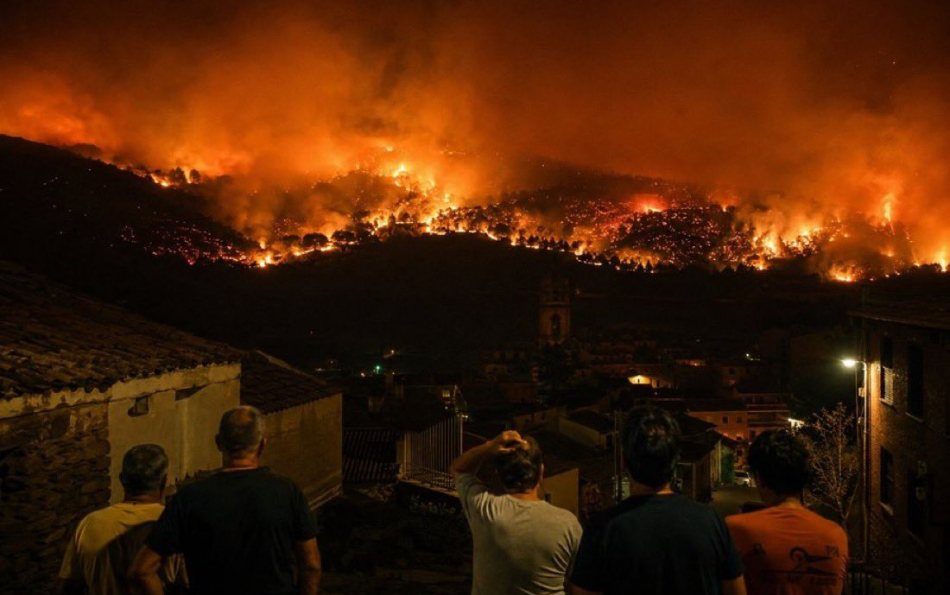
The Spanish government declared a national state of emergency overnight into Friday in the Community of Madrid and the province of Ávila. The move came after Isabel Díaz Ayuso, President of the Community of Madrid, publicly requested central intervention to combat "out-of-control" wildfires.
Operational command has transferred from regional authorities to the central government, with ground operations coordinated by the Military Emergency Unit (UME). By the morning of July 24, the fires had forced the evacuation of more than 11,500 people—over 10,000 in the Community of Madrid and approximately 1,500 in Ávila.
The first fire ignited on Wednesday in Almorox (Toledo province), crossing into the Community of Madrid and burning roughly 890 hectares. The blaze forced the evacuation of the town of El Encinar del Alberche (around 700 residents). On Thursday, two additional, independent fires broke out.
One broke out in Villa del Prado, spreading toward Aldea del Fresno and forcing the evacuation of roughly 3,500 residents and three nursing homes. Another erupted in the municipality of San Martín de Valdeiglesias—triggered by a vehicle catching fire along the shoulder of the M-501 highway—where wind and extreme heat carried the flames toward the San Juan Reservoir within hours. Residents of Pelayos de la Presa were instructed to gather in the town center for safety.
Prime Minister Pedro Sánchez chaired a meeting of the State Emergency Coordination Committee on the morning of July 24. According to Madrid’s 112 emergency services, all three blazes in the region remain uncontained and out of control, despite "effective" firefighting operations overnight.
Meteorologists warned that strong winds will complicate suppression efforts through Friday and into the weekend. Six roads have been closed in the Community of Madrid, while Spain's Directorate-General for Traffic (DGT) reported that 24 secondary roads across the country are closed due to active wildfires. The region suspended five intercity bus routes and mobilized transport fleets for resident evacuations.
The wildfire in the municipality of Burgohondo (Ávila province), which began Wednesday, proved to be the most rapid. Advancing at a rate of roughly three kilometers every 40 minutes, it forced the evacuation of about 1,500 people and swept into the Valle de Iruelas Nature Reserve, home to one of Spain's primary black vulture colonies. By Friday morning, the Mayor of Burgohondo reported that the fire had weakened significantly overnight, expressing hope that evacuated residents could soon return.
These blazes represent the most critical wildfire situation in the country alongside the La Mierla fire in Guadalajara, which has scorched 32,000 hectares and remains active.
Concurrently, two major wildfires continue to rage in southwestern France—one near Bordeaux and another in the Var department. According to AFP estimates, 2026 has become the second-worst year on record for total burnt land area across the European Union.
“We are facing a dramatic situation not only across various Spanish provinces, but also in neighboring countries,” Prime Minister Pedro Sánchez wrote. “Wildfires are destroying thousands of hectares and threatening numerous communities. I want to express my deepest solidarity with everyone who is watching the flames burn their forests and threaten their homes.”
Related Articles
Valencia Parliament Approves 2026 Budget Enshrining "National Priority" Aid Clause
A deal between the PP and far-right Vox prioritises Spanish citizens for public assistance, slashes union funding, and lengthens social benefit residency requirements
Loading…
Loading…