


Support La Cotorra on Patreon
Access exclusive content, special perks, and closer connection with us.
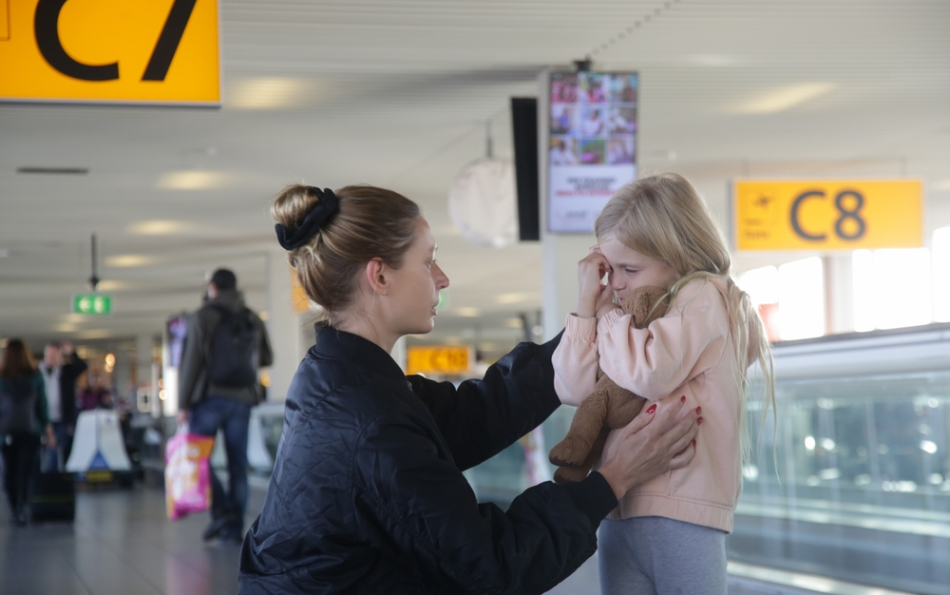
Emigration is no easy matter (as you well know), and emigrating with children is another thing entirely. One of the first pressing questions that arises in the very first days after relocating with a family is education. How do you choose a school and a nursery? And what about the language? Children adapt very easily. Or do they? What should you pay attention to when choosing a school? We put all these questions to Svetlana Pron, a child psychologist and educator.
Let's work through all the green and red flags one by one.
— The choice of school should be inseparably linked to the child's previous education history, namely:
For some, logistics matter most — having the school five minutes' walk from home; for others, prestige and an individual approach are important — small classes, attention to each child. For some, none of this matters at all — as long as the child is going somewhere. So to begin with, you need to define your priorities clearly.
At the same time, it's important to remember: the child has found themselves in a completely new environment, and the more of the familiar you can preserve, the more easily the adaptation will go. For example, if before the move they went to music school or played football, it's worth continuing those activities in the new country.
It all depends on your means and needs.
— Private schools, as a rule, are about a more individual approach: there are fewer children per class, which means each child receives more attention. The curriculum may be structured differently from that in public schools, depending on the institution.
You can't say categorically that one option is better or worse than the other — there are both excellent public schools and poor private ones, so here I would rely solely on your means and needs.
If parents can afford a private school and it matters to them that their child, while living in Spain, studies in English, learns several languages, or follows a specific teaching method — why not? But if there is no such possibility, or it's difficult, I see nothing wrong with a state school, as long as the child is comfortable within the institution. There's no need to demonise or idealise either type of school — in both, teenagers face similar problems, and in both, they will study similar subjects. They might encounter bullying at a private school, or they might get into Harvard after attending the ordinary school in your courtyard.
To begin with, Google Maps lets you find institutions in the areas you're interested in and check genuine reviews. You can also search for groups by the name of the school or nursery on social media — they often exist on Facebook — and get to know the internal community a little better. If location is less important to you but status matters, study the international ranking lists for Valencia (this works in any city).
 "Children adapt easily, unlike adults" — true or myth?
— It varies. To a large extent,, it depends on the child themselves, their age, and their personal characteristics: temperament, character, introversion or extroversion, their ability to get close to people, their sensitivit,y andtheir tendency to take offenceMany factors affectct adaptation, and we can't say that at a certain age adaptation is easy, and from the age of 14 everything suddenly becomes difficult — it doesn't work like that.
But we can single out preschoolers — for them, things usually go a little more easily, because at this age, the main thing for a child is having their parents nearby. So if the parents are in a stable state, not too stressed, and able to be a solid support for the child, the adaptation will go more smoothly.
A classic situation that parents face both in emigration and at home: "I'm not going to nursery/school!" Tantrums, tears, persuasion, and feet planted firmly on the floor. What should you do in such a situation, and how can you resolve it as gently as possible — for both yourself and the child?
— If we're talking about preschoolers, this is an absolutely standard situation. There is always an adaptation period: the child can be brought in not for a whole day straight away but gradually — for an hour, then for two, and so on. If parents have the option, it's better not to leave the child for a whole day in a new environment right away — that's a serious source of stress for the child and the parent.
The second point is conversation. Parents often mistakenly believe that children at this age understand nothing and that talking to them is pointless, but that's not quite true. Of course, if you try to lay out all their emotions for a three-year-old neatly, that's unlikely to produce the desired result.
But here's what will:
This is very important because children often feel they've ended up in a new environment and now have to cope with everything themselves — understand it all, figure it out, and ideally not get in anyone's way. Because of this, we often encounter situations where a child is being hurt, something is going wrong, there's discomfort — but the parent doesn't know about it, because no one tells them. Remember: the feeling that "Mum will hear and Mum will come and rescue me" is not a default setting — it needs to be said out loud. The child doesn't know it a priori, even if it seems obvious to you. And this applies to all ages — don't be afraid to repeat it too often: here it's dangerous to under-do it, but you can't over-do it.
This method, as Svetlana explains, is also well-suited to preschoolers and helps children imagine how meeting other children in a new environment will go.
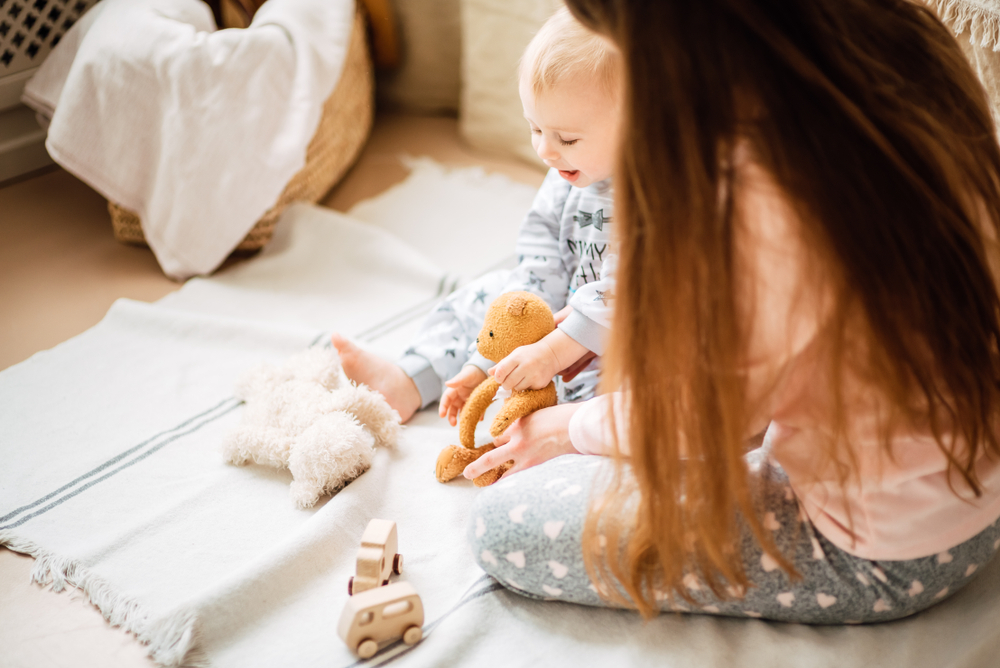
For example, you can use a role-play scenario: take two toys — a mouse and a hare — and suggest the child get to know them, tell them about themselves, and ask them questions. Children at this age play such games anyway, and this mechanism settles well into the subconscious: this is allowed, this is how it works.
— If the child is a little older, already of primary school age, such games aren't really suitable. Here, dialogue once again takes the leading role, and we return to the previous approach — talk everything through. At the same time, you need to be ready for the fact that, at this age, children may have a million questions: Where is the school? What does the classroom look like? How many children are in it? What lessons are there? What's the teacher's name?
Parents aren't always ready to give those million answers: you might be tired, or you might not know. But it's important to understand that this is the child's way of coping with anxiety and regaining control over their life — feeling solid ground beneath their feet and a sense of predictability. In the stress of a move, this is especially important.
In this way, you help the child feel more secure.
When it comes to puberty, a frequent thing psychologists hear from parents is roughly this: "I don't recognise my child." Mothers whisper about it in kitchens, doctors hear it in their offices, and it's this very phrase that parents carelessly throw in the faces of their offspring. But what do you do if emigration coincides exactly with adolescence, when stress levels are already going through the roof, and the child's most frequent phrases become "OK," "fine," "leave me alone," and "you don't understand"? How are you supposed to recognise a problem in the new environment if, as a parent, they're not exactly eager to talk to you?
— Even the most empathetic and engaged parents can't always tell that something is wrong with their child, because so much tends to be written off as puberty — hormones playing up, so that's why they are behaving this way.
Teenagers aged 13–16 are the most vulnerable group. For them, adapting to new living conditions is difficult even without emigration, and in a new place where everyone speaks a different language, the process becomes many times harder. So it's important to understand that your child hasn't simply moved with you like a suitcase — right now, they are experiencing a loss of self-identity.
In their old place, they already have an established routine; they have their own "pack" — friends who, at this age, become, to some extent, more important and authoritative than parents. They understand the mechanisms of recognition, acceptance, and being understood. And in an instant, they're deprived of all this — that's not easy.
There are several important rules thatseveralf specialists pointed out to us:
1. Talk before the move
Talk to your teenager as you would to an adult — explain why and where you're moving, tell them more about the new place, allow them to make some decisions and take part in the process.
Here you can look at flats together, give the teenager the right to veto and choose, discuss with them what their room will look like and how they picture their new place to live, what housing criteria matter to them, and so on.
2. Don't dismiss the teenager's feelings
If this phrase already makes you wince, don't roll your eyes just yet — we'll explain clearly what's meant here.
— It's important to acknowledge the child's emotions and feelings — whether joy, sadness, tears, a tantrum, even if they're being rude and calling you names and shouting that they never asked to be born and don't need any of this. Give those feelings a chance to come out: things are very hard for them right now, probably much harder than for you, because you are an adult who has at least some control over the situation and makes your own decisions, while they are presented with the fact that their life is going to change by 180 degrees.
If you see that the dialogue isn't working, the person is hysterical and in denial and doesn't want to talk to you, put the conversation on pause and come back to it later.
3. Provide a sense of a fallback
This isn't always possible, but if it is, you can, for example, explain to the child that they can still come home to see their grandparents and friends. It's important to explain that moving does not equal cutting off all ties. They'll have the internet, a phone, and a computer; they'll be able to call and even see their loved ones online at any time.
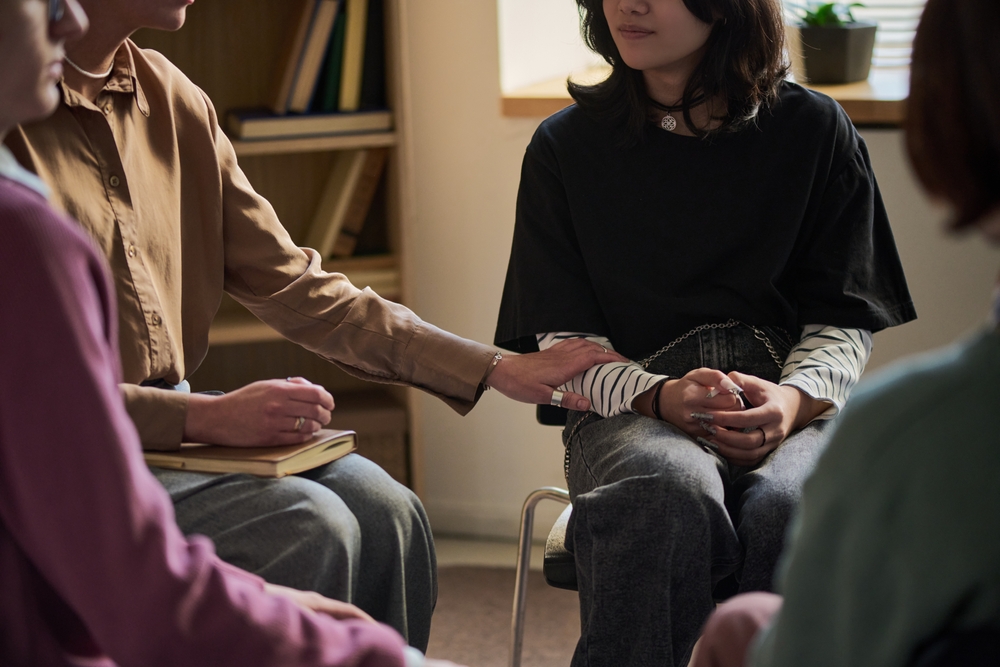
Another frequent request to specialists, and a cause for parental anxiety, is a child's withdrawal, which can intensify at the moment of emigration. A new school, a new city, a new life — and they're not interested in anything, no new friends have appeared, the teenager is glued to a screen and tries not to leave their room. Is there any point in doing anything at all, then?
Don't force your children to socialise if they don't want to.
— I often see situations where parents take the initiative into their own hands and start insisting on and imposing friends and socialising on their children: "Look, I've found you a boy from the next building, he's your age, you'll have a good and interesting time together." More often than not, a teenager will react to this with hostility, as though they're being treated like a small child, taken by the hand, deprived of their will, and "married off."
If you're completely sure that your child makes contact easily and will only be glad of a new acquaintance, you can try. If you're given to understand the first time that the idea hasn't been met with enthusiasm, don't insist.
If the teenager has any hobbies — whether playing the guitar, embroidery, singing, or going to the gym — try to support them in the new place so they don't lose themselves. This helps preserve part of their self-identity and avoid feeling that their lives have been destroyed. Old rituals give a sense of more or less solid ground underfoot: the old you didn't get left behind at the border checkpoint — you're here, the scenery has changed.
All of this, as the specialist explains, constitutes red flags. If a teenager tells you that there are elements of bullying at school, that they're being picked on, mocked, or subjected to psychological abuse — don't brush it off.
— Immigrant children are a vulnerable category in the school environment. On the one hand, there's the language barrier, which complicates communication and understanding; on the other, that same barrier creates an opportunity to exploit a person's weakness. If the school administration doesn't stop this, parents need to hear their child in time and intervene. If your teenager tells you about such situations, take it seriously. Observe how the situation changes over time — is it a one-off or systematic, deliberate harm?
Right, we've worked out how to recognise problems in a new school and what can cause them. So the child has come to us, they've told us about their troubles — we didn't brush them off, we listened. But what next? Rush to the school and sort it out? And with whom? And if they ask you to do nothing, then what?
— The first and most important rule is always to take your child's side. Then the question arises: Does your child need active protection?
"Please don't, don't go there, you'll only make it worse" — this is not a rare reaction from a teenager to the "lion-like" behaviour of a parent itching to do battle with the offender.
— And in this situation, we again return to dialogue. If your child has already come to you and told you about a situation that's worrying them, but is categorically against you sorting it out, I would suggest observing how it develops. Perhaps it's not an acute conflict but a misunderstanding they'll handle themselves. But there's an important caveat — how exactly they'll handle it. And it's important to talk this through: what's happening, what solutions they see, what they plan to do. You can suggest something to them, discuss it, or take them to a consultation with a psychologist.
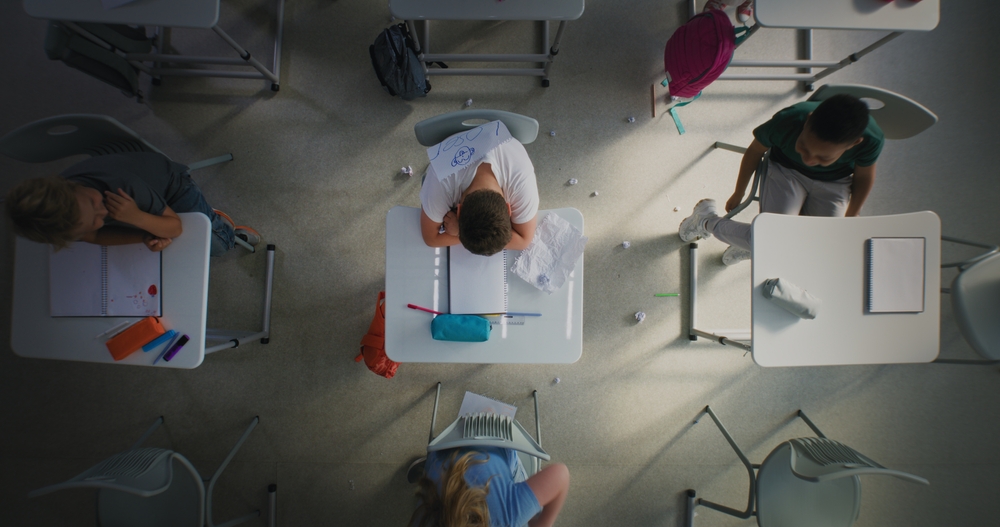
The child may have a perfectly understandable fear of being called a snitch if Mum comes to the school, and this could ultimately become an additional pretext for bullying rather than protection. So if you see that they're capable of handling the situation themselves, allow the teenager to do so — give them a set of acceptable tools (hitting first is not one
But if you realise that the situation has gone too far — your child comes home with bruises, they're in a depressed emotional state, they're being bullied — then we're already talking about protecting their life and health. In that case, you need to engage in dialogue — first with the teacher, the administration, and the offender's parents. If nothing helps, don't forget that changing schools is also an option.
This too, unfortunately, happens: in some children, the "fight-flight-freeze" defence mechanism opts precisely for "fight," and the child, in order not to become a victim of bullying, becomes the aggressor.
What do you do then? Protect them? Tell them off?
— Explain. Explain that this is violence and that it leads to serious consequences. Today you might push a classmate, and tomorrow he might fall down the stairs from it and break his neck, and then — police, courts, criminal charges, and all the rest. Explain with real examples what it can lead to. All violence begins with something small, but its intensity will keep escalating, and no one is immune to it. That's why it's important to talk to a teenager as you would to an adult.
It's also necessary to teach children and teenagers empathy: put them in the victim's place, give real examples of their actions, and invite them to feel the emotions that come from such behaviour. Remember that what seems obvious to you isn't always obvious to others.
Related Articles
Why Feeding Kids in Spain Means Surrendering to Sugar — A Russian Mum's View from Valencia
At the playground, treats fly between families faster than you can track them, and restaurant kids' menus rarely stretch beyond chips and nuggets. But after years in Valencia, one mother is rethinking what really matters.
The Best Schools in Valencia: State, Semi-Private, Private, and International — Ranked and Compared
From top-scoring state schools and Catholic semi-private institutions to IB programmes, British curricula, and the French Lycée — a data-driven guide to Valencia's best schools based on PAU results, Forbes and El Mundo rankings, and parent reviews
Beyond Paella: Discovering All i Pebre, Valencia’s Best-Kept Culinary Secret
Deep in the heart of the Albufera wetlands, the fishing village of El Palmar preserves a traditional, rich garlic and wild eel stew that tourist traps completely miss
Loading…
Loading…