









Support La Cotorra on Patreon
Access exclusive content, special perks, and closer connection with us.
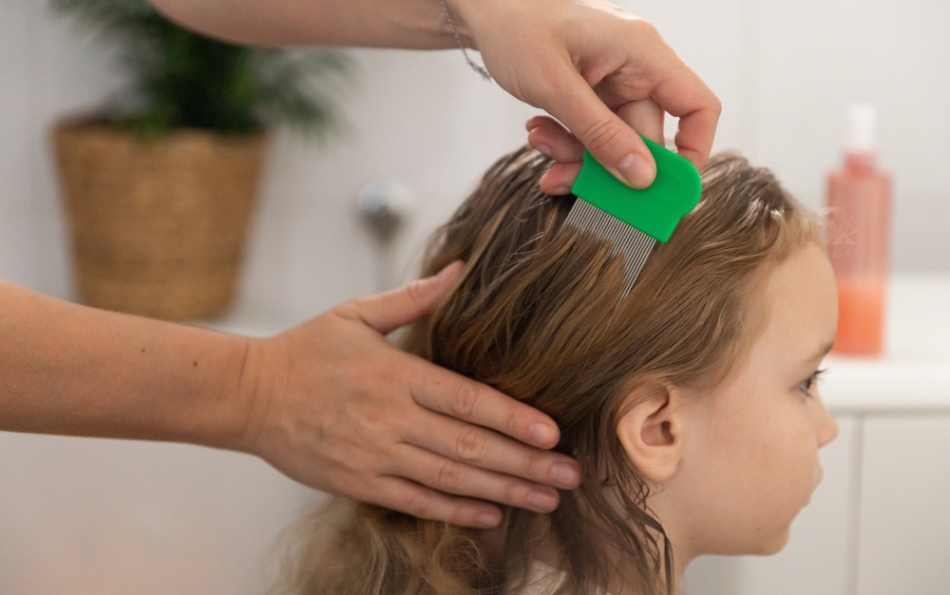
“Dear parents, some children in the class have been found to have head lice.” This polite yet unwelcome message is received by almost every parent of a schoolchild in Valencia. Ethical norms do not allow teachers to address individual families directly. However, even if you are convinced that this surely does not concern your child, it is worth checking.
A 2023 study by the Instituto de Salud Carlos III, involving 227 children aged six to seven from seven schools in Valencia, showed that 30.4 per cent of schoolchildren in the city encounter head lice at least once a year. The subject is head lice (Pediculus humanus capitis), which, according to current research, are not dangerous. DNA of harmful bacteria is occasionally found on head lice, but actual transmission to humans has not yet been documented. Unlike body lice, head lice do not transmit typhus, trench fever, or other serious diseases.
Nevertheless, they cause itching, scalp scratching, allergic reactions, eczema, and psychological discomfort in interactions with peers. Below, we review the main methods of dealing with head lice in Spain, accessible to everyone.
Permethrin (Permetrina in Spanish) at a concentration of 1–1.5 per cent is an effective and affordable remedy which kills both lice and nits. Its action is chemical: permethrin is a pyrethroid insecticide with a neurotoxic effect. Products containing permethrin are sold over the counter in pharmacies and para-pharmacies.
For best results, choose a product applied to dry hair, leaving it on for the time indicated on the packaging — usually 10–15 minutes. It is important not to use a hairdryer, as heat reduces the effectiveness of permethrin. After treatment, thorough combing with a special nit comb is required; it is usually included in the kit. Prices range from 6–7 euros to around 20 euros.
Products containing dimeticone (Dimeticona) act in a gentler, mechanical way. Dimeticone is a silicone oil that coats lice and nits with a dense film, blocking their breathing openings. Concentrations are typically around 4 per cent, and products come as lotions or sprays. They are applied to dry hair and are suitable for children from the age of one, as they contain no neurotoxic substances. Combing is required, and treatment must be repeated after 7–10 days. Prices start from approximately 10 euros. Sold without prescription.
As in many countries, Spain has its share of “grandmother’s remedies” for pediculosis. These include traditional vinegar (apple or wine), which helps weaken the adhesive bond holding nits to the hair, used together with combing. Other examples are eucalyptus decoctions with lemon juice and rosemary; lavender, eucalyptus, or tea tree oils; even mayonnaise and olive oil, based on the assumption that the oily texture works similarly to silicone.
However, even a brief overview of scientific literature indicates that tea tree oil and other folk remedies lack sufficient evidence of effectiveness.
Special nit combs (lendreras) — metal, with very closely spaced teeth — are an essential complement to any treatment. Some combs use electrical impulses to kill lice and nits through mild electric discharges.
If the above methods do not work, or if you prefer to go straight to a specialist, you can book an appointment at a dedicated salon. In Spain, the chain Sin Mas Piojitos offers professional treatment.
In addition to chemical products, they use a special device called Zonner, similar to a gentle vacuum cleaner. The entire procedure takes just over an hour, and the cost starts at 70 euros. Diagnosis is free of charge.
La Cotorra adheres to evidence-based medicine and reminds readers: any treatment requires prior consultation with a doctor, and combining multiple anti-lice products is not permitted.
Related Articles
Beyond Paella: Discovering All i Pebre, Valencia’s Best-Kept Culinary Secret
Deep in the heart of the Albufera wetlands, the fishing village of El Palmar preserves a traditional, rich garlic and wild eel stew that tourist traps completely miss
Loading…
Loading…