


Support La Cotorra on Patreon
Access exclusive content, special perks, and closer connection with us.
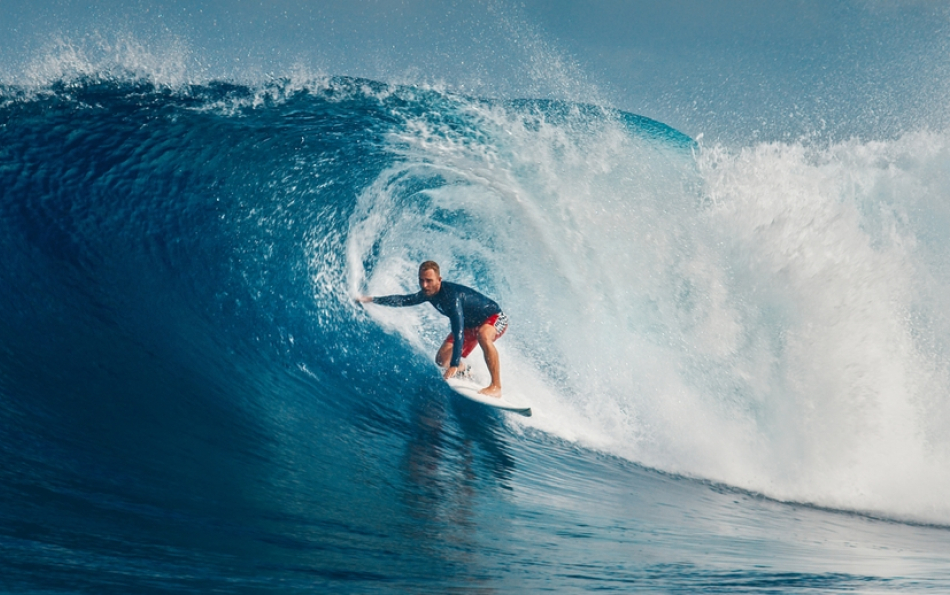
What places come to mind when you hear the word "surfing"? Most likely Bali, with its eternal summer. Or California, where the sport has long been not only a regional calling card but a part of pop culture. Professionals will name Hawaii or Australia as the birthplace of surfing, where it has become part of the national culture and turned into a genuine professional industry.
But what if you don't need to fly to the other end of the world to feel the euphoria of catching your first wave? And you don't even need a ticket to neighbouring Portugal with its famous Nazaré. Surfing in Spain has, over recent decades, transformed from a niche pastime into a significant sector of the national economy. With 7,905 km of coastline, including the islands, Spain has become one of the key destinations for surf tourism in Europe.
This success is due not only to natural factors — such as the stability of North Atlantic swells or the near-year-round season in the Canary Islands — but also to the development of federations, local clubs, a network of surf schools, and tourist infrastructure.
To cover the main surf regions of Spain, we have divided this guide into two large parts: the first covers the Atlantic north, the second the south and the Canary Islands.
The early manifestations of surf culture in Spain in the 1950s were linked to "planking" — riding small plywood boards with turned-up noses, mostly on the shore break, while lying down. The first evidence of classic surfing, where the athlete stands on the board, dates to the early 1960s. Remarkably, the sport arose in different parts of the peninsula almost simultaneously and spontaneously: different groups of enthusiasts were entirely unaware of each other's existence.
In 1963, Asturian Félix Cueto built his first boards, guided by drawings from an American magazine. He first tested them in his own home's swimming pool, then on Salinas beach. Footage of Félix conquering the waves at Salinas is the oldest surviving visual document capturing a Spanish surfer.
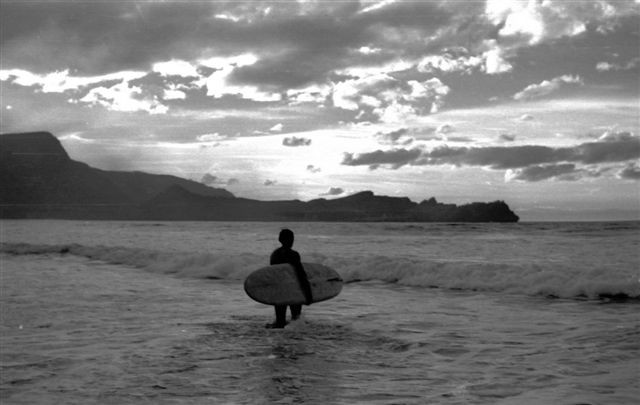
In the Basque Country, the pioneers were Iñaki Arteche from Gipuzkoa and José Luis Elejoste from Bizkaia in 1964.
A landmark date for Cantabria is 23 March 1965. On that day, Jesús Fiochi first took to the waves at El Sardinero beach on his Barland board, which had been brought to him from France in a rather unusual way — in the boot of the Racing de Santander football club's bus.
"That day was a real event. Everyone around was whispering, 'That guy must be crazy. Why would he go into the sea in those waves? He'll be swept away by the current, and there he stands shivering with cold," recalled Jesús Fiochi of his first time in the water.
Women also played a part in the early history of surfing in Spain. Salud "Nena" Gutiérrez (Cádiz), Laura Revuelta (Cantabria), and Mar Eizaguirre (Gipuzkoa) were the first Spanish women whose passion for surfing is confirmed by documentation or eyewitness accounts.
The period of early experimentation was followed by an era of rapid growth: in the 1970s and 1980s, surfing in Spain acquired official status and clear professional contours. The spontaneous solo sessions of individuals grew into a developed network of clubs and a national federation, and coastlines from Cádiz to Galicia filled with the first surf shops and wetsuit workshops. A local pastime rapidly became a fully fledged industry with its own media, transforming yesterday's rebels into professional athletes ready to make their mark on the international stage.
Today, Spain is one of the notable countries in European surfing and regularly features in international discussions: from World Surf League (WSL) international stages to technology projects such as Wavegarden's artificial waves. The current generation of Spanish riders — from elite veteran Aritz Aranburu to big-wave conqueror Nacho González — is not merely involved in these developments but is an integral part of global surf culture.
Alongside this development, a geography of "power spots" took shape: key coastlines gained the status of cult locations and remain to this day the main points of attraction on the country's surf map.[/accordion-item][/accordion]
The coastline from the Basque Country to Galicia is open to powerful Atlantic storms, which ensures a phenomenal consistency of waves: descriptions of the Pantín spot in Galicia, for instance, suggest it offers surfable conditions for 250 to 300 days a year. However, the character of the ocean changes radically depending on the season.
The golden time for surfing here is from September to November. The water still retains the warmth of summer, while autumn storms are already beginning to generate clean, quality swells. This is the best time for intermediate and advanced surfers.
Winter brings the era of a harsh North Atlantic. The ocean whips up enormous bodies of water, activating demanding spots such as the famous left-hander at Mundaka. Winter surfing requires serious experience and a thick wetsuit with boots.
Spring is a transitional period with changeable weather: waves are still frequent but no longer as powerful, while the ocean water cools to its annual minimum. This time is ideal for progressing surfers working on their technique.
Summer, meanwhile, is the perfect season for first steps. The ocean calms, waves become smaller and more predictable — suitable for learning on the gentle beaches of Zarautz or Somo. The only downside is the high tourist season and crowded lineups.
Equipment: in the north you always need a wetsuit
The Basque Country is one of the historical and sporting centres of Spanish surfing. The region is renowned for its powerful Atlantic swells, complex coastline, and a deeply rooted surf culture that has long become part of life in cities such as San Sebastián and Zarautz.
The 2.5-kilometre sandy beach at Zarautz is ideally suited to surfers of all levels: there is a consistent break and well-developed infrastructure. The city is home to the renowned Pukas Surf Eskola, which has been operating since 1982. The surf school stands out not only for the quality of its teaching but also for its close ties with board manufacturers, which allows students to test world-class equipment.
The North Shore Surf Eskola, opened in 2015, focuses on maximum personalisation: their 300-square-metre centre is equipped with everything needed for quality theory sessions and video analysis. This is the place chosen by those who want not just to catch the whitewater but to progress within a unique proprietary teaching methodology where groups are limited to six students per instructor, guaranteeing safety and rapid error correction.
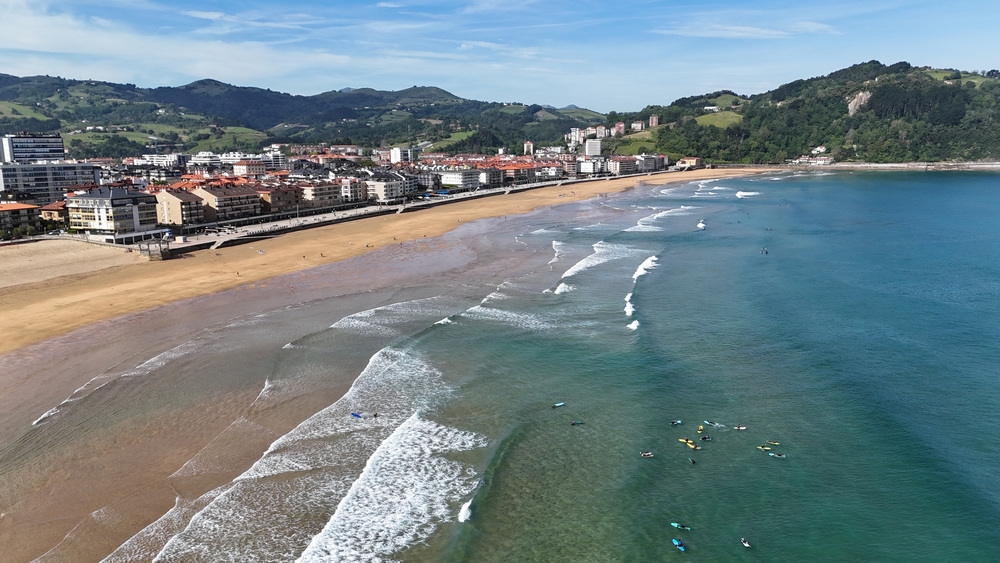
For those seeking a more advanced level of preparation, Zarautz has Moor Surf Eskola — the first school in the city to receive the quality mark for professional sports services of the highest category (three stars). The programme focuses on technical analysis with video review of each manoeuvre and small groups. Another choice for those who want to progress quickly is Shelter Surf Eskola by Aritz Aranburu, Spain's most decorated surfer, who competed on the WSL world tour. His training centre is geared towards serious progress: from basic technique to advanced manoeuvres.
If your goal is to feel the power of the ocean in a more extreme format, it is worth looking at the school of Axi Muniain, a renowned big-wave hunter. His approach to teaching is aimed at overcoming fear and developing endurance in the water.
San Sebastián offers a quite different format of surfing. The Zurriola beach in the Gros district stretches for 800 metres between the mouth of the Urumea river and Mount Ulia. The beach's zones are accessible to different levels: at the Sagüés wall, there is a powerful peak with tubes for experienced surfers; near the Kursaal, a softer right-hander for beginners.
Bera Bera Surf Eskola was established in 1999 and is among the first three schools in the Basque Country to begin offering lessons in classic surfing, bodyboarding, and SUP surfing. Courses are available year-round, including winter programmes.
Zurriola Surf Eskola was the first on the Basque coast to receive the EHSF quality certificate from the Basque Country Surfing Federation. In addition to surfing and bodyboarding, it offers freediving, yoga, and Pilates.
For those who want to live in the rhythm of the beach, there is Surfing Etxea — a surf hostel a hundred metres from Zurriola, with surfing and SUP lessons and yoga on the terrace.
Mundaka is known for its left-handers, which attract surfers from around the world. It forms on a sandbar at the mouth of the Oka River, creating perfect tubes at low and medium tide. The wave can reach 200–300 metres in length, and on particularly good days even 400 metres. Mundaka is not a place for beginners. The strength of the currents, the speed of the wave, and the high level of competition demand expert skills from the surfer and knowledge of line-up etiquette.
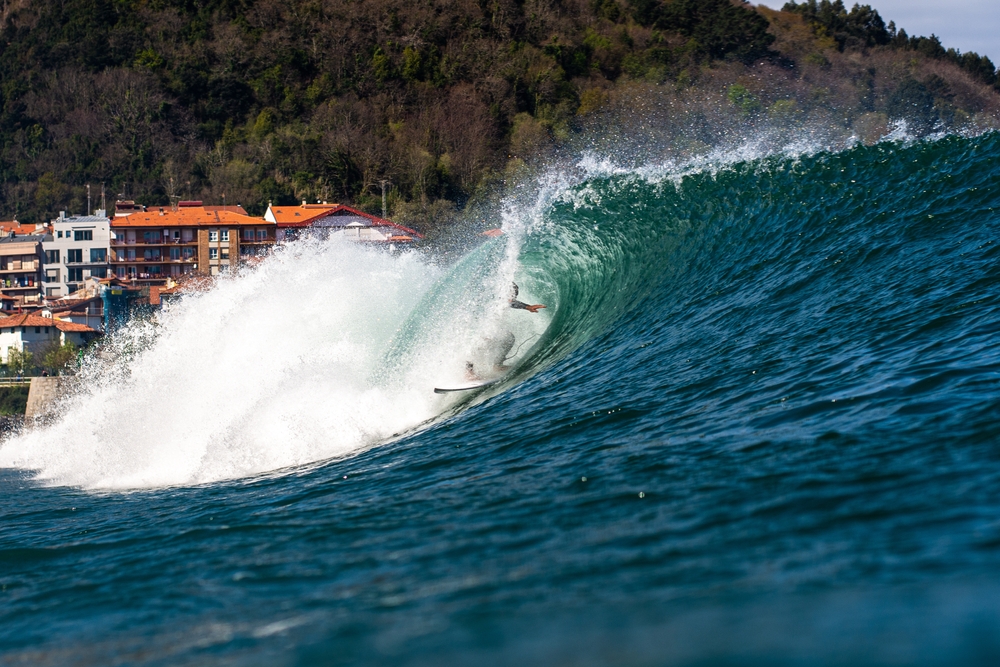
That said, nearby there are calmer spots that suit those just getting acquainted with surfing. Local instructors know the coastline well and choose spots for first sessions to avoid difficult conditions. In addition, their deep immersion in local subculture will make the learning experience more interesting and varied.
The Mundaka Barra Surf school specialises in advanced instruction, preparation for demanding conditions, and understanding the etiquette observed at this spot. Individual coaching from experts such as Mike Dobos is aimed at those who want to master tube-riding technique and adapt to the dynamics of the powerful Basque waves. Mundaka Surf Shop is renowned for its historical heritage and wide selection of professional equipment, while Gudari Caribe places emphasis on physical culture and balance, combining yoga and surfing.
Cantabria is a genuine magnet for surfers. Its coastline receives a significant share of Atlantic storms, meaning there are waves for most of the year. The region's main advantage lies in its diversity: within just a few kilometres, you can move from the endless sandy beaches of Somo with their predictable waves to the powerful break of Santa Marina or Los Locos in Suances.
It was here in the early 1990s that the Escuela Cántabra de Surf was established — the first school in Spain to receive official status. At the same time, the region gained its first surf reserve: in 2012, the local waves were officially designated as natural, sporting, and cultural heritage.
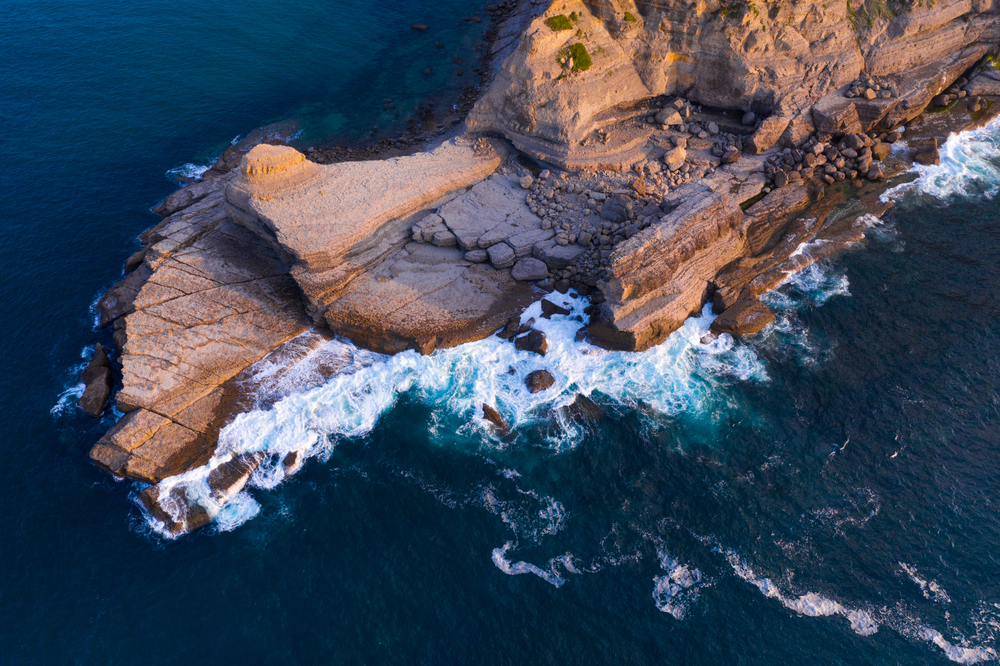
The sandy stretch of Somo and Loredo is considered one of the most accessible places in Cantabria for first steps in surfing: a long shoreline, a wide choice of schools, and waves that often suit beginners and intermediate surfers. This is where the Escuela Cántabra de Surf is based. Over its years of operation, the school has developed a tested methodology combining physical preparation, the study of wave theory, and the history of surfing.
The school offers a variety of formats — from one-off lessons to week-long camps, with groups divided by age and level: children from age six, teenagers, and adults. It is one of the most versatile options for those for whom experience, developed infrastructure, a wide choice of programmes, and clear organisation of learning all matter.
Xpeedin Surf School, by contrast, suits lovers of a more intimate format: groups here are smaller, and teaching is more personalised. The school's roots go back to 1977, when pioneers of Spanish surfing Zalo Campa and Laura Revuelta launched one of the first surf brands and shops in Cantabria. Today, the school is run by a new generation that has preserved the spirit of a small community: here, they teach not only technique but also etiquette, philosophy, and respect for the ocean.
For those who want to combine learning with full immersion in the atmosphere, there is Latas Surf — one of the most established local surf camps, operating for more than 13 years. Four surf houses in Somo and Loredo are located less than 100 metres from the water. The school focuses on small groups, personal breakdowns, and video analysis, and in addition to surfing offers yoga, surf skate, and surf photography — a format for those who come not just for the wave but for full immersion in the culture.
Another example of a modern approach to surfing is provided by Koa Surf School. Small groups and their own Surfness format (a physical preparation and yoga programme developed specifically for surfers' needs) make it one of the most sought-after schools in Somo.
Finally, a few kilometres from Somo lies Suances with Los Locos beach — another consistent spot in Cantabria. Based here is Solar Escuela de Surf, founded in 2007 by Pablo, Deva, and Mirka Solar — a family of multiple Spanish and European champions in surfing and bodyboarding. The school's emphasis is on small groups and learning from champions.
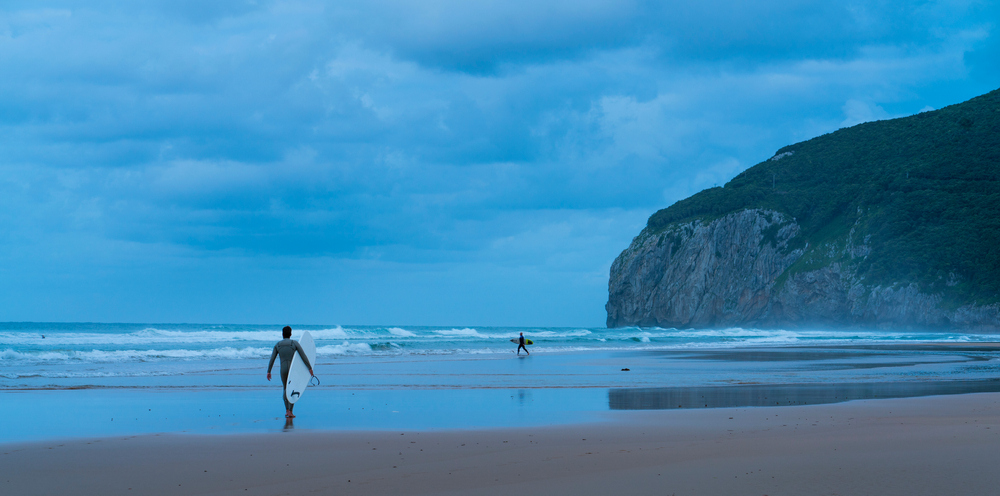
Berria beach in Santoña is a long sandy strip between Monte Brusco and the Bución massif. There is none of the urban bustle of Somo or Loredo here, but there is an open Cantabrian coast, a gentle gradient, and space well suited to educational programmes, surf camps, and immersion in the ocean environment.
Berria's main focus is camp formats, particularly for children and teenagers. Watsay Surf School & Camp offers camps for children aged 10–17, providing a week's accommodation by the beach with surfing lessons, meals, division by age and level, and round-the-clock supervision. For those who already have a grounding and want to advance further, the school offers technique development programmes and surf skate.
A more classic direction in Berria is represented by Berria Surf School. The school was founded in 1998 by the well-known Cantabrian surfer Rubén Abelenda from Santoña and was one of the first surf schools to open right on the beach. Today,y it is a fully equipped surf camp with lessons, accommodation, meals, equipment hire, and additional activities, but the school's approach still carries a connection to local surf culture.
A more contemporary approach is offered by Waves Sound Surf School. This is an option for those looking not just for individual lessons but for multi-day surf trips to the ocean, including instruction, accommodation near the beach, and a more relaxed pace. The main difference between Waves Sound and large surf camps is flexibility and the atmosphere of an intimate surf community.
Asturias is one of the most expressive regions for surfing in Spain: ocean beaches sit alongside green hills, cliffs, and small coastal towns. But its value is not only in the scenery. In recent years, Asturias has increasingly become associated with quality surf instruction: attention to safety, instructor certification, and the ability to read the sea. For this reason, Asturian surfing is interesting both for beginners and for those who want to develop their skills in a considered way — with attention to technique and ocean conditions.
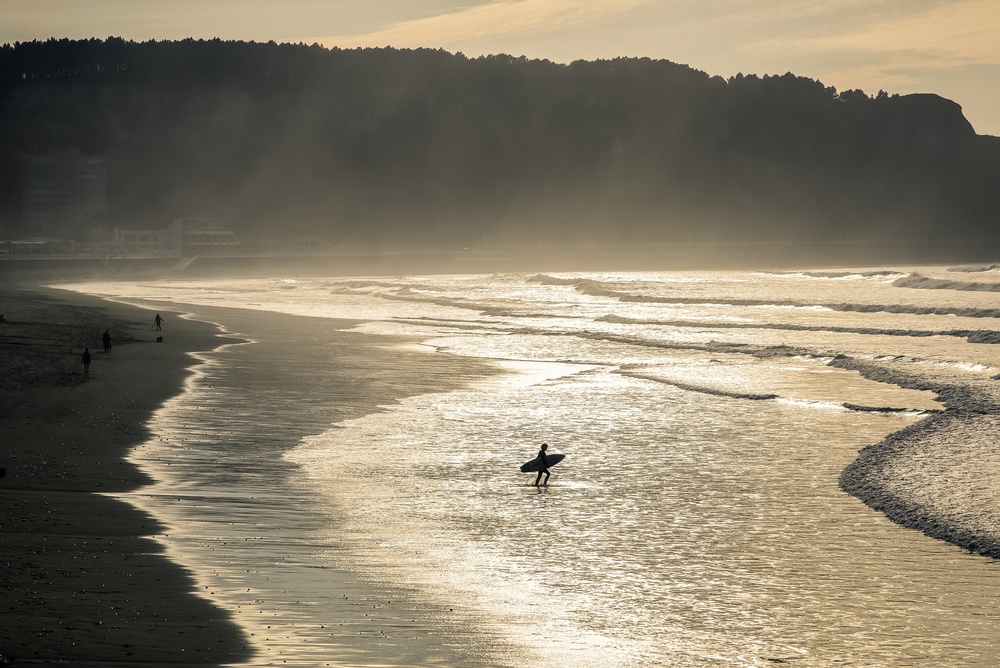
Salinas is one of the main surf locations in Asturias. The beach runs along the town promenade and, together with the neighbouring San Juan, forms an extended sandy stretch where you can ride at both the early stages of learning and at a more confident level. The central place in local culture is occupied by the Festival Internacional Longboard Surf Salinas — one of the most famous longboard festivals in Europe and an important symbol of the town's identity.
Horizon Escuela de Surf & Surf Camp suits those looking for intensive instruction with a sporting slant. The school works with competition-level instructors and offers camp formats for adults and children, small groups, individual supervision, and video analysis. Such a format is ideal for those who want to build their technique over a few days and work in an intensive mode.
A more foundational approach is offered by Escuela Surf Lucas García at the Espartal Salinas Sport Centre. It is led by Lucas García Cabrera, a Spanish and European champion. The school focuses both on technique work and on understanding ocean conditions: wave formation, currents, bottom characteristics, and safe behaviour in the water.
Longbeach Surf School & Surf Camp suits those looking for an "among friends" format: with a small number of students and the opportunity to immerse themselves in the local surf culture. Another important local reference point is Surfcamp Las Dunas. This is the first surf camp in Salinas and one of the oldest in Asturias. It operates year-round and offers programmes for three levels of preparation: beginner, advanced, and competitive. Its director, Paulino Rodríguez, is one of the few in the region who publicly advocates for the development of Asturias as a destination for quality surf tourism.
Salinas wins through its diversity: here you'll find both intensive coaching with champions and technical schools with an emphasis on reading the ocean, as well as more relaxed camp formats.
Ribadesella is a resort town with historic villas and a magnificent Santa Marina beach. This peaceful place is ideally suited for beginners. One of the region's key figures is Guillermo Alonso, a Spanish champion in several categories who has represented the national team at world and European championships. His Santa Marina Surf Camp focuses on a sporting preparation methodology — the emphasis is on technique, body position, and systematic development. All of this makes the spot an ideal base for starting or correcting skills in conditions of predictable surf.
A complete contrast to Ribadesella is provided by the wild Playa de Vega, where Vega Surf Academy teaches students to understand theory well and act independently: lessons take place in an equipped barn with video projections and detailed error analysis. There are a few students here — a deliberate decision by the school that allows it to maintain a community atmosphere and, most importantly, ensure high quality of instruction: it goes beyond simply learning to stand on a board, and encompasses the ability to read the ocean.
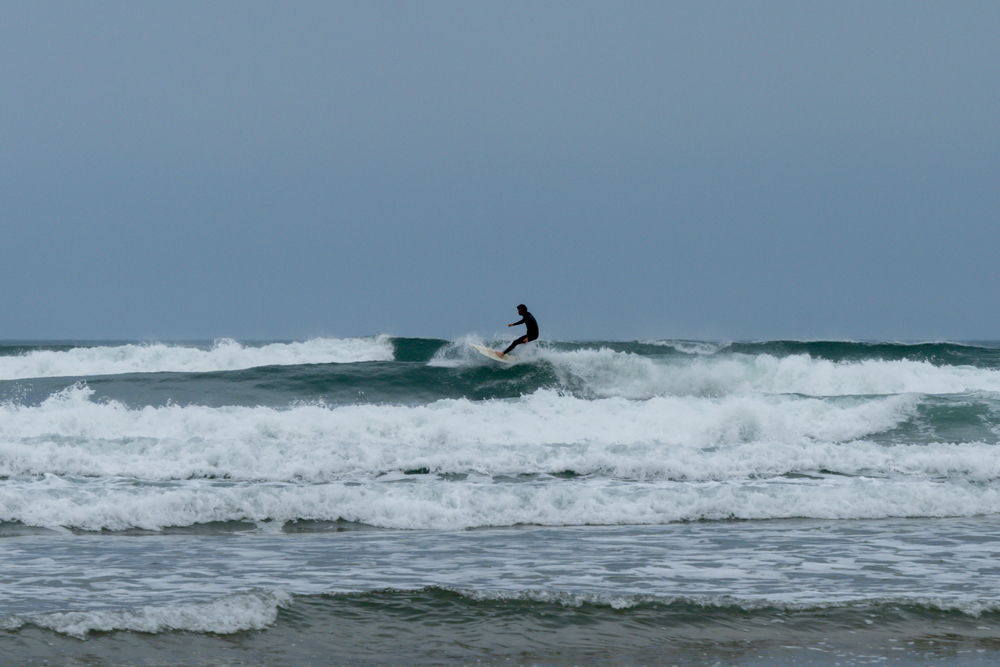
This spot is often compared to Mundaka — because of the famous La Barra left-hander, which forms at the mouth of the Villaviciosa ría (a drowned river valley). The main sporting reference point here is the Special Surf school, which combines a camp format with other directions: lessons for children, adults, and advanced surfers, as well as SUP surfing. The school is run by multiple Spanish and European champion Dani García, who, together with his son Néstor, leads sessions, analyses technique on video, and provides personal recommendations.
Rodiles should be thought of as a spot with character. Although on calm days it is possible to begin learning in certain safe zones, the main value of the place reveals itself fully to those who are already ready to approach one of the most famous left-handers in northern Spain.
Galicia is one of the most rugged and distinctive surf regions in Spain. An open Atlantic, an indented coastline, and numerous beaches make this one of the most consistent surf destinations in continental Europe.
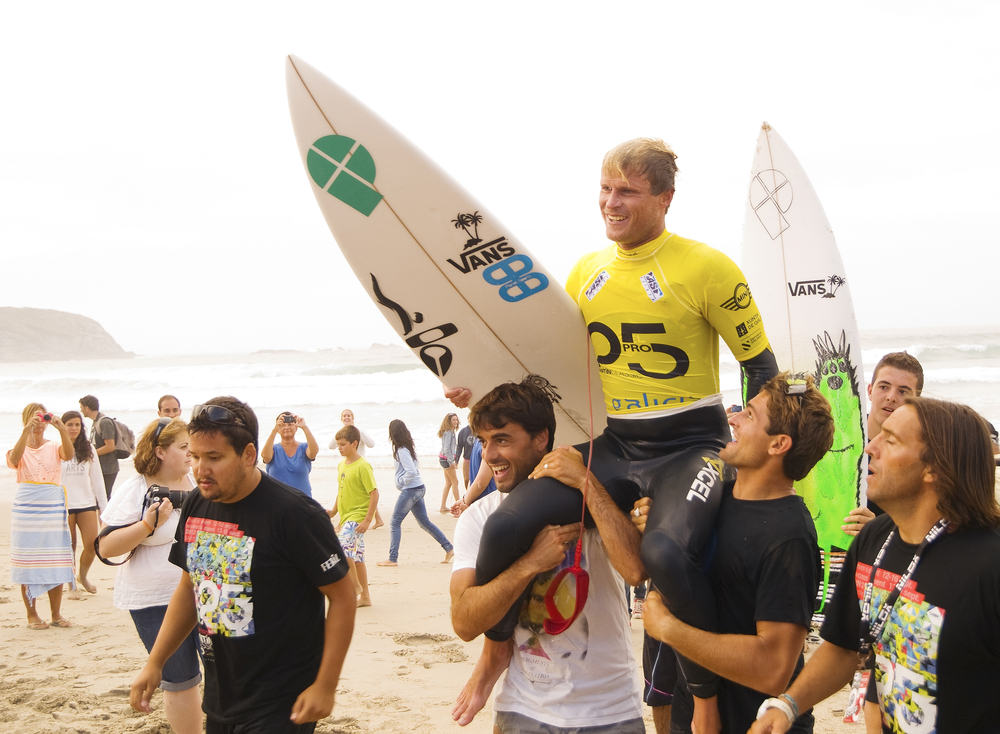
Pantín beach has long been called the "Wave Factory" (La Factoría de Olas) for its rare consistency and ability to receive Atlantic swell in the most varied conditions. The spot is known not only for its waves: since 1988, it has hosted the Pantín Classic Pro, one of the main tournaments in Spanish surfing, which put this small Galician beach on the international map of competitive surfing.
Against this backdrop, an entire educational ecosystem has formed around Pantín, where learning has long been seen as part of the path to serious progress.
The sporting core of the spot consists of schools that work with students with an eye to technique and competition. Alawa Surf Camp, where the experience of two-time European champion Estichú Éstremo has become part of the methodology, focuses on advanced coaching, video analysis, physical preparation, and technique work. Pantín Surf Camp draws on many years of knowledge of the local waters and takes students from the first steps to an advanced level. Together, the schools set a high bar: here, surfing easily stops being a holiday pastime and becomes a discipline that demands attention, patience, and systematic work.
Alongside the major players, small schools also exist. For those who want to analyse the mechanics of movement in depth, an interesting option is RSM Surf School. Here, a methodology of targeted technique work is used: individual analysis, surf skate, and detailed work on manoeuvres allow for a quick transition from the level of "catching a wave" to conscious control of body, board, and trajectory.
Santiago de Pantín Surf School, located near Pantín, offers a more applied and local format: equipment hire, introduction to the spot's conditions, and instruction built on many years of experience in the region. This approach has less competitive fanfare but a stronger everyday connection to the place — its rhythm, weather, and the character of the Atlantic.
Rounding out the picture is Ondas Novas — a school "for insiders," with small groups, personal feedback, video correction, surf sessions away from the spot, and individual adaptation of lessons to the student's level.
Pantín thus offers a rare range for a single spot: from intensive technical instruction and competitive culture to a local, thoughtful immersion in the Atlantic tradition of surfing.
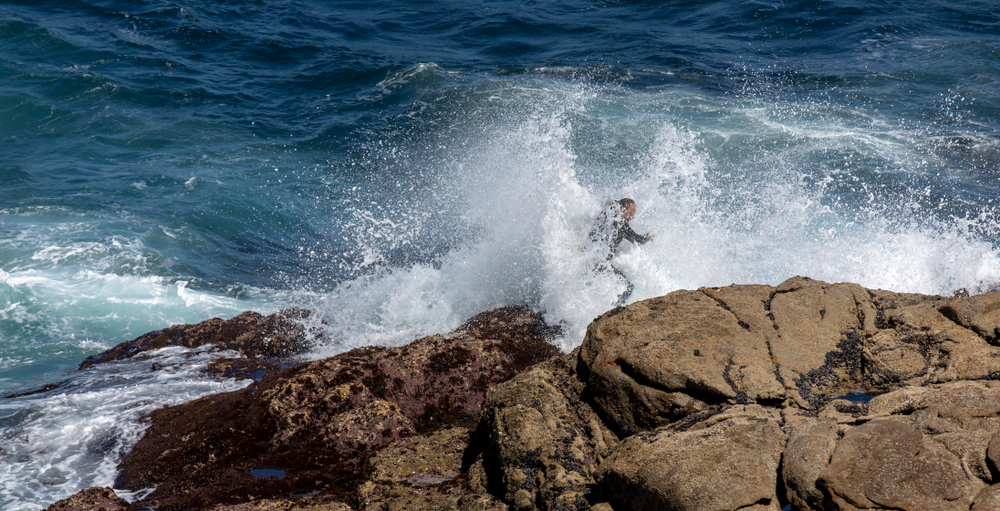
Razo beach, awarded a Blue Flag, lies on the open coast of the Costa da Morte and is considered one of the most expressive sandy zones of the Galician Atlantic. Thanks to its position, it frequently receives Atlantic swell and is well-suited to surfing in different seasons.
The technological side of this spot is represented by Art Surf Camp — a large complex by the beach combining a school, accommodation, and a well-developed training base. Here, they don't just teach you to stand on a board: surf, skate, beach volleyball, yoga, and other activities turn surfing into comprehensive work with the body and balance. A special place in this system is occupied by video correction and manoeuvre analysis. This format is particularly useful for those who have already passed the initial stage and want to move from simply accumulating waves to more conscious work on position, trajectory, and technique.
A historical alternative to this modern infrastructure is provided by Raz SurfCamp — one of the first surf camps in Europe, founded in 1991. Over the decades, the camp has developed a special atmosphere: accommodation by the ocean, group sessions, and a life built around surfing. If Art Surf Camp attracts with its scale, sporting multi-disciplinarity, and modern teaching infrastructure, then Raz SurfCamp matters as the bearer of a more classic spirit: community, tradition, and immersion in the everyday rhythm of surf culture.
It is precisely this juxtaposition that makes Razo particularly interesting: the same beach contains a modern platform for progress and a place for living within the surf community.
Related Articles
Valencia Begins Work to Protect Its Famous Centenary Ficus in the Jardines de la Glorieta
Planted in 1852 after gardeners mistook it for a magnolia, one of the city's most photographed trees is being given more room for its roots, new lighting, and two accessibility ramps over three months
Loading…
Loading…