






Support La Cotorra on Patreon
Access exclusive content, special perks, and closer connection with us.
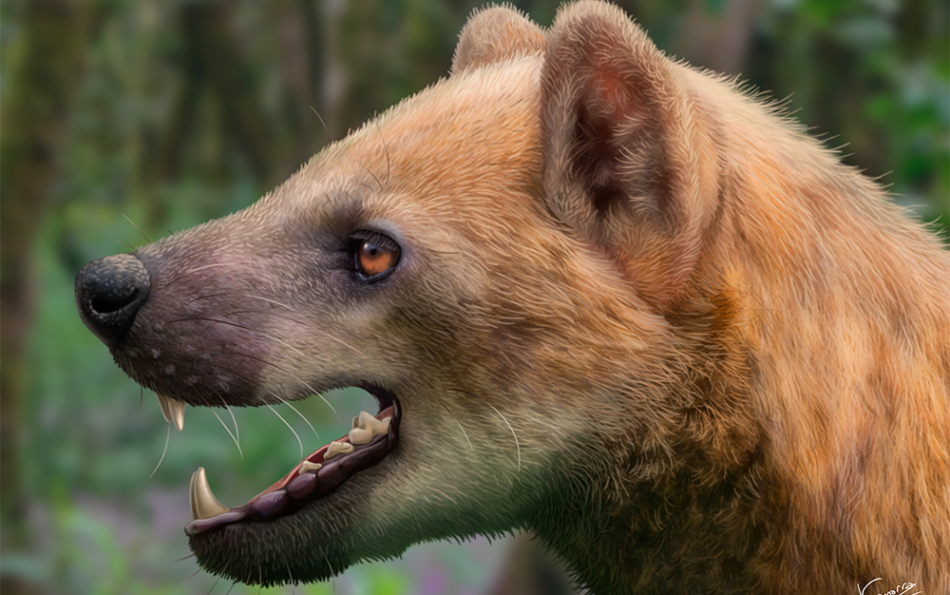
Researchers from several Spanish scientific institutions have described a new species of extinct predator discovered during excavations at the Els Casots site in the municipality of Subirats (province of Barcelona). The find changes our understanding of the vanished fauna of the Iberian Peninsula during the Miocene epoch. The study has been published in the Journal of Mammalian Evolution.
The new species has been named Paludocyon moyasolai. It belongs to the group of amphicyonids — predators commonly known as "bear-dogs." Despite this nickname, amphicyonids are not direct relatives of either modern dogs or bears. They are an extinct family that flourished in North America and Eurasia from the Eocene to the late Miocene.
Paludocyon moyasolai was medium-sized and, in all likelihood, hunted herbivores — deer, cattle, and small pigs. The age of the remains found is around 15.9 million years, corresponding to the early Middle Miocene.
The core of the find is an almost complete skull, laterally compressed, with an almost complete upper tooth row and an isolated second lower molar. Analysis of the dental morphology revealed features not observed in any other species of the genus Paludocyon.
The name Paludocyon itself translates as "marsh dog" — a reference to the natural conditions in which the predator lived. The species name moyasolai was given in honour of the palaeontologist Salvador Moyà-Solà — founder and long-serving director of the Institute of Palaeontology of Catalonia (ICP), which he headed from its founding until 2017. It was he who was behind the first expeditions to Els Casots, during which the remains that made it possible to describe the new species were extracted.
Els Casots is one of the most significant palaeontological sites of the Miocene epoch in south-eastern Europe. The site was discovered in 1989, systematic excavations were carried out until 1994, and in 2018 they resumed once more. During this time, more than 5,000 remains of large vertebrates have been found at the site, representing around 80 species of fish, amphibians, reptiles, birds, and mammals.
Related Articles
Designer Isabel Serrano Unveils Two New 1920s-Inspired Collections at Her Valencia Atelier
In an intimate showing at the heart of the city, guests stepped inside the atelier to see new bridal and special-occasion collections — and the hand-stitching craftsmanship behind each dress
Loading…
Loading…