









Support La Cotorra on Patreon
Access exclusive content, special perks, and closer connection with us.
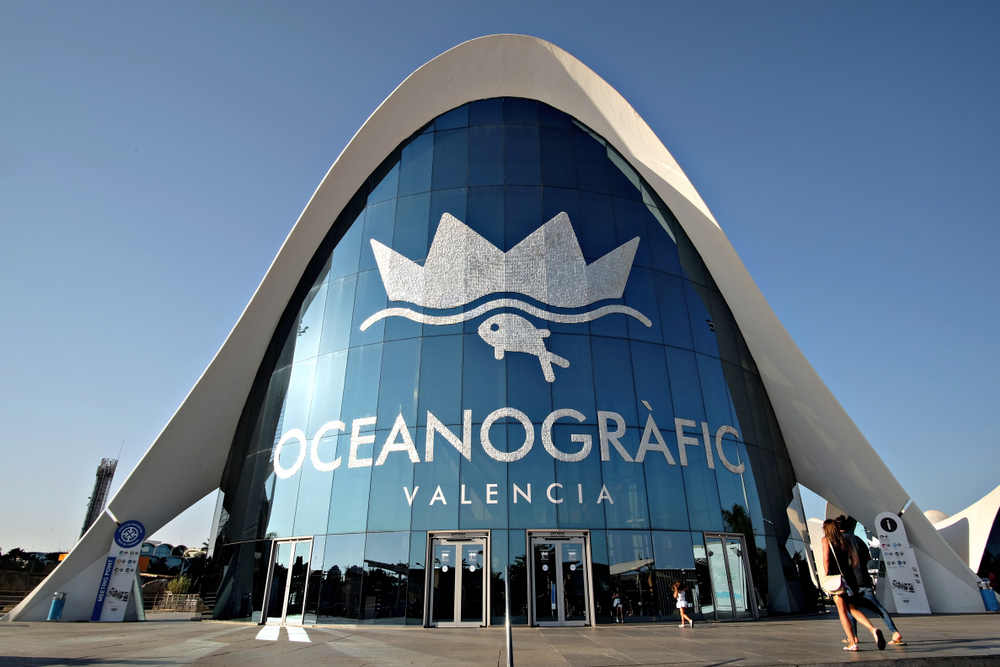
If you've been meaning to visit the Valencia oceanarium for ages but never got past "ugh, I really should go," then here's your sign — it's time. So, welcome to the largest aquarium in Europe, where in a few hours you'll pass through most of the planet's climate zones.
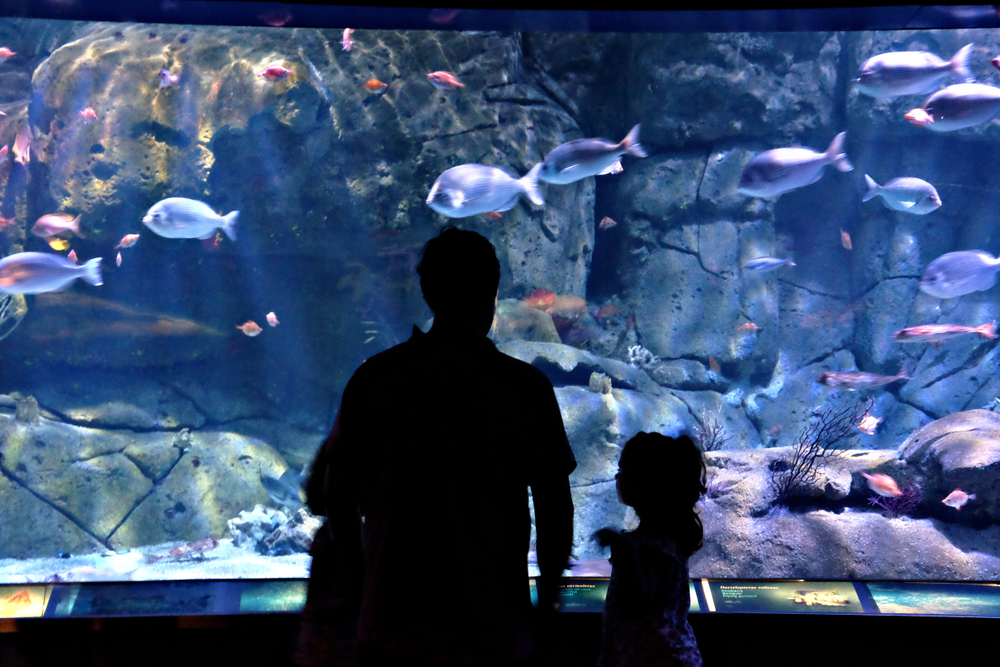
None of those "nature corner" tanks from a school classroom: here, there are 35,000 animals from 780 species — sharks, penguins, dolphins, belugas, reptiles, and birds. There are also shark tunnels and shows that make not only children,n but their parents squeal with delight.
La Cotorra has put together a fresh guide to the Valencia oceanarium for you: what to buy, which shows to see, where to eat, and most importantly — how much it all costs. Ready to dive in?
You could write a dissertation on the types of tickets to the Valencia oceanarium — that's how many there are. We'll simplify the task and tell you about the most relevant options.
The main option is the standard one-day entry, which gives access to the main exhibition. Prices depend on the season: low (usually November–February, when the flow of tourists drops noticeably), medium, and high (the peak tourist season, as well as holidays). For example, July–August is considered high season at the oceanarium, which means ticket prices will be a little higher than at other times of the year.
Here and below, prices are given as of June 2026.
Standard ticket prices:
Adult ticket — €39.45.
Children (4–12 years), pensioners over 65, and people with disabilities — €29.05.
Infants under 3 — free.
If you're entitled to a discount, you must have a supporting document with you — otherwise, there will be no concession,n and you'll have to pay the full price. Even if you're sure you look your age, take your documents anyway: cashiers don't believe in the wisdom of grey hairs.
This category is generally considered the best value, but there are nuances here, too. There's the Oceanogràfic + Museu de les Ciències option — from €41.60 per adult. The same with the Hemisfèric added will cost from €47.75 per person.
Additional discounts are available for students, holders of youth cards, large families, and other categories, but for this, too, you need to have supporting documents with you.
It's important to understand: a combo ticket is valid for two or three consecutive days (depending on the number of locations) and lets you visit the key sites of the City of Arts and Sciences in whatever order suits you. The main restriction: each site can be visited only once. For example, you won't be able to go to the oceanarium twice on a single ticket.
The oceanarium with an upgrade
In addition to the standard ticket to the oceanarium, you can add extra experiences. Our favourite option is the Backstage Tour. With it, you can get into the oceanarium's restricted areas, watch the animals being fed and trained, and listen to an audio guide with stories from the oceanarium's staff (in Spanish and English). The tour lasts 75 minutes, but the impressions will last you a year. The cost of the tour, together with the entry ticket,t is €52.45 per adult.
You can also watch a 4D film (€42.45 per adult), see the marine animal recovery centre (€46.45 per adult), and the place where sea turtles are rescued (€44.45 per adult).
For those who live in Valencia, the best-value option is an annual pass. For tourists, such an option generally won't be suitable. It can be purchased both for the oceanarium — the Pase Amigos Oceanogràfic — and for the City of Arts and Sciences — the Pase Amigos Ciutat.
The price for an annual pass to the oceanarium is €101 per adult, €84 per child.
The pass is valid from 1 January to 31 December, or for 12 months from the moment of purchase (this depends on the type of pass), and allows unlimited visits to the chosen sites. It's also worth noting that it includes a fixed price for parking, discounts in restaurants and museum shops, 20% off the backstage tour, and a special price for the summer and Easter schools.
Everyone is on show, so let's set off on a round-the-world trip. The oceanarium is a great way to walk around the whole world in a couple of hours, and without a passport.
We suggest starting at the central lake — here you'll be greeted by flamingos soaring or strikingly standing on one leg, pelicans straight out of a Pixar cartoon (although you still shouldn't check whether Nemo's in their mouths), and cormorants that look like they've walked straight out of the "Lyudmila" hair salon — one with a bouffant, another with blue eyelids — loudly gossiping about each other at the top of their voices.
Once the feathered choir is behind you, we suggest gently moving on to the Arctic, where some of the oceanarium's most spectacular residents are already waiting for you. Belugas and the seabirds of the northern seas live he, including the charming puffin (Fratercula) with its bright beak and almost cartoonish look. They really do look stunning, and, to be honest, it's hard to resist the urge to linger here a little longer.
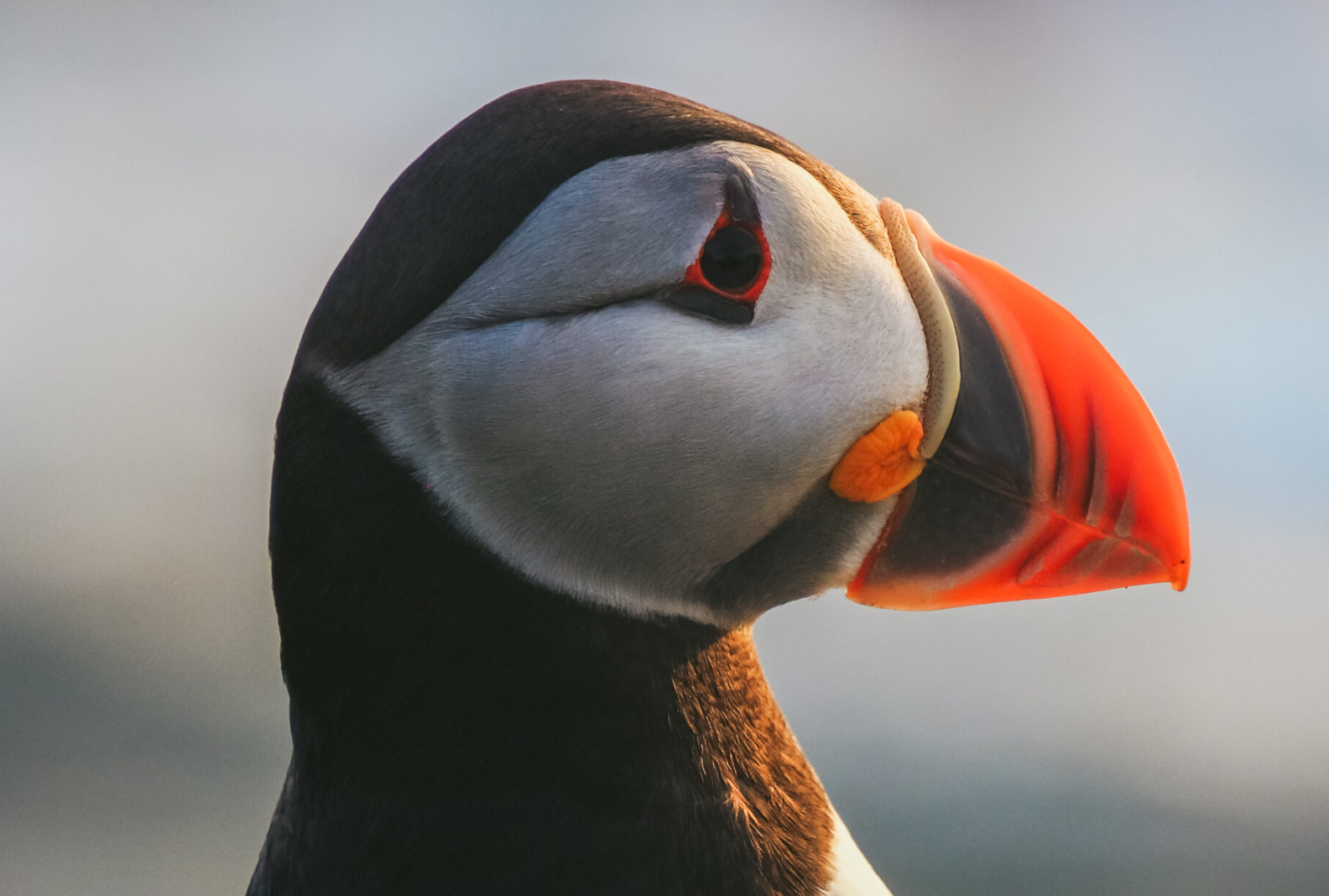
Next, the route leads to Antarctica, straight to two species of penguin: the gentoo penguin with its bright orange beak, and the king penguin — tall, stately, with golden patches on its chest and the air of a creature that clearly knows its own worth.
Other local favourites are the seals and sea lions. The seals at the oceanarium live in zen mode: unhurriedly gliding through the water and just as lazily hauling out onto land. The sea lions are their more active neighbours: noisy, lively, with character and a habit of constantly reminding you they're there.
If you want to feel like Discovery reporters, it's worth looking in on the mangrove thickets — an ecosystem with its own architecture of aerial roots, home to true dinosaurs of the modern age: crocodiles and alligators (these aren't the same thing — an alligator has a broad U-shaped snout, a crocodile a narrow V-shaped one). They're kept company by land and water turtles of all sizes, as well as other reptiles.
And of course, besides the usual animals, the oceanarium has its own highlights:
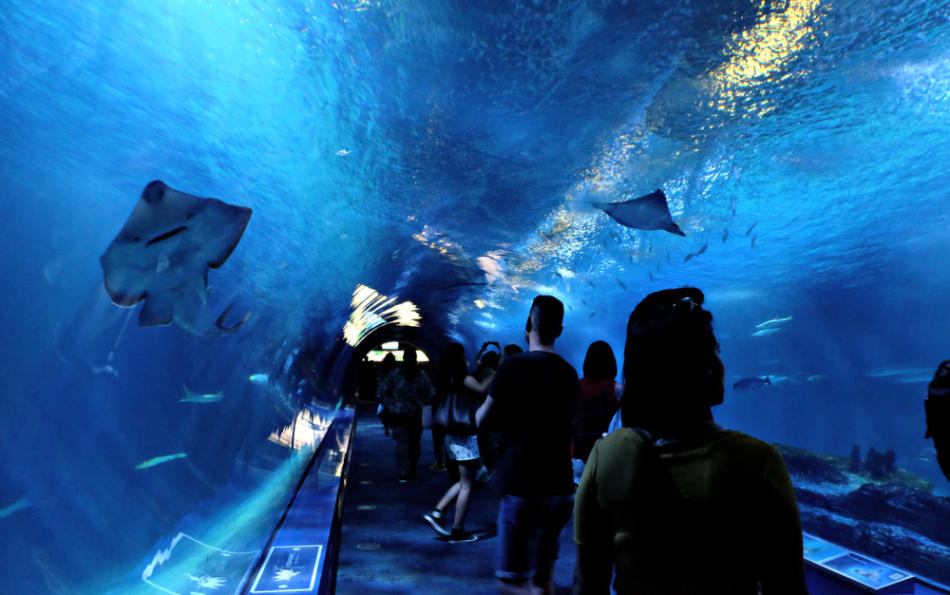
— The longest underwater tunnel in Europe, through which you literally walk through the water, while two-metre sharks, rays, and dozens of fish swim above your head (some people get scared at this point — and no wonder, the distance between you and the shark is maybe ten centimetres, if that).
— An aviary under a dome — a huge sphere 26 metres high, inside which birds and turtles have found room. Some fly overhead, others splash in the water beneath your feet, or simply sit and look at you with an air of "and what exactly are you doing here?"
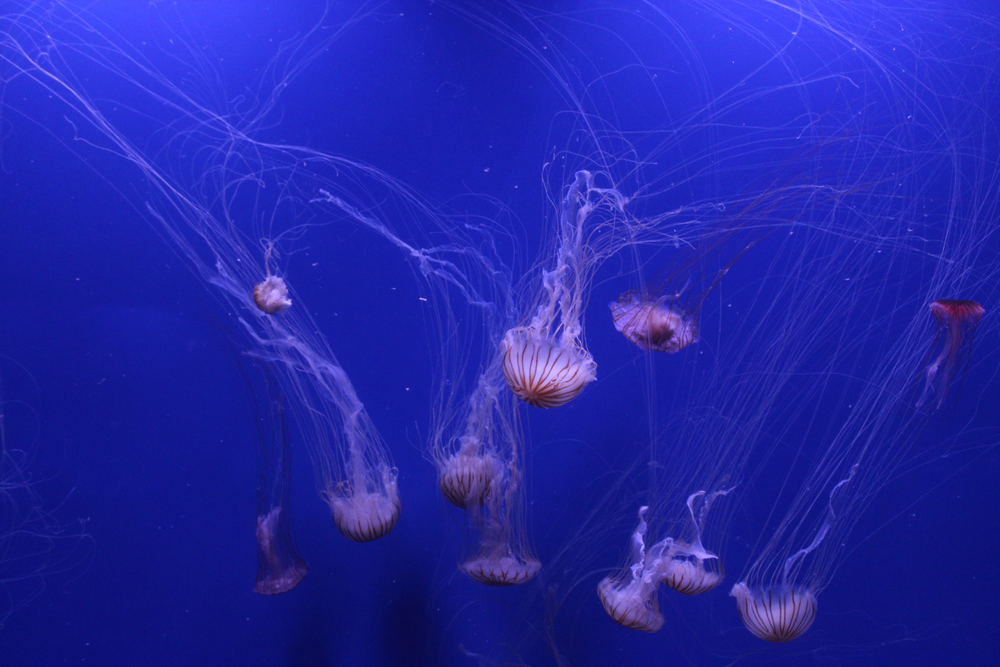
— The largest collection of jellyfish in Europe, stretching across the entire oceanarium. Tropical, Mediterranean, and even fried-egg jellyfish — you'll find every size, colour, and degree of strangeness.
— The Ágora del Mar dolphinarium — here the dolphins display their natural behaviour, while the oceanarium's staff talk about the animals' lives and marine research. The dolphinarium relies not only on spectacle but also includes explanations of how the behaviour of marine mammals works and how they are cared for within the oceanarium.
In short, if the ocean had an embassy, this is what it would look like.
There are,e of course, several places where you can grab a snack or have a proper lunch here, but let's say straight away: food at the oceanarium isn't cheap, and the venues' ratings aren't the highest — but at least there's a view of the sharks.
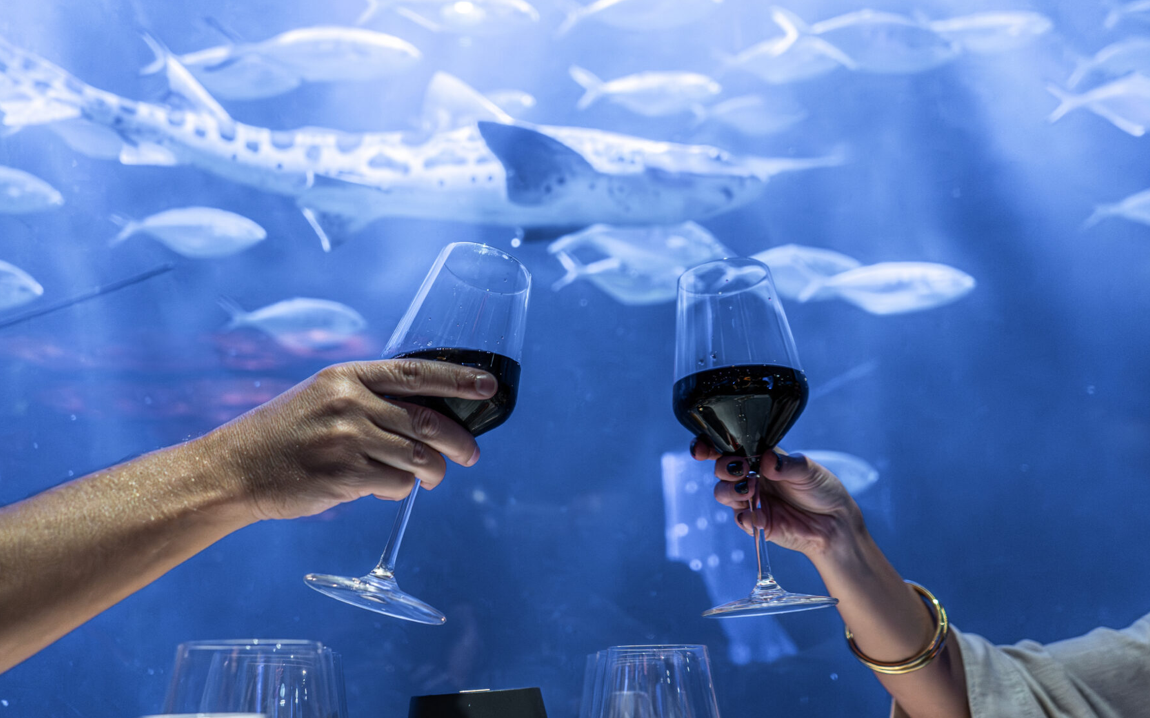
The oceanarium's main restaurant — Submarino — has a fairly modest four-star rating on Google Maps, but can boast a magnificent interior. The venue is on two levels: on the ground floor, there's an aquarium wall, where, over lunch,h you can watch the inhabitants of the underwater world. The second level is on an open terrace with a view of the park. Mediterranean dishes are served: starters at €10–17 and main courses averaging €25.
The reviews mostly criticise the mismatch between the high price tag and the actual quality of the food and service, but you shouldn't forget the location: prices in such places are always higher, and these venues aim not at the long term and reputation but at the tourist flow.
Submarino isn't the only option inside the oceanarium, but it is, alas, the best. Besides it, there are also Pizzeria Mediterráneo, Heladería Rompehielos, Hamburguesería Ágora del Mar, Restaurante Océanos, and the Lonja self-service café. All these venues have low ratings, so we obviously can't recommend any of them to you.
Picnics on the oceanarium's grounds are not allowed, but no one will stop you from bringing along a banana or a sandwich. And if you do want to sit down at a table and eat properly, then head out through the oceanarium's gates and come up out of the Turia gardens — a 10–15-minute walk, and you'll find yourself at the Saler shopping centre. This is the nearest point to the oceanarium with any sort of choice of food. The prices, naturally, are lower.
If you're as much of a fan of museum shops as we are, then there'll be plenty here to keep you busy. At the entrance and exit of the oceanarium, and in special shop zones located throughout its grounds, hundreds of types of soft toys are sold: cute turtles, plush dolphins and sharks, penguins and octopuses (our favourites are the plush seals and fur seals). There are also magnets, T-shirts and hoodies, postcards, keyrings, stationery, books about the underwater world, eco-bottles and flasks, mosaics, and tote bags — in short, there's plenty to keep you occupied.
As a bonus, a little tip: buy a postcard and send it from the nearest post office to your home address or to your friends. It's always nice to receive such little reminders after returning from a trip.
Related Articles
Glowing Seas of Spain: Where to See Bioluminescence Along the Coast
From the magical Mar de Ardora in Galicia to hidden coastal spots in Cádiz and Murcia, these beaches glow with neon light on dark summer nights
Loading…
Loading…