





Support La Cotorra on Patreon
Access exclusive content, special perks, and closer connection with us.
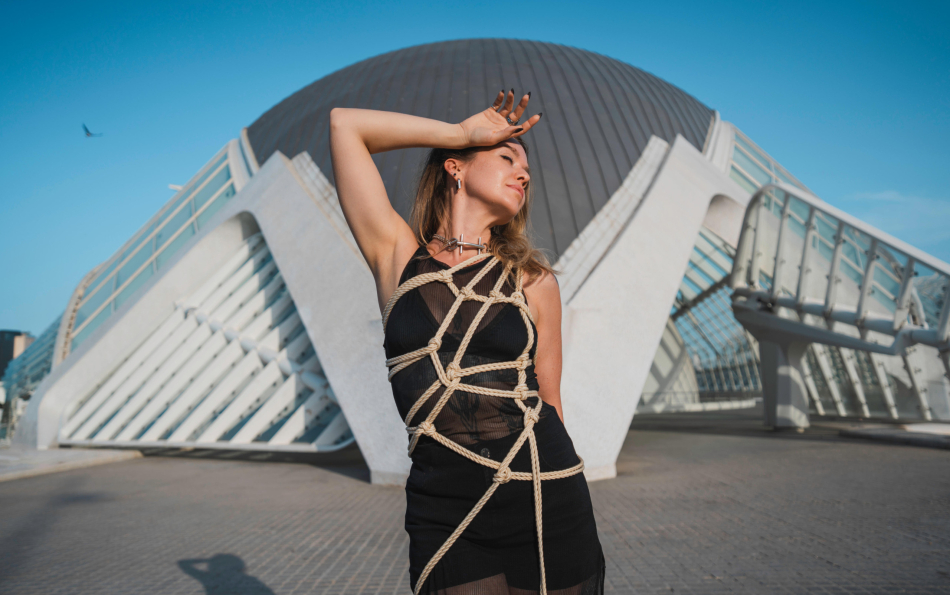
Think Spain is hot? You haven't read Sofia Katenina's candid interview with artist and BDSM activist Inna Krause, given exclusively to La Cotorra. They discussed how BDSM differs from kink culture, the nuances of the subculture, and why BDSM isn't always about sex.
We are sitting in the shaded patio of the Westin Hotel in Valencia. It is a sufficiently secluded spot to interview on a delicate topic: Inna promised to talk about one of the most closed and enigmatic subcultures—BDSM. Bondage, Discipline/Dominance, Sadism, and Masochism—that is what the acronym stands for.
— Why do you think kink culture is being widely discussed right now? Has it become more popular?
— That is probably a question for sociologists, but subjectively—yes. Perhaps the influence of religion, which carries most taboos and shame, is declining. Even here in Spain, young people are becoming less religious. And, of course, society is gradually liberalising—not in a political sense, but in a sensory one. There is more freedom of expression. Though it isn't all sunshine and roses.
I came to Europe with wide eyes, thinking that there would definitely be no taboos here, and that things would surely be much more interesting in terms of subcultures. Unfortunately, it turned out that here in Spain, finding the things I'm interested in with the depth I need is significantly harder.
— In Russia, did you have to hide your interests?
— Yes, I had to hide them. Even my friends didn't always know about my interest in the art of shibari. Up to a certain point in Moscow, a BDSM subculture existed—for example, I used to visit the "Predel" [The Limit] club. Very carefully, with a lot of restrictions, all of this could survive, and there were even moments when certain information was popularised. For instance, a film was released featuring a scene with rope binding performed by a master I knew very well. It gave hope that there was growing acceptance and freedom in society. Right now, thinking about that is impossible. Even private events get raided by masked police ("maski show"), clubs have closed, people are hiding, and criminal cases are being opened against them.
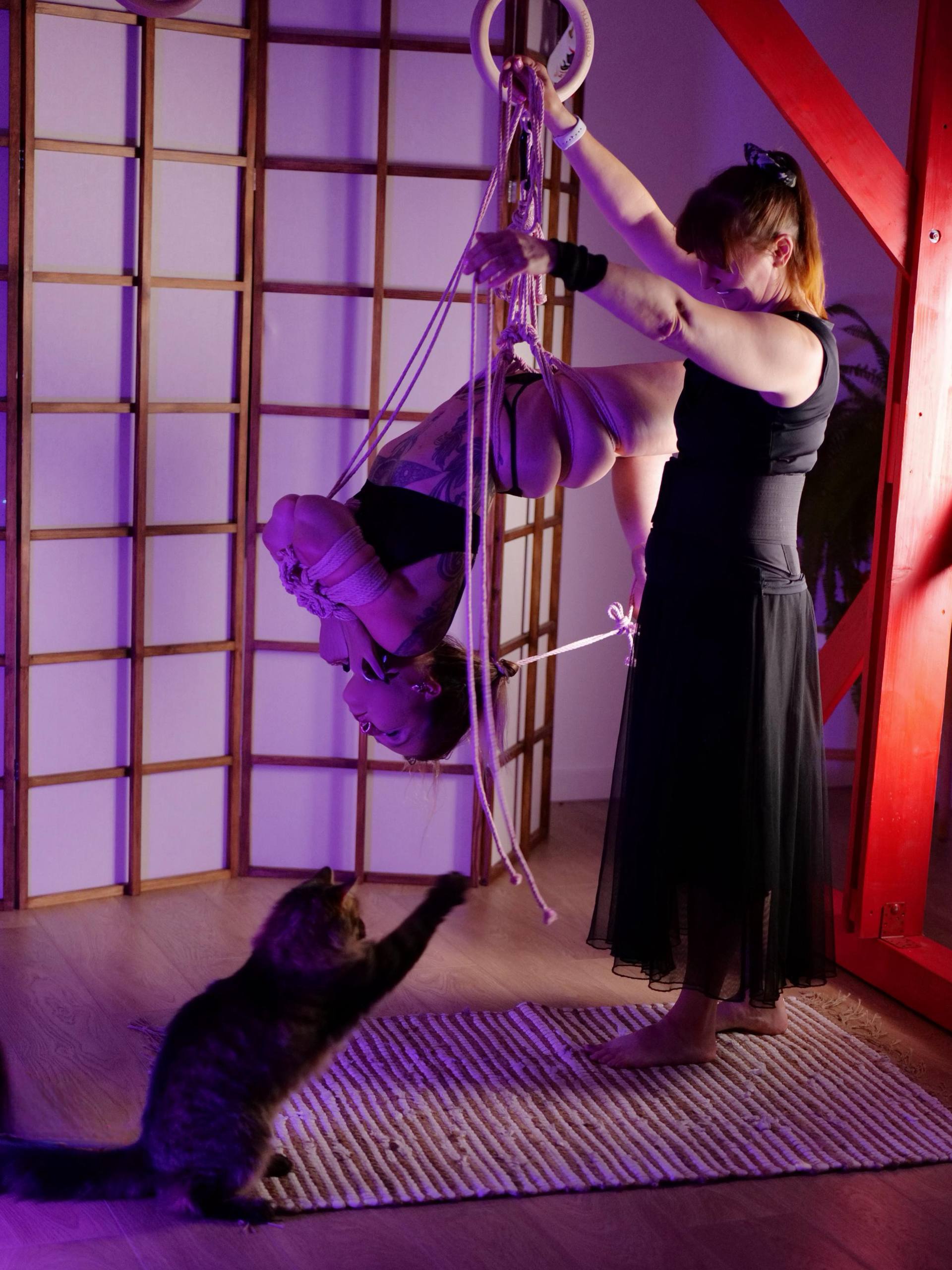
By the way, you mentioned kink culture. BDSM is a separate direction, and unlike kink, it might not be connected to sex at all. Kink is precisely about form, costumes, whips, outfits, and intricate sex, whereas BDSM is a distinct, deep, and vast story where the palette of interaction is much broader than just "having wild sex with a spark."
— How can it not be connected to sex?
— In BDSM culture, there are many boundaries, norms, and rules, and very often interactions have nothing to do with sex. I can't cite exact statistics, but pain or suffering of a different kind doesn't always bring a purely sexual sensation. Take domestic slaves, for instance, who fulfil the commands of a master or mistress—they might never even touch them. Physical contact isn't mandatory here; it might not exist at all. Dominance can be psychological. You see, in a way, it's a game played by set rules agreed upon by a couple beforehand. Even pet play—the practice where one person dresses up as an animal—can happen without any painful impacts or physical contact. That is precisely the big difference with kink. At kink parties, visual attributes come first: spikes, latex aesthetics. BDSM practitioners often look completely ordinary.
— What do you mean by "ordinary"? My idea of a BDSM club is roughly like the "Blue Oyster" from Police Academy: everyone must be in spikes, peaked caps, leather, chains everywhere, heavy rock playing, and terrifying things happening in corners!
— You just described a typical kink party. In a proper BDSM club, everyone dresses in whatever feels comfortable—most often like everyday people. Someone might be in costume; it's a subculture of acceptance. It accepts a person as they are, without judgment.
— If a remarkably attractive person and an average-looking person walk into a regular club, the attractive one will likely get more attention. Are there appearance standards in thematic clubs?
— Thematic clubs are based on something slightly different. I've seen women with very non-conventional appearances, to put it gently, who were immensely popular.
— I have to ask—what do you think of the "50 Shades of Grey" phenomenon? Did the book and movie accurately convey information about this subculture?
— Well, what was there about the BDSM subculture at all? In my opinion, nothing. It was more of a daring flirtation with the topic. Why did it become popular? I don't know, maybe because many people are curious about how things work there, and this presented it in a very schematic, simplified form. There was no authentic thematic interaction in it. If you need an example of a real BDSM movie—"Secretary" (directed by Steven Shainberg, 2002)— La Cotorra. Now that movie shows a connection between people built on BDSM principles quite honestly. On the other hand, everyone has their own idea of dominance; for some, changing a single position seems like extreme dominance. However, it has nothing to do with BDSM.
— How long have you been in this subculture?
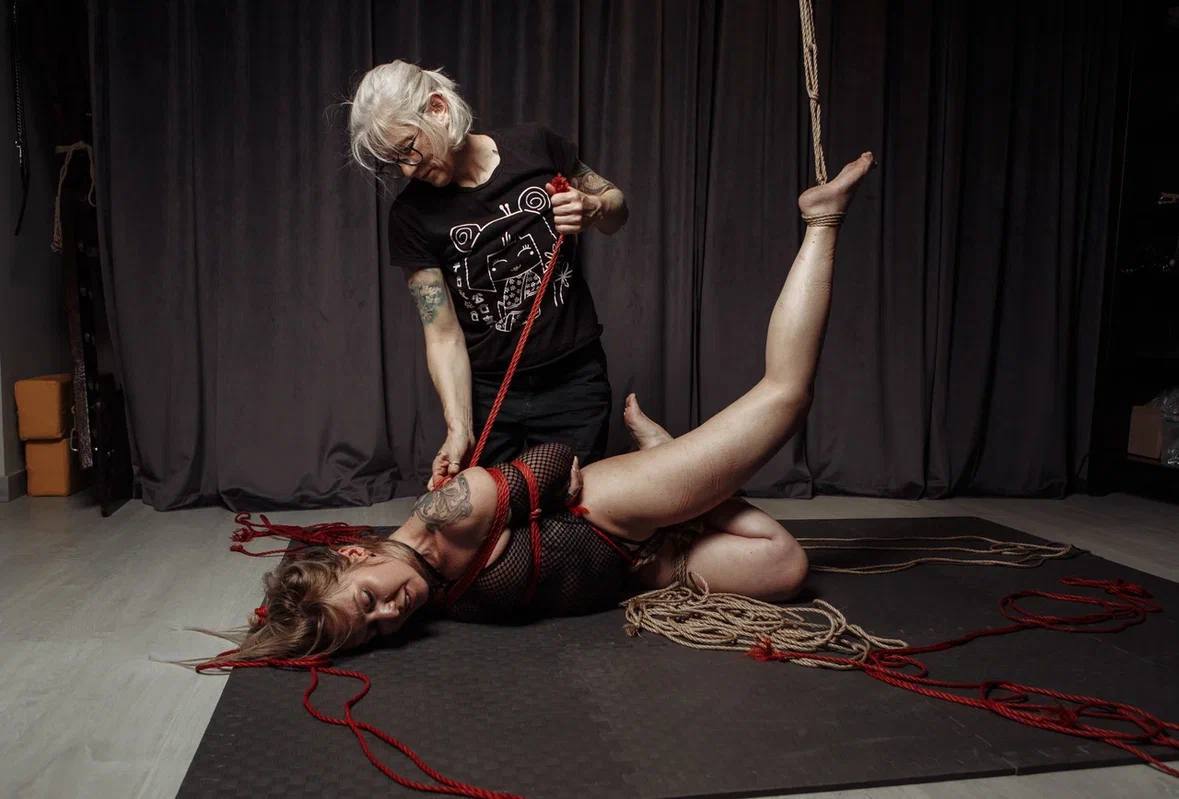
— Not terribly long, about six years. Initially, my husband didn't support my interest in shibari; for him, it was too much. We had an uncomfortable conversation, because in those moments you are vulnerable and opening up to your partner. I told him I was curious about how a bound person feels, what they experience. My husband couldn't accept it. I had long liked the aesthetics of the subculture and the interactions—the imitation of aggression, so to speak. However, going to a club was terrifying: How? Where would I go? I would lose control and wouldn't be able to know what they'd do to me. I was entering a defenceless, vulnerable state. The fear was very intense. In reality, though, for a long time, it felt to me that a club where people from "The Scene" (as BDSM is often called) gather was one of the safest places on earth.
Safe, Sane, and Consensual—these are the three core principles upon which this subculture rests.
— You are in emigration. How are things with thematic gatherings here in Spain?
— Saddening, honestly. So far, I haven't found a community comparable in quality where I'd feel comfortable, nor the depth of interaction I need. Unfortunately, despite general open-mindedness here, a lot devolves into formalisms. I found several shibari communities, which are probably the most grounded of all the thematic groups here. Though with caveats—for instance, there is competition between them. Also, nobody here will go out of their way to engage you: if you come, great; if not, fine. I haven't yet felt a sense of a community where you are unambiguously welcomed and viewed as an important part. Perhaps not yet. I'm interested in exploring the internal boundaries of my body; the messages behind the practice, the depth, and a supportive environment matter to me.
— What about clubs?
— There are swingers' clubs for couples, plenty of options for gay men, and kink parties. With BDSM, things are complicated, unfortunately. I attended some events and, frankly, was astonished by how poorly organised everything was. Starting from the basics: headcount and safety... One famous club in Barcelona was clearly selling tickets without limits. As a result, the venue was crammed with a crowd of young men. Furthermore, clubs usually have staff wearing glowing badges whom you can always approach for help. Here, the staff quickly vanished into the crowd... There weren't even basic hygiene or protection supplies available. People were smoking right under "No Smoking" signs, and so on. I had to physically fend off some visitors. There was nowhere to change clothes, even though the club declared a strict dress code... which nobody checked anyway. I was interested in a shibari session—it turned out to be extremely basic, clearly added just for show.
It was an unpleasant, if not terrible, experience. And unsafe. Later, the club posted photos—I was very surprised, as they differed vastly from what I personally witnessed and experienced at the event. I was deeply disappointed and am now considering opening such a club myself, organised properly and thoughtfully.
— Where and how do Russian-speaking expats look for new connections with similar interests in Spain?
— It's no easy task. For some, apps and online communication work; it's very time-consuming, but sometimes yields results. There's the social network FetLife—specifically for people with clear requests. It's easier to find partners there than on Pure, where people are focused on quick sex and things are often superficial. Recently, I reconsidered my scepticism toward online platforms and created two profiles on FetLife—both as a Dominatrix and as a submissive. Also, there was a club in Alicante organised by Ukrainian expats, but their website hasn't been opening lately, so I don't know if they're operating or closed down. I ask expats and locals, then check reviews. After all, the shibari practice I'm interested in is one of the most injury-prone, with specific nuances. Once, I damaged a nerve and had to see a doctor. I told one story at work and a completely different one to the doctor—making up something about a theatrical production I was participating in. So in Valencia, I connect with shibaristas and am still searching for "my people."
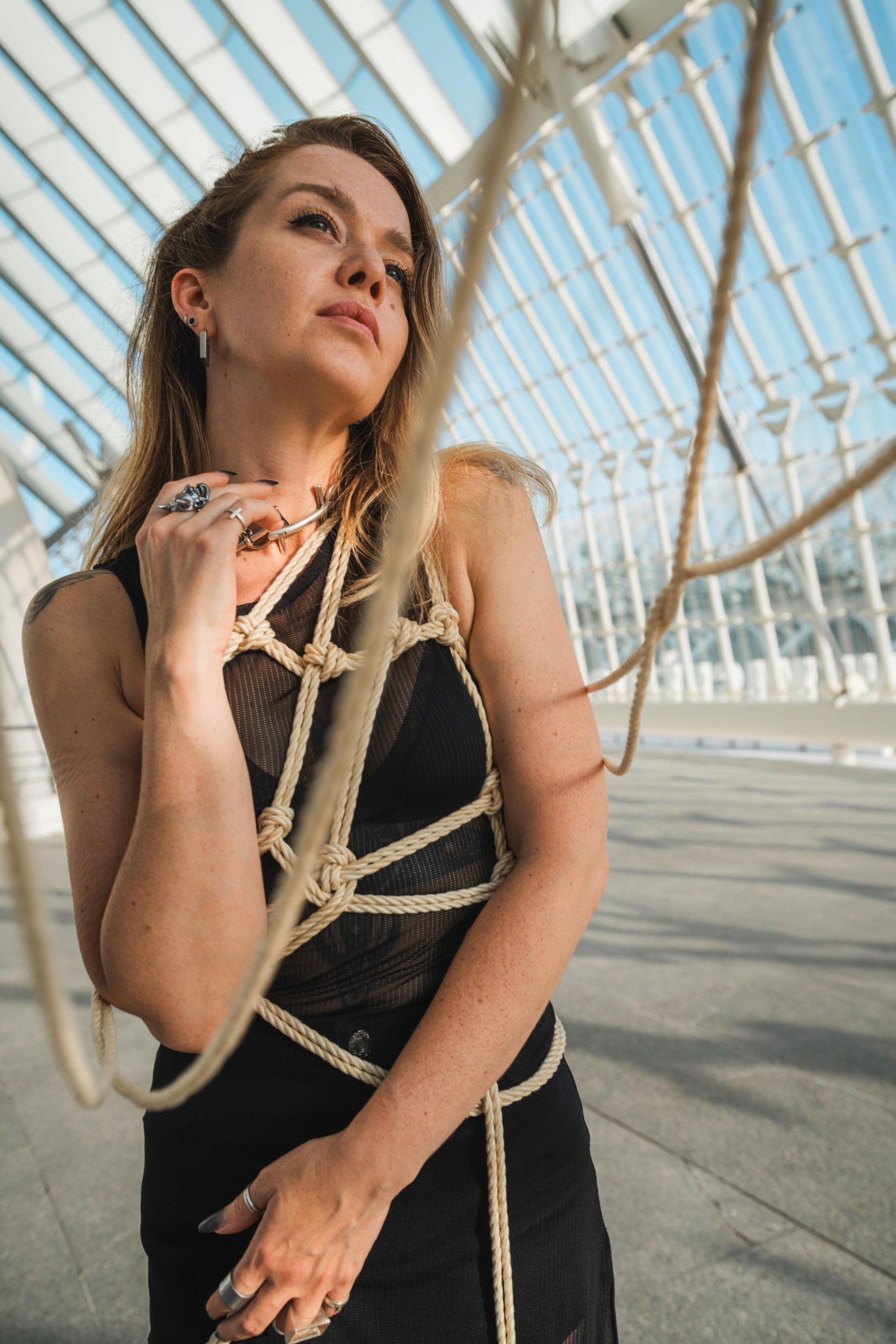
Here, of course, shibari culture invokes immense interest and even respect, and practices can take place in broad daylight in public parks. Yes, everyone is clothed, but people don't see anything unusual about tying people up right in front of onlookers. That's a unique aspect of Spanish society. You go for a stroll by a pond, and there are people suspended in a city park.
— Are people interested in BDSM topics more often polyamorous? Do they stay faithful to one partner?
— The number of combinations is endless. Some people practice BDSM only with one partner. There are masters (top, or dominant partners) who practice their disciplines with different models (as those who receive the practice, or "bottoms", are often called). Some models visit different masters. For example, I used to visit different masters. The initiative most often comes from the models. There are fewer masters: after all, a good master is someone who has thoroughly studied their discipline (such as impact practices) and worked through it with different people, understanding feedback reactions. For instance, a safeword is a formality. Sometimes the person receiving the practice enters an altered state of consciousness and might not realise they've been uncomfortable for a long time. A good master closely monitors the model's condition even without safewords. It's a complex interaction, but the emotional palette it offers is much broader than what ordinary people are used to.
— Speaking of ordinary people, how do people inside the scene view ordinary, "vanilla" people?
— It depends on the individual. For example, I'm in a "vanilla" relationship myself. There isn't any uniform attitude.
— I ask because from the other side, there is a distinct pre-existing attitude—for instance, ordinary people often view BDSM enthusiasts as perverts or dangerous maniacs who, given the chance, would commit crimes. Is there anything similar from the reverse perspective?
— Overall, BDSM is a subculture with all the drawbacks of a subculture. And it also has "gatekeeping" elitists who allow themselves to devalue others or act superior. "What's new about that? That's nothing special..." and so on. But if you think about it, those with specific desires are in a more vulnerable position than people with conventional preferences. It is BDSM practitioners who have to open up and await acceptance or judgment. Sometimes there is acceptance, sometimes denial; sometimes a partner is fine with the other fulfilling certain desires outside the relationship. People can step away from practising while staying in the community circle, or vice versa—be very private, communicate with no one, have a single partner and practice exclusively with them. Most often, unfortunately, due to judgment and lack of acceptance, they cannot build relationships with "vanilla" partners.

— How do you incorporate shibari into your art?
— I have a personalised experience called "Trace of You"—a delicate immersion into shibari, or rather, bondage. It's an art experience with rope binding that results in an individual imprint of your body on paper. An art object created by your own body. Beforehand, I discuss the practice in detail and explain how it unfolds. Afterwards, we either process the experience together or chat over tea.
— Who is mostly interested in this experience?
— Both Russian-speaking and English-speaking people, as well as Spaniards. Anyone curious to experience shibari in a safe, controlled environment and listen to their own body's reactions, which can reveal so much. The prints turn out very beautiful and adorn not only bedrooms but also office spaces of some clients. Sometimes it's important to understand what you're afraid of and step right into it: after all, you might find a source of strength, inspiration, and pleasure there.
Related Articles
Glowing Seas of Spain: Where to See Bioluminescence Along the Coast
From the magical Mar de Ardora in Galicia to hidden coastal spots in Cádiz and Murcia, these beaches glow with neon light on dark summer nights
Loading…
Loading…