






Support La Cotorra on Patreon
Access exclusive content, special perks, and closer connection with us.
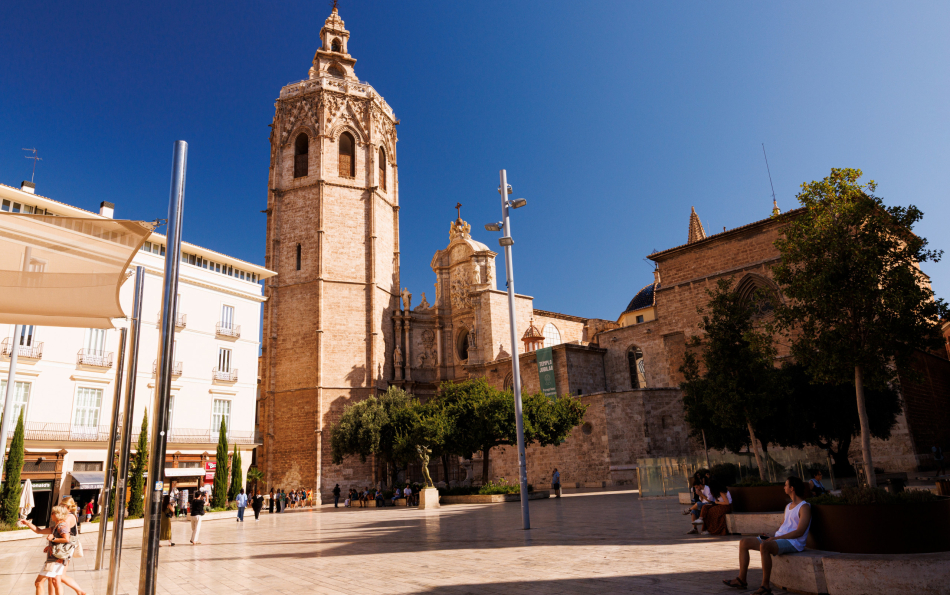
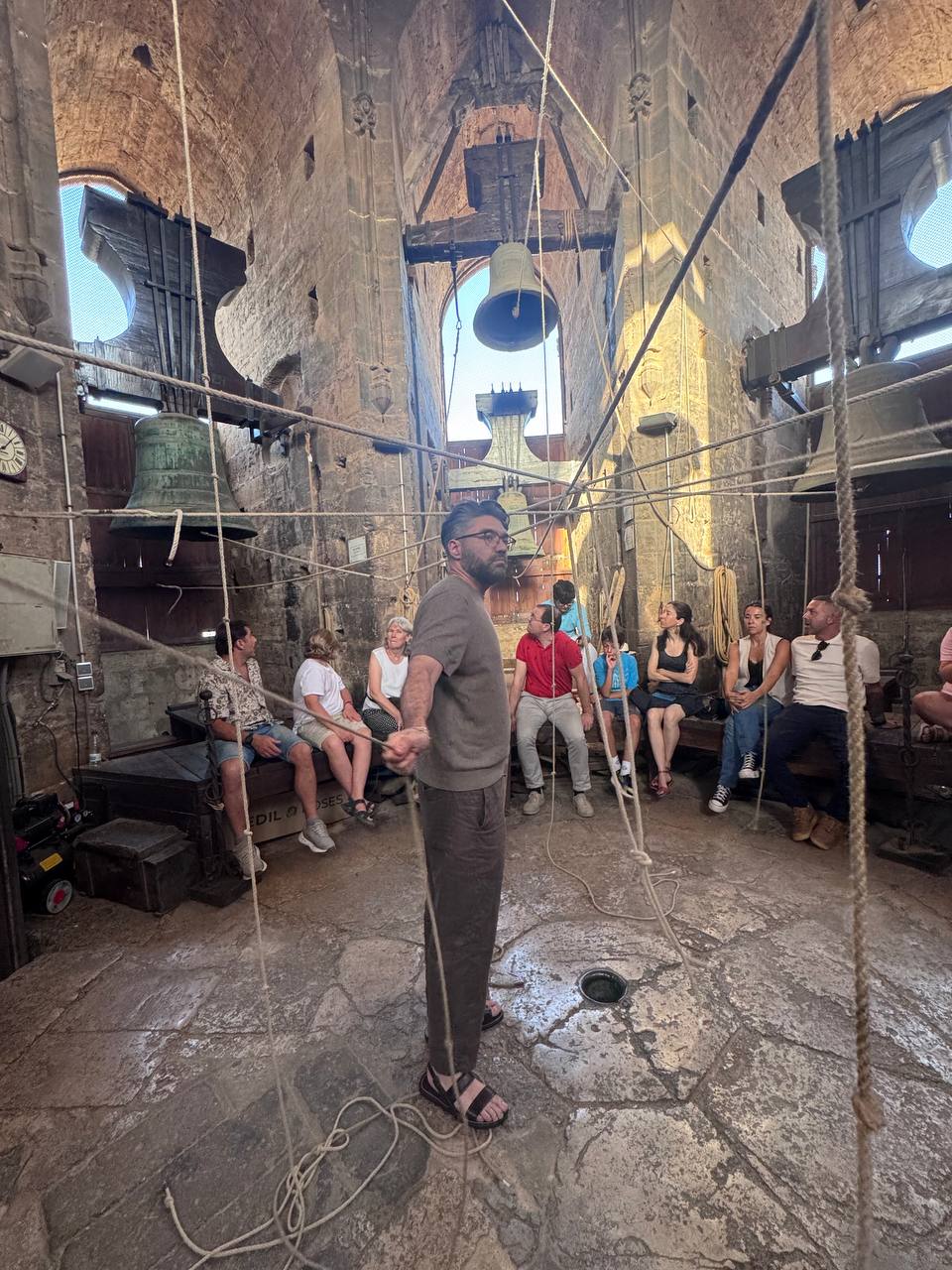
In the evening, there is barely any room left on the cathedral's bell tower. A few dozen people climb the narrow spiral stairs behind guide Tatiana Khrylova. Tours here are always small—it’s impossible to squeeze past each other in the tight space between the medieval bells. With every step, the buzz of tourist-filled Valencia fades below, and at the top, it feels as though time stood still several centuries ago.
People sit on wooden benches along the perimeter of the tower, directly beneath the medieval bells. A few minutes later, the silence is shattered by the first strike—so powerful that someone gasps in surprise. Then, several bells swing into motion at once.
Today, there are three bell ringers. Sometimes they work alone, sometimes in pairs, when the melody calls for multiple bells simultaneously. Talking is no longer an option; you have to literally scream into each other's ears. This is how one of the historic festive peals begins—a sound Valencia has heard for many centuries.
This is precisely why people climb the Micalet (the tower is called El Miguelete in Spanish, and Micalet in Valencian). To this day, the tower remains a living musical instrument rather than a museum piece.
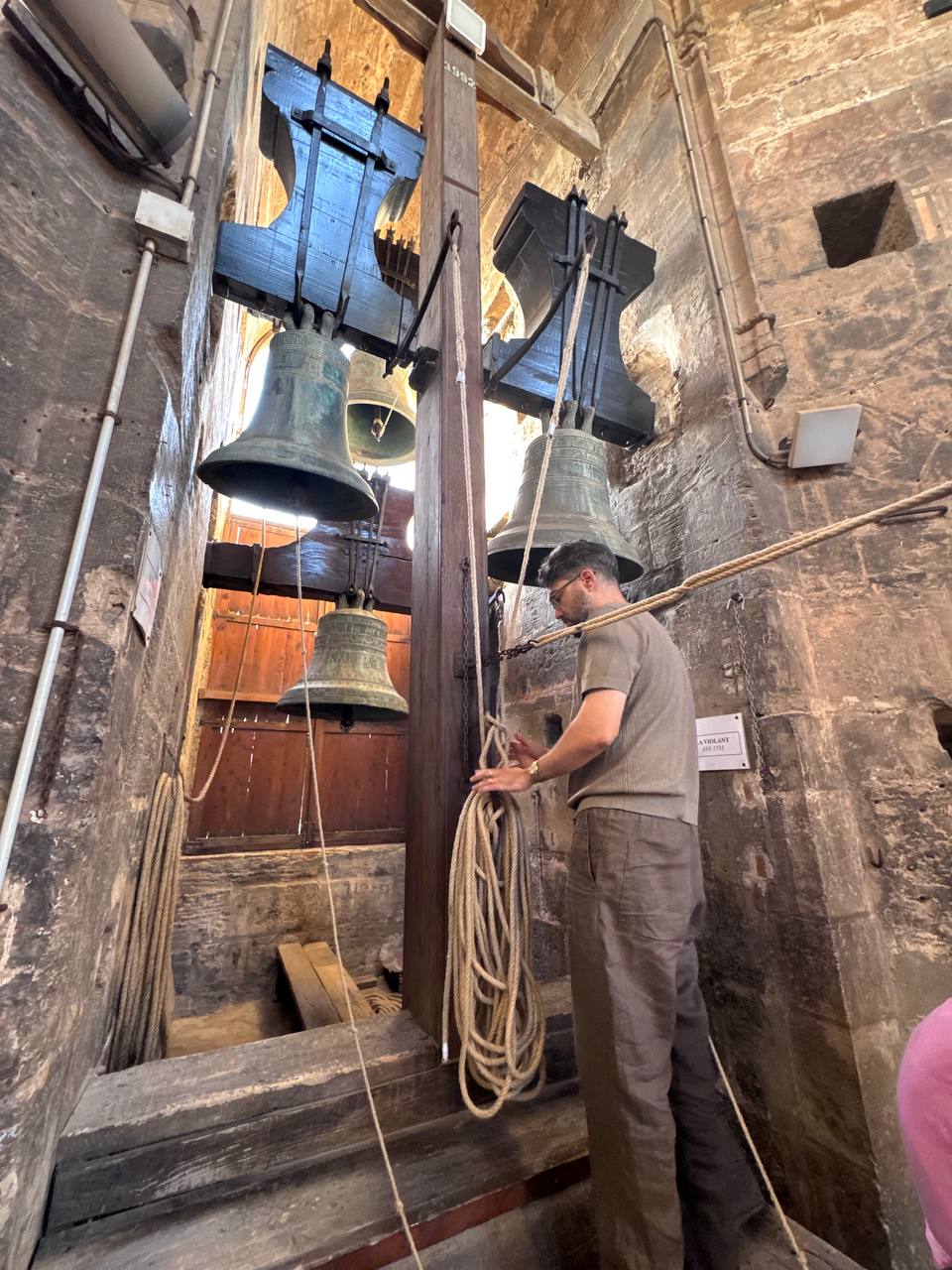
All eleven historic bells have their own names and casting dates. You can still read them inscribed on the bronze: Caterina (1305), Jaume (1429), and Úrsula (1438). Each bell differs not only in size and tone but also in its specific purpose. In the Middle Ages, city residents decoded this auditory language with ease. A festival or a funeral, an emergency alarm, a call to prayer, or even the closing of the city gates—each event had a distinct ring.
Today, automated systems handle the standard hourly striking of the largest bell at the top of the tower. But important holidays still require the human touch.
On major religious holidays, members of the association of Valencia's bell ringers (Campaners de la Catedral de València) ascend to the bell chamber. Many visitors are surprised to find them dressed in completely modern, casual clothes, as one might instinctively expect people in clerical robes. However, as Tatiana explains, bell ringers historically wore the traditional attire of their respective eras. Thus, colourful linen shirts and trousers can easily be considered the costume of the 21st century, meaning modern ringers follow the tradition strictly.
They are neither cathedral employees nor professional musicians. Instead, they come from entirely diverse professional backgrounds, united by one unique passion: studying the history of Valencian bell ringing, maintaining the bells, participating in their restoration, and manually performing ancient melodies during major holidays. It is thanks to this association that one of Valencia's rarest traditions has survived and continues to thrive.
"The bell-ringing melodies were almost entirely lost. The ringers reconstructed them using old documents, parish registers, and historical descriptions. So today, when the festive bells echo through Valencia, locals hear practically the same ring that their ancestors heard centuries ago," says Tatiana Khrylova.
Another fascinating tradition lives on: every evening, the bell still tolls at the exact hour when the city gates were shut during the Middle Ages. Valencia has long outgrown its fortress walls, but the evening signal remains. As the ringers explain, there was never a precise clock time for this ring—the watchmen simply closed the city gates as darkness fell.
One of the ringers is Ares Sotos. In his day job, he works as a French translator, but on holidays, he climbs the bell tower.
"I started ringing as a child in my hometown. When I moved to Valencia, I came here and began learning the local traditions. Some people like cars, some like motorcycles, but I like bells," he smiles.
Tatiana Khrylova explains that the bell ringer's house is still preserved inside the tower. The entrance is secured by a metal gate, through which you can peek inside as you climb up to the belfry. This is where medieval bell ringers lived with their families, kept watch over the tower, and maintained the bells.
"A rope connected to the clock bell ran through a hatch in the ceiling, straight from the belfry down into the bell ringer's home. This allowed the ringer to strike the hours without ever stepping outside. You could say he was a 15th-century remote worker," Tatiana Khrylova laughs.
This opening is still there today; you can peer through it and spot a piece of the bell ringer's home floor.
In that same room, three large stone spheres remain. Today they look like decorative antique relics, but they once served as a sort of medieval telegraph.
"The Micalet was the only spot in Valencia with a clear view of the sea. Lookouts watched the port and, depending on what was happening, placed these stone spheres on the open terrace of the tower in specific combinations. That is how the townspeople found out what was happening along the coast," Tatiana says.
Construction on the Micalet began in 1381. Back then, the tower stood detached from the cathedral, only integrated into the current complex several decades later. It got its modern name from the largest clock bell, the Micalet, which has been tolling the hours over the city for nearly five centuries.
But perhaps the tower's most extraordinary feature isn't its age at all.
Most medieval bell towers in Europe have long since been reduced to silent architectural monuments. The Micalet in Valencia, however, is still very much alive. Its ancient signals are still in use, the historical ring for the closing of the city gates can be heard every single evening, and during major holidays, volunteers manually perform the very same melodies that accompanied life in Valencia back when the city was still enclosed by fortress walls, and bells were the primary means of communication with all its people.
Related Articles
Double Victory: Madrid’s Dalú Burger Wins Valencia’s The Champions Burger — Smash Edition
Following their recent triumph in Madrid, Dalú Burger’s "Legend Winner" took gold at Mestalla Stadium, with Zaragoza’s Madison and Madrid’s Bandido rounding out the top three
Loading…
Loading…