







Support La Cotorra on Patreon
Access exclusive content, special perks, and closer connection with us.

Every summer, hundreds of people travel to the outskirts of Valencia to see the lavender fields. Some dream of finding a "Spanish Provence," others of doing a beautiful photoshoot and buying essential oils in the hope of relieving stress and improving their sleep.
A little-known fact: by no means does all lavender have a relaxing effect. There are many varieties of this plant, and some of them, on the contrary, stimulate the nervous system.
It's this very fact that most surprises visitors to the family farm Ecoaromuz in Ademuz, which is located about a two-hour drive from Valencia.
For many coastal residents, Ademuz remains a blank spot on the map. This small district lies off the usual tourist routes and looks nothing like the image of the Valencian Community that usually springs to people's minds. Instead of beaches and promenades, here there are mountains, pine forests, old terraced fields built in steps along the slopes, and elevations that reach almost 1,000 meters above sea level.
The Rincón de Ademuz is considered something of a Valencian exclave: it's surrounded by the territories of Aragon and Castilla-La Mancha. In the local dry climate with its cool nights, aromatic plants feel especially at home. For almost 30 years now, lavender, rosemary, and other herbs have been grown here for the production of essential oils and herbal blends.
Ecoaromuz allows anyone who wishes to get to know this place up close, but only as part of an organised tour, which lasts about 1.5 hours.
"What surprises people most on the tours is that there are different kinds of lavender, each with its own properties and aromatic notes. Some varieties, on the contrary, have an invigorating effect," says Patricia Aparicio, a second-generation member of the family business.
According to her, the photographs of the famous fields in Provence often show not the lavender used for relaxation in aromatherapy.
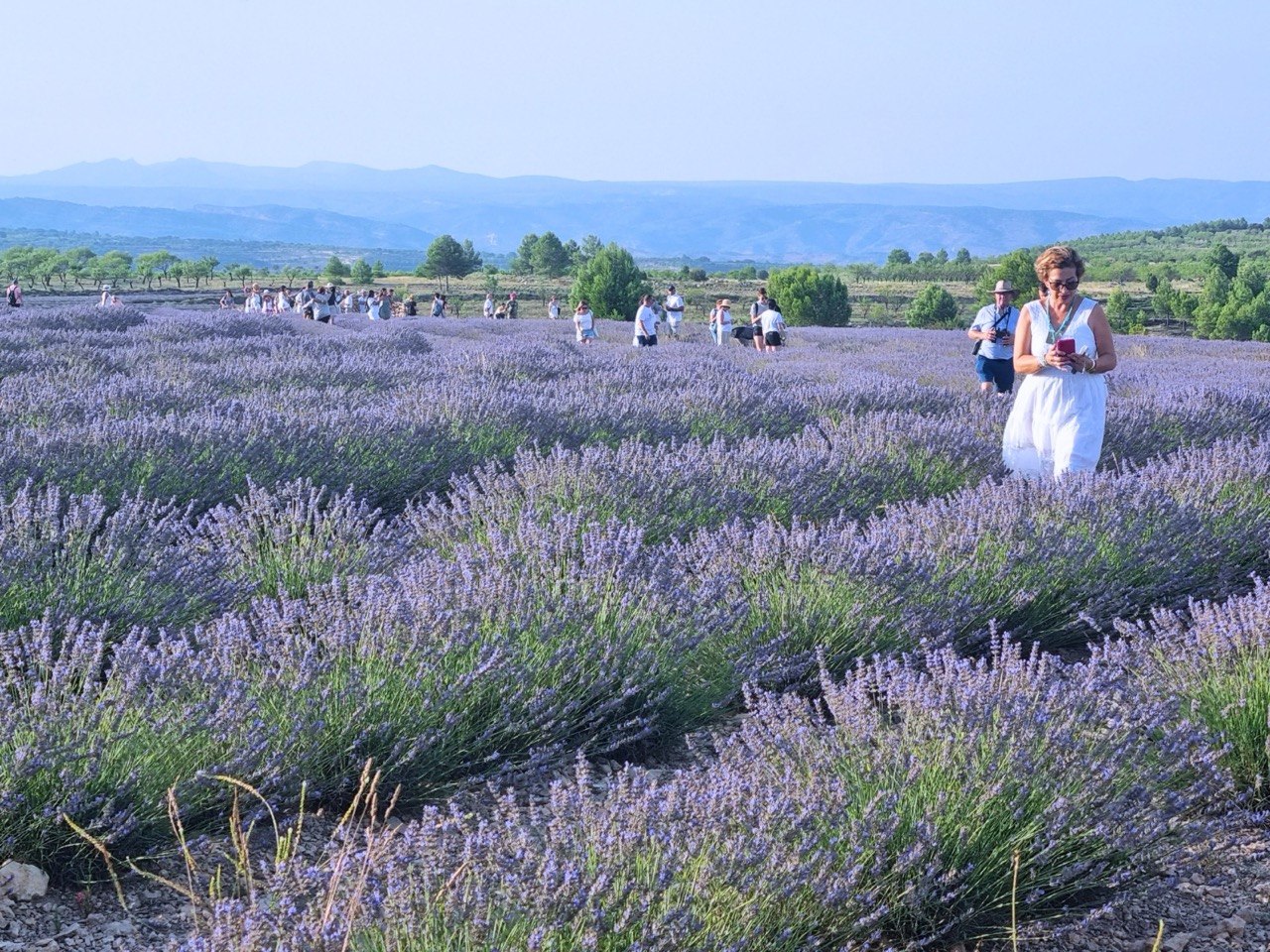
"If someone comes for lavender to relax, you need to understand which variety exactly they need. A serious specialist in a natural-products store should know this. But sometimes a person is simply sold a product labelled 'lavender' without any explanation of the differences — because the point is just to make a sale," Patricia says.
The family now grows around 15 different crops — lavender, rosemary, thyme, and other Mediterranean plants.
When you look at the neat rows of fields, it's hard to imagine that the founders of this business — Patricia's parents — used to run a jewellery shop and a home-appliance repair workshop. They began growing herbs without any farming experience.
"We started with one hectare and four plants. Now we have 100 hectares and 15 different crops. My brother and I grew up alongside this farm and learned to work in the fields from childhood," Patricia says.
Over three decades of work, the family has managed to build a large business and restore a great deal of abandoned land. According to Patricia, when plots are left without human attention for a long time, they quickly become overgrown with scrub, the risk of fires rises, pests appear, and the traditional rural landscape disappears.
The blooming lavender fields in Ademuz can only be seen for three weeks — from late June to mid-July.
Many people are convinced that the purple landscapes last throughout the entire summer. In practice, there's much less time. We don't grow the plants in order to show them to tourists. The main thing for us is to harvest them at full bloom and send them off for processing.
Patricia
Essential oils and herbal blends are made from plants. If you delay the harvest, the plants lose some of their beneficial properties.
"After the visits end, literally just a few days pass, and we harvest the last fields. After that, there's nothing left there to see," she says.
Despite the popularity of lavender photographs on social media, the family doesn't regard the tours as their main line of work.
"Tourism for us is only a small addition. We're engaged in farming. The tours came about because people became interested in seeing this process with their own eyes," Patricia explains.
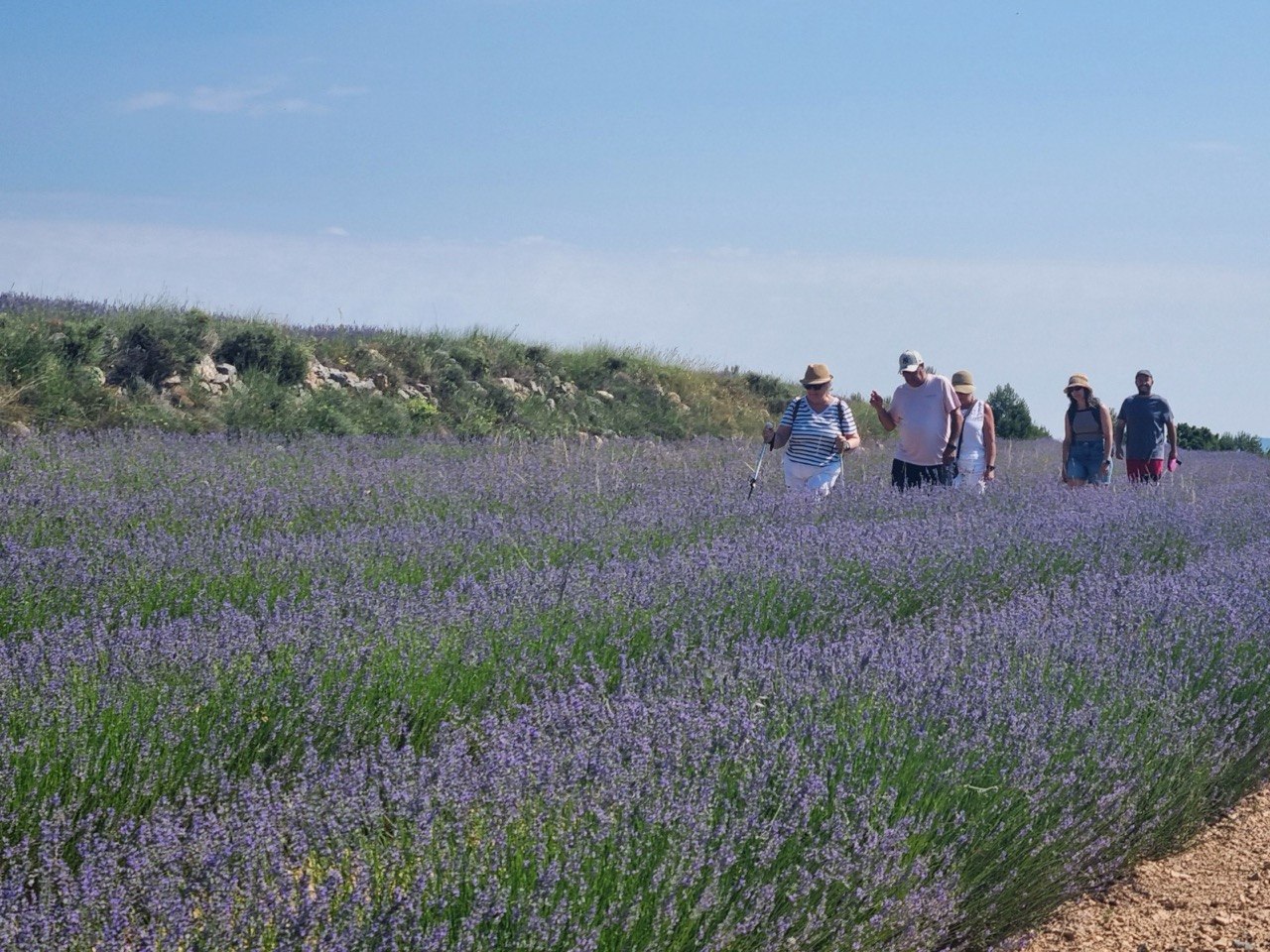
Another surprise awaits many right out in the field. People arrive expecting that signature sweet "lavender" smell familiar from cosmetics, candles, and air fresheners. But in reality,y the aroma of blooming lavender turns out to be quite different. It's far sharper, more herbaceous, and more complex, with woody and camphorous notes.
The Ecoaromuz lavender fields cannot be visited independently. This is private land, which can only be accessed by booking a tour in advance. Guests arrive in their own vehicles, and the exact meeting point is provided after booking.
During the walk, guests are shown different kinds of lavender and other aromatic plants, and are told how they're grown, harvested, and processed.
During one of the stops, guests have time to take the photos that many come to this remote but picturesque region for in the first place.
Related Articles

A Peruvian Duo Lost Everything in the DANA Flood — Then Wrote a Song About It with Greenpeace
Alejandro y María Laura lost their piano and almost everything they owned. Nine months later, the house is restored, a Greenpeace video clip is out, and a new album is on the way — still written about whatever happens to them
Valencia Becomes First Spanish City to Host the Gay Games
The world's largest LGBTQ+ sports and culture festival opens June 27 with over 10,000 participants from 80 countries — but its organizers stress it's open to everyone
Loading…
Loading…