Support La Cotorra on Patreon
Access exclusive content, special perks, and closer connection with us.
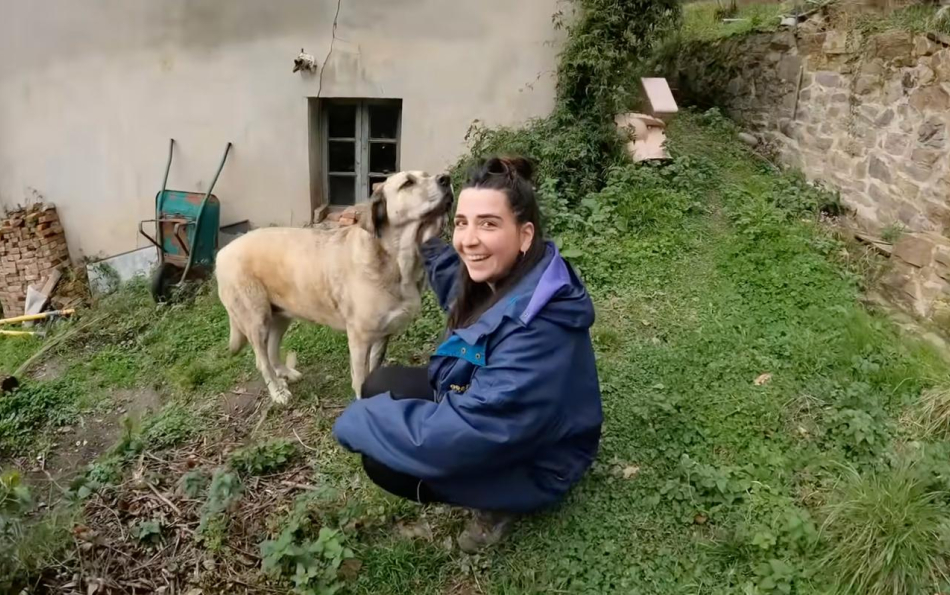
In 2020, during the coronavirus lockdown, a young Spanish woman named María found herself in her mother's village in Asturias. One day she came across an abandoned house: "Only the top part of the house was visible — all the rest was hidden by brambles."
She spoke with her mother's neighbour and learned that the house belonged to his cousin, who had recently inherited it, and within a few months, she had completed the purchase. "I was lucky enough to pay 6,000 euros in cash, and from that day on, I'm the owner of this house," she says.
The difficulty was that the house had neither electricity nor water, and María had no experience whatsoever. "I had never lived alone, never been alone out in nature, never grown plants, never done plumbing, never done construction, nothing at all," she explains. Nevertheless, she decided to go through all of it: "No one forced me. I did it because I wanted to experience it all to the fullest."
The house is connected to a natural spring — the cost of water comes to just 6 euros a year. The only dependence is on the weather: the more rain, the more water. During dry periods, she has to ration it or bring water from the village spring in jerrycans.
The same logic applies to the solar panels: "If it's sunny, I can use more electricity. If there's no sun, I have to try to work by hand, rather than relying so much on battery-powered tools, the phone, or anything else."
Right now, clay tiles are laid on the lower floor of the house. Every day, María chips away at it a little, breaking off pieces. She wants to level the floor. "Some people advised me: 'Get a jackhammer,' but I find that too much of a burden, because you have to rent it, you have to do the work within a certain timeframe, and then return it… So, since that creates a certain pressure, because maybe one day I won't feel like doing it, I prefer to work gradually with a pickaxe, the way it's always been done."
She admits that some activities lose their charm without company, but adds with a smile: "I've got plenty of activities saved up that my future husband will enjoy."
"My currency now isn't money, but time. I consider myself a rich person — rich in time," she says. María documented her entire six-year journey on social media under the handle elcampuylamaria. Her videos can be watched, for example, on YouTube.
"Let this serve as an example for anyone who's thinking about making a change in their life," she concludes.
Related Articles
Spain's Wine Battle and the Long, Troubled History of Spanish Wine
On the eve of Haro's Batalla del Vino, La Cotorra explores where Spanish wine came from, how to read its labels, and why winemaking is facing its worst crisis in decades
Loading…
Loading…