Support La Cotorra on Patreon
Access exclusive content, special perks, and closer connection with us.

The concept behind Jajajers is hard to explain to anyone who has never lived in Valencia. On one level, it is a comedy show. On another, a gastronomic guide. But above all,l it is a cultural phenomenon and a meme page about Valencians and Valencia. La Cotorra spoke with the bloggers about where to find real Valencian food and how to pass as a local. And yes, at the end, you will find their own paella recipe. The real one, without chorizo.
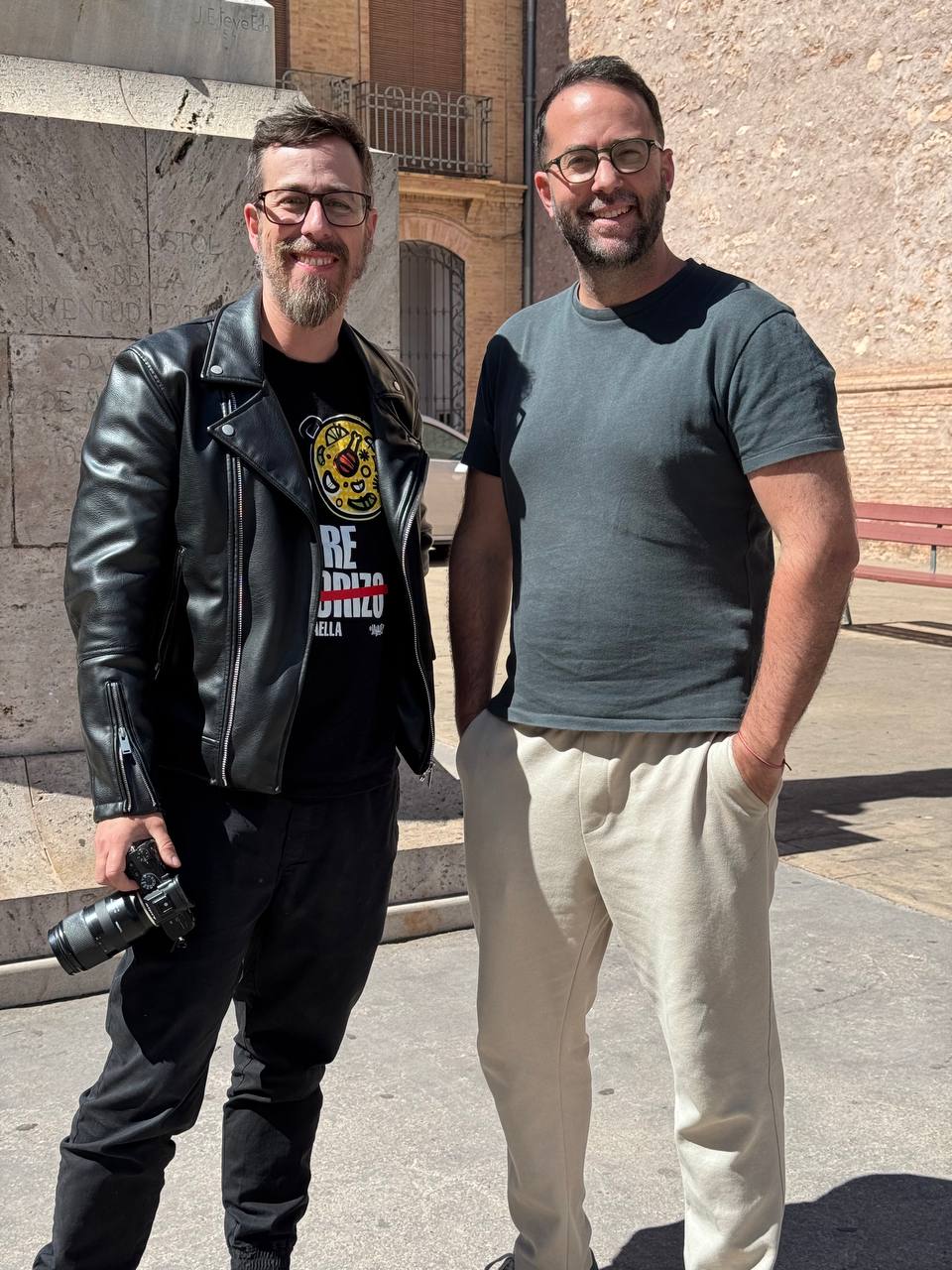
Jajajers is the duo of Jorge García and Alexis Martínez, who were already filming comedy sketches as schoolmates and launched their full-blown project 12 years ago. They make videos about paella, markets, restaurants, esmorzaret (the late Valencian breakfast), Valencian jokes, local habits, and the collective trauma around chorizo in rice. They joke the way only insiders can.
Jorge and Alexis — both professional directors and screenwriters — film their blog as a chronicle of Valencian life, with all its gastronomic dramas and distinctly local humour.
This is not a typical influencer blog. Landing on their page feels like sitting down at the next table in a very loud Valencian bar, where everyone is simultaneously arguing, laughing, and debating the best place to get rice.
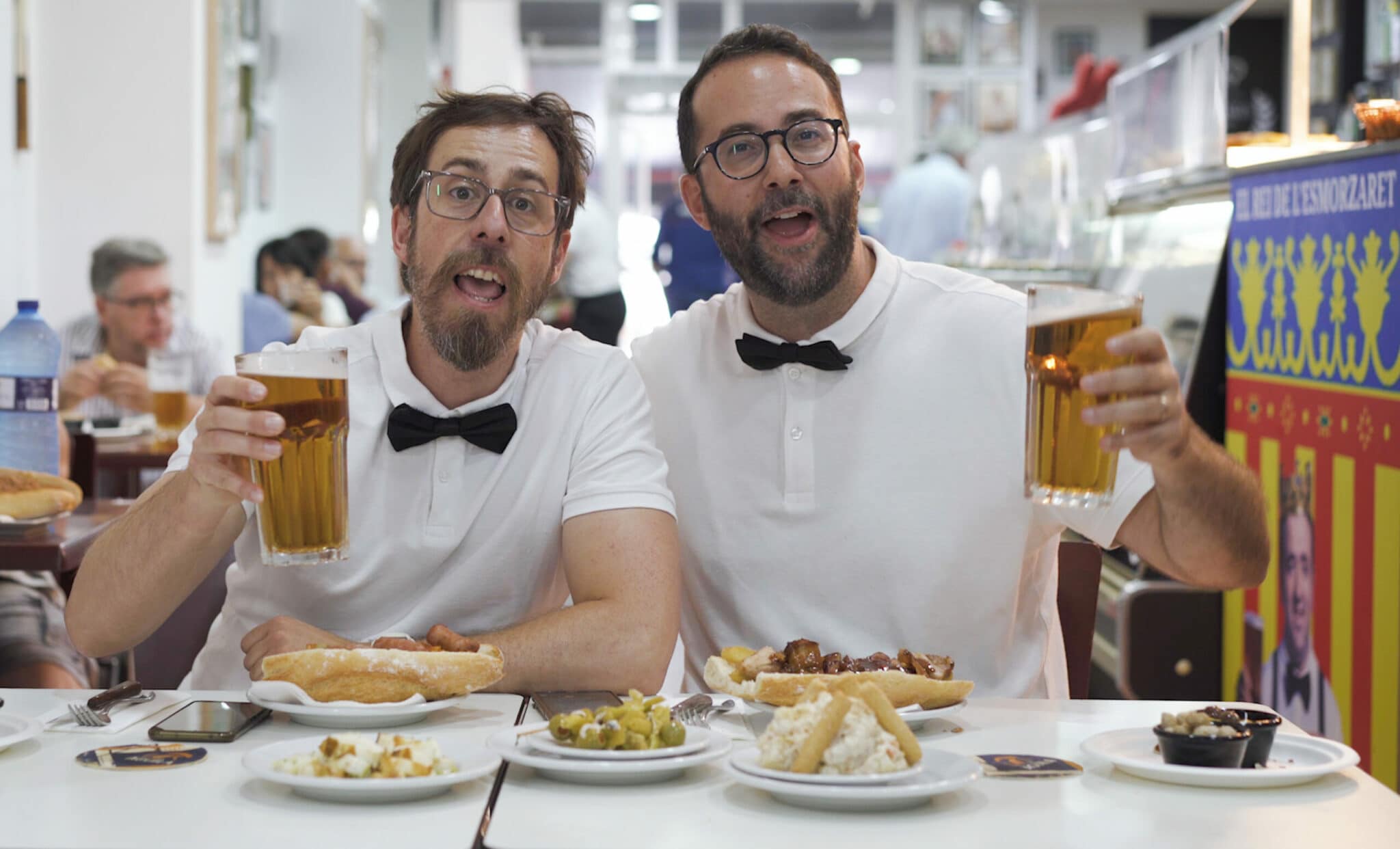
Over the years, Jajajers has become one of Valencia's most recognisable media brands — they now have more than 300,000 followers across platforms, a popular podcast in the Valencian language, their own shows, and DJ sets. Their video "No more chorizo in the paella" about "proper" Valencian paella has racked up millions of views far beyond Spain.
The Jajajers duo say their real breakthrough came when they started making content in Valencian.
Jorge: For foreigners, our project looks a little unexpected: viral contemporary content — in the Valencian language. Most people would assume that limits your audience.
Alexis: At the start, we ran the blog in Spanish and were afraid to switch to Valencian. We thought our audience would shrink and the social media algorithms would simply stop promoting us. But the exact opposite happened. From the moment we started making content in Valencian, the project really began to grow. We connected much better with our audience.
When someone hears the language their grandparents spoke, but in a modern, funny, and alive format, it creates a very powerful emotional response. We think people are simply tired of the same generic global content. Everyone wants something genuine, local, with character. In that sense, the Valencian language became not a limitation but the opposite — a way to stand out. We ourselves started speaking more Valencian because of the project.
Jorge
One of Jajajers' most viral videos is "No more chorizo in the paella," filmed in London. Without a word of explanation, the Valencians stood in the street holding a sign to get a simple message across to Londoners: real Valencian paella does not contain chorizo.
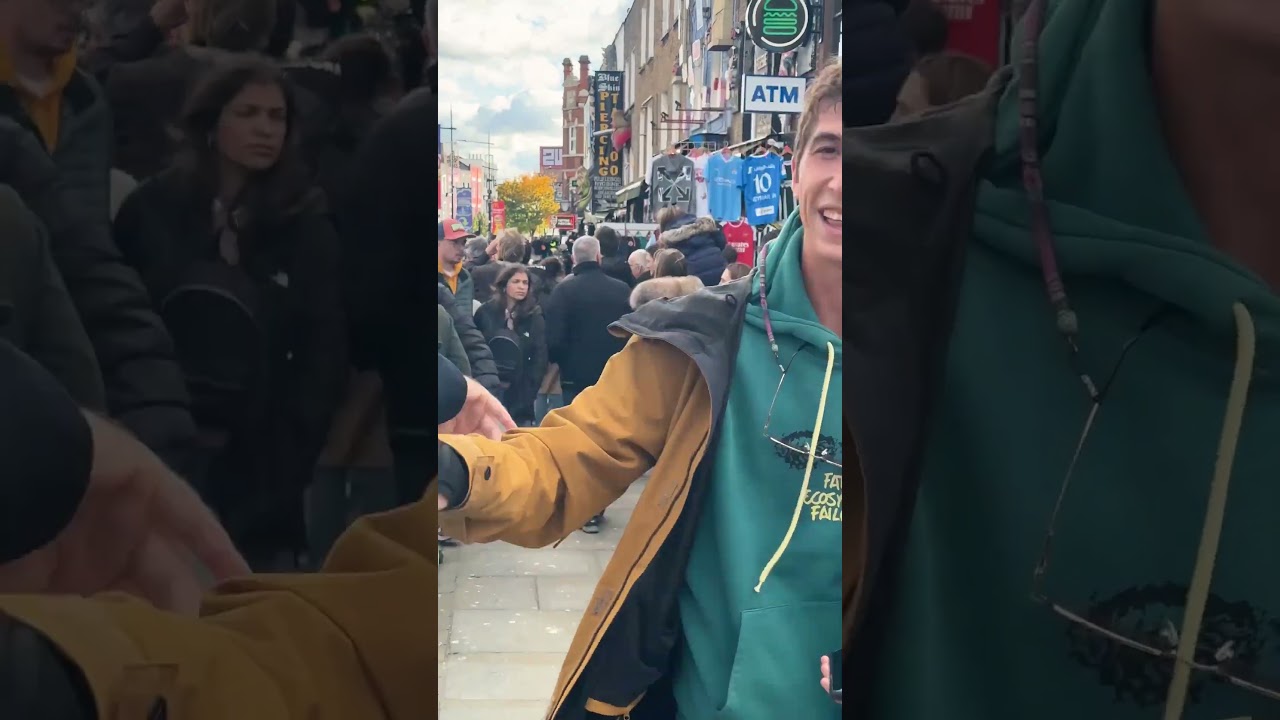
La Cotorra: Why did the chorizo-in-paella video go so viral?
Alexis: That video hit a nerve. But it's not really about the chorizo itself. We don't care what anyone eats at home. The problem is that around the world, people often simply don't know what Valencian paella is.
Jorge: I think most people know that pineapple on pizza is practically a crime for Italians. But with paella, somehow it's different. Many English people genuinely believe chorizo is part of the traditional recipe. We're not gastronomic activists. We're comedians. And we laugh at Valencians too — at how seriously we take paella. Because sometimes it really has become almost a religion.
It genuinely stings a little that a dish so famous worldwide is so poorly understood. Many people don't know that traditional paella is made with rabbit and rice, that it contains the large white bean called garrofó, or anything about the actual method of cooking. It's as though our paella is just any rice dish with seafood.
Alexis
La Cotorra: How are Valencians different from other Spaniards?
Alexis: There's a word — comboi — that captures our identity very well.
Jorge: Exactly, it's one of the favourite Valencian words,s and it's hard to translate directly. It's something between "the anticipation of getting together," "the pleasure of good company," and "joy in the moment."
Alexis: Valencians love to get together, to spend time with friends. Paella is the perfect symbol of that togetherness — often everyone eats from the same pan. For us, food is always an excuse to meet. Even the sound of Valencian is more relaxed and ironic somehow.
Jorge: Even swear words sound less aggressive in Valencian. The language is very fun, good-natured — disfrutón (life-loving). There's a lightness to it, a boldness, a sense that life is meant to be enjoyed.
La Cotorra: Can you teach us a few Valencian expressions?
Alexis: If something has really impressed you, you can say: "De categoria" — "top class." Or when saying goodbye: "Au cacao" — roughly "ciao, cacao."
Jorge: It's a bit like "see you later, alligator" in English.
La Cotorra: So much of Jajajers' content is about food — how do you find the best places for your blog?
Alexis: We don't go to "the most hyped burger joint of the month." We're interested in places connected to Valencian tradition, and we look for them beyond Valencia too. Once in Seville, we were hunting for a restaurant that does proper paella, and we ended up finding a place with almost no reviews on Google Maps. We looked at the photos and could see that the rice looked right. And it turned out the owner was Valencian.
Jorge: If someone comes to Valencia and wants to understand the city, they should go not even to a restaurant but to a market. It doesn't have to be the central one; the Cabanyal market works just as well. Even if the stallholders don't speak English, that's where you see the real gastronomic culture of the city. You can buy good Valencian tomatoes, local salad leaves, and produce from the huerta (the historic agricultural land around Valencia). Or simply sit down for an espresso right there in the market.
Alexis: Neighbourhood markets like Cabanyal are still part of ordinary city life. There, you see how people actually buy food, argue, talk, and have breakfast. That is the real Valencia.
La Cotorra: If you're filming a video about a place and you notice something is off — something you don't like — will you say so in the video?
Jorge: It's very important to us to keep things humorous and positive. If a place really doesn't work for us, we simply won't film it — and if we've started filming and see that something is wrong, we'll just drop that video.
Alexis: Someone puts their energy into their business every single day. We don't want to make toxic content or destroy someone for the sake of views; we respect other people's work. But of course, we won't pretend the rice is wonderful if it isn't.
Today, Jajajers extends well beyond Instagram. The duo has comedy shows, DJ sets featuring music in the Valencian language, and the Disfrutons podcast.
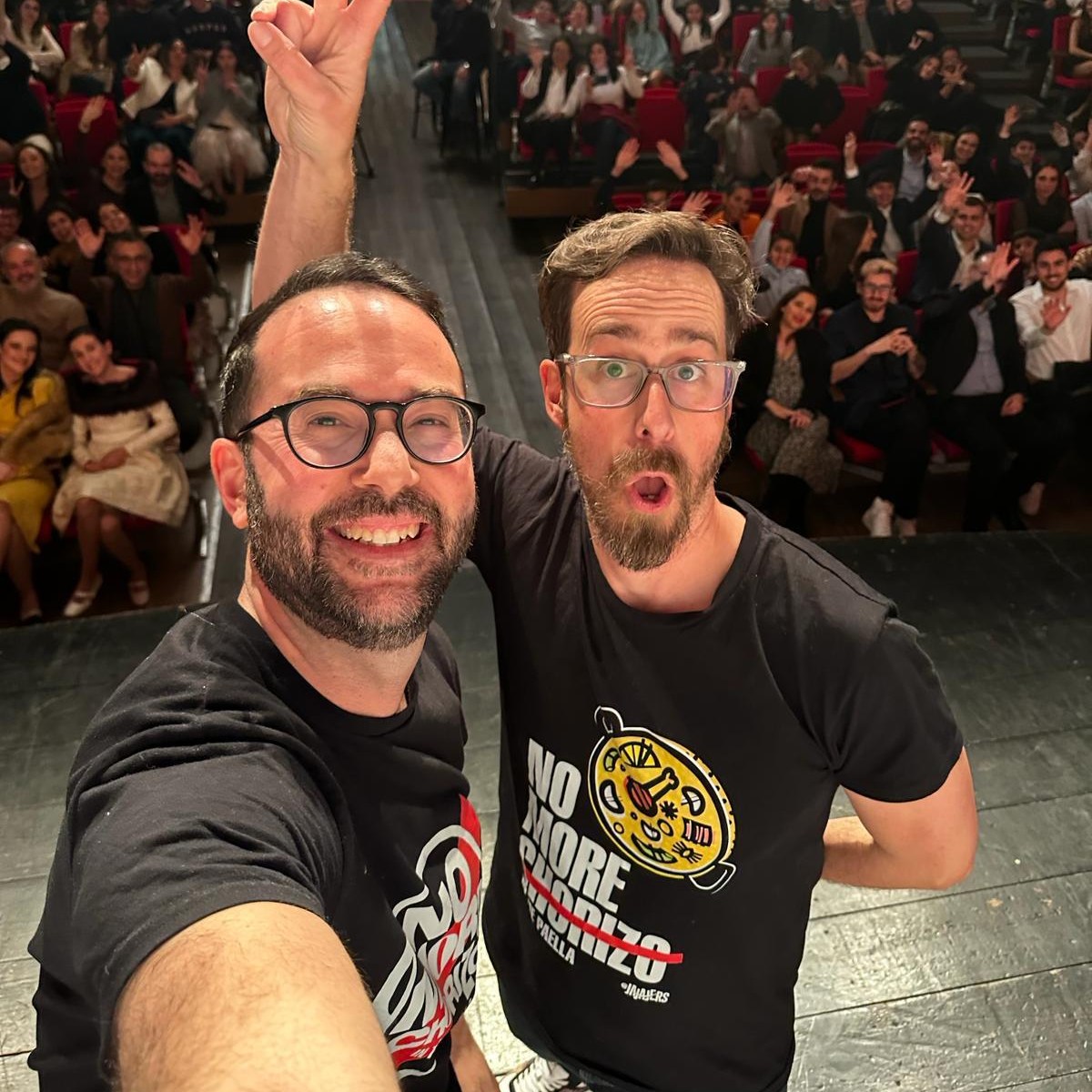
Jorge: We still have a huge number of topics to explore. Valencian gastronomy is endless. Beyond paella, there are dozens of rice dishes, traditions, and local histories. We want to make more content about how fruit and vegetables are grown, about villages, regional products, and local culture across the whole Valencian region.
Alexis: We feel there is so much about Valencia that hasn't been told yet. People know paella, Las Fallas, and the sea — but behind all that, there's an enormous world.
Jorge: The DJ shows have unexpectedly taken off really well. We play music in Valencian, do comedy sets, and travel to festivals. We want to do more in Catalonia and the Balearic Islands too — because the language and culture are shared. And beyond that, we'll see where things take us.
Before saying goodbye, Jorge sums up the philosophy of the project in one short phrase:
[accordion-item title="Jorge's recipe for real Valencian paella"]El techo es el cielo.
The sky is the limit.
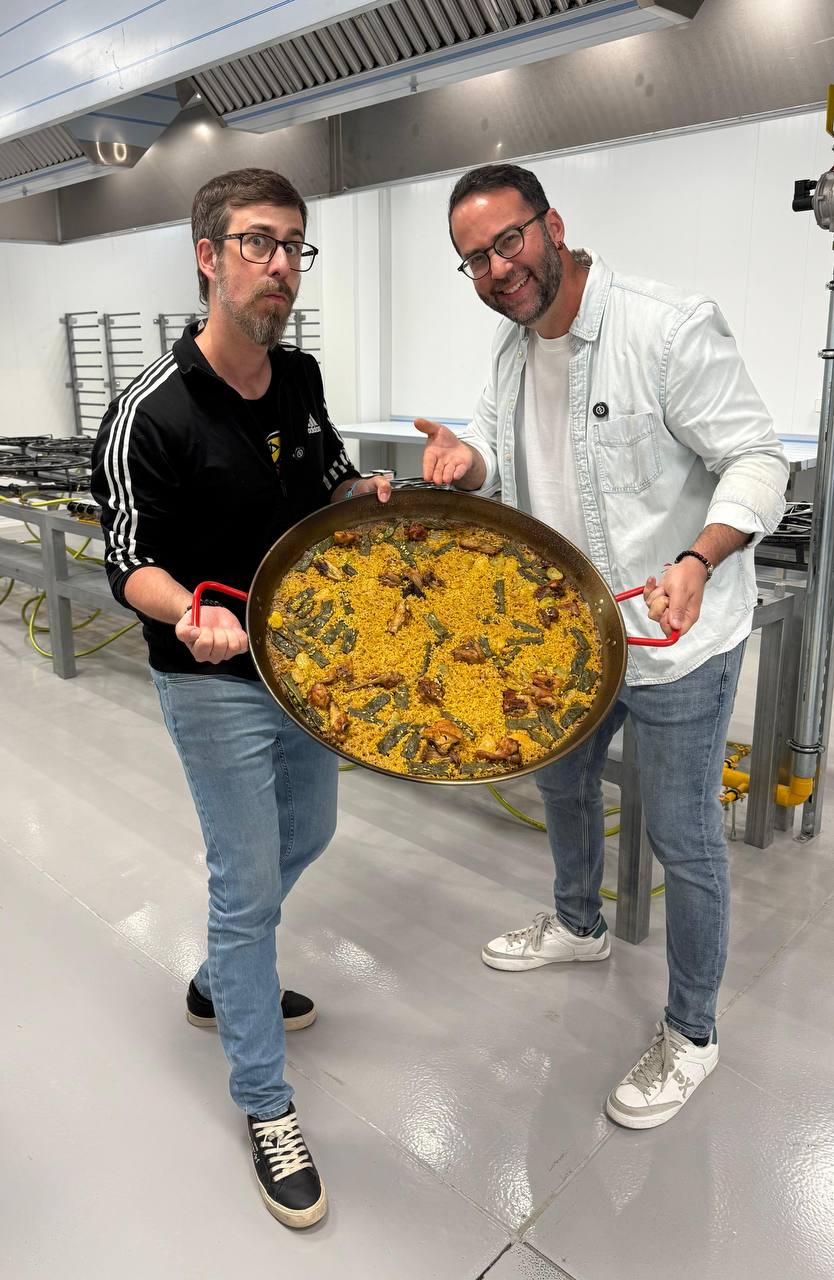
Jorge: The recipe for Valencian paella is, in theory, a single thing — but every household makes it differently. The flavour depends on the variety of rice, the cooking time, and the amount of oil: some prefer it drier, others like a more pronounced socarrat (the golden crust). Here is how I make it myself.
For me, paella begins not with the rice but with the right foundation. I always use Albufera-variety rice and cook it in an iron paellera — it holds the heat better and gives that proper socarrat.
I use quite a lot of oil, but not so much that the dish turns out greasy: the aim is to achieve the right texture at the end.
Ingredients (4–5 servings)
Step 1. Brown the meat properly
I fry the chicken and rabbit for around 20–25 minutes over a medium heat. I don't rush: the meat shouldn't just turn white — it needs to colour well and give its flavour to the oil.
Step 2. Vegetables — fry, but don't overcook
I also fry the green beans and garrofó briefly, then take them out of the paellera. Especially if the vegetables are fresh — this way they keep their flavour and texture, rather than turning into mush after a long simmer.
Step 3. The sofrito — half the battle
Sofrito is grated tomato sautéed with garlic and chopped ñora pepper, cooked down to a rich, concentrated flavour. Once the sofrito is ready, I add a little sweet paprika — and immediately pour in the water, so the paprika doesn't have time to burn.
After this, the broth simmers with the meat and sofrito for about half an hour.
Step 4. Rice and rosemary
When the time comes for the rice, I turn the heat to maximum.
I put in a sprig of rosemary for just a couple of minutes — literally 2–3 minutes, enough for it to lend a faint fragrance. Then I take it out.
I add a little saffron, which I have steeped beforehand in a small amount of broth. I don't like too vivid a colour — the saffron should give aroma and a gentle tint, not turn the paella an unnatural shade of yellow.
I return the vegetables to the paellera.
Step 5. The most important part — cooking the rice
I add the rice and cook it on a high heat for the first 8–10 minutes. During this time, the rice can still be stirred.
Then I lower the heat and leave the rice completely untouched for the next 4–6 minutes.
Throughout, I taste the broth for salt several times — usually adjusting it 2–3 times. There is an old rule: when you think the salt level is perfect, add one tiny pinch more. Rice absorbs everything.
Step 6. The socarrat
Once all the liquid has evaporated, I put in a fresh sprig of rosemary and give it a burst of high heat for just a minute to create the socarrat.
The key here is not to get distracted. Between "perfectly toasted" and "burnt" is about thirty seconds.
One last thing: paella needs to rest
Once it is off the heat, the paella must sit for at least five minutes.
Only then does the rice settle, the flavours come together, and everything becomes exactly what it should be.
Related Articles
Beyond Paella: Discovering All i Pebre, Valencia’s Best-Kept Culinary Secret
Deep in the heart of the Albufera wetlands, the fishing village of El Palmar preserves a traditional, rich garlic and wild eel stew that tourist traps completely miss
Loading…
Loading…