
Support La Cotorra on Patreon
Access exclusive content, special perks, and closer connection with us.
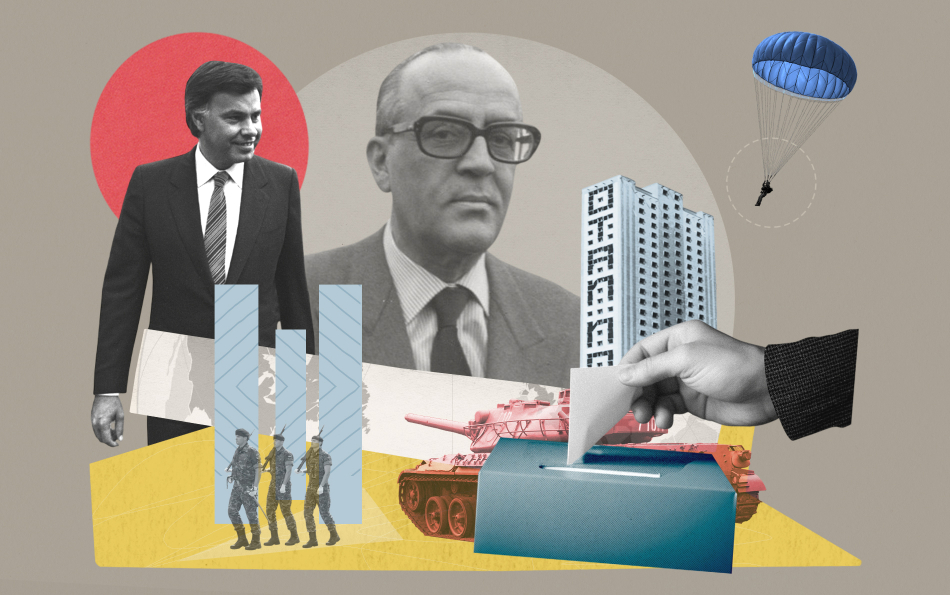
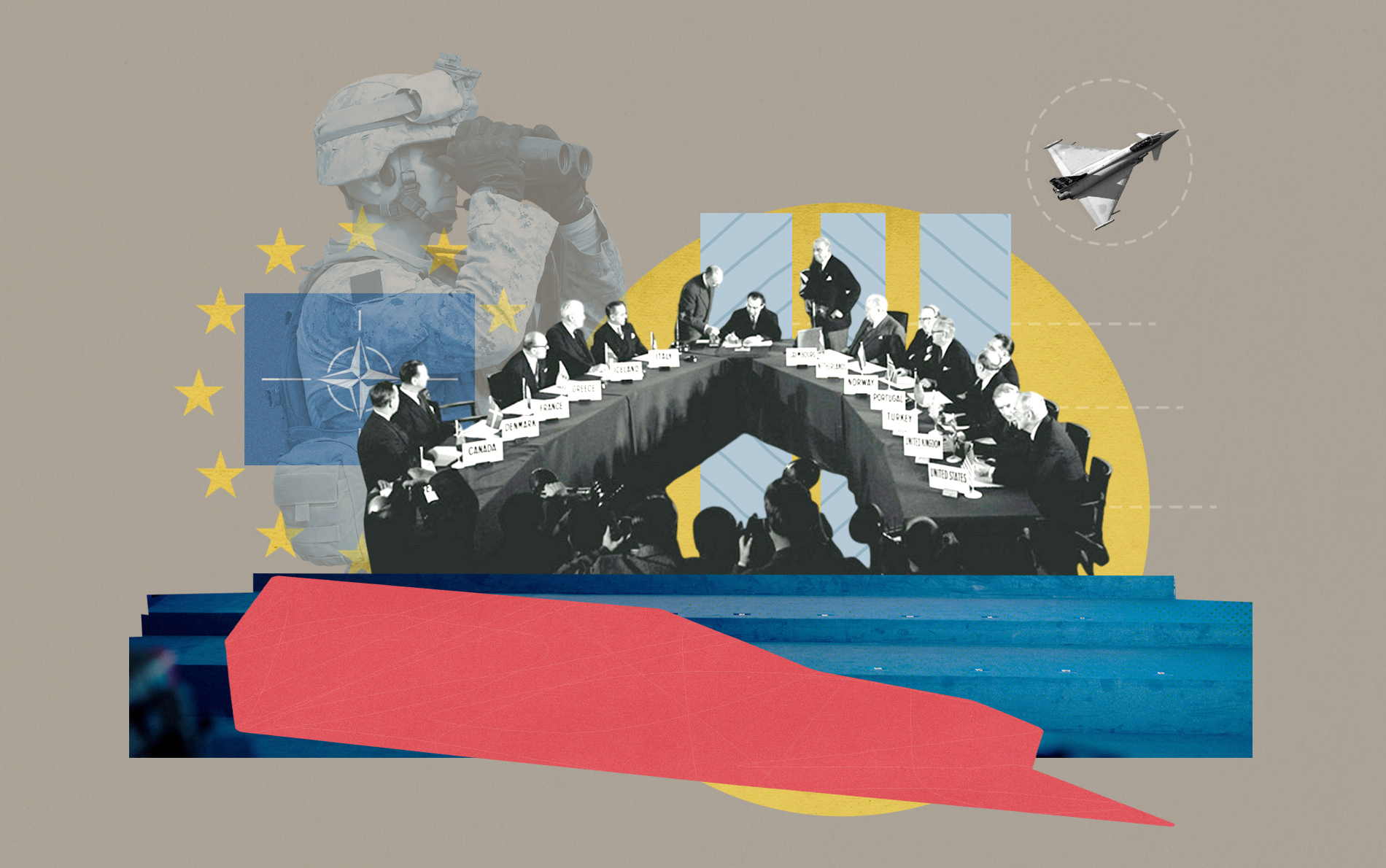
Exactly 40 years ago, on 12 March 1986, Spaniards set the country’s defence and foreign-policy priorities for decades to come: in a referendum, they voted for Spain to tie itself to NATO for good. For many, the result was unexpected at the time. Today, Spaniards themselves no longer question whether they need the Alliance. Instead, calls to strip Spain of NATO membership periodically come from the other side of the Atlantic — from the United States. How Spaniards moved away from scepticism toward NATO, and what Spain’s armed forces look like today — in La Cotorra’s report.
Spanish historians and politicians still debate when the Transición — the transition from Franco’s dictatorship to democracy — truly ended. It is often dated to the adoption of the Constitution (December 1978), the failed coup attempt (23 February 1981) or the general election of October 1982. Yet 40 years ago one could also hear another view: the decisive point came on 12 March 1986, when Spaniards took part in the NATO referendum.
The road to that vote was full of unexpected turns. In the late 1970s, society as a whole did not support joining NATO. As historians note, public attitudes were shaped by Spain’s traditional 20th-century neutrality and still-fresh memories of the Civil War.
There was no sense that NATO would bring Spain a direct benefit. And priorities were different: building political institutions, strengthening democracy, and economically drawing closer to Europe.
Left-wing parties were especially hostile for whom NATO was inseparable from the United States. Back in 1953, Washington had, through bilateral agreements, incorporated Franco’s dictatorship into its strategy of countering the USSR, securing access to Spanish military bases and granting the regime international legitimacy. In 1981, Ronald Reagan’s arrival in the White House — and his hard-line policy (especially toward left-leaning Latin American states such as Cuba, Nicaragua and Grenada) — only intensified anti-American sentiment in Spain.
The centre-right, meanwhile, saw NATO membership as Spain’s “return to the West,” a chance to modernise the armed forces, and a step that would help Spain join the European Economic Community (EEC) — the EU’s predecessor.
In December 1981, the right-wing government of Leopoldo Calvo-Sotelo filed an official application to join NATO, and on 30 May 1982, Spain became the Alliance’s 16th member. The decision was taken by a simple parliamentary majority and provoked strong public rejection: at the time, integration was supported by only 18% of Spaniards, while 52% were against. [source]
Spain’s Socialist Workers’ Party (PSOE), led by the young and charismatic Felipe González, capitalised on that protest sentiment. Under the slogan “NATO — initially NO” (OTAN, de entrada NO), the party brought hundreds of thousands into the streets, uniting anti-American, pacifist and environmental movements. In its election programme, the PSOE promised to hold a referendum on leaving the bloc.
The tactic worked: in the election on 28 October 1982, the PSOE won. However, as the author of the famous anti-NATO slogan later admitted, the campaign always contained an element of ambiguity: the wording de entrada left the Socialists a loophole. And in the end, they used it.
González’s government quickly concluded that leaving NATO would entail enormous political and economic costs. First, it became clear that Spain’s partners saw integration into Euro-Atlantic structures as a single package: full EEC membership was informally tied to remaining in NATO. Second, staying in NATO mattered for reforming the Spanish army and preventing further coup attempts. Third, it was viewed as the only way to guarantee Spain’s territorial integrity and protect the enclaves of Ceuta and Melilla from possible claims by Morocco.
But the Socialists could not simply abandon their campaign promises. So they held the referendum — but flipped their position 180 degrees. The new slogan became: “Choose YES in the interest of Spain.”
Several political tactics were used. First, González promised that if “No” won, he would resign and the right would return to power. Second, the campaign avoided the acronym “NATO” and instead used the softer term “Atlantic Alliance.” Third, a “Yes” vote was framed as conditional on three strict limitations:
The right-wing opposition faced an equally unpleasant choice. “If it supported the government — consistent with its beliefs (about the benefits of joining NATO, — La Cotorra) and interests — it would boost the governing party’s success and glory; if it played the role of opposition, it would be left without arguments and without its own line; if it leaned toward abstention, it would show that electoral interests mattered more than convictions,” the prominent left-wing politician and sociologist Ignacio Sotelo recalled a year after the referendum.
In the end, the right chose the third option — calling for a boycott — and lost. On 12 March 1986, 52.49% of voters chose to remain; 39.1% voted against. Turnout was 59.42%. “No” won only in Catalonia, the Basque Country, Navarre and the Canary Islands.
Over time, the three caveats printed on the ballot faded away. On 1 January 1999, Spain joined the Alliance’s integrated military structure. This was helped by the fact that NATO’s Secretary General in 1995–1999 was Spaniard Javier Solana — a PSOE member who had once strongly opposed Spain’s entry but later, along with his party, made a sharp turn.
The ban on nuclear weapons was softened even faster. As early as 1988, Spain signed a new agreement with the U.S. allowing the introduction of nuclear weapons with Madrid’s prior consent. In a country marked by the trauma of U.S. thermonuclear bombs falling at Palomares in 1966, such flexibility prompted mixed reactions.
What happened at Palomares?
As for the U.S. military presence, the Americans did leave two air bases — Torrejón de Ardoz and Zaragoza. But the remaining joint-use bases in Rota (Cádiz) and Morón de la Frontera (Seville) gained major strategic significance. Instead of the promised reduction, the size of the U.S. contingent and the scale of infrastructure there increased many times over.
Today, Morón supports, among other things, operations linked to U.S. Africa Command (AFRICOM). Rota is a critical node for the naval component of the U.S. ballistic missile defence system.
By the end of the 20th century — after the Cold War ended and the USSR collapsed — NATO had, in many ways, lost its original purpose. In 2019, French President Emmanuel Macron even diagnosed the Alliance with “brain death,” pointing to the lack of a shared vision between the U.S. (during Donald Trump’s first term) and European allies, as well as problems of coordination stemming from internal contradictions.
NATO got a second wind in 2022 — the year its summit was held in Madrid. The key outcome was a new Strategic Concept setting the Alliance’s course for the decade ahead. For the first time, Russia was described in the document as “the most significant and direct threat to Allies’ security and to peace and stability in the Euro-Atlantic area.”
At the Madrid summit, many words were spoken about unity and solidarity among the 32 allies. On major issues, this is indeed the case. But differences are inevitable — and for Spain, as La Cotorra has reported, they became especially visible after Donald Trump returned to the White House in January 2025.

The issues include Spain’s unwillingness to spend 5% of GDP on defence and its categorical ban on the U.S. using the bases in Rota and Morón de la Frontera to support the Iran operation. Spain’s firmness on both points prompted calls in the U.S. to expel the Kingdom from NATO.
Against this backdrop, in February, Spanish media began asking: what happens if Spain is actually kicked out? The newspaper La Razón, for example, outlined three consequences:
In reality, NATO has no mechanism to expel a member state. And NATO Secretary General Mark Rutte — who, incidentally, has a warm personal relationship with Trump — has stated clearly that Spain’s role in the Alliance cannot be downplayed. “For example, Spain’s Patriot system in Turkey has protected the country and key U.S. interests located there for ten years,” he noted.
Spain’s Ministry of Defence says Spain is involved in NATO operations in the Mediterranean, Baltic and Black Sea regions, as well as in Iceland. The Foreign Ministry’s portal lists deployments in Slovakia, Romania, Latvia and Estonia; participation in the defence of Turkey; involvement in training and capacity-building for Iraq’s armed forces; and participation in operations in the Mediterranean and the Atlantic Ocean.
According to the Global Firepower 2026 ranking, Spain’s armed forces rank among the world’s top twenty, placing 18th out of 145 countries analysed. Spain is ahead of Egypt and just behind Australia. The project puts Spain’s defence budget at $39 billion (16th place).
Spain’s armed forces have 440 aircraft and helicopters (26th), 298 tanks (46th), 49.3k armoured fighting vehicles (20th), and 175 naval assets (including two submarines and one aircraft carrier; 16th).
Since 2001, after conscription was abolished, Spain has relied exclusively on a professional army.
Active-duty personnel total 121.8k (45th worldwide). The government’s stated goal is 127.5k by 2029. [source]
But meeting that target will not be easy: the number of applicants declines each year, in part due to low pay. A soldier or sailor at the start of service takes home about €1,350 per month; a sergeant can expect around €1,800. [source]
Given this, the benefits of being under NATO’s shared “umbrella” — which spreads the burden among 32 allies — are particularly important for Spain. And most Spaniards understand this well: according to polling, 85% believe leaving the Alliance would be a mistake. [source] Over 40 years, the cautious “NATO — initially NO” has turned into a confident “Yes.”
Related Articles

Why Feeding Kids in Spain Means Surrendering to Sugar — A Russian Mum's View from Valencia
At the playground, treats fly between families faster than you can track them, and restaurant kids' menus rarely stretch beyond chips and nuggets. But after years in Valencia, one mother is rethinking what really matters.
Why Is Spain So Corrupt? A Brief History and Eight Reasons the Problem Won't Go Away
With parliamentary elections approaching, corruption has become Spain's hottest political weapon. But the phenomenon is neither new nor simple — it stretches back centuries and involves structural, cultural, and psychological factors that no government has yet managed to fix.
Beyond Paella: Discovering All i Pebre, Valencia’s Best-Kept Culinary Secret
Deep in the heart of the Albufera wetlands, the fishing village of El Palmar preserves a traditional, rich garlic and wild eel stew that tourist traps completely miss
Loading…
Loading…