
Support La Cotorra on Patreon
Access exclusive content, special perks, and closer connection with us.
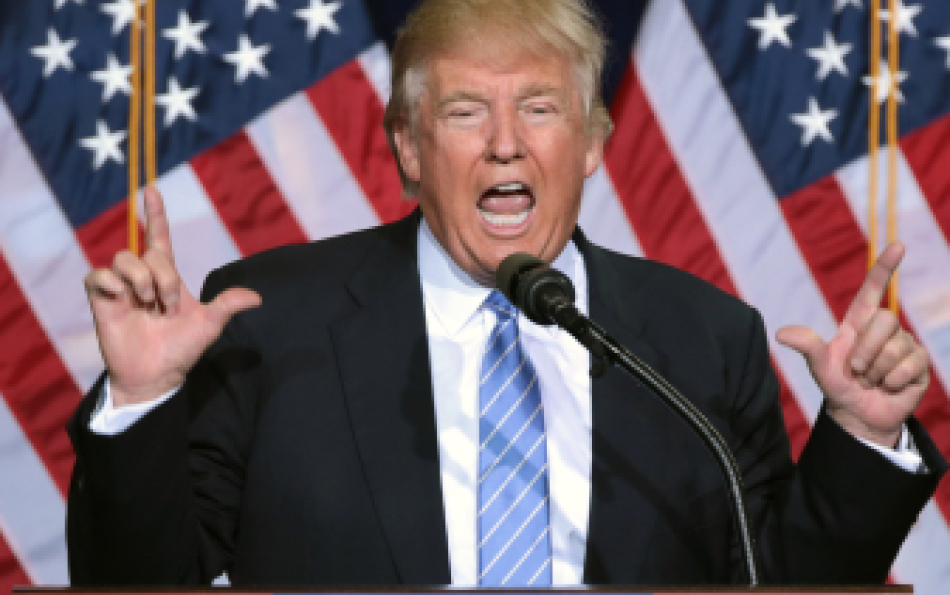
“Blackmail by an aggressor state” — that is how Spain’s government has described US President Donald Trump’s threat to cut off trade ties with Madrid. The White House chief’s anger was triggered by the Pedro Sánchez government’s decision to ban the Pentagon from using the military bases in Rota (Cádiz) and Morón de la Frontera (Seville) to support strikes on Iran. But that is far from the only grievance the Trump administration has with Madrid. La Cotorra looks at the reasons behind the most serious rift in US-Spain relations in decades — and what Trump could actually do in practice to “punish” Spain.
Donald Trump made the explosive remarks on 3 March during a meeting with German Chancellor Friedrich Merz. Responding to a journalist’s question about the role of European allies in the war in the Middle East, the US president said some countries, such as Germany, were behaving “magnificently”, while others were behaving “terribly”. He placed Spain in the second category, then said: “I even told Scott (Treasury Secretary Scott Bessent — La Cotorra) to stop all deals with Spain.”
Listing his complaints against the kingdom, Trump first said that among all NATO members, only Spain had refused to commit to raising defence spending to 5% of GDP. “And now Spain has said that we cannot use its military bases,” the US president continued. “We could use the bases if we wanted to. We can fly there and use them. Nobody is going to tell us that we can’t do that. They (the Spanish authorities — La Cotorra) have behaved in a hostile way.”
“Spain has absolutely nothing that interests us except its people — they are wonderful. They have wonderful people. But the leadership is not wonderful,” Donald Trump added, before once again promising to halt “all trade” with Madrid. “We want nothing to do with Spain,” he concluded.
According to US figures, bilateral trade in goods reached $47.5 billion in 2025.
The United States exported $4.6 billion more to Spain than it imported from it. That means Trump’s trade threat could inflict greater damage on American business.
As El País explained, “overall, Spain does not have particularly intensive trade with the United States: only 4.3% of its exports go there”. But some sectors are especially vulnerable. Olive oil, for instance. The North American market accounts for 50% of global consumption outside the EU, and Spain could lose ground to competitors such as Tunisia.
The US is also a strategically important market for Spanish wine, where Latin American producers could stand to gain. Jamón, by contrast, would be much harder to replace fully.
Leaving agricultural products aside, Spain also exports significant amounts of machinery and electrical equipment to the US.
The main category of American exports to Spain, meanwhile, is energy. The US accounts for almost 30% of Spain’s total gas imports. In 2025, supplies of American liquefied natural gas to the kingdom doubled, helping Madrid make up for its отказ from Russian fuel.
In his remarks, Trump used the word “embargo”. But the likelihood of a full-scale embargo is, in practice, close to zero. First, because it is an extremely severe tool that even the United States uses only rarely (at present, only Cuba remains under a US embargo; in the second half of the 20th century, there were only a handful of examples, such as Libya under Muammar Gaddafi and Sandinista Nicaragua).
Second, given the EU’s single economic space, any broad tariffs or sanctions against Spanish goods would affect the entire European Union. That would be a blow on a completely different scale, including to the US economy itself.
That said, Washington could still impose selective tariffs on specific categories of goods — Spanish agricultural products, for example. Another option would be sanctions against individual companies.
Immediately after Trump’s speech, sources in the Spanish government told local media that if the US president truly wants to review bilateral relations, he “must respect the independence of private business, international law and the agreements between the EU and the US”.
At the same time, government sources tried to reassure the public, saying: “Our country has the tools to soften the potential consequences (of Trump’s decisions — La Cotorra), help the affected sectors and diversify supply chains.”
A little later, Spain’s deputy prime minister and Sumar leader Yolanda Díaz responded sharply, saying that “Spain does not accept blackmail or lectures from an aggressor country”.
“We are a country of peace. If the United States wants an ally, it should start by respecting our sovereignty and international law,” she wrote.
Meanwhile, EU spokesperson Olof Gill said Brussels expects Washington to honour the trade commitments agreed previously. He also stressed that the European Commission will always fully protect the interests of EU member states.
In any case, Spain may not need defending. Trump also threatened Spain with trade measures after the NATO summit in The Hague in June 2025. In the end, however, there were no real consequences.
Spain and Donald Trump have been at odds since the very start of his second term. Shortly after the inauguration, Trump unexpectedly described Spain as a member of BRICS while speaking to journalists — which, of course, it has never been. He then threatened it (again, as a supposed “BRICS member”) with exceptionally high tariffs.
In the months that followed, the US president repeatedly criticised Spain, above all for failing to meet NATO targets on defence spending. When Trump returned to power, the alliance’s benchmark stood at 2% of GDP (Spain had spent only 1.24% in 2024).
In summer 2025, under US pressure, allies agreed at the Hague summit to raise military spending to 5% of GDP by 2035 (3.5% on defence itself and 1.5% on infrastructure security — a category that can be interpreted very broadly).
For Pedro Sánchez, who leads a fragile left-wing coalition, that ultimatum was impossible to accept. The government understood that hitting such a target would require huge cuts to social spending, including healthcare and education.
Madrid ultimately chose open defiance: Sánchez secured an exemption for Spain, saying the country would cap itself at 2.1% of GDP for now, as that level was enough for Spain to meet all its NATO obligations.
That act of defiance enraged Donald Trump, who even began calling for Spain to be expelled from NATO. In practice, however, that was purely rhetorical: there is no mechanism to throw a country out of the alliance.
There are other factors that irritate the Trump administration as well. One is the Spanish government’s approach to migration. On 4 February, The New York Times published an opinion piece by Pedro Sánchez in which he explained why the large-scale regularisation of migrants was necessary.
He pointed first to the “moral aspect”: Spain was once a country of emigrants, and now it should repay that debt by being “a welcoming and tolerant society”. His second argument was “pragmatic”: without migrants, Western countries face a “sharp demographic decline”.
In that same article, Sánchez directly criticised “MAGA-style leaders” who describe regularisation as “a suicidal step” and “the desperate move of a country in decline” (MAGA stands for Trump’s slogan Make America Great Again). Personal attacks from the US president clearly sting.
At the same time, another foreign-policy issue that has weighed on US-Spain relations throughout the past year has been the war in Gaza.
In summer 2025, 82% of Spaniards surveyed said that Israel was committing genocide against Palestinians. Pedro Sánchez used the same word himself. The Trump administration, by contrast, fully backed — and continues to back — the actions of the Israeli government in Gaza.
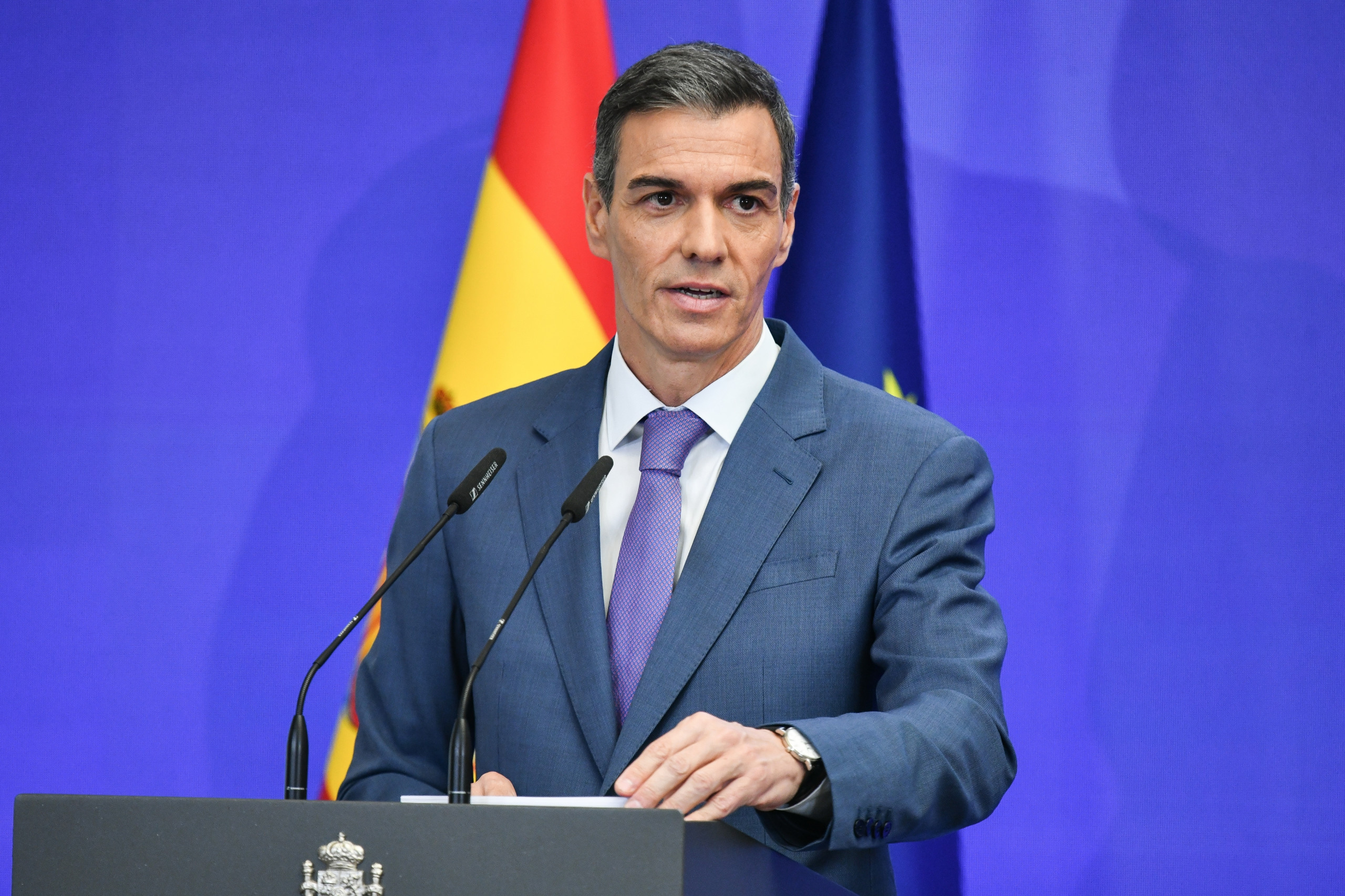
The disagreement over Iran has proved the most serious of all. Pedro Sánchez is the only EU leader who has openly condemned the “unilateral military actions of the US and Israel” — the strikes on Iranian territory that began on 28 February.
“You can be opposed to a hateful regime — as Spanish society broadly is in relation to the Iranian regime — and at the same time oppose an unjustified and dangerous military intervention that falls outside international law,” Sánchez explained when setting out his position.
That political condemnation was backed up by practical action. Spain imposed a veto on the Pentagon’s use of the military bases in Rota (Cádiz) and Morón de la Frontera (Seville) to support attacks on Iranian territory. “We will not make our bases available for anything that is not provided for in the treaty (with the US — La Cotorra) or that does not comply with the UN Charter,” Foreign Minister José Manuel Albares said.
Which treaty is this referring to?
The Spanish government’s firmness created unexpected logistical problems for the US military.
The Pentagon was forced to relocate at least 15 KC-135 Stratotanker refuelling aircraft from Spanish bases to airfields in Germany, the UK and France.
The government’s position has drawn criticism from all of Spain’s right-wing parties — and even from some on the left. Ione Belarra, the secretary-general of the left-populist party Podemos, called on Sánchez, first, to “clarify the role of the Rota base in this illegal US operation”. Second, to close the American bases in Spain. And third, to “immediately” withdraw Spain from NATO — in her words, to “break this military-criminal alliance that makes Spaniards accomplices in some of the worst crimes against humanity”.
“Prime Minister Sánchez is turning Spain into a military target,” warned Belarra, whose party only a few years ago won more than 20% of the vote and was part of the governing coalition, but now has the support of around 2% of Spaniards.
Meanwhile, a party roughly ten times more popular — the far-right Vox — attacked the government for the opposite reason. Vox leader Santiago Abascal called Prime Minister Sánchez the “best friend” of Iran’s Ayatollah Ali Khamenei, killed in recent days, as well as of Venezuelan leader Nicolás Maduro, captured by US special forces in January. “The best thing Sánchez can do is keep quiet and stop putting Spaniards’ safety and international alliances at risk,” Abascal said.
In the same vein, Israeli Foreign Minister Gideon Sa’ar wrote in Spanish on X: “First Hamas thanked Sánchez, then the Houthis, now Iran. Is this what it means to be ‘on the right side of history’?”
From the United States, meanwhile, voices have once again started calling for Spain to be “thrown out of NATO”.
Among them was the influential American analyst and columnist Marc Thiessen, who is close to Republicans and to Trump.
This time, however, the US president chose to threaten Spain not with exclusion from NATO but with economic consequences. That has likely only reinforced Spaniards’ already negative view of him. In May 2025, 61% of Spanish citizens said Trump’s return to the White House was harmful to Spain’s interests. When the next poll is conducted, that figure will likely be much higher.
Related Articles

Why Feeding Kids in Spain Means Surrendering to Sugar — A Russian Mum's View from Valencia
At the playground, treats fly between families faster than you can track them, and restaurant kids' menus rarely stretch beyond chips and nuggets. But after years in Valencia, one mother is rethinking what really matters.
Why Is Spain So Corrupt? A Brief History and Eight Reasons the Problem Won't Go Away
With parliamentary elections approaching, corruption has become Spain's hottest political weapon. But the phenomenon is neither new nor simple — it stretches back centuries and involves structural, cultural, and psychological factors that no government has yet managed to fix.
Beyond Paella: Discovering All i Pebre, Valencia’s Best-Kept Culinary Secret
Deep in the heart of the Albufera wetlands, the fishing village of El Palmar preserves a traditional, rich garlic and wild eel stew that tourist traps completely miss
Loading…
Loading…