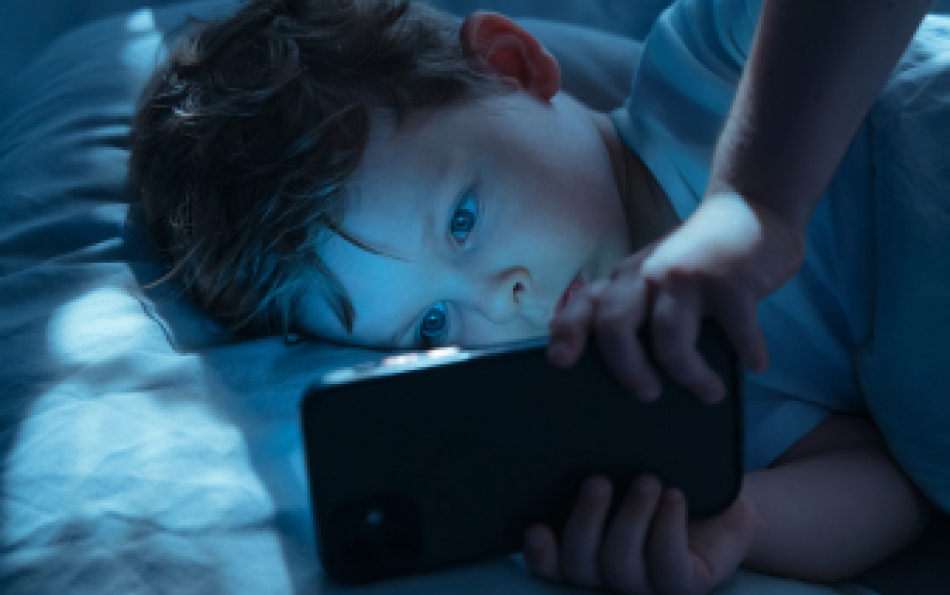
In Spain, there is growing discussion about banning access to social media for children under the age of 16. The initiative was presented by Prime Minister Pedro Sánchez, who described social networks as a space where laws are now ignored and crimes are treated with tolerance. According to him, the state has a duty to protect minors from what he called the “digital Wild West”. La Cotorra explains what psychologists and digital security experts think about the restriction of social media for teenagers.
«Social media has turned into a failed state»
The restriction on access to social media for minors under the age of 16 has become central in a package of initiatives aimed at tackling abuses on digital platforms. Under the proposal, the platforms themselves would be required to verify users’ age.
“Social networks have turned into a failed state — a space where laws are ignored, and crimes are allowed,” Pedro Sánchez said. “We are obliged to set boundaries and protect children in the same way we do offline.”
The authorities are also discussing the creation of a monitoring system for major platforms and the strengthening of tech companies’ responsibility, including possible sanctions for the spread of illegal content and the manipulation of algorithms.
Silvestre del Río, a juvenile police officer and digital security expert, regularly holds meetings in schools across Spain. He told La Cotorra about the main risks for children associated with the virtual world. In his view, many parents and children still do not fully grasp the full scale of risks online.
«It’s not just about inappropriate content, but also sexting, cyberbullying, grooming (situations in which an adult gains the trust of a minor in order to exploit them later — La Cotorra’s note), dangerous viral challenges and eating disorders» – he says. «An unregulated internet is like sending a child to war and telling them they’re going to Disneyland.».
Del Río says that in Spain, children’s access to content intended for adults has become normalised. According to him, the average age at which children first encounter pornography is around nine, and in many cases, this happens accidentally.
The risks are not limited to social media alone. Chats within online games and children’s apps have also become spaces where bullying and other forms of aggression take place.
«What seems unacceptable to an adult often appears amusing to a child»
At the Trafalgar school in Valencia, pupils are not allowed to use mobile phones or bring them into the building. Students who, for whatever reason, need to bring a phone to school are required to hand it in for safekeeping and collect it again after lessons.
A ban on the use of mobile phones in educational centres is in force across the entire Valencian Community and is enshrined in regional legislation, Trafalgar’s headteacher, Alberto Villanueva, told La Cotorra. In his view, restrictions on minors’ use of social media are a justified measure — albeit a long-overdue one.
«What an adult finds worrying or unacceptable often seems funny to a child. There are real examples of this: children watch viral videos with inappropriate content and then imitate what they’ve seen, without realising that it can be physically dangerous» – Villanueva explains.
According to him, the use of mobile phones and video games should be under parental control, and parents, in turn, need to understand exactly what their children are doing on the other side of the screen.
Spanish psychologist Elena Anguiano supports the idea of systemic restrictions and points to a rise in mental health problems among children and adolescents. “Social media is already affecting anxiety, depression, eating behaviour and the cognitive abilities of young people,” she noted in a conversation with journalists. “We cannot turn a blind eye to this.”
«Guidance and awareness are more important than restrictions»
Speaking to La Cotorra, child psychologist Natalia Loseeva noted that such a measure could reduce the risks of early and uncontrolled immersion in social media, but would not solve the problem on its own.
“You can’t control all the digital content the internet might throw at a child,” she says. “But you can maintain a relationship of trust with them — one in which they will come to their parents with any difficult situation, rather than hiding it out of fear.”
According to her, adolescents are in a particularly vulnerable position, as they have a strong need to explore different social roles and to belong to a group. “A ban can provide a framework, but what fills that framework is the family’s daily work,” Loseeva explains.
Isabel Calvete, head of the association of parents’ groups, believes that digital education should form part of the school curriculum and not be reduced to restrictions alone.
.
«A ban on its own is not a solution,” Calvete says. “Supporting and informing families is often more important than simply imposing restrictions».
AMETIC, the association representing Spain’s digital industry, argues for an approach that moves beyond outright bans. It suggests measures such as designing services with safety in mind, introducing age-based levels of protection, setting appropriate default settings, and promoting digital literacy among both children and parents. “A ban may prove ineffective and, in the long term, could lead to greater inequality and wider digital divides,” the association warns.
Related Articles
—
Why Feeding Kids in Spain Means Surrendering to Sugar — A Russian Mum's View from Valencia
At the playground, treats fly between families faster than you can track them, and restaurant kids' menus rarely stretch beyond chips and nuggets. But after years in Valencia, one mother is rethinking what really matters.
Spain's "Watergate": How the Leire Díez Case Is Threatening Pedro Sánchez
A former PSOE activist nicknamed "the plumber" is accused of running a shadow operation to sway court cases involving the party. With "El One" appearing throughout her messages, the opposition is circling
Andalusia Votes Right: What the Regional Election Results Mean for Spain's 2027 General Election
The People's Party won 41.6% but fell short of a majority, handing Vox the decisive role in forming a government. Healthcare and housing dominated the campaign — and both issues will be central in 2027
Why Is Spain So Corrupt? A Brief History and Eight Reasons the Problem Won't Go Away
With parliamentary elections approaching, corruption has become Spain's hottest political weapon. But the phenomenon is neither new nor simple — it stretches back centuries and involves structural, cultural, and psychological factors that no government has yet managed to fix.
The Cross and the Smartphone: The Paradoxes of Spanish Faith in the 21st Century
As Spain secularises at record speed, a new "cool Catholicism" led by influencers and pop stars like Rosalía is reinventing ancient traditions for the Gen Z era
Can You Cut Off Utilities to "Okupas"? Spain’s Supreme Court Sets Crucial Legal Boundary
While cutting off water and electricity to illegal squatters is ruled legal, the court warns that using the same tactic against a divorcing spouse remains a punishable crime
Valencia Unveils Free Nature Guide Featuring 69 Stunning Water Routes
From free open-air screens at major town squares to indoor mega-venues like the Roig Arena and Movistar Arena, here is the complete guide to catching Sunday's historic final live
Beyond Paella: Discovering All i Pebre, Valencia’s Best-Kept Culinary Secret
Deep in the heart of the Albufera wetlands, the fishing village of El Palmar preserves a traditional, rich garlic and wild eel stew that tourist traps completely miss
Historic Milestone: The Gibraltar Border Fence is Down as Schengen Integration Begins
A new era dawns for the Campo de Gibraltar region as a temporary EU-UK treaty takes effect, ending 117 years of physical separation and removing daily controls for 15,000 cross-border workers
The World Cup 2026 Final: Best Big Screens and Fan Zones in Valencia, Barcelona and Madrid
From massive public screenings at Roig Arena and beachfront hubs to open-air gardens and local cinemas—here is your ultimate guide to the best spots to watch the historic match in the Valencian Community