





Support La Cotorra on Patreon
Access exclusive content, special perks, and closer connection with us.
Spain has endured record heat. And it looks as if things may become even more difficult. Is the country ready for the consequences of global climate change?
The summer of 2025 in Spain was not merely very warm — it was one of the most extreme meteorological periods in the country’s history. The anomalies began as early as June, and in August the national weather service AEMET recorded a record-breaking heatwave in terms of intensity.
According to sociologists, 88 per cent of Spaniards consider climate change a serious problem — and they have many questions. How can the number of heat-related deaths, which broke every record this summer, be reduced? Are the authorities doing enough, or is the opposition’s criticism fair? Will residents of the south have to relocate to the north? And, more broadly, what awaits Spain by the end of the century? Clear answers to these and many other questions are still to be found.
The summer of 2025 entered Spain’s history books. It was comparable to the extreme summer of 2022 and surpassed the infamous heat of 2003. As early as June, temperatures in Spain and Portugal reached 46°C, and on 30 June the Mediterranean Sea warmed to 27°C — three degrees above the 1991–2020 average.
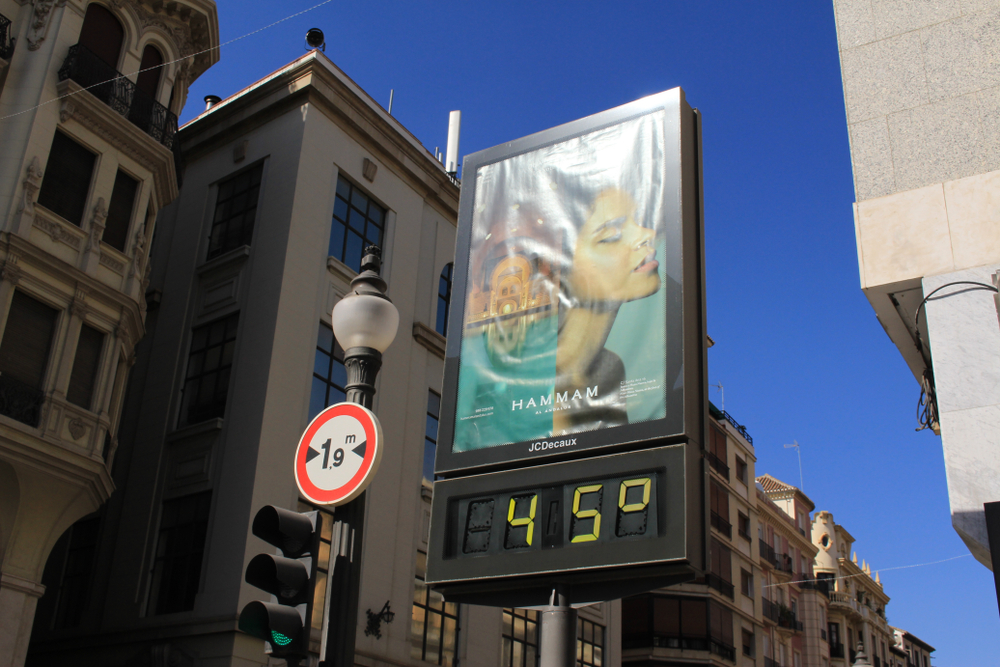
Then things got worse. According to the national meteorological agency AEMET, in August Spain experienced “the most intense” heatwave (ola de calor). Spanish meteorologists use this term for a period in which the daytime maximum temperature exceeds the average for the region and season by roughly 5°C or more, and this abnormally high temperature persists for at least three consecutive days.
The previous record had been set in July 2022: the anomaly was 4.5°C above normal. Between 3 and 18 August 2025, the average temperature was 4.6°C above normal. And that was not August’s only record. For example, 8–17 August 2025 was a run of ten consecutive days that were the warmest on record in Spain since 1950.
Spain’s Ministry of Health described what was happening as an event of “exceptional intensity, characterised by an unprecedented rise in average temperatures and a significant increase in mortality associated with heatwaves”.
According to the ministry and the Carlos III Health Institute (ISCIII), heat claimed 407 lives in June, 1,060 in July, and 2,177 in August. The comparison with the same months of 2024 is striking: 32, 674, and 1,267 deaths.
Most of those who died, were residents of Andalusia, Extremadura, and Castile–La Mancha. But other regions were affected too. For example, in the Valencian Community, at least 381 people died due to heat between June and August (261 the previous year).
Spain’s national heat plan states that particularly vulnerable groups include people over 65, children under 4, pregnant women, people with chronic, cardiovascular, and respiratory diseases, as well as those undergoing treatment or living with mental health disorders. In addition, especially vulnerable are low-income residents who were unable to shelter from record temperatures, and people forced to work outdoors. Among the latter, migrants are particularly numerous.
Some of the most high-profile stories covered by the media this summer involved those working in the open air (or, in heatwave conditions, not very open air at all). In Barcelona, for instance, a 51-year-old municipal street cleaner, Montse Aguilar, died shortly after finishing a shift during extreme heat — a case that triggered union protests and forced the city council to investigate the circumstances.
In the province of Lleida, a fruit picker died. A forensic examination indicated “acute cardio-respiratory failure under conditions of heat stress”.
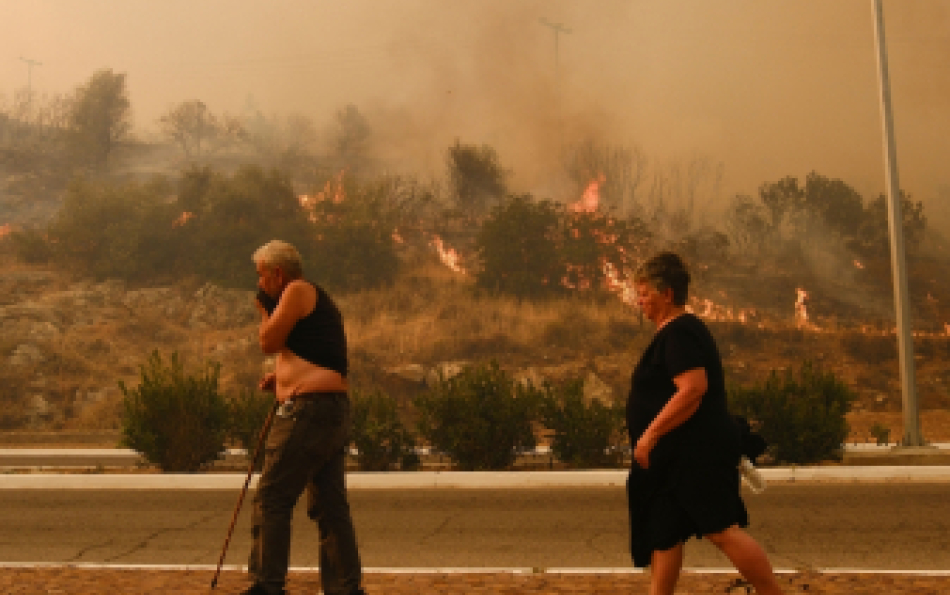
Another tragic consequence of the heat and prolonged drought has been wildfires. Here, too, records were set: by the end of August, the area burned across the EU had exceeded one million hectares. This is the worst wildfire season since 2006, when Europe began keeping these statistics.
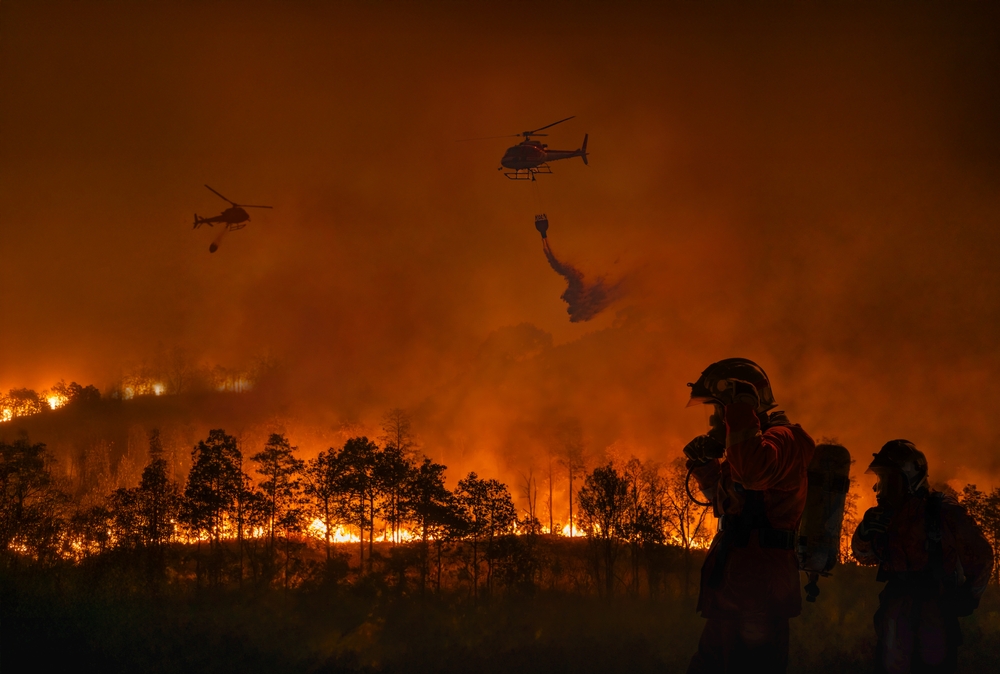
Spain and Portugal were hit particularly hard: roughly 1 per cent of the entire Iberian Peninsula burned. As of August 2025, more than 390,000 hectares of forest had been destroyed in Spain, making 2025 the worst year in three decades. Galicia, Castile and León, Extremadura, Asturias, and Cantabria suffered especially badly. The fires forced more than 30,000 people to leave their homes.
Because of the fires and heat, one of Spain’s key economic sectors — agriculture — suffered severely. Fires destroyed pastures, forests, and farmland. In addition, high temperatures and drought affected olive and grape yields, as well as livestock health. For example, olive producers in Andalusia expect yields in key areas to drop by more than 40 per cent. And if September does not bring heavy rainfall, the sector could face outright catastrophe.
“Extreme heat is no longer a rare event, it is the new normal,” noted UN Secretary-General António Guterres in Seville in June 2025. In his words, “the planet is becoming hotter and more dangerous: no country is immune”. But there are “red alert” zones — and Spain clearly belongs among them.
According to AEMET data, Spain’s average temperature rose by 1.69°C between 1961 and 2024.
Not every summer will be hotter than the one before, but there is a clear trend towards more extreme summer seasons,
Spain’s meteorological service notes.
Europe as a whole is in a difficult position too: since the start of industrialisation, air temperature across the entire planet has increased by roughly 1.3°C — but in Europe it has risen by 2.4°C.
Climatologists and meteorologists are in agreement: the heat, and the resulting fires, are driven by human impact on the climate. But not everything is determined by global warming alone. As Astrid Barrio, a professor at the University of Valencia, told El Periódico, “although climate change increases the danger, scale, and speed of wildfire spread, it is not their only cause”. An important role is played by rural depopulation, which leads to land becoming overgrown and, as a result, to larger fires. In addition, many fires are caused by deliberate arson (according to Interior Ministry statistics, these are isolated cases) and negligence (careless handling of fire).
At the same time, wildfires have become a political issue in Spain. “The first theory is that the country is burning because of the right: they allegedly deny climate change, and their austerity policies leave insufficient resources... According to the second theory, the country is burning because of the left: progressive urbanites tell rural residents how they should manage their land,” wrote El Mundo, reaching a bleak conclusion:
In Spain, everyone is screaming at the top of their lungs, but nobody wants to take responsibility,
El Mundo
In short: nothing good. Scientific scenarios indicate that temperatures in Spain will continue to rise, heatwaves will become more frequent and more severe, and nights will grow warmer. According to forecasts from the Polytechnic University of Catalonia, the Mediterranean climate in Spain may disappear by around 2050. The areas most vulnerable for permanent living and agriculture will be southern and central Spain (Andalusia, Extremadura, and parts of Castile–La Mancha): the highest temperatures and the greatest likelihood of critical water shortages are expected here.
The economic damage from heat will increase. Already, heatwaves cost Europe up to 0.5 per cent of GDP, and by 2060 this figure could reach 1.14 per cent. For southern countries such as Spain, losses may amount to around 3 per cent.
Crops that depend on water — maize, sunflower, and so on — are under threat. Shifts in plant growth cycles are expected, along with higher risks of pest damage. For example, heat and water scarcity are already reducing the quality and stability of grape harvests. By the end of the century, optimal zones for a number of traditional European varieties will shift northwards or into the mountains. But small farms are unlikely to be able to afford relocation and adaptation costs.
Research suggests that if current trends continue, tourism volumes in Spain will decline. That said, there are ways to soften the negative trajectory. First, a shift in seasonality: less summer tourism and more in spring and autumn. Second, a reorientation towards the northern regions — although this year temperature records were set there too.
Already, 35 per cent of Spaniards admit that extreme weather affects their attitudes to housing. Sixteen per cent have taken concrete steps: they have moved or are actively looking for a new place. Coastal and southern regions are particularly vulnerable, where heat, floods, and fires make property less attractive. Interest is growing in northern areas and in homes with strong climate adaptation.
Climate change is felt most acutely by residents of the Valencian Community: after the DANA catastrophe, 42 per cent considered relocating, are looking for housing, or have already moved. In Andalusia, the figure is 37 per cent; in Catalonia, 36 per cent; in Madrid, 31 per cent. Young Spaniards are the most mobile.
Reducing the negative consequences of climate change is possible only through a package of measures at multiple levels — from the local (home, street, neighbourhood) to the global.
Spain’s city authorities are being forced to search for different ways to help residents. In Madrid, Barcelona, and Valencia, for example, “climate shelters” now operate in summer — spaces where people can wait out the heat.
In Barcelona, for instance, a programme called Plan Calor 2025–2035 has been developed: a comprehensive initiative that includes expanding green spaces, increasing water play areas, installing sun canopies, equipping schools and care homes with cooling systems, and more.
Meanwhile, Madrid’s College of Architects (COAM), through the Madrid2050 initiative, is trying to tackle “heat islands” — areas where temperatures are higher than in parks and surrounding districts. The temperature difference between the city centre and the Casa de Campo park can reach 8.5°C. Among the tasks COAM sets for the authorities is the introduction of “climate-sensitive design”, involving the use of light-coloured surfaces, replacing asphalt with permeable materials, expanding greenery, and creating additional water features. COAM experts propose following the “3-30-300” principle (from every home, you can see 3 trees; 30 per cent of the neighbourhood is green; the nearest park or green area is within 300 metres). In many — if not most — Spanish cities, this is not even something people can realistically dream of yet.
At the national level, Spain is also attempting to build a strategy to respond to the climate crisis. At the end of the summer, Prime Minister Pedro Sánchez announced the creation of an interdepartmental commission to fight wildfires and proposed a “State Pact against the climate crisis” (Pacto de Estado), intended to unite all levels of government around a long-term adaptation programme. The focus is on modernising agriculture, investing in water resources, strengthening firefighting infrastructure, and redesigning cities to reflect the new climate reality. On 1 September, he also proposed creating a state emergency agency.
In parallel, the state is strengthening oversight of labour conditions. The Ministry of Labour issued recommendations to employers: move heavy work to morning or evening, increase breaks, ensure access to water, and train staff to recognise signs of heatstroke.
But experts urge far more: reform labour legislation, conduct real inspections, and impose serious penalties for breaches.
Especially harsh criticism is coming from the opposition. The People’s Party (PP) refused to support the government pact, calling it “political cover”, and put forward its own 50-point plan. It focuses on urgent assistance to those affected and compensation for losses. Among the proposals are even electronic bracelets for those who deliberately set fire to forests and grasslands. It is telling, however, that the term “climate change” appears only once in the PP document.
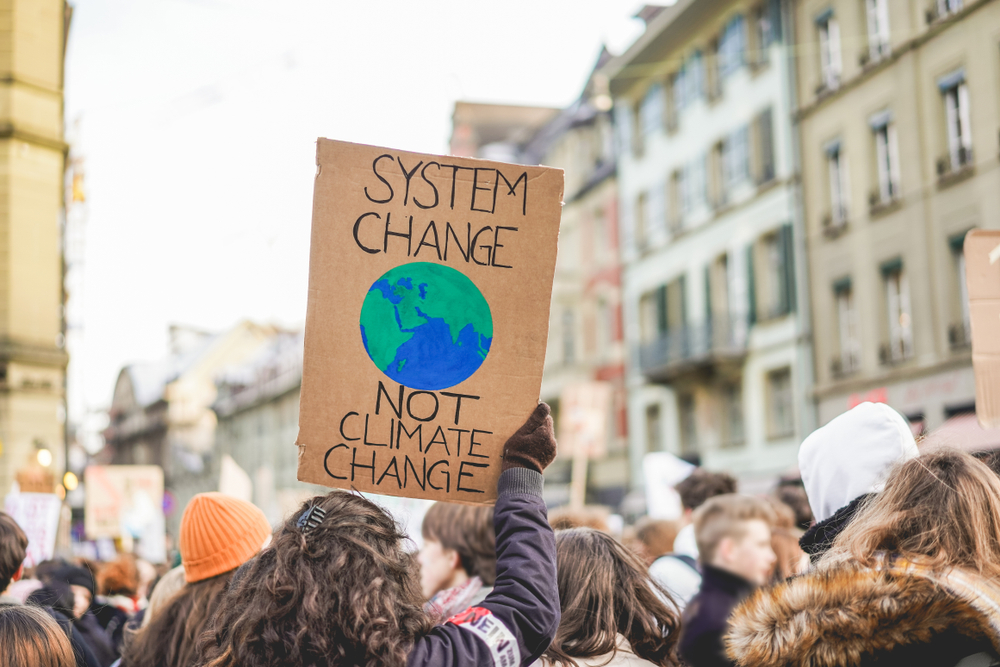
For several decades, humanity has been trying to build a strategy to combat climate change. Under the UN umbrella, the Framework Convention on Climate Change operates, and annual climate conferences (COP) are held.
In 2015, the Paris Agreement was adopted: countries committed to reducing greenhouse gas emissions and to keeping global warming this century within 2°C (and preferably 1.5°C) compared to the pre-industrial level of the second half of the nineteenth century. Temperatures have already risen by at least 1.2°C.
In 2024 — if taken in isolation — the target threshold was exceeded by 1.55°C. As the UN notes, this does not mean it is time to declare the effort a failure: the Paris Agreement refers not to a one-off breach, but to averages across years and decades. But it is possible that in 2024 we passed a point of no return.
The central problem is that countries with the highest CO₂ emissions (the United States, China, Russia, EU countries) bear the greatest responsibility, yet often act not in line with the climate agenda but according to economic and domestic political interests. The US factor is especially dramatic. In 2017, Donald Trump first announced a withdrawal from the Paris Agreement, which he described as “destroying the American economy”.
Under Joe Biden, the country returned as a signatory, and in 2025, during Trump’s second term, it left again. The fact that many populist leaders take Trump as a model makes the situation even more alarming: although the scientific community is calling ever more urgently for decisive action, genuine political will and full-scale international cooperation remain absent.
Related Articles

Why Feeding Kids in Spain Means Surrendering to Sugar — A Russian Mum's View from Valencia
At the playground, treats fly between families faster than you can track them, and restaurant kids' menus rarely stretch beyond chips and nuggets. But after years in Valencia, one mother is rethinking what really matters.

Why Is Spain So Corrupt? A Brief History and Eight Reasons the Problem Won't Go Away
With parliamentary elections approaching, corruption has become Spain's hottest political weapon. But the phenomenon is neither new nor simple — it stretches back centuries and involves structural, cultural, and psychological factors that no government has yet managed to fix.
Beyond Paella: Discovering All i Pebre, Valencia’s Best-Kept Culinary Secret
Deep in the heart of the Albufera wetlands, the fishing village of El Palmar preserves a traditional, rich garlic and wild eel stew that tourist traps completely miss
Loading…
Loading…