



Support La Cotorra on Patreon
Access exclusive content, special perks, and closer connection with us.
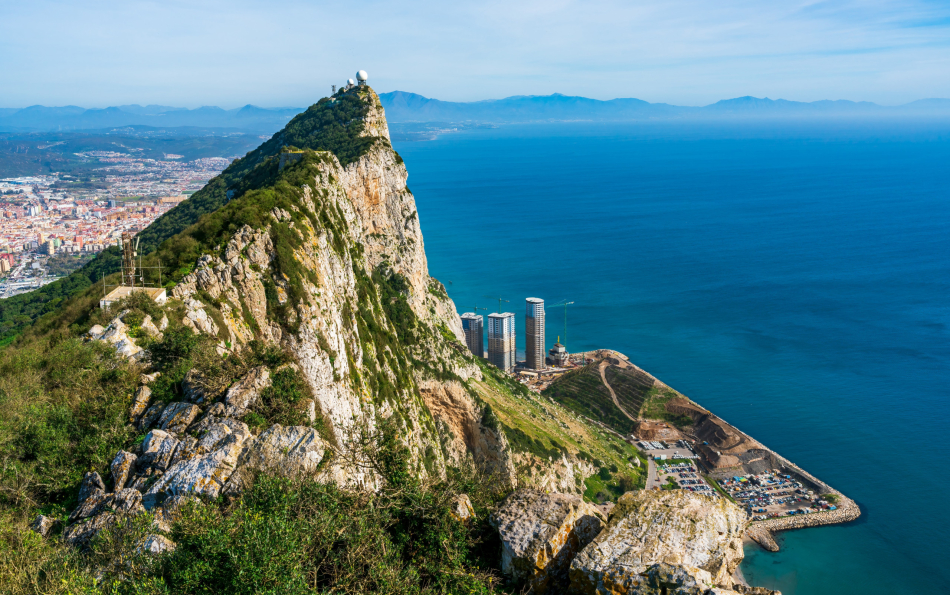
The fate of Gibraltar, a British Overseas Territory on the border with Andalusia, has once again moved to the centre of attention for Spanish politicians. At the end of October, the right-wing People’s Party and Vox succeeded in getting parliament to pass a motion calling on Pedro Sánchez’s government to seek “the restoration of Spanish sovereignty” over the peninsula.
The timing is not accidental. In the coming weeks, a more than 250-page draft treaty on Gibraltar is expected to be published. The draft was provisionally agreed by the EU and the United Kingdom in the summer of this year.
According to the plan, in January 2026 the border fence between Spain and Gibraltar is to be dismantled, and holders of any Schengen visa, including Russian citizens, will be able to enter Gibraltar freely.
La Cotorra has decided to recall how Madrid and London have argued over Gibraltar for centuries, and to examine what will change once the agreement finally comes into force (if, of course, everything does not end in a new crisis).
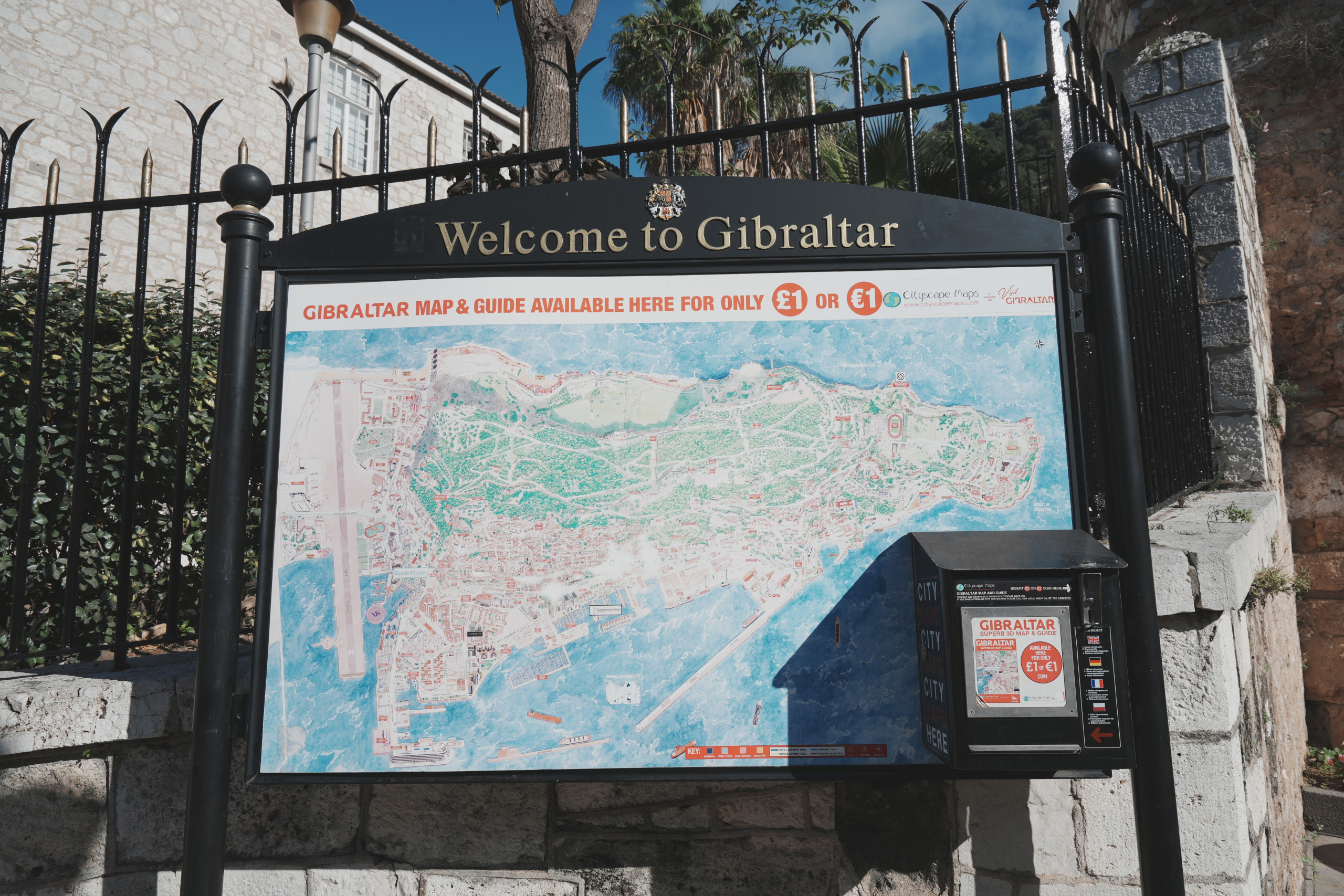
Spain and the United Kingdom have been disputing this tiny strip of land of just 6.5 square kilometres, crowned by an impressive rock on the southern tip of the Iberian Peninsula, for more than three centuries. Before them, Phoenicians, Carthaginians, Romans, Vandals, Goths and Arabs had all fought for Gibraltar in turn. Everyone understood the strategic value of the territory: the Rock stands at the strait connecting the Mediterranean Sea with the Atlantic Ocean.
The name “Gibraltar” comes from the Arabic “Jabal Tariq”, “the mountain of Tariq”, in honour of the general Tariq ibn Ziyad, who led the Arab invasion of the Iberian Peninsula in 711.
Gibraltar is inseparable from the concept of the “Pillars of Hercules” – the cliffs on either side of the Strait, which in antiquity were considered the boundary of the known world. After the completion of the Reconquista and Spain’s arrival at the Strait of Gibraltar in 1462, Ferdinand of Aragon added a symbolic image of the pillars to the Spanish coat of arms: two columns entwined with a ribbon bearing the inscription non plus ultra (“nothing further beyond”). After the discovery of America, the phrase was changed to plus ultra (“further beyond”). This motto remains on Spain’s coat of arms to this day.
In 1704, during the War of the Spanish Succession, an Anglo-Dutch fleet seized Gibraltar. In 1713, the Treaty of Utrecht confirmed British possession of the territory. The document specified that if Britain ever decided to renounce Gibraltar, it would have to offer it to Spain. London, and the Gibraltarians themselves, have shown no desire to do so.
After 1713, British military personnel and civilians began to move to Gibraltar in large numbers, although overall the ethnic composition of the territory remained highly diverse. In the mid-eighteenth century, for example, more than a third of the population were Genoese, which could not but leave its mark on the local architecture and everyday life. Another third were Jews: Gibraltar was the only place on the Iberian Peninsula where they were permitted to live.
Under Francisco Franco’s dictatorship, Gibraltar was a central issue in Spanish foreign policy, with the regime demanding the return of the territory. Madrid’s position has changed little since then. “Gibraltar is a colony. Since the 1960s it has been included in the United Nations list of ‘Non-Self-Governing Territories awaiting decolonisation’. This colonial remnant is incompatible with Resolution 1514 (XV) of 1960 on decolonisation,” Spain’s Ministry of Foreign Affairs notes today. It adds: “The United Nations states that the applicable principle in the decolonisation of Gibraltar is not that of self-determination, but that of the restoration of the territorial integrity of Spain.”
Among other things, Madrid is angered by the fact that, according to the Treaty of Utrecht, Spain ceded to the United Kingdom “the town and castle of Gibraltar, together with the port, fortifications, and forts thereunto belonging”, but not the surrounding land on which the airfield and other infrastructure were later built. Spain considers this an act of encroachment.
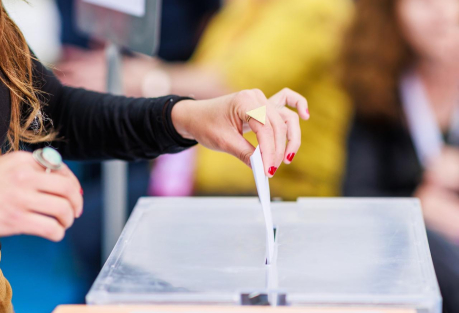
The Gibraltarians expressed their own position in 1967, when 99.2 per cent voted in a referendum to remain under British sovereignty.
Franco responded by closing the border (formally, this was justified by Gibraltar’s disputed status: Madrid regards the line not as a border, but as a de facto demarcation line). The closure had severe economic and humanitarian consequences. Spain only lifted the blockade in 1982.
Another referendum, in 2002, came as a reaction to talks between Madrid and London. The two capitals were discussing the idea of joint sovereignty, but local residents were angered that their views were not being sought. To the sharp dismay of Spain, and to some surprise in the United Kingdom, they held a vote in which 98.97 per cent rejected “the principle that Britain and Spain should share sovereignty over Gibraltar”.
A new thaw followed in 2006, when the United Kingdom, Spain and Gibraltar signed an agreement on cooperation in a number of practical matters. That same year, on 30 November 2006, Gibraltar adopted a new constitution which significantly expanded the powers of the local authorities and their autonomy from London.
The event whose consequences are still being felt today was Brexit, which the Gibraltarians strongly opposed. In the United Kingdom as a whole, 51.89 per cent voted “yes” to leaving the EU in the 2016 referendum; in Gibraltar only 4.1 per cent did so. When the United Kingdom negotiated its withdrawal from the European Union in 2020, Gibraltar was essentially left on the margins of the process.
After Brexit, it was decided that the issue of Gibraltar would be addressed in a separate treaty between the United Kingdom and the EU. Formal negotiations began in October 2021, and on 11 June 2025 a breakthrough occurred: the EU, Spain, the United Kingdom and Gibraltar reached political agreement on a draft treaty intended to secure the future prosperity of the entire region (Gibraltar and the neighbouring Spanish area, the Campo de Gibraltar).
Key points of the future agreement:
“There has been a rare convergence of the parties’ key interests: the United Kingdom preserves the independence of its military bases, the people of Gibraltar resolve the main political and economic issue since the border closure of 1969, and Spain gains a privileged position regarding Gibraltar within the Schengen Area. In a certain sense, Spain returns to Gibraltar – in the collective consciousness of Spaniards, the legendary ‘lost town of the [Spanish] Crown’.”
Professor Alejandro del Valle Gálvez, Professor of International Law at the University of Cádiz
In June, however, only a political framework agreement was reached. Numerous details still had to be negotiated, and the process continues. At the end of October it emerged that the future treaty already ran to 250 pages. Once the text has been finalised, the ratification process will begin in all parties. Achieving the stated aim – the full opening of the land border and implementation of the agreement’s provisions by January 2026 – will not be easy.
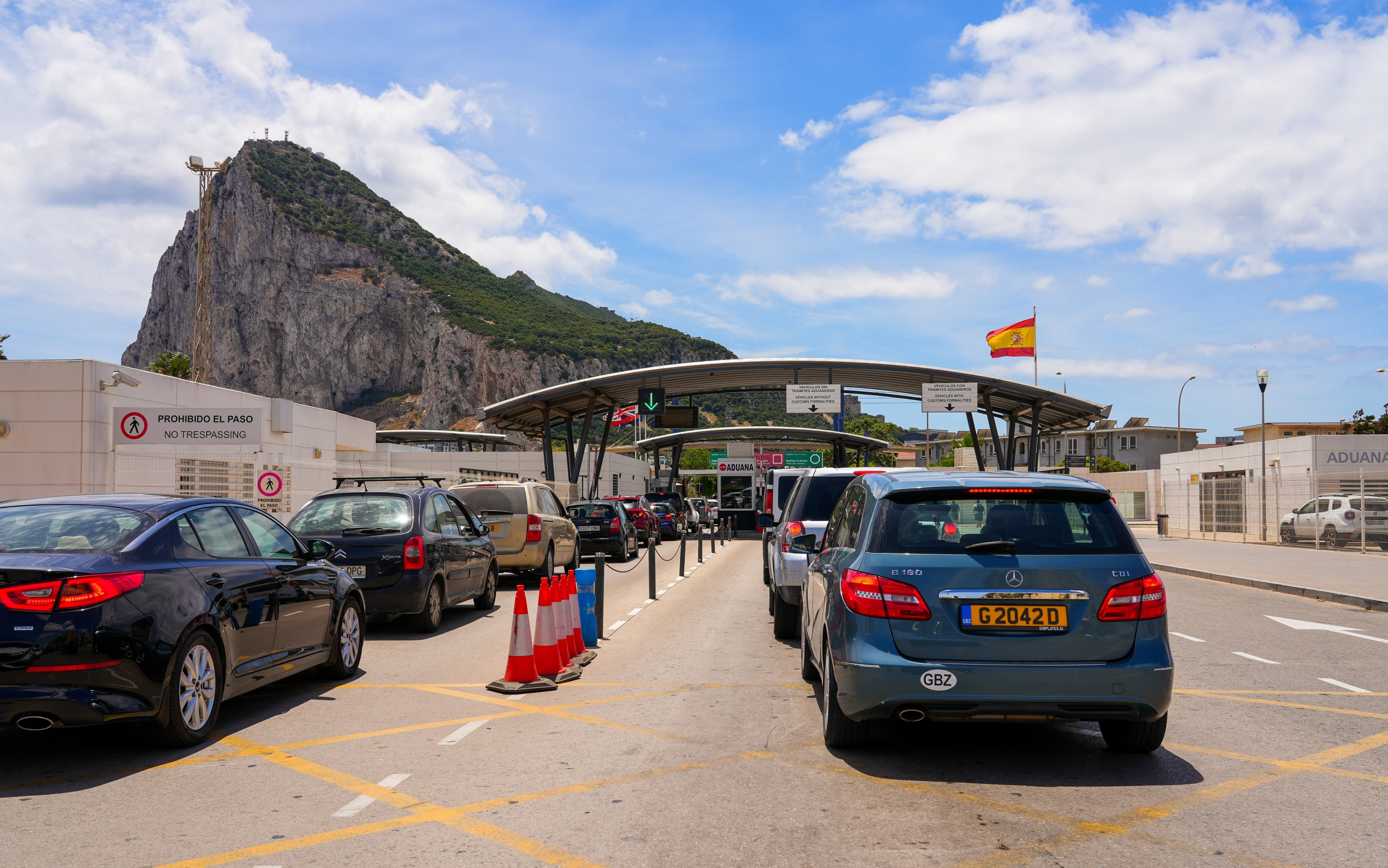
One way or another, changes in Gibraltar are already visible. Firstly, business activity has increased: the first outlets of the Spanish fast-food chain Rodilla have opened, Starbucks has arrived, and it has become possible to receive Amazon deliveries – all developments that have not gone unnoticed by local residents.
Larger businesses are also moving in. Pelagos Data Centres, for example, has announced the construction in Gibraltar of a data centre costing £1.8 billion, one of the largest in southern Europe. The facility will be developed in five phases up to 2033.
Secondly, more and more people want to live in Gibraltar. Local authorities used to receive around 1,000 residence applications per year; after the announcement of the political agreement with the EU, that figure has tripled. Those applying are mainly British, attracted in particular by the prospect of open borders with the Schengen Area. In October the Government of Gibraltar even announced a temporary suspension of new applications, as it was struggling to cope with demand.
“People are going crazy buying up premises in order to rent them out later, and this is already affecting the property market,” the newspaper El Confidencial reported, relaying the words of Gibraltarians. It concluded that there is a nervous feeling in Gibraltar that it might turn into “a new Monaco”.
The key question in Gibraltar’s centuries-old saga – that of sovereignty – has not become any less sensitive.
“Our exclusively British sovereignty remains unchanged, firm and unwavering,” insisted Gibraltar’s Chief Minister Fabian Picardo. London has expressed the same view.
In September, at bilateral talks, British Prime Minister Keir Starmer and Spanish Prime Minister Pedro Sánchez carefully avoided discussing sovereignty. The opposition in both countries, however, has not exercised such restraint. The far-right British party Reform UK has described the agreement as “another capitulation” by Starmer.
Spain’s far-right Vox party has condemned it as “illegal, illegitimate and unjust”, driven solely by a desire to “distract from the corruption crimes” of the ruling Socialists.
On 28 October, the Spanish parliament’s Committee on European Union Affairs approved a non-binding motion (PNL) calling on the government to put the question of Gibraltar’s status firmly to London and to reject the political agreement, which it claims implies “Spain’s indirect renunciation of its historical and legal rights over the territory”.
Vox’s initiative was backed by the country’s main opposition force, the People’s Party. The Socialists and their allies voted against, but did not have a majority in the committee.
Foreign Minister Albares, seeking to reassure the right, told parliament that Spain was not abandoning its position on Gibraltar’s sovereignty and that “nothing in the [agreement’s] text or in the procedures for its implementation can be used to support opposing positions in international courts”.
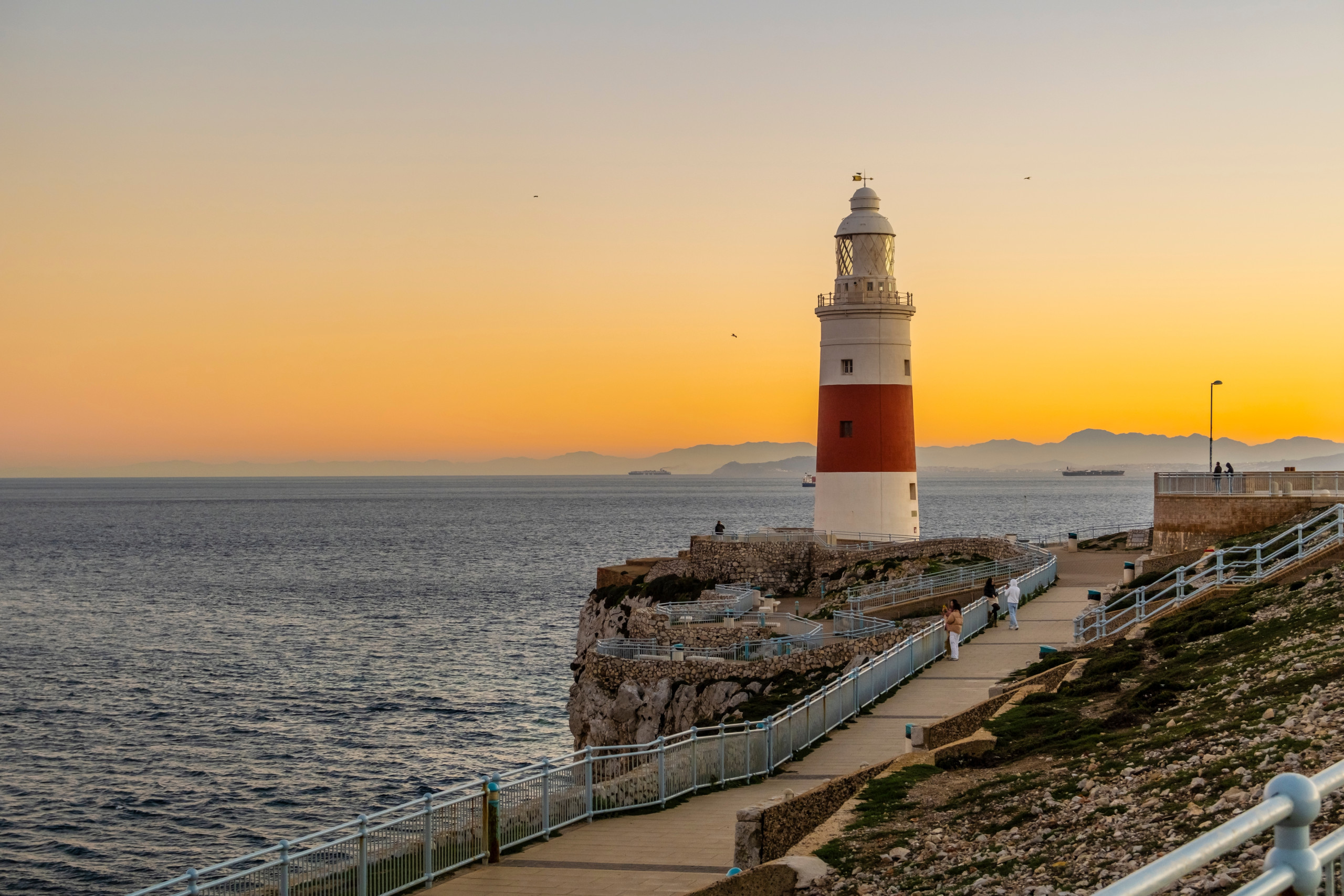
In truth, Spain does not seem to know how to achieve its desired outcome, or whether this is possible at all. If another referendum were to be held in Gibraltar, the results would probably resemble those of 2002. The inhabitants of the peninsula are not about to renounce their identity, which even includes their own language, Llanito (llanito). It is a mixture of Spanish with an Andalusian accent and English, with its own unique vocabulary: tipá (kettle, from English teapot), chinga (chewing gum, from English chewing gum), kuecaro (cereal; derived from the brand name Quaker Oats), chachi (something very good; from the surname of Winston Churchill, who headed the British Government at a time when Spain was gripped by hunger and Gibraltar was prospering).
It appears that Spaniards can only hope that, one day, the British territory will lose its main symbol – Gibraltar’s macaques. According to an old legend, as long as the macaques inhabit the Rock, it will remain under the rule of the British Crown. In 1942, when only seven monkeys were left in Gibraltar, Churchill ordered that the population be replenished without delay – and the order was duly carried out.
Related Articles

Why Feeding Kids in Spain Means Surrendering to Sugar — A Russian Mum's View from Valencia
At the playground, treats fly between families faster than you can track them, and restaurant kids' menus rarely stretch beyond chips and nuggets. But after years in Valencia, one mother is rethinking what really matters.
Why Is Spain So Corrupt? A Brief History and Eight Reasons the Problem Won't Go Away
With parliamentary elections approaching, corruption has become Spain's hottest political weapon. But the phenomenon is neither new nor simple — it stretches back centuries and involves structural, cultural, and psychological factors that no government has yet managed to fix.
Beyond Paella: Discovering All i Pebre, Valencia’s Best-Kept Culinary Secret
Deep in the heart of the Albufera wetlands, the fishing village of El Palmar preserves a traditional, rich garlic and wild eel stew that tourist traps completely miss
Loading…
Loading…