
• News
  • Valencia
  • Life in Spain

Follow us:

Search

A Comprehensive Guide to Political Life in Spain for Those Who Do Not Understand Politics

A Comprehensive Guide to Political Life in Spain for Those Who Do Not Understand Politics

2025 is a milestone year for Spain. Half a century ago, in November 1975, the death of dictator Francisco Franco opened the way to the legalisation of political parties, the adoption of a new Constitution, and the formation of Spain’s modern political system — one which, with certain caveats, remains in place today. La Cotorra explains who and how built Spanish democracy, which parties are currently competing for power, and what political views they represent.

How did Spain transition to democracy after Franco’s dictatorship?

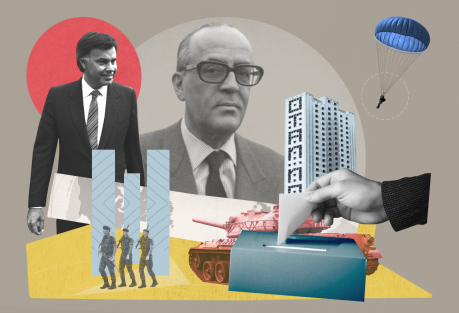
Since January 2025, Spain has been holding commemorative events to mark fifty years since the start of democratic reforms. The process that began then is known as la Transición (the Transition) and it is regarded as a unique and exemplary case of peaceful democratisation.

What triggered the change?

It all began on the morning of 20 November 1975, when Prime Minister Carlos Arias Navarro said in a televised address:

Spaniards, Franco is dead

This was a turning point. Just two days later, on 22 November, Juan Carlos I — the grandson of King Alfonso XIII — ascended the throne. Despite his closeness to the dictator, the new king chose a very different path.

I learned from Franco how to observe, listen, and remain silent, —

he later explained. “In 1975, the time came to speak and to act.”

Who carried out the reforms?

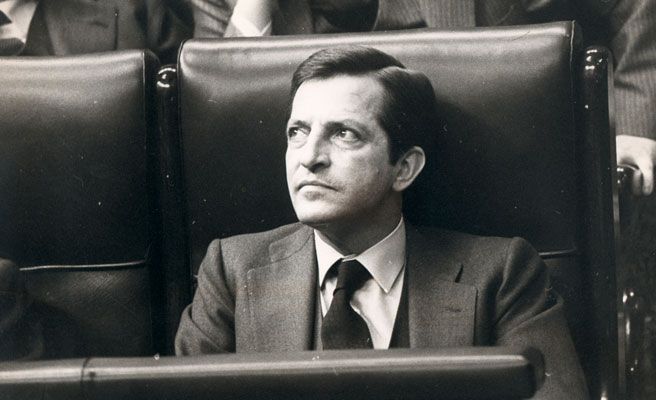
Политическая система Испании: Adolfo Suárez González

The central figure was the young lawyer Adolfo Suárez, who himself was a product of the Francoist system. Under the dictatorship, he had served as Secretary-General of the National Movement, the only political organisation legal under Franco. In July 1976, he was appointed Prime Minister and immediately set to work:

  • He secured the adoption of the Law for Political Reform, which opened the path to multi-party elections.
  • In 1977, he organised the first free general election since the Civil War. Spaniards elected members of a new parliament consisting of two chambers: the Congress of Deputies and the Senate. The winner was the Union of the Democratic Centre (Unión de Centro Democrático, UCD), led by Suárez. The coalition brought together fifteen centrist groups, ranging from social democrats to moderate Francoists.

How was social consensus achieved?

  • The core idea was simple: do not argue about the past, look to the future. This principle was formalised in the Moncloa Pacts — agreements between parties of very different political orientations.
  • To ensure that no one feared retribution, the authorities declared an amnesty which pardoned former crimes committed by Francoists, their left-wing opponents from the Popular Front, and fighters from all post-war factions. It was a difficult but necessary step towards national reconciliation.

How could we have reconciled with those who killed one another if we had not erased this past once and for all?

asked Communist MP Marcelino Camacho, who had spent many years in prison for his beliefs.

What did the Constitution establish?

On 27 December 1978, Spain adopted a new Constitution in which it declared itself:

  • a state governed by the rule of law,
  • a social democracy,
  • a country committed to freedom, justice, equality, and political pluralism.

After this, Suárez declared that “the political transition has ended”: “In just two years, we Spaniards have legally transformed an authoritarian system of government into a pluralist democracy.”

Did it really end then?

Historians still debate this question. Three dates are most often cited:

The Transition did take place — and, crucially, without bloodshed or violence. On the gravestone of Adolfo Suárez, who died in 2014, the following phrase is engraved: “Consensus became possible.”

Who are the Spanish Socialists and what do they stand for?

The Spanish Socialist Workers’ Party (PSOE) is one of the country’s main political forces. Under Franco, the party operated underground, but after his death it was quickly legalised and gained popularity.

What is important to know about PSOE:

  • Founded in 1879 to defend workers’ interests. It originally adhered to Marxist ideology. Legalised in 1975, it abandoned Marxism in 1979 and became a centre-left force.
  • First came to power in 1982 under Felipe González who served as Prime Minister for fourteen years.
  • Other Socialist Prime Ministers include:

José Luis Rodríguez Zapatero (2004–2011)

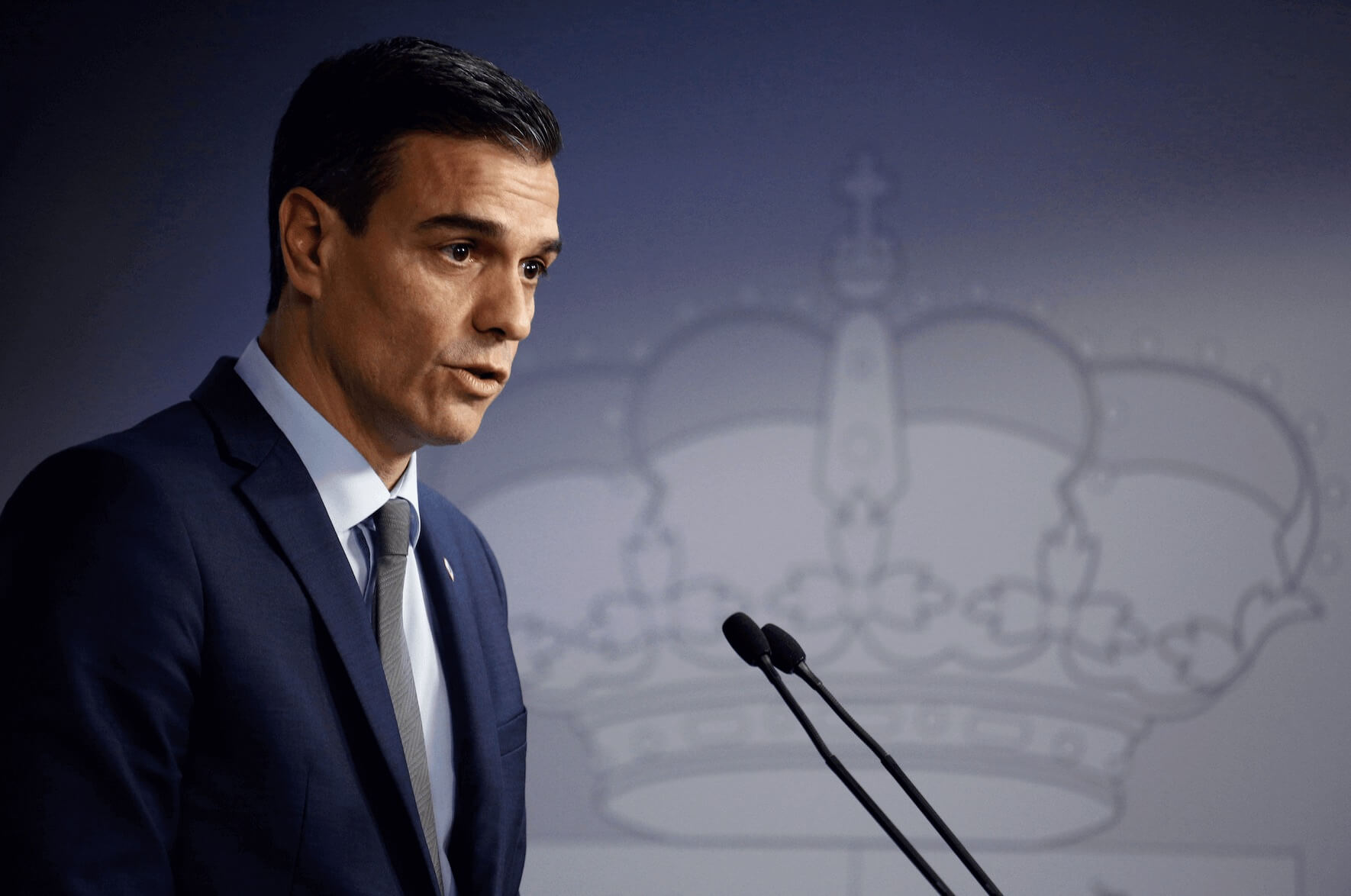
Pedro Sánchez (from 2018 to the present day)

Политическая система Испании. Премьер-министр Испании Пе́дро Са́нчес Пе́рес-Кастехо́н

What they promote:

Who are the “People’s Party” — the Socialists’ main rivals?

The People’s Party of Spain (Partido Popular, PP) is the country’s second most influential political force. It represents the right-wing camp and frequently clashes with the Socialists, particularly on issues of historical memory and national unity.

What is important to know about PP:

  • Founded in 1976 on the basis of the Francoist National Movement. Many former regime officials became party activists.
  • Conservatives: they emphasise traditional values, religion, and a strong state.
  • The party has governed twice:
    – under José María Aznar (1996–2004)
    – under Mariano Rajoy (2011–2018).

What they promote:

  • The economy: less state intervention and a stronger role for the market.
  • Family and tradition: support for Catholic and Christian-democratic values.
  • National unity: a hard line against Catalan independence and other separatist movements.
  • Security: an active fight against terrorism (the Basque group ETA and Islamist extremism).
  • Foreign policy: traditionally — especially under Aznar — close cooperation with the United States and the United Kingdom (for example, participation in the Iraq War which began in 2003).
  • On the Russian–Ukrainian conflict, PP takes an even tougher stance than PSOE, criticising the Socialists for insufficient support for Kyiv.

How did a new party emerge from street protests?

Until 2011, Spain’s political system was effectively bipartisan: the Socialists (PSOE) and Conservatives (PP) alternated in power. Regional parties existed but played little national role.

What changed in 2011:

  • • On 15 May 2011, Madrid saw a mass protest by the informal “Indignados” movement (15-M) sparked by the economic crisis and declining trust in political elites. Protesters demanded social justice, political reform, and an end to corruption.
  • This movement became the launchpad for a new force — the party Podemos (“We Can”), founded by political science professor Pablo Iglesias, who became the symbol of a new left-wing wave.

What is important to know about Podemos:

  • Formed as a party in 2014. It brought together feminists, leftists, anarchists, Greens, anti-globalists, and activists.
  • In 2014, Podemos won 7.8 per cent of the vote in the European Parliament elections and secured five seats — its first major success.
  • In 2015, candidates affiliated with the party became mayors of Barcelona and Madrid.
  • In 2020, the party entered Spain’s first coalition government of the democratic era, with Iglesias becoming Deputy Prime Minister a post he left in March 2021.

What they promote:

  • Sharp criticism of the political establishment and corruption.
  • Support for feminism, LGBT+ rights, environmental protection, migrant rights, and direct democracy.
  • Support for regional self-determination and for limiting the influence of the Catholic Church.
  • The view that the monarchy is outdated.
  • Opposition to arms supplies to Ukraine and to Spain’s participation in military missions. They criticise NATO and at times even call for Spain to leave the alliance.

A direct competitor

Spain’s political landscape shifted again a few years later. In 2023, a competing left-wing alliance, Sumar (“Unite”), emerged under the leadership of Yolanda Díaz, Deputy Prime Minister and Minister of Labour. Like Podemos, Sumar is a coalition of left-wing, Green, feminist, civil society, and regional political forces. It has inherited part of Podemos’s electorate and is actively positioning itself as the main alternative left-wing force. Sumar currently holds 31 seats in the 350-member Congress and controls five ministerial portfolios.

Does Spain have an ultra-right party?

Yes — Vox (Latin for “Voice”) is the main force of the radical right. Its leader is Santiago Abascal.

What is important to know about Vox:

  • Founded in 2013 by former members of the People’s Party, who considered PP too soft on separatism and regionalism.
  • Gained popularity during the Catalan crisis of 2014 thanks to its hard-line rhetoric.
  • Abascal is known for aggressive public statements and a confrontational style. In 2025, for example, he called Prime Minister Sánchez “an idiot and a bastard.”

What they promote:

  • Defence of a “traditional Spain”: Catholic morality, patriarchal values, and hard nationalism.
  • Opposition to abortion, feminism, same-sex marriage, and what they call “gender ideology.”
  • Criticism of historical memory policies: opposition to the condemnation of Francoism and to bans on glorifying the dictatorship.
  • Migration: support for the deportation of irregular migrants especially from Muslim and African countries, and opposition to any legalisation schemes, including those based on long-term residence (arraigo).
  • Euroscepticism. They demand a “tough defence of national interests” without calling for withdrawal from the EU.
  • Regarding Russia, their position is ambivalent: they consider it a threat, yet criticise both NATO and the EU. Abascal claims that the war in Ukraine is being used by the West against US President Donald Trump, a figure he openly admires. One of Vox’s slogans is “Make Spain great again.”

Common ground with the left (unexpectedly!)

Like Sumar, Vox opposes Spain’s military involvement in the Russian–Ukrainian conflict. The motivations differ: Sumar is driven by pacifism and the protection of social spending, while Vox prioritises sovereignty and rejects what it sees as “foreign” geopolitical adventures.

Is that all the parties?

No. Spain’s political system is highly diverse, with several other notable forces.

Ciudadanos (“Citizens”) — once Spain’s fourth-largest political party:

  • Founded in 2006 in Barcelona as a response to Catalan nationalism.
  • Reached peak popularity in 2017, winning 25.4 per cent of the vote in Catalonia although separatist coalitions prevented it from taking power.
  • At the national level, positioned itself as centrist, cooperating at different times with both PP and PSOE.
  • Its best general election result was 13.9 per cent in 2015. Since then, its support has steadily declined.

Regional parties: small but influential

After the de facto collapse of Spain’s two-party system, Catalan and Basque nationalists have come to play a key role in coalition negotiations. They currently hold 25 seats in the Congress of Deputies: 14 for Catalan parties and 11 for Basque ones. Without their support, forming a parliamentary majority is difficult.
 
A touch of eccentricity

Spain’s official register of political parties (maintained by the Interior Ministry) lists nearly 4,200 organisations. Many sound like jokes — but they are real.

At various times, the media have reported on such parties as:

Spain has also had, or still has, pirate parties, advocates of cannabis legalisation, and many other movements with counterparts across Europe.

What comes next?

Recent opinion polls suggest that if elections were held today:

  • The Socialists could expect around 33 per cent of the vote.
  • The People’s Party would receive about 26 per cent.

This would not be enough to govern alone, meaning coalition-building would again be necessary.
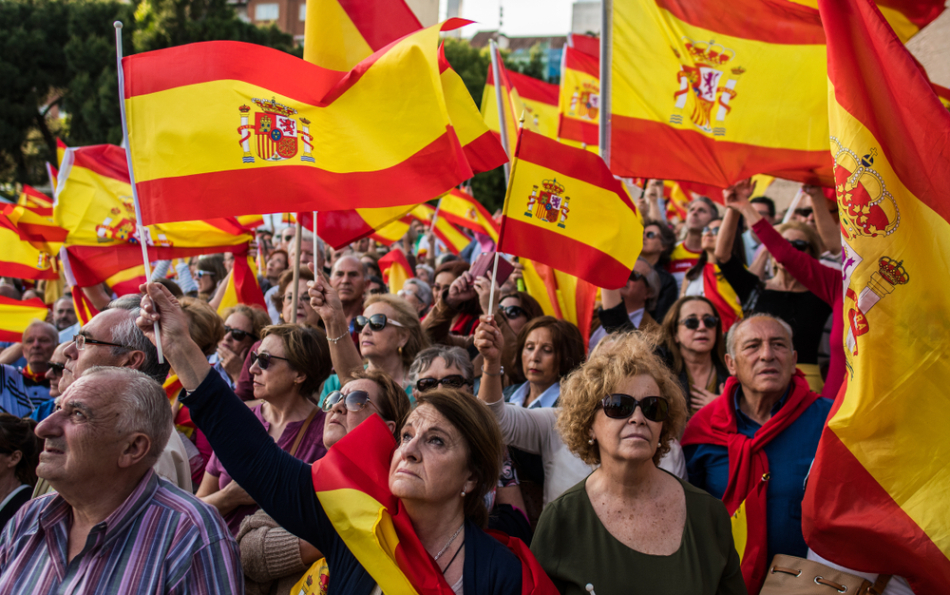
According to the current timetable, the next general elections are due in 2027 but they may take place earlier. On 8 June, Madrid saw a mass demonstration demanding the immediate resignation of Pedro Sánchez.

Given how rapidly the political situation is changing — not only in Spain, but globally — elections may well come sooner than planned.

Related Articles

Why Feeding Kids in Spain Means Surrendering to Sugar — A Russian Mum's View from Valencia

Why Feeding Kids in Spain Means Surrendering to Sugar — A Russian Mum's View from Valencia

At the playground, treats fly between families faster than you can track them, and restaurant kids' menus rarely stretch beyond chips and nuggets. But after years in Valencia, one mother is rethinking what really matters.

Spain's "Watergate": How the Leire Díez Case Is Threatening Pedro Sánchez

Spain's "Watergate": How the Leire Díez Case Is Threatening Pedro Sánchez

A former PSOE activist nicknamed "the plumber" is accused of running a shadow operation to sway court cases involving the party. With "El One" appearing throughout her messages, the opposition is circling

Andalusia Votes Right: What the Regional Election Results Mean for Spain's 2027 General Election

Andalusia Votes Right: What the Regional Election Results Mean for Spain's 2027 General Election

The People's Party won 41.6% but fell short of a majority, handing Vox the decisive role in forming a government. Healthcare and housing dominated the campaign — and both issues will be central in 2027

Why Is Spain So Corrupt? A Brief History and Eight Reasons the Problem Won't Go Away

Why Is Spain So Corrupt? A Brief History and Eight Reasons the Problem Won't Go Away

With parliamentary elections approaching, corruption has become Spain's hottest political weapon. But the phenomenon is neither new nor simple — it stretches back centuries and involves structural, cultural, and psychological factors that no government has yet managed to fix.

The Cross and the Smartphone: The Paradoxes of Spanish Faith in the 21st Century

The Cross and the Smartphone: The Paradoxes of Spanish Faith in the 21st Century

As Spain secularises at record speed, a new "cool Catholicism" led by influencers and pop stars like Rosalía is reinventing ancient traditions for the Gen Z era

10 Spanish Startups to Follow in 2026

10 Spanish Startups to Follow in 2026

A look at the startups shaping Spain’s tech scene

How Spain Learned to Stop Worrying and Accepted NATO

How Spain Learned to Stop Worrying and Accepted NATO

We explain how Spain’s entry into the alliance was far from straightforward — and what the country’s armed forces look like today

Trump vs Spain: The Transatlantic Feud Just Blew Up

Trump vs Spain: The Transatlantic Feud Just Blew Up

La Cotorra breaks down the causes of the conflict and its possible consequences

Can You Cut Off Utilities to "Okupas"? Spain’s Supreme Court Sets Crucial Legal Boundary

Can You Cut Off Utilities to "Okupas"? Spain’s Supreme Court Sets Crucial Legal Boundary

While cutting off water and electricity to illegal squatters is ruled legal, the court warns that using the same tactic against a divorcing spouse remains a punishable crime

Valencia Unveils Free Nature Guide Featuring 69 Stunning Water Routes

Valencia Unveils Free Nature Guide Featuring 69 Stunning Water Routes

From free open-air screens at major town squares to indoor mega-venues like the Roig Arena and Movistar Arena, here is the complete guide to catching Sunday's historic final live

Beyond Paella: Discovering All i Pebre, Valencia’s Best-Kept Culinary Secret

Deep in the heart of the Albufera wetlands, the fishing village of El Palmar preserves a traditional, rich garlic and wild eel stew that tourist traps completely miss

Historic Milestone: The Gibraltar Border Fence is Down as Schengen Integration Begins

A new era dawns for the Campo de Gibraltar region as a temporary EU-UK treaty takes effect, ending 117 years of physical separation and removing daily controls for 15,000 cross-border workers

The World Cup 2026 Final: Best Big Screens and Fan Zones in Valencia, Barcelona and Madrid

From massive public screenings at Roig Arena and beachfront hubs to open-air gardens and local cinemas—here is your ultimate guide to the best spots to watch the historic match in the Valencian Community

View All

Support La Cotorra on Patreon

Access exclusive content, special perks, and closer connection with us.
Become a Patron