







Support La Cotorra on Patreon
Access exclusive content, special perks, and closer connection with us.
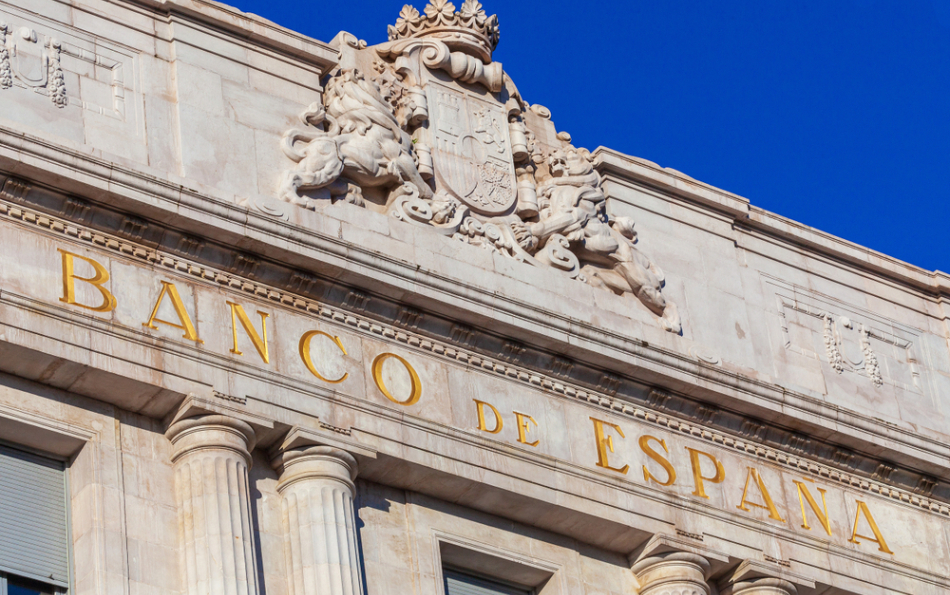
Many Spanish companies are listed on the domestic stock exchange, and almost anyone can become a shareholder. Spaniards themselves make active use of this opportunity. La Cotorra explains which companies trade on Spain’s financial markets, how to begin investing, and which instruments may be suitable for different aims.
According to BlackRock, around eleven million people invest in the Spanish stock market, representing 28 per cent of the adult population. Of these, 47 per cent hold shares and bonds. Although the Spanish stock market is far smaller than its American counterpart in terms of trading volume, investor activity and diversity of instruments, it still allows investors to acquire stakes in the country’s major enterprises and potentially profit from them.
It is important to decide through which service to purchase Spanish shares. There are two primary options: traditional brokers or neobanks. The final choice depends on the investor’s goals, planning horizon and the amount of capital involved. Investors with Russian passports must also consider potential sanctions-related complications, especially if EU residency is lost.
Traditional brokers — for example Interactive Brokers, Saxo Bank or BBVA Broker — can be described as expensive but reliable. Their disadvantages include a relatively complex interface and the presence of fees (for trading and sometimes for custody). In return, they offer secure and transparent asset protection and a broad range of instruments. Client assets are typically held separately from those of the broker, which is crucial in the event of bankruptcy.
Neobanks — such as Revolut, N26 or Trade Republic — prioritise convenience, although their transparency and reliability are sometimes questioned. They offer very simple interfaces, may not charge commissions, and allow fractional share purchases. However, these platforms do not always provide direct exchange access: trading may occur through designated market-makers or internal models, which can result in less favourable prices. Neobanks may not segregate client assets and often provide a limited selection of instruments. Many do not offer access to the Spanish exchange directly but instead to Germany’s Xetra, where some Spanish equities are unavailable.

Several hundred companies are listed in Spain. The thirty-five largest constitute the IBEX 35 index, which reflects the general state of the Spanish stock market. It consists mainly of financial institutions, energy and oil-and-gas companies, consumer goods producers and telecommunications firms — together accounting for more than 80 per cent of the index’s capitalisation.
At the opening of trading on Monday 5 May, the IBEX 35 stood at 13,446.70 points. It recently recovered from a drop of more than ten per cent caused by Donald Trump’s tariffs. Overall, the index is performing well: it has risen more than 15 per cent since the start of the year and has nearly doubled in the past five years.
The ten largest companies account for almost 80 per cent of the index’s capitalisation:
There are two principal ways to earn from shares: dividends and price appreciation. It is relatively rare for a company to offer both high growth and substantial dividends. Therefore, we examine separately the strongest dividend payers, the fastest-growing shares and those for which analysts predict the greatest potential. We limit ourselves to IBEX 35 constituents due to higher liquidity and narrower spreads.
Dividend yield (last 12 months): 8.61%.
The company owns Spain’s national gas pipeline network and several LNG regasification plants. Sustaining this dividend is uncertain due to record losses although the company has promised to maintain payouts.
Shares have risen 14.2% this year but lost more than one-third over five years. Analysts expect a recovery of around 12% within a year.
Dividend yield: 7.33%
Spain’s largest oil-and-gas company, operating across the full value chain. Repsol confirmed that it will continue dividends and buybacks following stronger-than-expected profits.
The share price has fallen nearly 9% this year but risen 25% over five years. Analysts forecast a further increase of around 25%.
Dividend yield: 6.54%
A major bank focused on individuals and SMEs. It may be acquired by BBVA; the deal has regulator approval and awaits the government’s decision.
Shares have risen more than one-third this year and 6.5-fold in five years, but remain below their 2007 peak. Analyst consensus suggests a modest further rise of 7.7%.
Dividend yield: 6.36%
Spain’s sixth-largest bank. Last year’s dividends were record-high.
Shares have risen one-third this year and 3.5-fold in five years. Analyst consensus indicates potential growth of 2.7%.
Dividend yield: 5.55%
A logistics company distributing goods from tobacco and books to medical products and hotel supplies. Considered a defensive stock.
Shares are up 4% this year and 90% over five years. Analysts forecast approx. +6% in twelve months.
| Top | Dividend yield 12 months |
|---|---|
| Enagas (ENG) | 8,61% |
| Repsol (REP) | 7,33% |
| Banco de Sabadell (SAB) | 6,54% |
| Banco Unicaja (UNI) | 6,36% |
| Grupo Logista (LOG) | 5,55% |

Selected by performance since the start of 2025.
A major IT and defence company producing air-traffic systems, aircraft simulators, ticketing platforms and military electronics. Shares up more than 70% this year, 3.5-fold in five years. Analysts expect a small additional increase of 1.3%.
One of the world’s largest financial institutions. Shares up more than 40% this year and tripled over five years. Forecast +10%.
Spain’s fifth-largest bank. Shares up nearly 40% this year and 3.5-fold in five years. Analysts expect a slight decline of 3%.
Also part of the dividend list: +33% YTD and 6.5-fold in five years.
Strong dividends and growth: +33% this year, 3.5-fold in five years. Further rise possible due to a planned buyback if large acquisitions fail.
| Top Five Fast-Growing Shares | Growth |
|---|---|
| Indra Sistemas (IDR) | 3,5 |
| Banco Santander (SAN) | 3 |
| Bankinter (BKT) | 3,5 |
| Banco de Sabadell (SAB) | 6,5 |
| Banco Unicaja (UNI) | 3,5 |
Based on analyst consensus (TradingView). Should not be the sole basis for decisions as forecasts often fail.
A global leader in plasma collection and producer of plasma-derived medicines. Analysts’ target price is more than 80% above current levels.
Shares are down 7% this year and have lost three-quarters of their value in five years.
A major solar energy producer. Target price suggests +75%.
Shares are down 20% this year and 29% over five years.
Produced Moderna’s COVID vaccine in 2020. Forecast: +50%.
Shares down 18% this year but nearly doubled over five years.
Producer of wind, solar, hydro and green hydrogen projects. Forecast: +44%.
Shares down 11% this year and 16% over five years.
Owner of Nina Ricci, Carolina Herrera and Paco Rabanne. Listed since May 2024. Forecast: +39%. Shares have fallen by one-third since IPO and 5% this year.
| Top Five Shares with the Greatest Potential | Forecast (%) |
|---|---|
| Grifols (GRF) | 80% |
| Solaria Energía y Medio Ambiente (SLR) | 75% |
| Laboratorios Farmacéuticos Rovi (ROVI) | 50% |
| Acciona Energía (ANE) | 44% |
| Puig Brands (PUIG) | 39% |
Investors can avoid choosing individual shares and buy the entire IBEX 35 through an ETF. The ETF collects investor money and purchases all 35 shares in the exact proportions of the index.
The only ETF tracking the IBEX 35 is the Amundi IBEX 35 UCITS ETF (AMES).
Accumulating version: €329.63 (2 May 2025).
Distributing version: €136.85, available only on the Spanish exchange.
This article does not constitute investment advice. Only you can determine which instruments suit your circumstances. You invest at your own risk. Investments may result in losses.
Related Articles

Why Feeding Kids in Spain Means Surrendering to Sugar — A Russian Mum's View from Valencia
At the playground, treats fly between families faster than you can track them, and restaurant kids' menus rarely stretch beyond chips and nuggets. But after years in Valencia, one mother is rethinking what really matters.

Why Is Spain So Corrupt? A Brief History and Eight Reasons the Problem Won't Go Away
With parliamentary elections approaching, corruption has become Spain's hottest political weapon. But the phenomenon is neither new nor simple — it stretches back centuries and involves structural, cultural, and psychological factors that no government has yet managed to fix.
Beyond Paella: Discovering All i Pebre, Valencia’s Best-Kept Culinary Secret
Deep in the heart of the Albufera wetlands, the fishing village of El Palmar preserves a traditional, rich garlic and wild eel stew that tourist traps completely miss
Loading…
Loading…