
Support La Cotorra on Patreon
Access exclusive content, special perks, and closer connection with us.
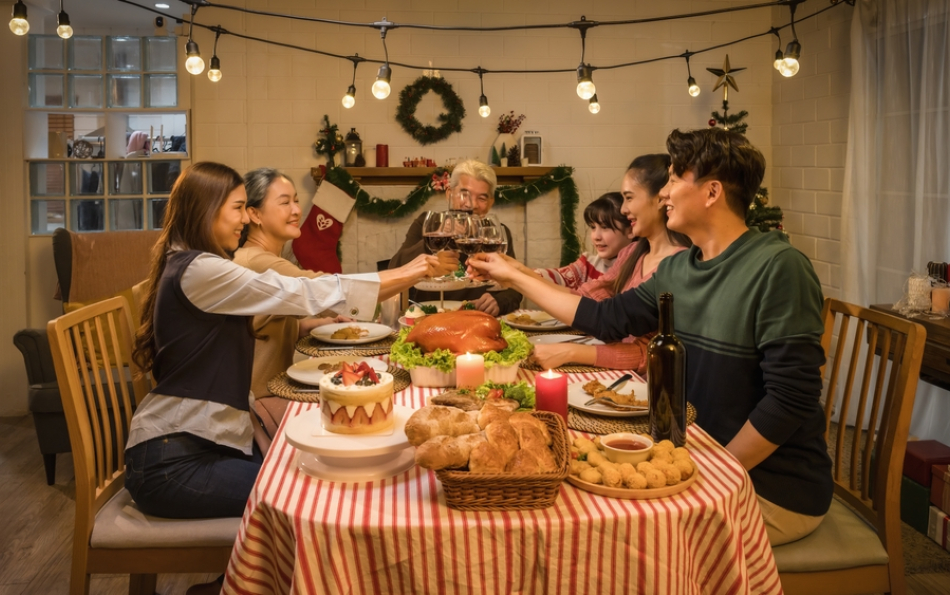
In Spain, preparations for Christmas begin in late November: homes are decorated in line with the Catholic calendar, family gatherings and festive menus are planned, and presents are bought. Glittering lights on city streets, Christmas markets filled with the scent of roasted almonds and chestnuts, cosy shop displays and a general sense of celebration — it may seem that Christmas in Spain looks exactly as we imagine it from classic European holiday films. Yet there are far more details and nuances here than first meet the eye. Even the central figure of Western Christmas — Papá Noel, or Santa Claus — is not awaited in every household. La Cotorra spoke to Spaniards about how their families celebrate the most important holiday of the year.
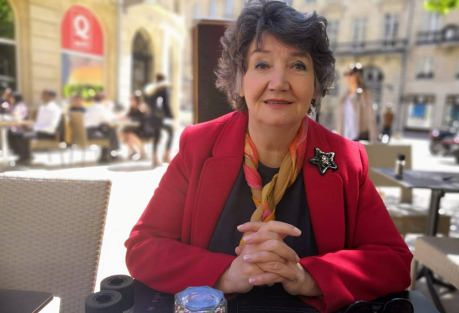
Rosa grew up in a religious family and has celebrated Christmas all her life according to Spanish Catholic tradition, which she now passes on to her children. In such homes, every decorative element has meaning, and each day of the pre-Christmas period forms part of the preparation.
“For us, the Christmas season begins long before 24 December — with Advent, a four-week liturgical period,” Rosa explains.
On the fourth Sunday before Christmas, Rosa decorates the house with an Advent wreath made of evergreen branches. Four candles are placed at its centre, and one is lit each Sunday in December. In this way, the light gradually grows stronger, preparing the family for the main event. On Christmas Eve night, an additional candle is lit, symbolising the birth of Christ.
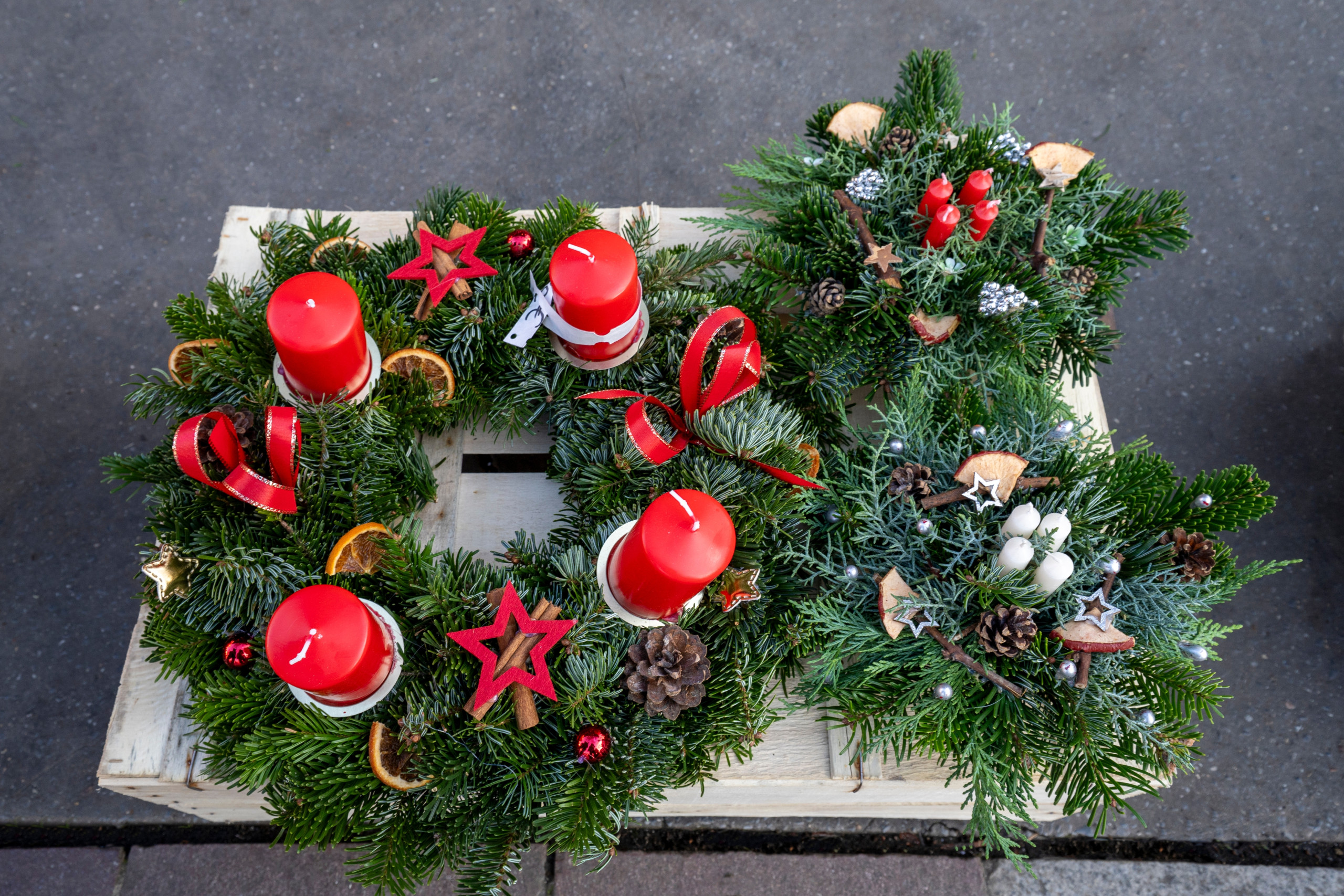
Rosa explains: “The Advent wreath is usually placed near the entrance to the house, as well as in one of the main rooms. In our family, for example, it is always in the dining room. In December we read passages from the Gospel, pray, or sometimes simply sit together in silence.”
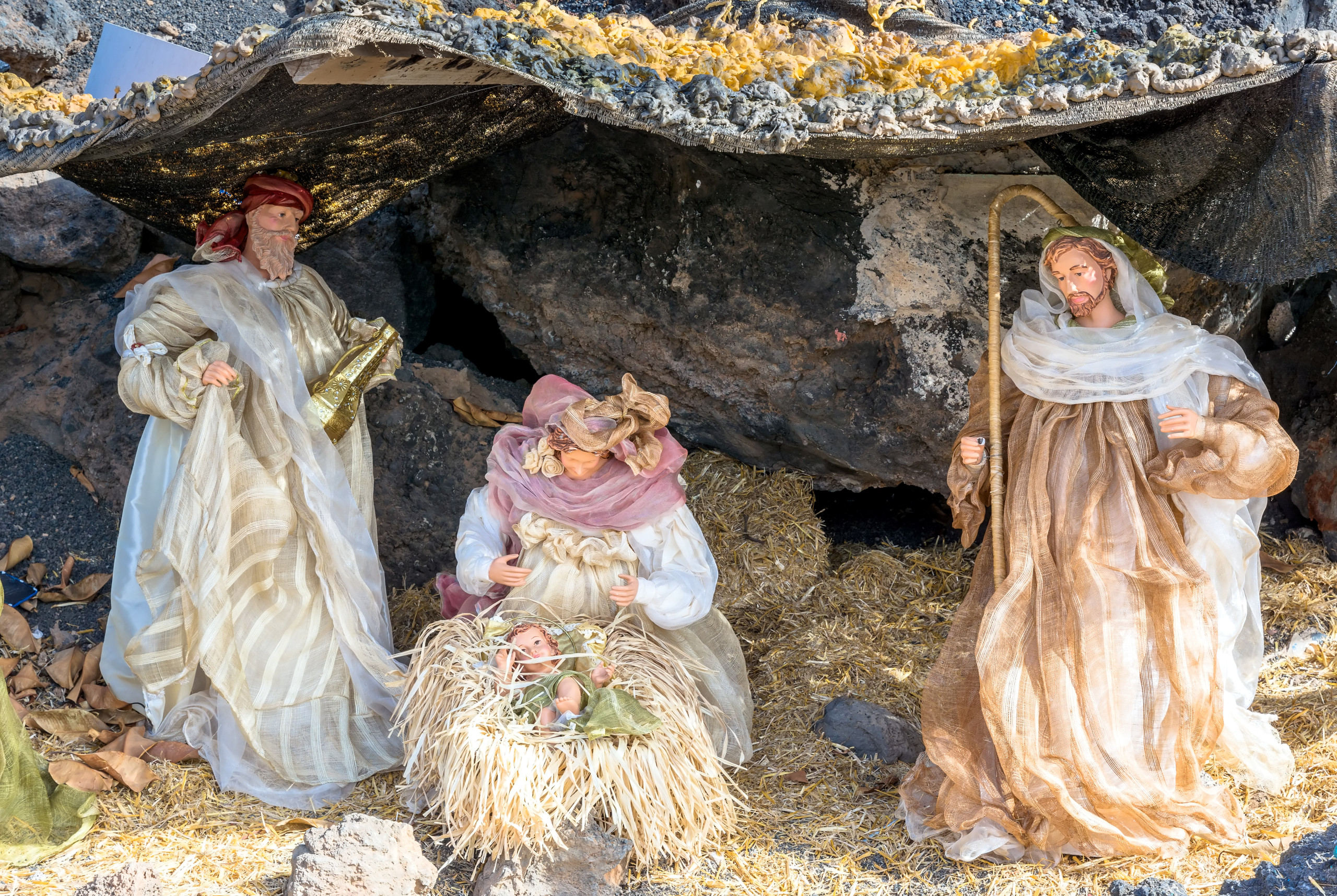
A special place in the home is reserved for the nativity scene (Belén). Figures of the Holy Family, the Three Kings and shepherds recreate the biblical scene of Jesus’ birth. In December, such sets are sold everywhere — from small shops to Christmas markets on central streets. In many Spanish families, nativity scenes are passed down from generation to generation. There is another important detail: in Spanish tradition, the Belén usually depicts a cave rather than a wooden stable, as is often shown in other European countries.
“The cave is a place of emptiness, and that is its deep meaning. A person must renounce what is unnecessary in order to be filled with God. On their way to Bethlehem, Joseph and Mary lose comfort, security and stability. It is in this complete emptiness that Christ is born. Each year, the nativity scene reminds us of humility, simplicity and inner cleansing,” Rosa explains.
Another essential Christmas symbol is the poinsettia, or flor de Pascua (“Easter flower”), which can be seen everywhere in December — on the streets, in shop windows and in homes. In Spanish church tradition, the word Pascua (Easter) means “passage” and refers not only to Easter itself, but to the entire cycle of major Christian festivals, including Christmas.
As Rosa explains, her home’s Christmas decoration is simple and symbolic rather than lavish. Nor is there a strong tradition of using old ornaments passed down from grandmothers, as in some other cultures.
“I know that in many post-Soviet countries it is common to decorate the tree with old ornaments. I have some too, from my grandmother’s time, but we don’t use them at Christmas — they are kept in a cupboard, in a box. The most important element of Christmas decoration is light: candles on the table, fairy lights. That is what creates the festive atmosphere,” Rosa says.
Each year, she puts together a new Christmas menu. When the family sits down to eat, every member finds a small surprise and a card from Rosa on their plate. “I always write warm words and wishes to my loved ones. I thank God for each of them — for their presence in my life and for who they are,” Rosa explains. For her, this is the most touching Christmas tradition.
“As for presents, they are brought by the Three Kings on 6 January, not by a man in a red hat. He appeared in Spain along with Coca-Cola advertising, and in recent years many families have adopted that tradition too,” — Rosa says, with noticeable disapproval.
The Day of the Kings is traditionally concluded with a family lunch, at the end of which roscón de Reyes is served — a round sweet cake containing two hidden surprises: a bean (the person who finds it must pay for the cake) and a small king figurine (the recipient wears a paper crown, usually provided with the dessert, and according to legend, will have good luck in the coming year).
After the festive meal, Rosa’s family sing Christmas carols (villancicos) and give children what are known as estrenas — a word derived from the Latin strena, the name for symbolic gifts given for good luck in Ancient Rome.
“An estrena is a small amount of money that relatives give to children. The sum is usually symbolic and depends on the family’s means. What matters is not the money, but the gesture,” Rosa explains.
In Rosa’s family, Christmas celebrations last up to three days — during this time they visit relatives they were unable to see on 24 December.
Concha’s family celebrates Christmas at her brother’s home in Alcoy, a small town in the province of Alicante. The main decoration in the house is a nativity scene inherited from Concha’s mother. It is arranged so that even the youngest children can see the ceramic figures clearly. Many Christmas dishes are prepared according to Concha’s mother’s recipes.
“At Christmas, we follow exactly the rituals I remember from my childhood. There are three main dishes I prepare every year: callos (a traditional tripe dish), fish meatballs, and la pericana (a Valencian speciality made from peppers, fish and olive oil). For dessert, I make mantecados using my mother’s recipe — traditional Christmas biscuits made from flour, sugar and pork fat,” Concha says (La Cotorra has previously written).
Over time, a Catalan tradition has also entered the family, brought by a relative from Barcelona. “We always play the game with the Catalan Tió, which children absolutely love. It’s a toy in the shape of a log with a painted face. Throughout December, children symbolically ‘feed’ it by placing fruit or biscuits beside it. Then the Tió ‘produces’ presents,” Concha explains. This ritual is linked to ancient rural beliefs about fertility: the log promises warmth and abundance for the home.
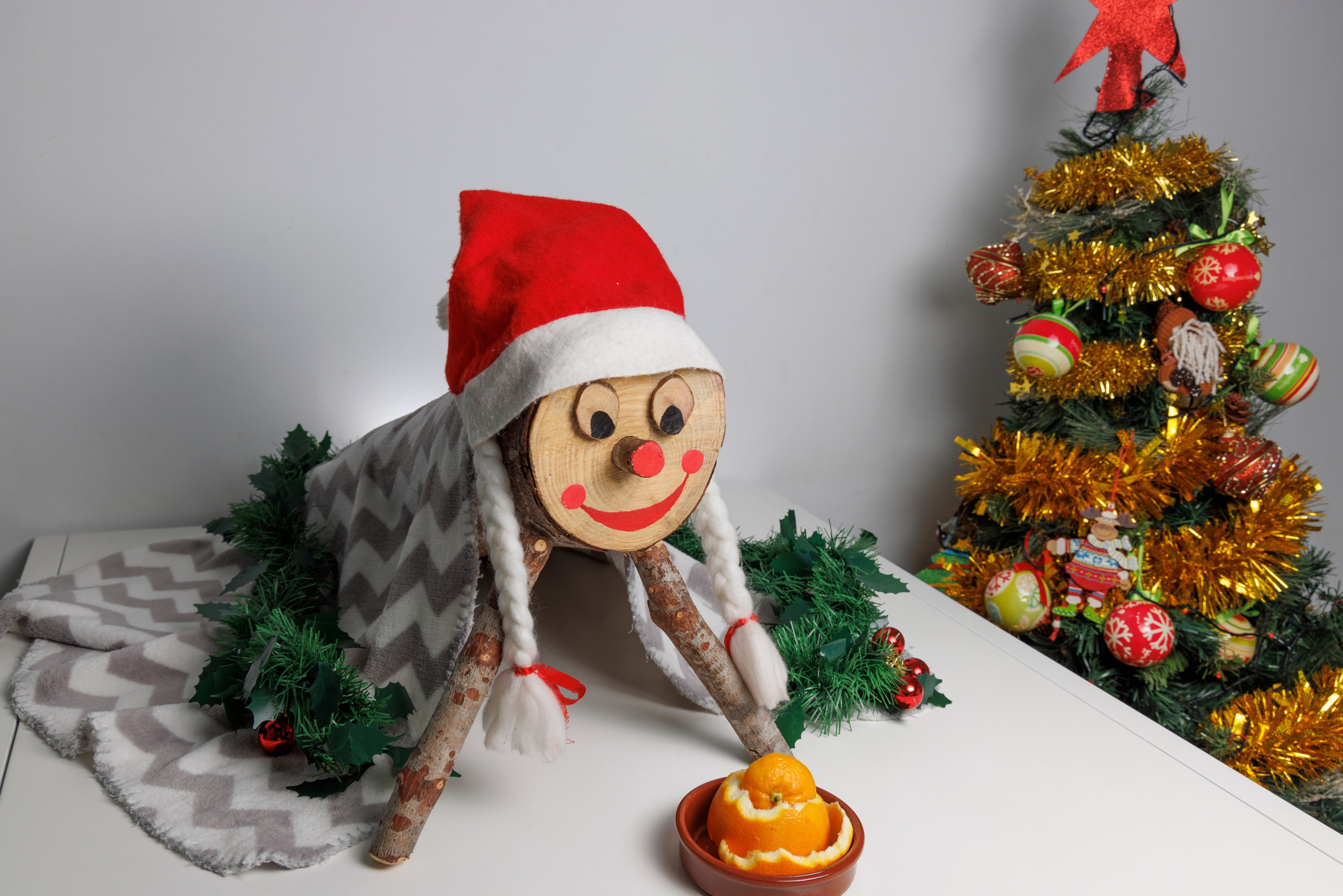
“Everyone sings a song asking the Tió to poop, while hitting it with a wooden stick. Then gifts appear from the log — usually small items or sweets. What matters is that everyone receives something. Paying attention to each family member is especially important at a celebration like Christmas,” Concha says.
Jesús describes himself as a secular person, so for him Christmas is first and foremost about warm gatherings with family. His extended family includes several dozen people, and during the holidays he tries to spend time with everyone. On 24 and 25 December, he and his wife divide their meals between relatives on both sides of the family — a situation that is quite common in Spain.
“On Nochebuena, my wife’s brother comes to us. He lives alone, so it’s a small gathering,” Jesús says. On 25 December, the scale of the celebration changes dramatically. “We get together with my side of the family — about thirty people,” Jesús explains. The festive menu reflects this: food must be prepared for a large group. Most often, a large paella is cooked; sometimes ready-made dishes are bought to make things easier for the hosts. After the meal, the family sings Christmas songs accompanied by a guitar.
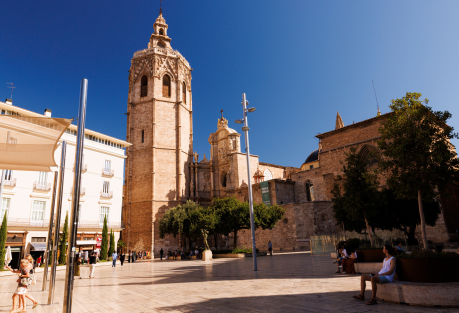
According to Jesús, Christmas celebrations have changed significantly since his childhood. Today, Valencia is decorated a month and a half before Christmas, whereas in the past the tree was put up much closer to the date. The tradition of gift-giving has changed too.
“When I was a child, presents were brought by the Three Kings — there was no Papá Noel. That’s a relatively recent tradition. Nowadays, gifts are often given already on Christmas Day, for a very practical reason: to keep children occupied with new toys during the school holidays,” Jesús explains.
Jesús also notes that the religious aspect of the holiday has weakened over time. In the past, after dinner on 24 December, families went to Misa del Gallo — the solemn midnight mass. Gallo means rooster; its crow has long symbolised the arrival of a new day, the victory of light over darkness, and the birth of Christ. In Jesús’s family, they no longer attend Christmas mass — the tradition faded away with the older generation.
Paco was born on 25 December. He jokes that you won’t find a more “Christmas” person in all of Valencia. But in his view, Christmas needs limits.
“We don’t start decorating the house in November, like many shops do nowadays — otherwise the holiday loses its meaning,” Paco says.
In his family, Christmas is celebrated warmly and without excessive ceremony, but the table is always filled with delicacies, as the family runs a shop selling cured meats and cheeses from around the world.
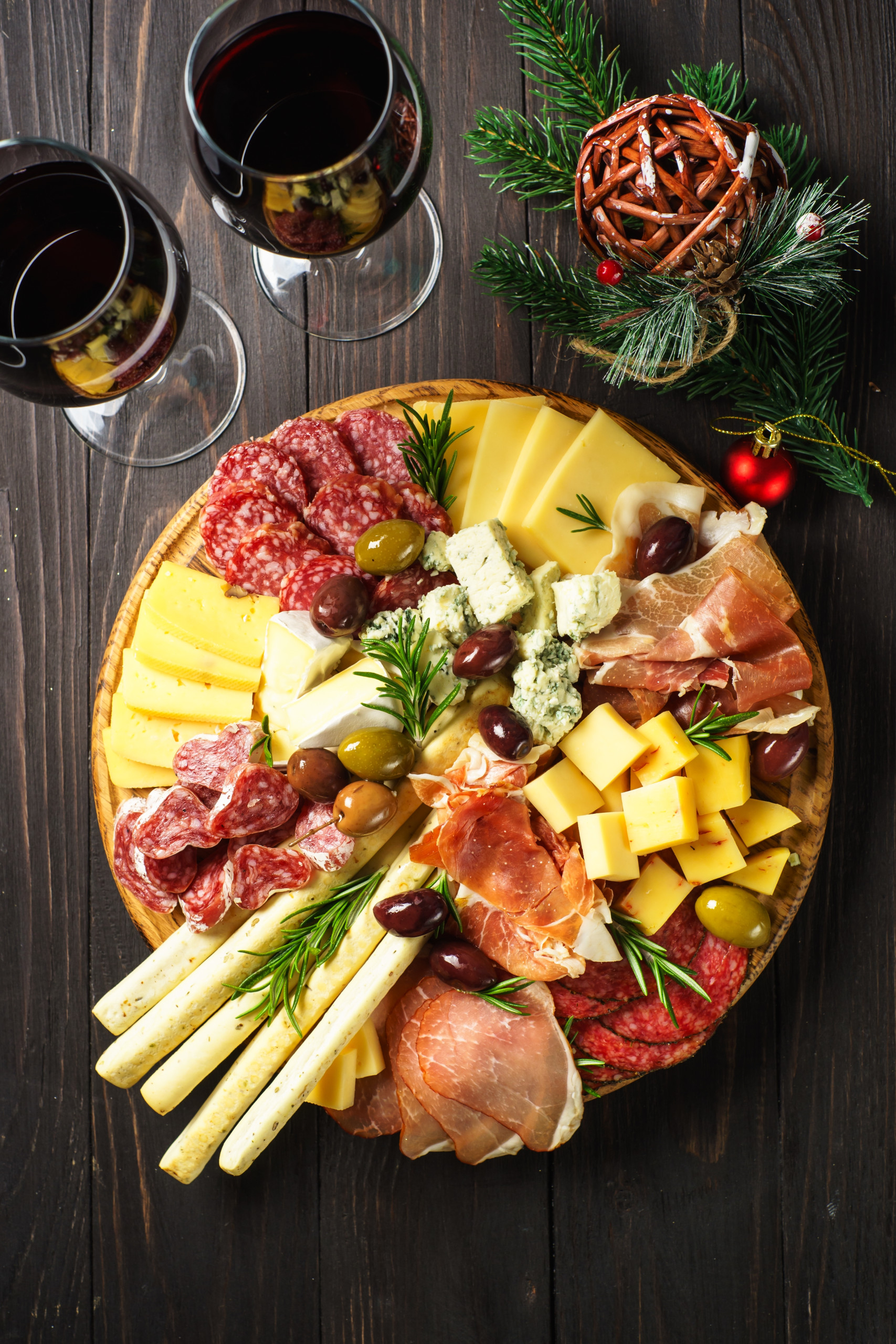
“I always put together a Christmas selection from the shop for our family. We love unusual cheeses; the main dish is often stuffed turkey; among the starters there is always Iberian ham — it’s the most expensive, but also the tastiest. We always buy good wine for the festive dinner too,” Paco says. For him, even talking about the Christmas meal is a pleasure in itself.
In Paco’s family, the children are already grown up, but they still observe the traditions of the Day of the Three Kings, which in Spain is considered a children’s holiday. “We still all write letters to the Kings — that’s essential. We place shoes by the window so the Kings can leave us presents, and we leave out water and food for their camels, as a sign of hospitality and anticipation.”
According to Paco, it is important for his family to preserve the original Spanish traditions of the holiday, even though in the streets of Valencia, in the days leading up to Christmas, images of Santa are now more common than those of the Three Kings. Only his wife goes to church; the rest of the family are not religious. However, they take decorating the home seriously and follow their own rituals, which help maintain warmth and closeness.
“We decorate the Christmas tree not only with ornaments and lights, but also with small notes. Each person writes down a wish or recalls an important moment from the passing year, folds the note into a small square and hangs it on a branch. You’re not allowed to open them before Christmas. Then, after the festive dinner, everyone reads their note aloud. That way we understand each other better and see what matters most to each of us,” Paco says.
These notes are kept for years. Over time, they have formed a long-standing archive of memories — a record of all the most important family events, which is a pleasure to revisit during the holidays.
Related Articles
Beyond Paella: Discovering All i Pebre, Valencia’s Best-Kept Culinary Secret
Deep in the heart of the Albufera wetlands, the fishing village of El Palmar preserves a traditional, rich garlic and wild eel stew that tourist traps completely miss
Loading…
Loading…