


Support La Cotorra on Patreon
Access exclusive content, special perks, and closer connection with us.
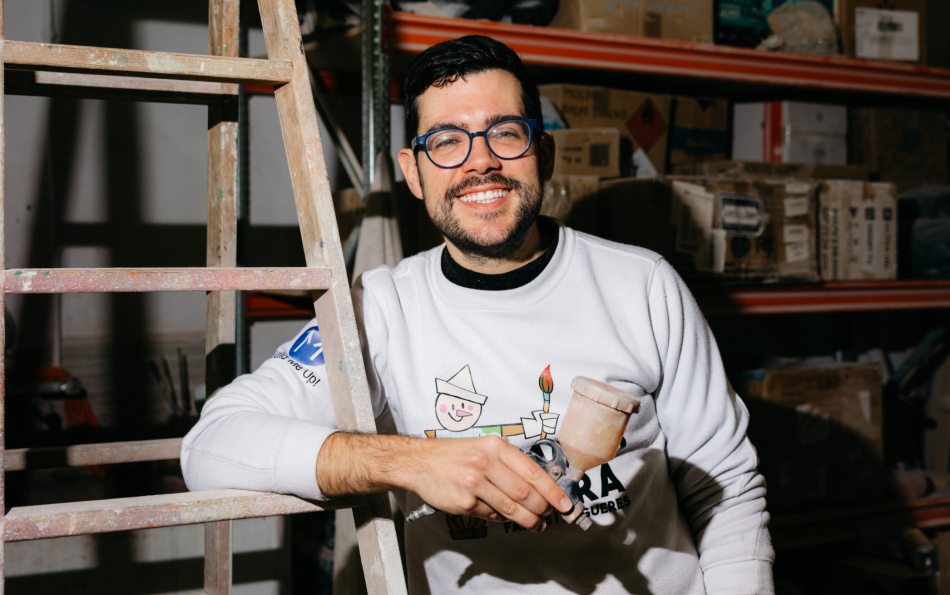
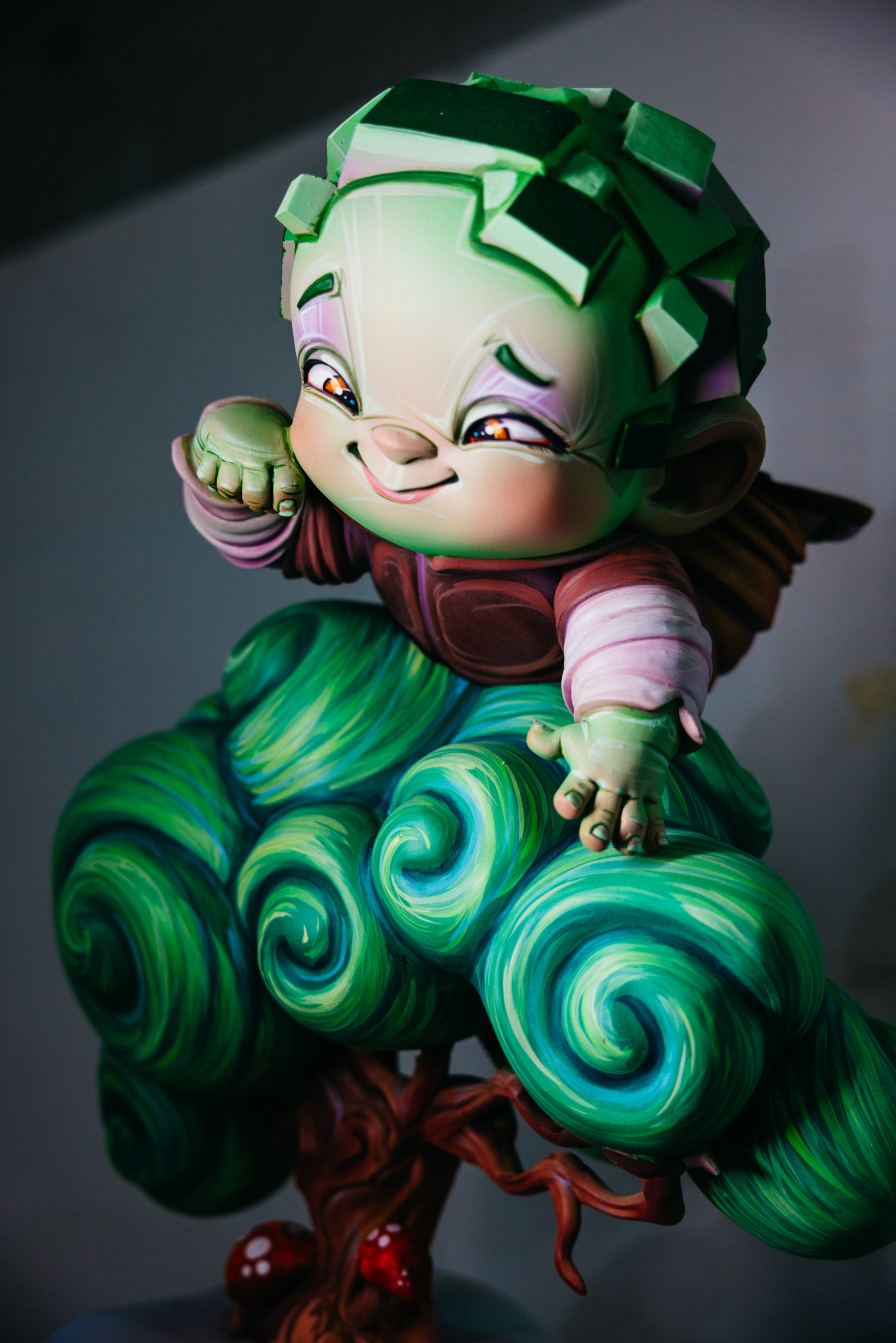
La Cotorra visited the Carto Pedra workshop of Borja Lorente, one of the youngest and most prominent fallero artists. His sculpture for the children is almost complete, but it cannot yet be revealed in full so as not to spoil the surprise. The finished piece will be unveiled on 15 March, when it is installed near Colón Market. It already looks set to be one of the most striking children’s figures of the year.
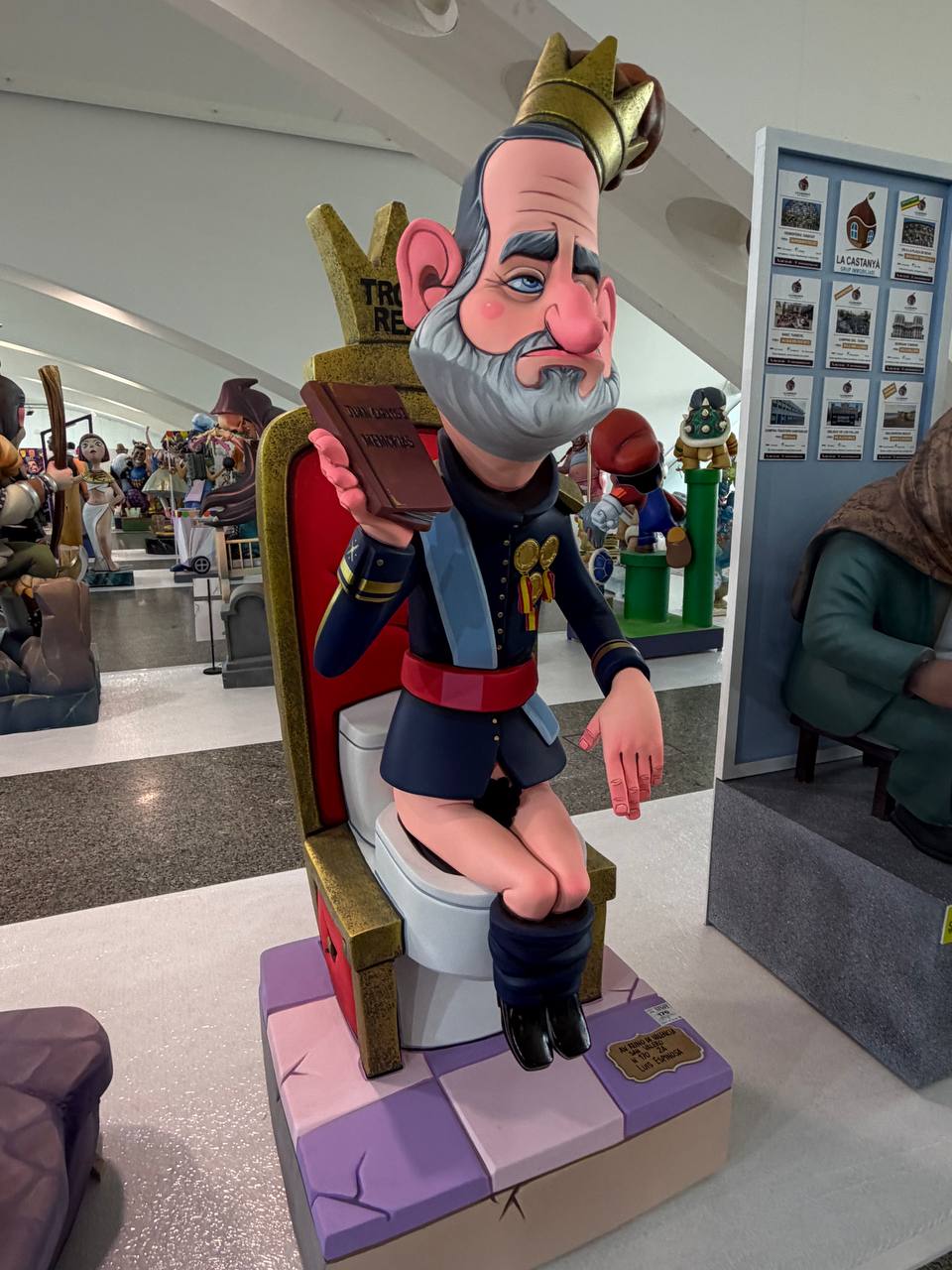
Every year, Valencians openly express their humour and anger through the figures. During Las Fallas, both gigantic monuments and smaller sculptures are installed across every district of the city. The tradition dates back to the 18th century, when simple figures made of wood and cardboard were used to mock neighbours, shopkeepers or the mayor. The essence of the tradition has remained the same ever since, and even members of the royal family are not spared. This year, for instance, the King of Spain was depicted sitting on a toilet: a figure currently on display at the City of Arts and Sciences.
Borja Lorente works primarily on children’s figures. These are usually several times shorter than the giant sculptures made for the adult categories. Borja does not see this format as a “minor league”: he aims to convey a view of the world through images that resonate with children while still appearing sophisticated to adults. For him, it is important that a figure has an educational purpose and sparks a child’s curiosity about new ideas and themes.
“Criticism is possible too, but it shouldn’t be so blunt. You can talk about human rights, inclusion, diversity,” Borja explains.
This year, Borja’s figure is dedicated to Japan and its unique ability to blend centuries-old traditions with modern technology. As a result, temple aesthetics and figures from Japanese mythology go alongside video game characters and elements of pop culture in his sculpture. While working on the piece, Borja is also preparing for a trip to Japan, where he will go on his honeymoon shortly after Las Fallas.
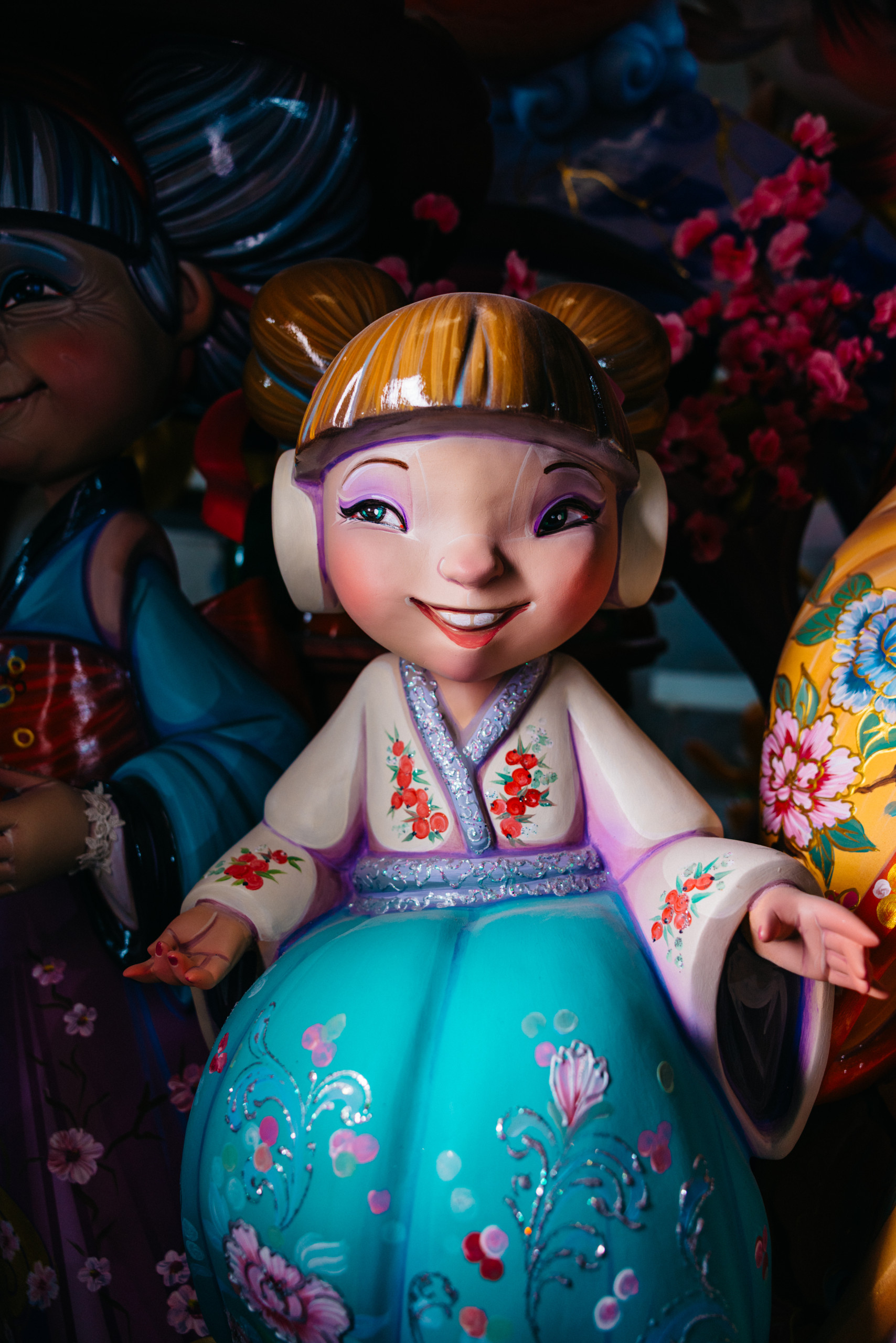
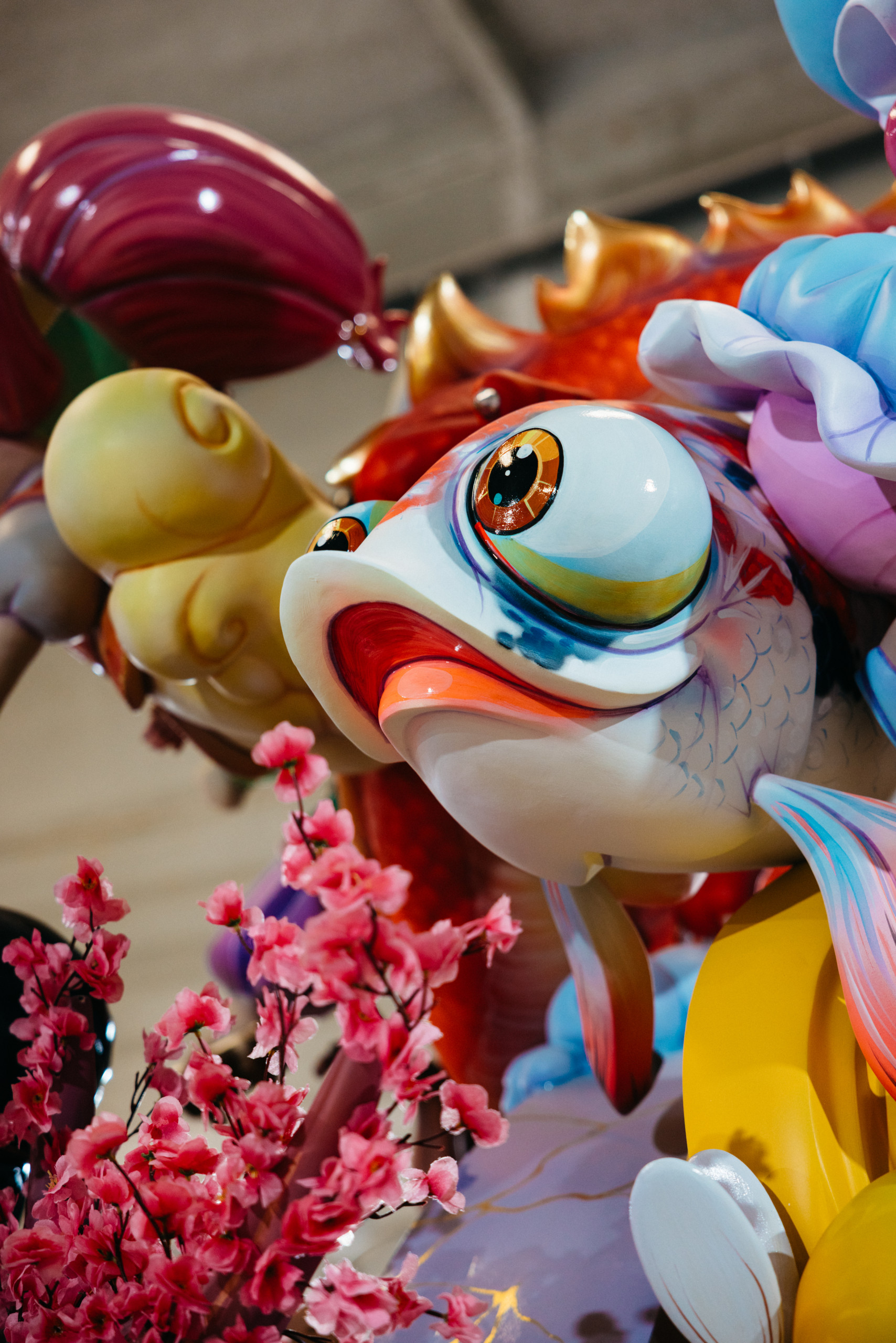
“You could say this figure is my guidebook,” Borja says. “We were planning the route, and I kept thinking about how the places we want to visit could be brought together in a single sculpture. I like it when there’s something personal in a piece of work. Together with the workshop team, we studied how religion in Japan works, which Shinto symbols are important, and which elements of contemporary culture shape its image.”
Most of the sculptures are made from a modern material: polystyrene. It is cut by hand or with machines, assembled into forms, then covered with recycled paper and a plaster-like compound known as gotelé.
The surface is carefully polished, resulting in smooth figures with a finish that resembles porcelain.
Only after that is the paint applied.
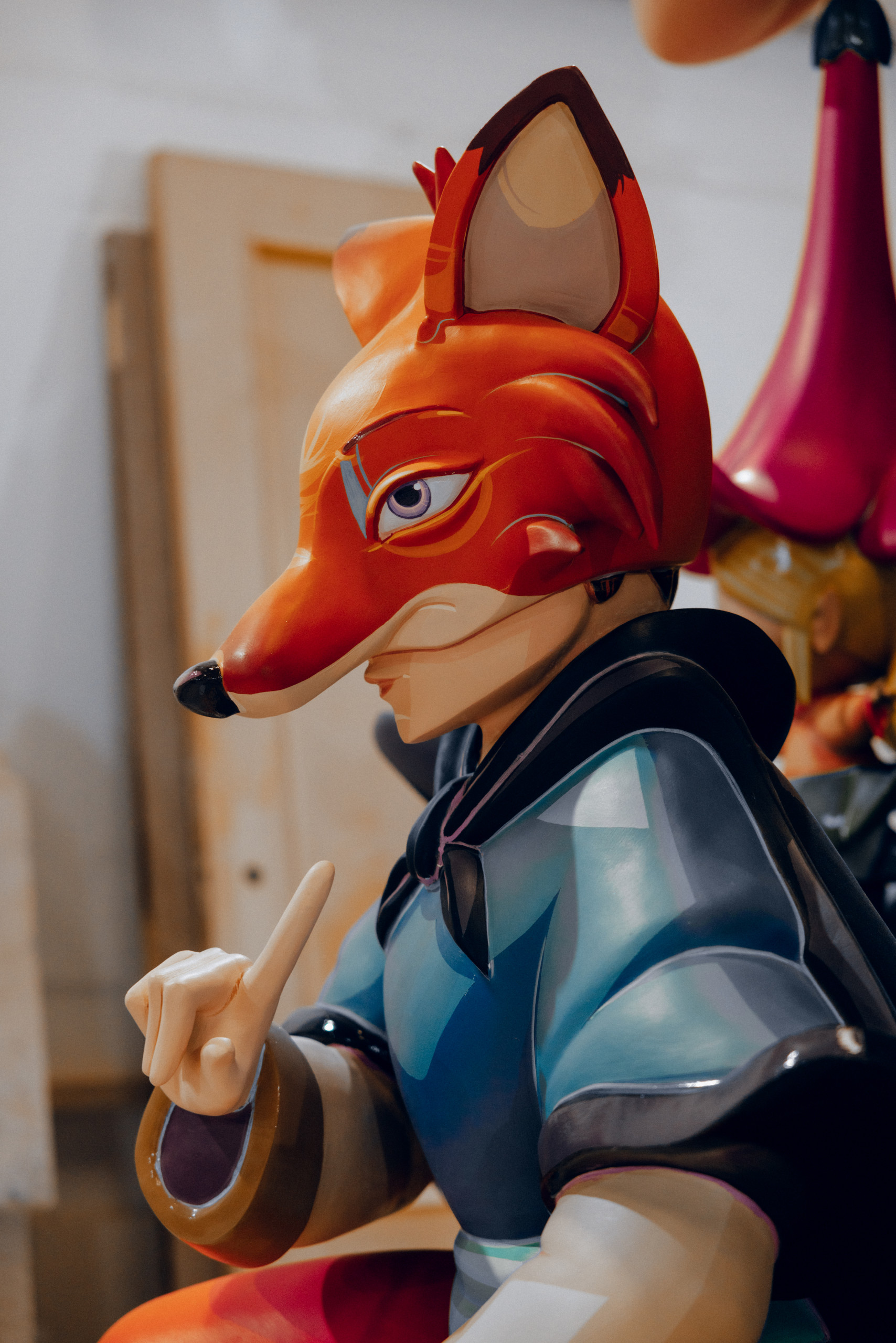
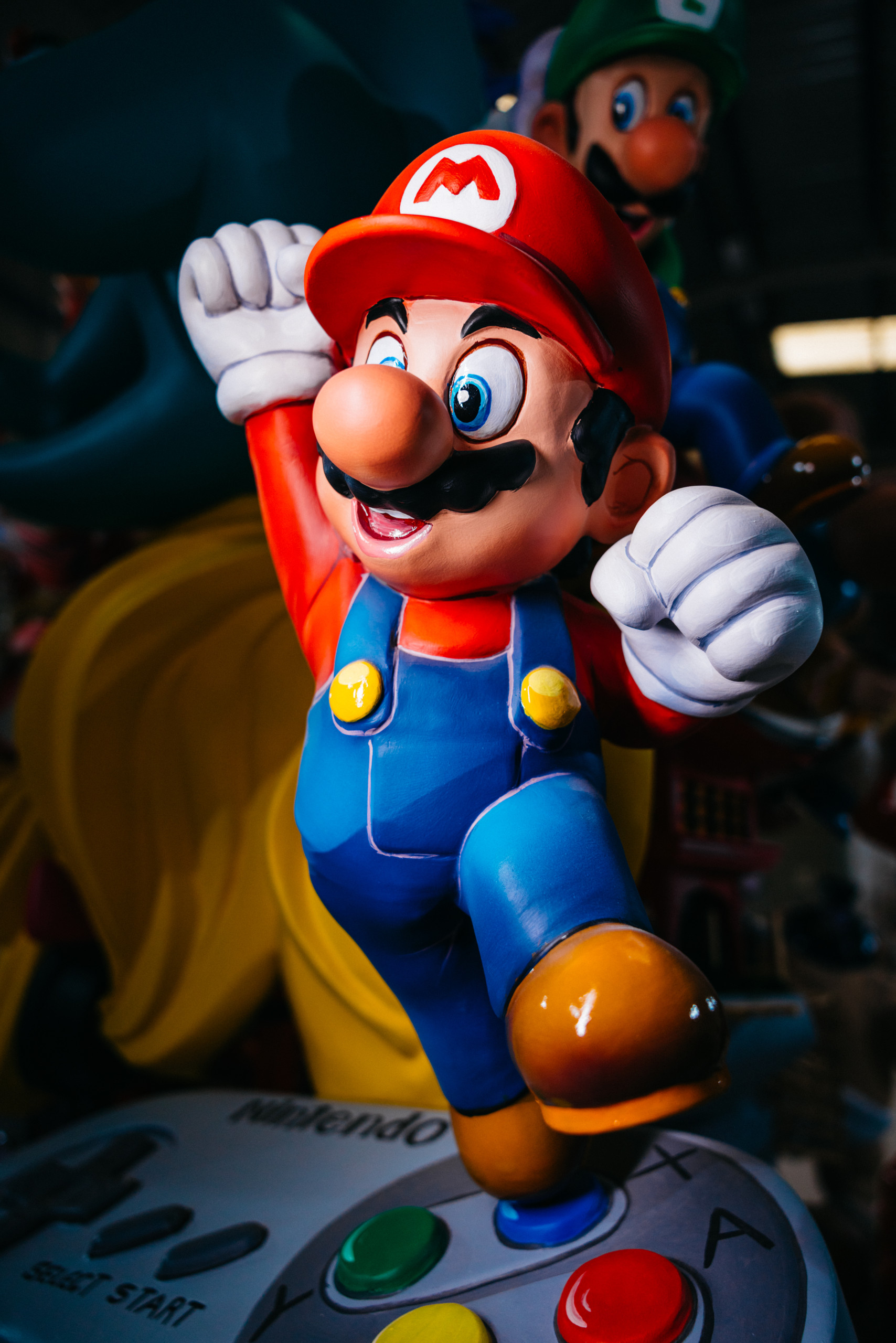
The sculpture is commissioned by a local falla, a cultural association responsible for organising the festival, which also covers the full cost of the work through membership fees. A children’s figure typically costs several tens of thousands of euros, while adult-scale compositions require a larger budget. The most expensive figure of 2025 was Convento Jerusalén Matemático Marzal, with a reported cost of €250,000.
At first glance, such levels of spending might suggest that figure artists should not face financial difficulties. Borja, however, disagrees.
“There is almost no generational renewal in our field. Young people do come in, but they rarely stay — the cost of entry is too high, and the risks are enormous. Materials are expensive: in recent years, prices have risen by 50–60%, and you can’t cut corners on quality. Workshop rent often ends up being higher than your income,” Borja explains.
He began working in 2014–2015. In his hometown of Alzira, just outside Valencia, there were around fifteen artists at the time. Today, only five remain. In just twelve years, the town has lost the majority of its creators.
“The next young artist after me only appeared a couple of years ago. That says a lot: people enter the profession, give it a try, realise how demanding and costly it is, and don’t stay.” Even Borja himself, despite being in demand, thinks about changing careers every year.
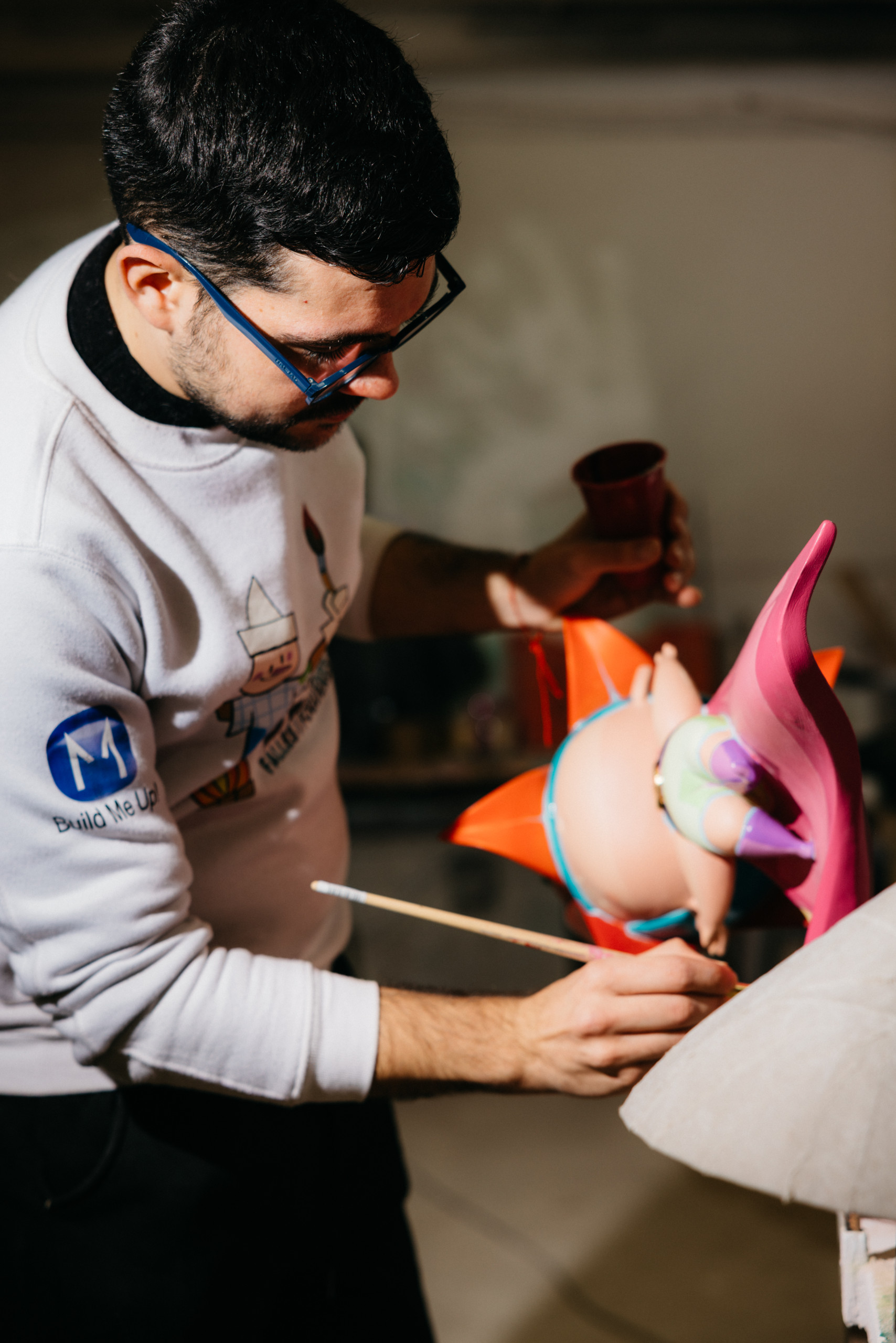
“Every year I tell myself: that’s it, I’m quitting. There’s financial pressure, like anyone who runs their own business. There’s internal pressure, my perfectionism, the need to make everything flawless. And there’s external pressure, even if no one is demanding anything, you know the figure has to make an impact for the awards and for the press. At some point, your head just can’t take it anymore, and you promise yourself: next year, I’m not doing this. I’ve been saying that for many years — and I’m still here.”
The cycle always looks the same: a new commission comes in, an idea emerges, and the workshop lives with it for the entire season, and then the finished sculpture appears, destined to decorate the city for just a few days before being burned.
“This is the most astonishing part of the profession — watching something you’ve worked on for almost a year simply disappear. At first, it was incredibly hard. You work for ten months, and then it burns in fifteen minutes. But over time, I realised and accepted it. Strangely enough, that’s exactly what helps you start again,” Borja says.
After the sculpture is installed, Borja Lorente will take a few days off to properly celebrate Las Fallas before leaving for his honeymoon in Japan. When he returns, he’ll begin work on a new sketch.
Related Articles
Beyond Paella: Discovering All i Pebre, Valencia’s Best-Kept Culinary Secret
Deep in the heart of the Albufera wetlands, the fishing village of El Palmar preserves a traditional, rich garlic and wild eel stew that tourist traps completely miss
Loading…
Loading…