






Support La Cotorra on Patreon
Access exclusive content, special perks, and closer connection with us.
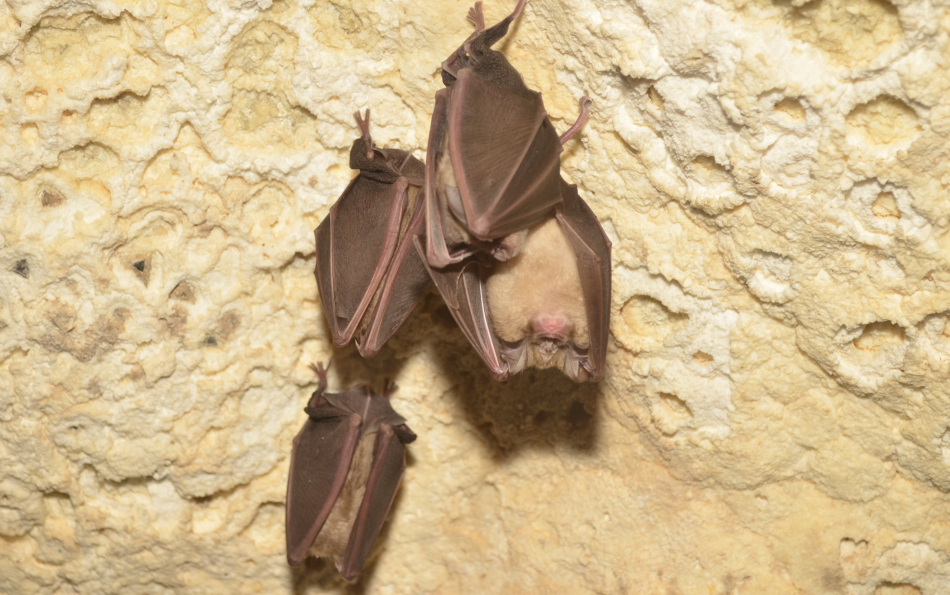
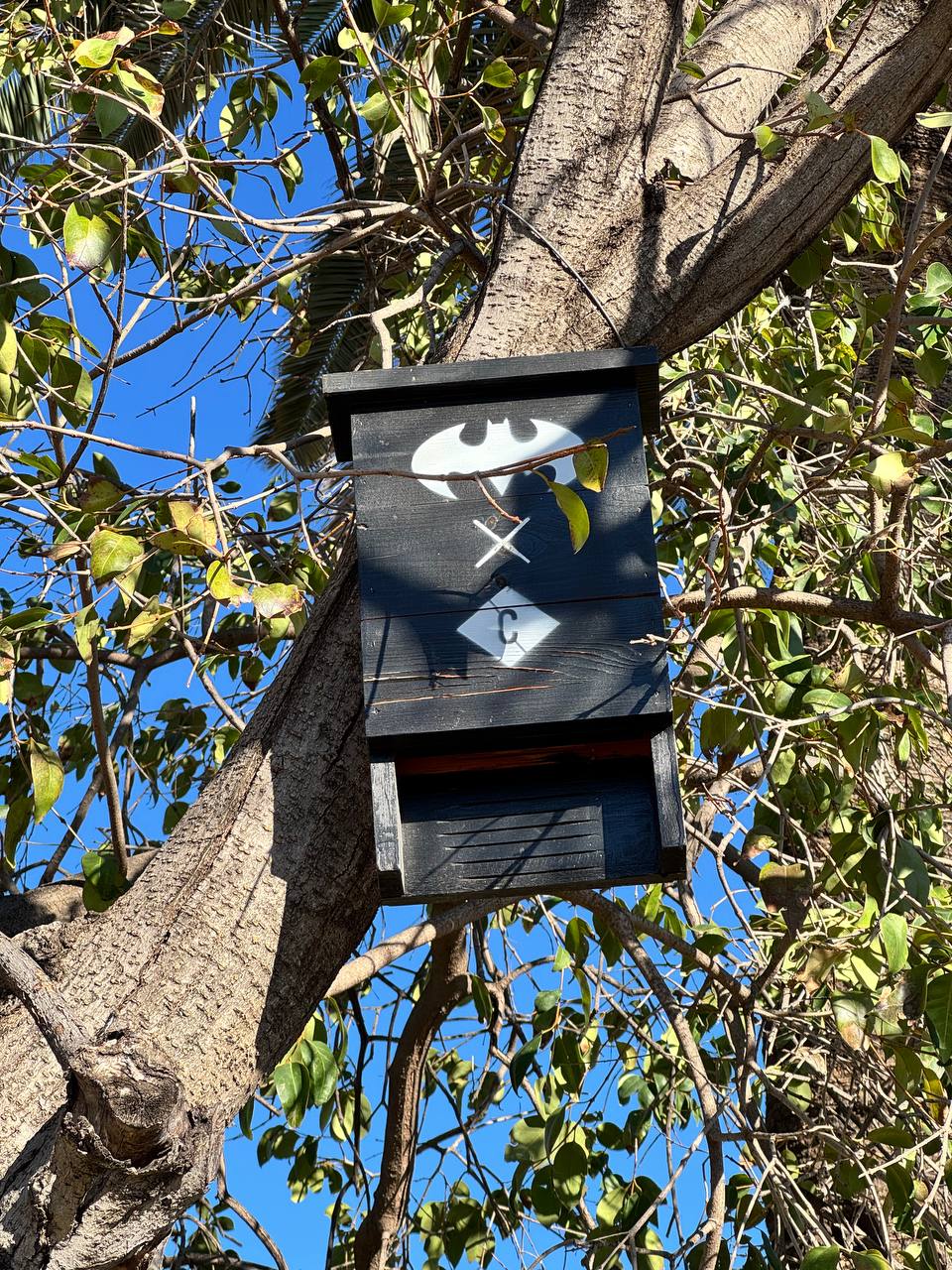
Walking through Valencia, you may notice small black boxes on the trees, marked with a bat emblem and looking rather like birdhouses. These are shelters for the city's nocturnal residents — creatures that Valencia deliberately protects. Large bat colonies also live in ordinary apartment buildings. There are thousands of individual bats in the city (the precise number is unknown). For Valencia, the bat is both a symbol and an essential member of the urban ecosystem. Why the city needs them, and whether they pose any danger to humans, was explained to La Cotorra by Miguel Crespo, an activist from one of Valencia's oldest environmental organisations, Acció Ecologista-Agró.
The bat appears on Valencia's coat of arms, a reference to one of the city's most famous legends, involving King Jaume I. According to one version, on the eve of the decisive battle for Valencia against the Moors in the thirteenth century, a bat created enough noise in Jaume I's camp to wake the soldiers, as though warning them of danger. The bat has been embedded in the city's symbolism ever since, regarded as a creature that brings good fortune and protects the city.
According to Miguel Crespo, bats continue, in their own way, to protect Valencia — by heading out every night to hunt insects. Almost nobody sees them, but they live right alongside us: under roofs, in cracks in buildings, in parks, on the city's outskirts, among trees and gardens.
People think they're not there, but if you know where to look, you start noticing them every evening," says Miguel.
He explains that bats are not exotic or rare — they are part of the urban ecosystem. "This is an animal that is supposed to live here. It is part of both our natural and our urban ecosystems," he says. These creatures perform a service for the city: they control the insect population.
Studies are showing that in one night, a bat can eat roughly half its body weight in food. That means a single bat could consume a huge number of mosquitoes in a single night. And we're not just talking about mosquitoes, but moths, night-flying butterflies, and other insects, including those that cause serious damage to agriculture," the activist explains.
This is precisely why environmentalists are so insistent about treating bats as allies. Miguel jokes that Valencia's bats are more Batman than Dracula. They don't threaten the city — they protect it, from mosquitoes and from crop pests alike.
The most common species in Valencia are small ones — common and soprano pipistrelles. But according to Miguel, almost all urban bats live somewhere quite different from where most people imagine.
"Most people think bats live in caves. But in Europe, many species nest in crevices, cracks in buildings, under roofs, and in voids behind facades. And this has become a problem in modern cities. The better we build and renovate, the worse off the bats are. New buildings are airtight, old ones are restored, and cracks are sealed up. For people, that means comfort and safety; for bats,s it means the loss of home," Miguel explains.
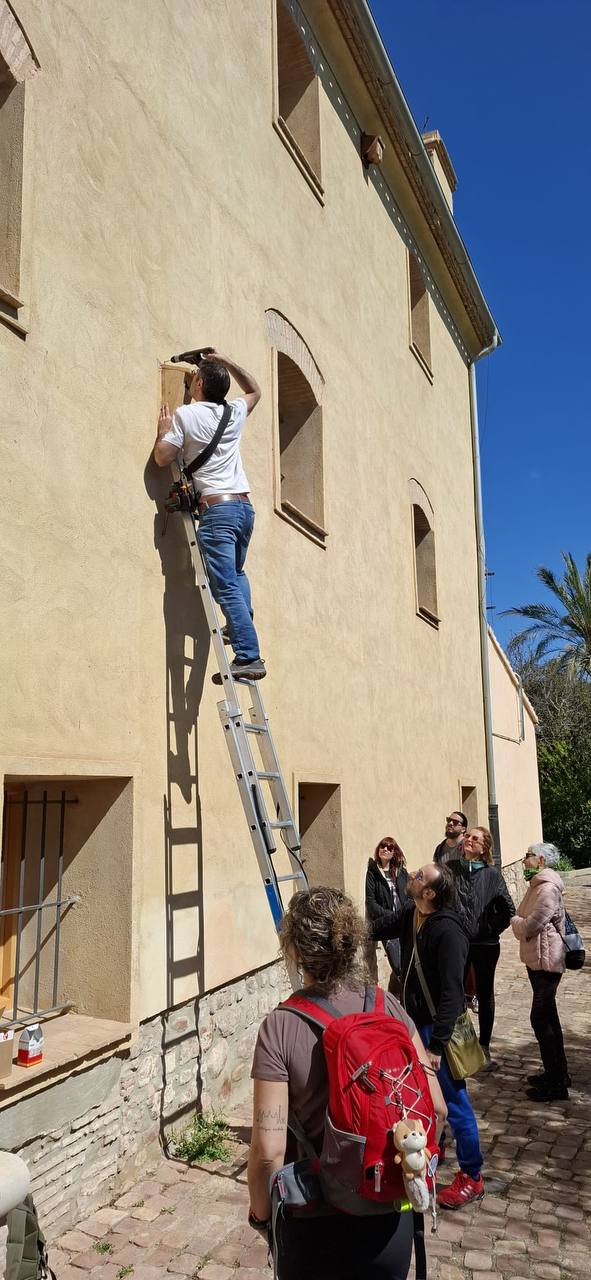
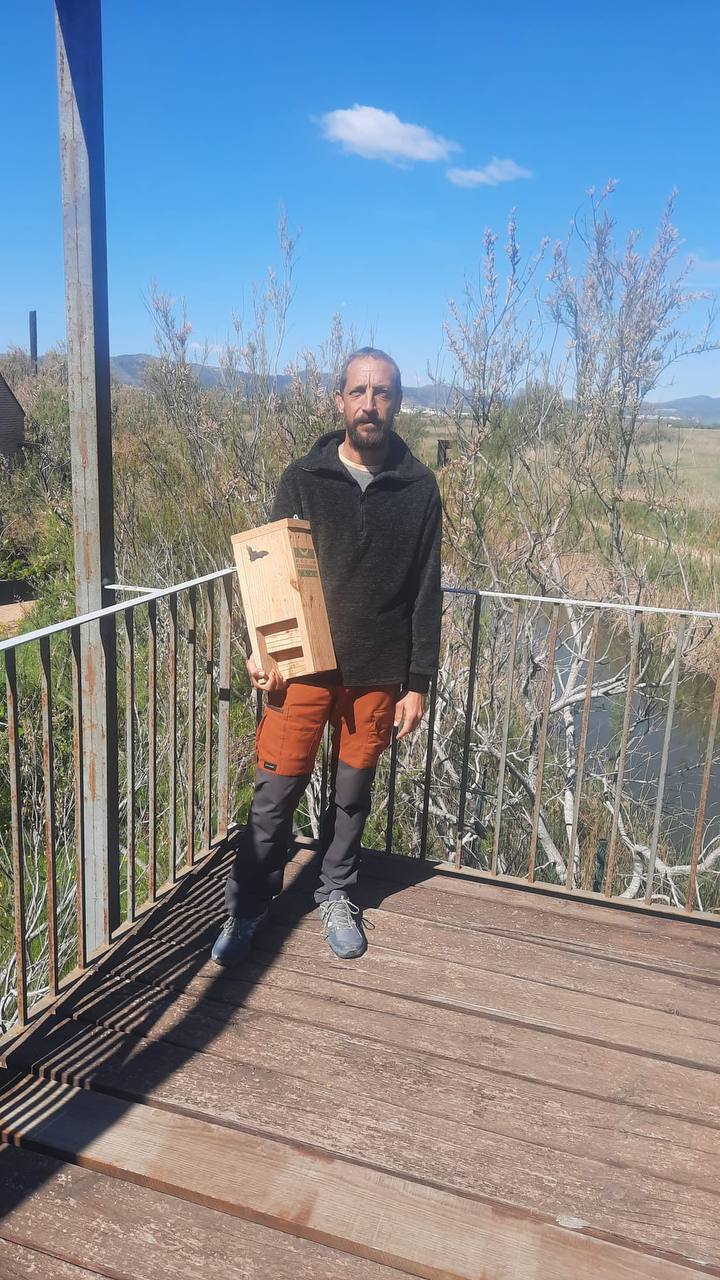
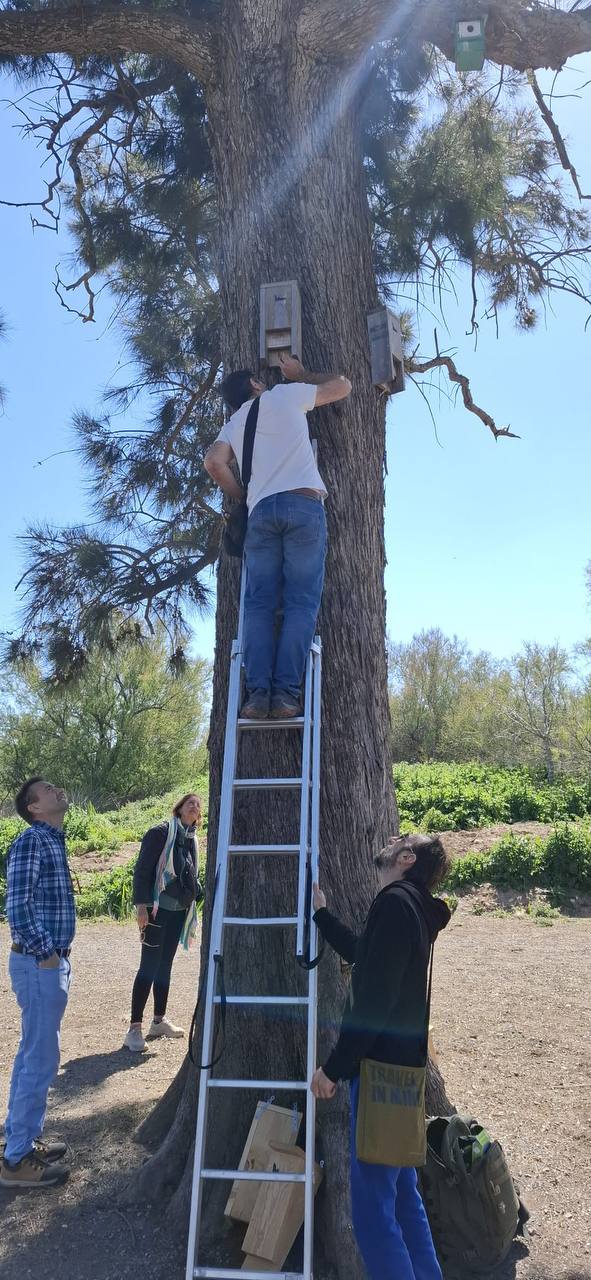
This is exactly why environmentalists install purpose-built bat boxes — wooden enclosures fixed to facades, in parks, and on trees — as replacements for disappearing natural shelters.
When we put up these boxes, we're compensating for the lack of crevices and openings in buildings and old trees. The small models most commonly installed in the city are designed to hold around 20–25 bats," says Miguel.
Sometimes the boxes are placed precisely where a colony had previously lived. "If you know where they were, and you put a box nearby, there's a very good chance they'll take it, because they simply have nowhere else to go," he explains. This was the case in a building he knows well personally: a colony had been living under the roof, and when the old opening disappeared, an artificial shelter was installed nearby.
During the breeding season, colonies become especially vulnerable. Bats have a distinctive reproductive cycle: females mate in autumn, but foetal development begins only in spring, when the weather warms up, and insects appear. At that point, the females gather together in colonies to breed.
"It's essentially a nursery. All the females come together with their young. They live as a colony, raising the pups in one place," Miguel explains.
While breeding and pup-rearing are underway, any building work near the colony can be lethal. Sealing a crack, removing a roof, drilling or making noise can wipe out the colony. These sites must therefore be protected.
"Spanish law protects bats during the breeding season. If there's a colony in a building, any renovation work must stop. It's the same as with birds: you can't simply destroy their nesting site if there are young inside," says Miguel. These rules are also enshrined at the EU level — bats across Europe are a protected species.
In theory, this protocol should always apply. In practice, much depends on whether anyone has noticed the colony, reported it, and whether workers and property owners are willing to follow the rules.
Ecologists stress that the bat species found in Valencia are not aggressive and never attack humans unprovoked. However, a bat may bite if picked up.
"The main rule if you see a bat on the ground is: don't touch it with bare hands. It may have fallen due to strong wind, a collision, illness, or exhaustion. The best thing to do is carefully lift it with gloves, place it in a cardboard box with a slightly damp towel, and in the evening set it down on an elevated surface. If it's fine, it will simply jump off and fly away. If not, it should be taken to a wildlife rehabilitation centre," Miguel advises.
Vampire stories have nothing to do with Spanish bats. Only three species in the world feed on blood: Desmodus rotundus, Diaemus youngi, and Diphylla ecaudata. They live in tropical regions from Mexico to South America and feed primarily on animal blood, not human.
Valencia's environmentalists talk about urban bats in schools and during volunteer campaigns. The bat here is not just a symbol on a coat of arms, but a genuine element of the urban ecosystem — one that is actively monitored and carefully preserved.
Related Articles
Beyond Paella: Discovering All i Pebre, Valencia’s Best-Kept Culinary Secret
Deep in the heart of the Albufera wetlands, the fishing village of El Palmar preserves a traditional, rich garlic and wild eel stew that tourist traps completely miss
Loading…
Loading…