






Support La Cotorra on Patreon
Access exclusive content, special perks, and closer connection with us.
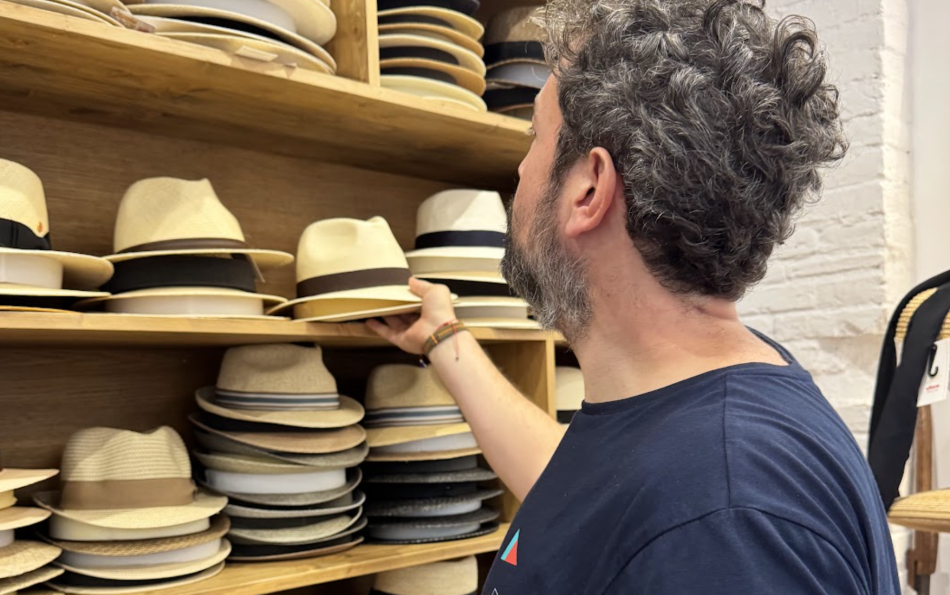
One of Valencia’s most renowned hat-making workshops, Sombreros Albero, is located in the very centre of the city, on Plaza Lope de Vega. The owner of this historic atelier, Rafael Albero Martínez, represents the fifth generation of a family of master hatters. He welcomed La Cotorra into his shop, housed in the narrowest building in Europe.
Local residents have been buying hats from the Albero family for more than two hundred years. Two centuries ago, the family lived on the market square, where their home also contained both the workshop and the shop. The atelier survived industrialisation, the Civil War and the rise of mass-market retail, and in the twenty-first century continues the craft begun by their ancestors in 1820.
Rafael Albero began learning the trade at the age of fourteen. Today, he runs the family business together with his father – who is also named Rafael Albero.
The family still tells the story of how Rafael’s grandfather travelled from village to village, his cart loaded with headwear, selling hats as he went. His dream was to transform the hat from a symbol of aristocratic luxury into an accessory accessible to ordinary people. It was the Albero workshop that developed the first democratically priced wool hat. In doing so, the small family business effectively changed the course of fashion history in Valencia.
Today, one of the Albero shops is located in the narrowest house in Europe. The building is known simply as La Estrecha – “the narrow one”. Its façade measures only 107 centimetres in width. According to one version, this was due to land prices; according to another, property tax was calculated based on the size of the street-facing wall.
“This is the most famous Valencian cap or, to be precise, a beret – the boina valenciana. It is a headpiece with a short front peak and a flat, rounded top. It is usually made from tweed, wool, felt, cotton or linen. It is an old English tradition, and such caps are now very popular even among the young. One could say they are back in fashion. Many people want to dress like the characters from Peaky Blinders,” Rafael explains.
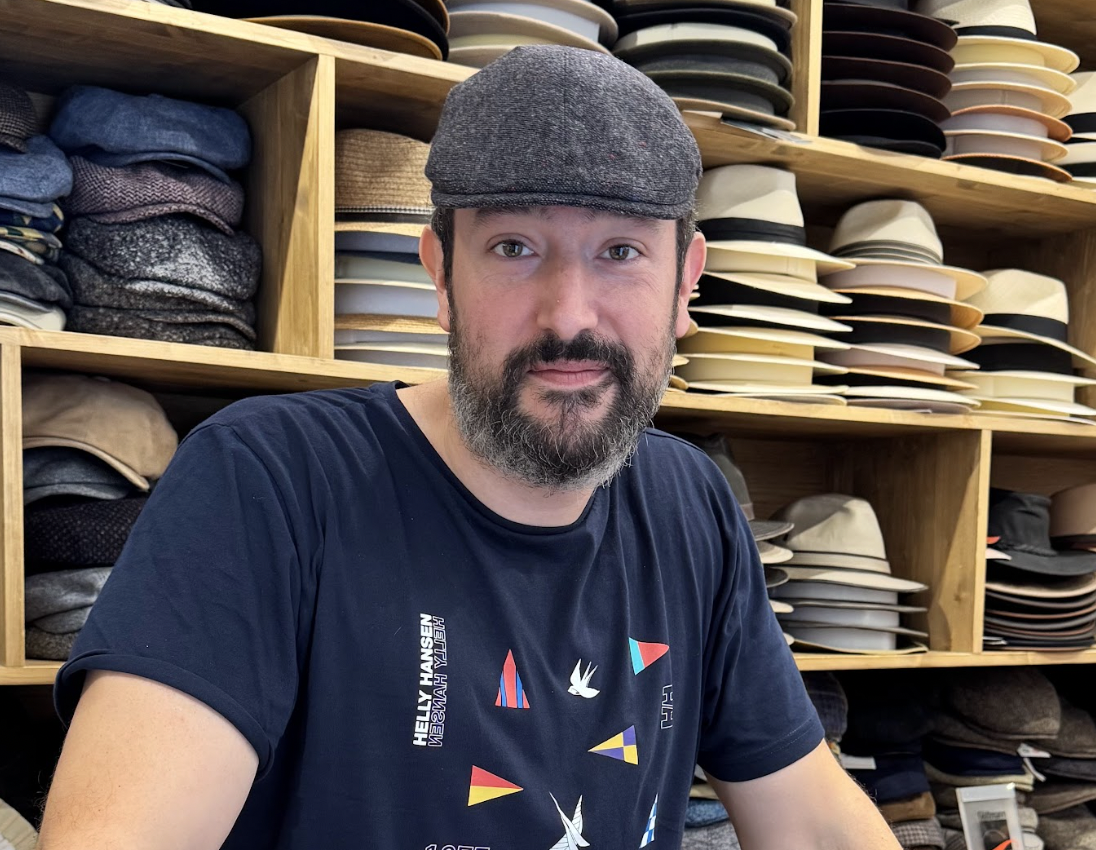
In Valencia, you often see this cap, especially on elderly señores, who wear it in almost any weather. The fashion came from England, where in the sixteenth century men were required by law to wear such caps on Saturdays and on holidays.
In the nineteenth century the cap became part of the everyday clothing of workers, farmers and drivers, and later spread across southern Europe, including Spain. In the twentieth century it entered the wardrobes of gentlemen, golfers and university students and became a symbol of casual elegance.
Rafael then shows another historic headpiece that has remained popular for more than four hundred years: the legendary panamá, with the stress on the final syllable. A panama is not the hat itself but the material made from a particular type of straw, paja toquilla, which grows only in certain regions of Ecuador. The straw is woven by hand to create the hats, which are then exported worldwide, Rafael explains.
“These hats were worn in South America four centuries ago, and they became especially popular in Europe during the construction of the Panama Canal. Workers and engineers used them, and Americans noticed that they did not overheat even under scorching sun – so they began wearing them too. When American politicians adopted the straw hat, its popularity spread across the world,” says Rafael.
Tourists and Valencians alike now buy panamás, and the most expensive hat in the Albero shop is one of them: it costs €799.
It has a special weave that allows better airflow while offering protection from ultraviolet light. It is also foldable for easy transport. But, according to Rafael, far more popular are the standard models costing around €50.
“Today, production works like this: in Ecuador, they make the unfinished forms called campanas – ‘bells’ – because their shape really does resemble one. The final shaping and finishing of the hat is done here,” Rafael explains.
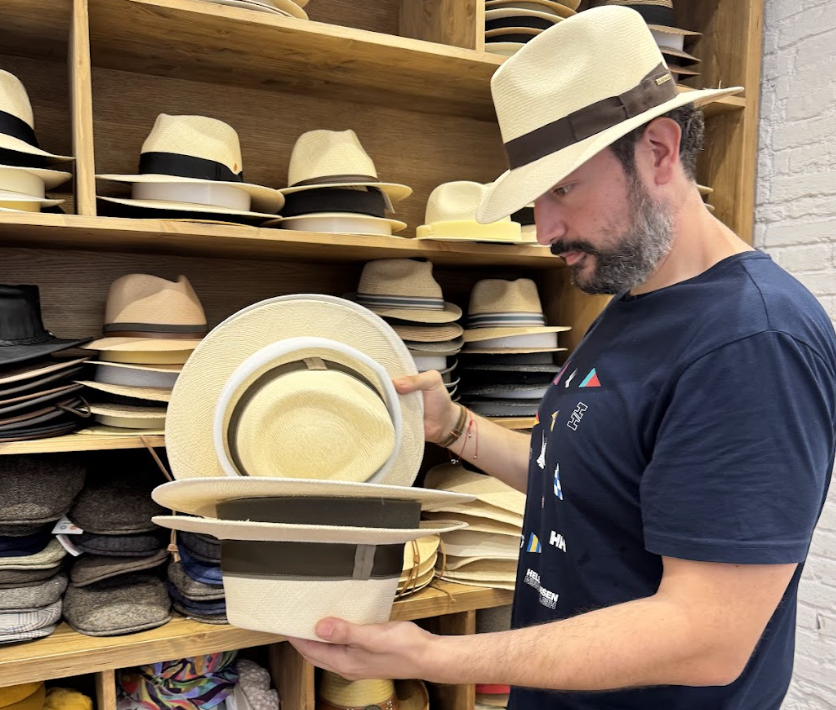
Women come to the old shop for the hats worn by the heroines in the paintings of the celebrated Valencian painter Joaquín Sorolla.
Some of the shop’s storage boxes are decorated with fragments of his works – a tribute to the artist who gave special attention to Valencian straw hats and preserved them in the history of world art. In Sorolla’s paintings, the hat is not merely an accessory but an essential part of the composition and a tool in working with light, which he depicted with exceptional mastery.
Joaquín Sorolla lived near Plaza Lope de Vega, where the shop now stands, a detail of great significance to the Albero family.
This is the family’s second shop, and it has become particularly popular among tourists who come to see the famously narrow façade, Rafael notes.
“Here we sell the most popular types of hats. But the traditional headwear worn during the Las Fallas festivities, as well as student caps and other special-occasion pieces, are sold in our other historic shop on Calle Xàtiva,” Rafael says.
In order to preserve their family business, the hatmakers continue to seek new technologies and new ways of selling. Their careful respect for tradition has turned the shop itself into a landmark of old Valencia.
Related Articles
Beyond Paella: Discovering All i Pebre, Valencia’s Best-Kept Culinary Secret
Deep in the heart of the Albufera wetlands, the fishing village of El Palmar preserves a traditional, rich garlic and wild eel stew that tourist traps completely miss
Loading…
Loading…