

Support La Cotorra on Patreon
Access exclusive content, special perks, and closer connection with us.
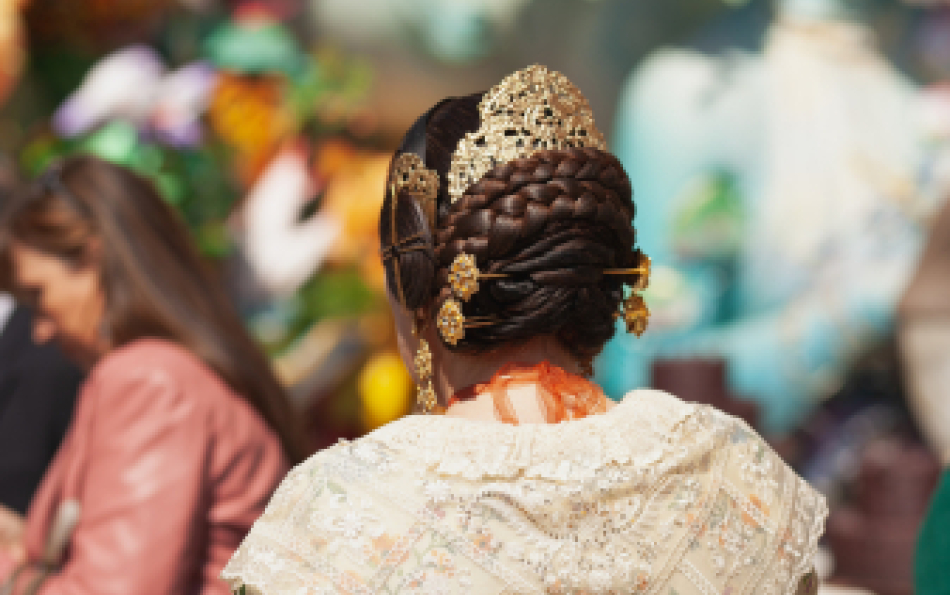
The iconic fallera hairstyle — worn by women taking part in Las Fallas — with its three buns and ornate combs, is one of Valencia’s most recognisable images. You’ll see that silhouette on festival posters, tourist leaflets, museum adverts and souvenirs, even though it isn’t the city’s official logo. La Cotorra visited a workshop where the jewellery for this hairstyle is made, and watched a hairdresser build the intricate hair structure for a fallera representing her falla.
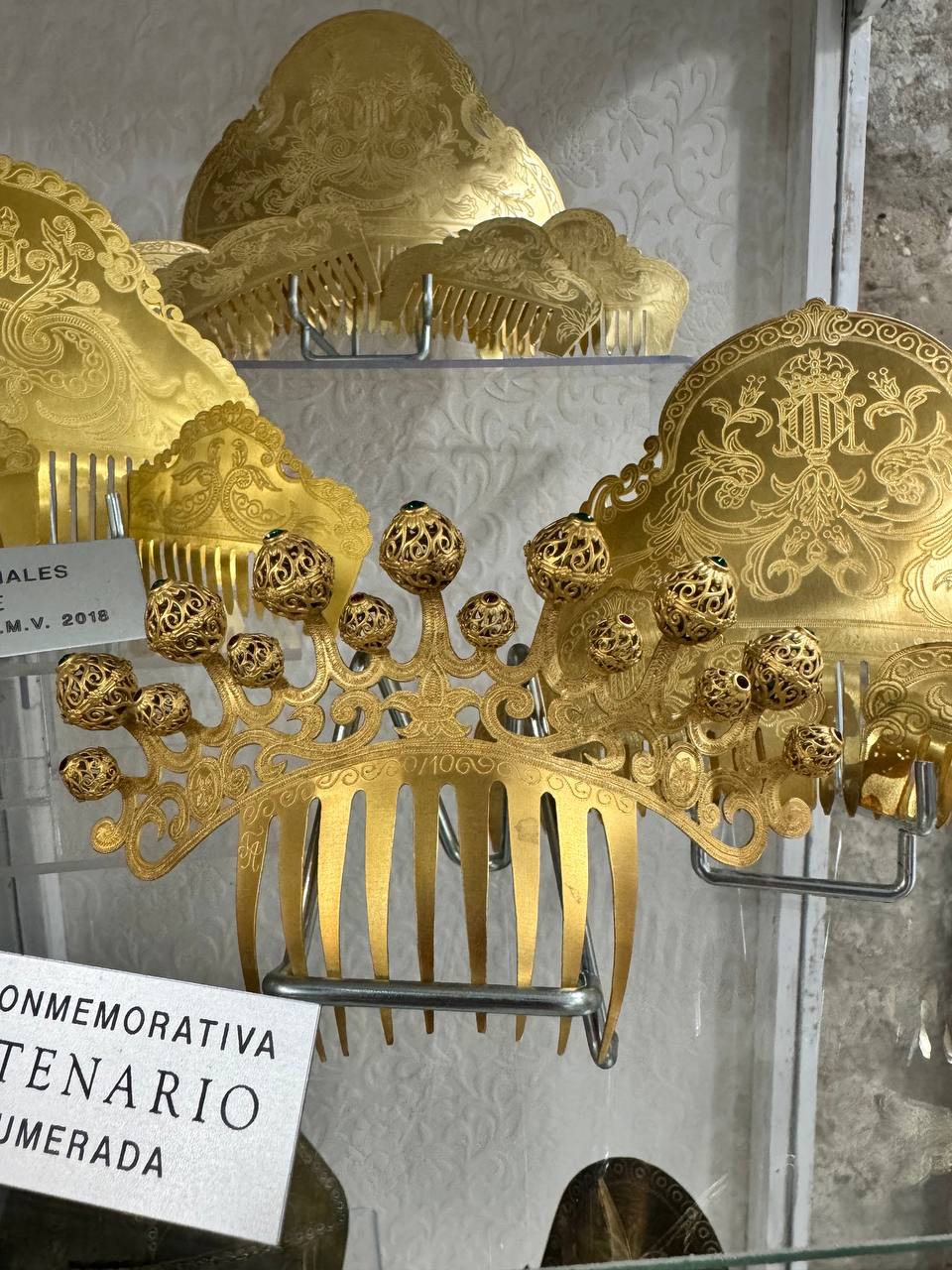
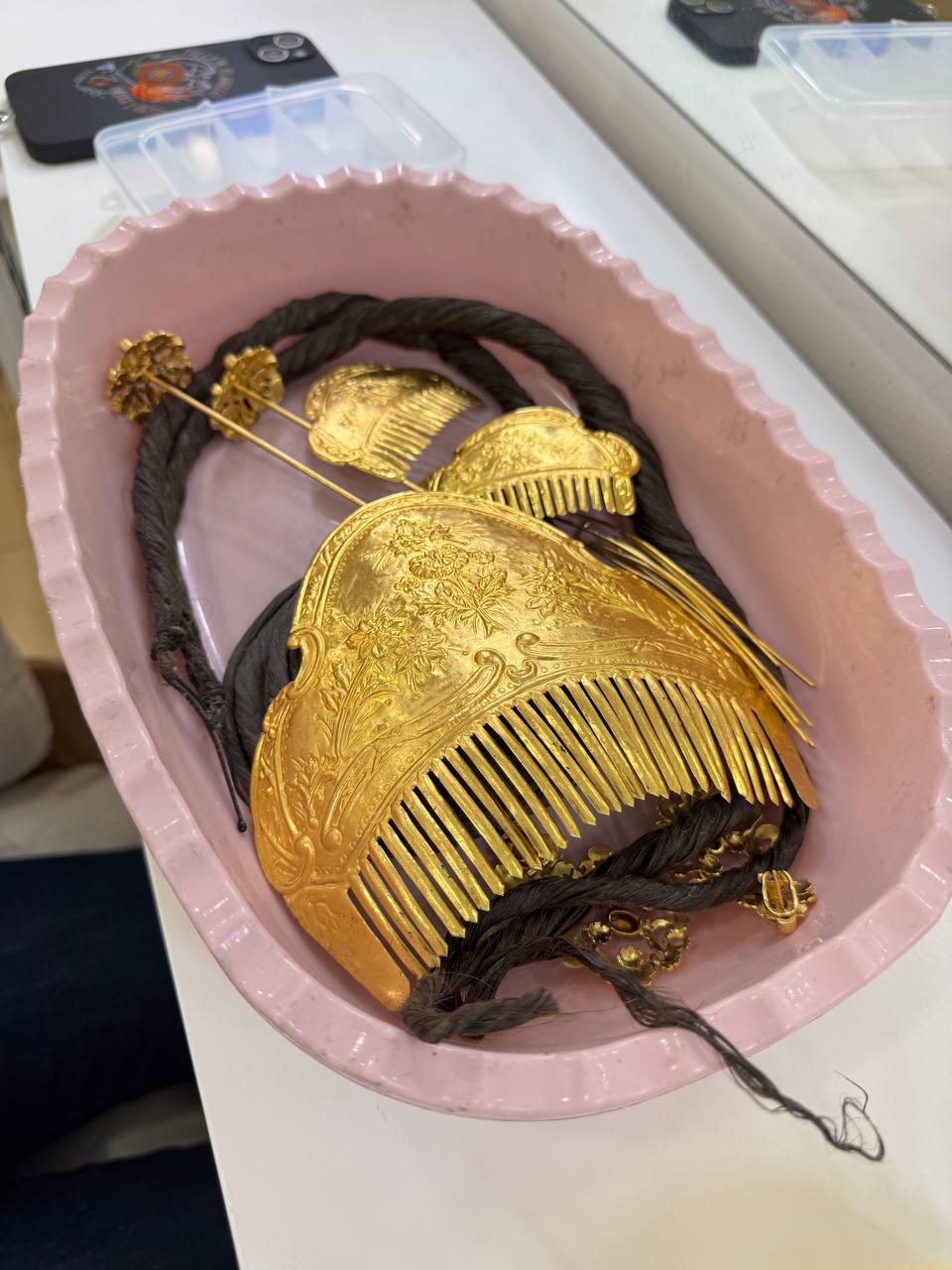
Guillermo Esposito runs Flor d’Aigua, one of Valencia’s oldest family workshops, where they make the combs, necklaces, earrings and brooches worn by falleras. He represents the fourth generation of jewellers in the family, but it was Guillermo who revived an old technique for making peinetas, the traditional combs he still produces by hand, as they were made centuries ago. Peinetas are the combs that complete the hairstyle: one large comb at the back and two smaller ones at the sides.
Almost everything here is custom-made, with one condition: the design must keep the spirit of “old Valencia”. “In the past, women also came to a craftsman and ordered combs with their favourite ornament. We follow the same principle today — the client brings an idea, and I help turn it into a piece of traditional costume that feels original, but still historically convincing,” Guillermo tells La Cotorra.
Sometimes clients ask for something very modern — a football club crest, for example, or an image of their own falla (the cultural association preparing for Las Fallas). Guillermo usually declines and redirects them to the language of antique combs.
Alongside classic floral motifs, historical combs featured mythological figures, sirens, fauns, unicorns, and even imagery with an erotic edge.
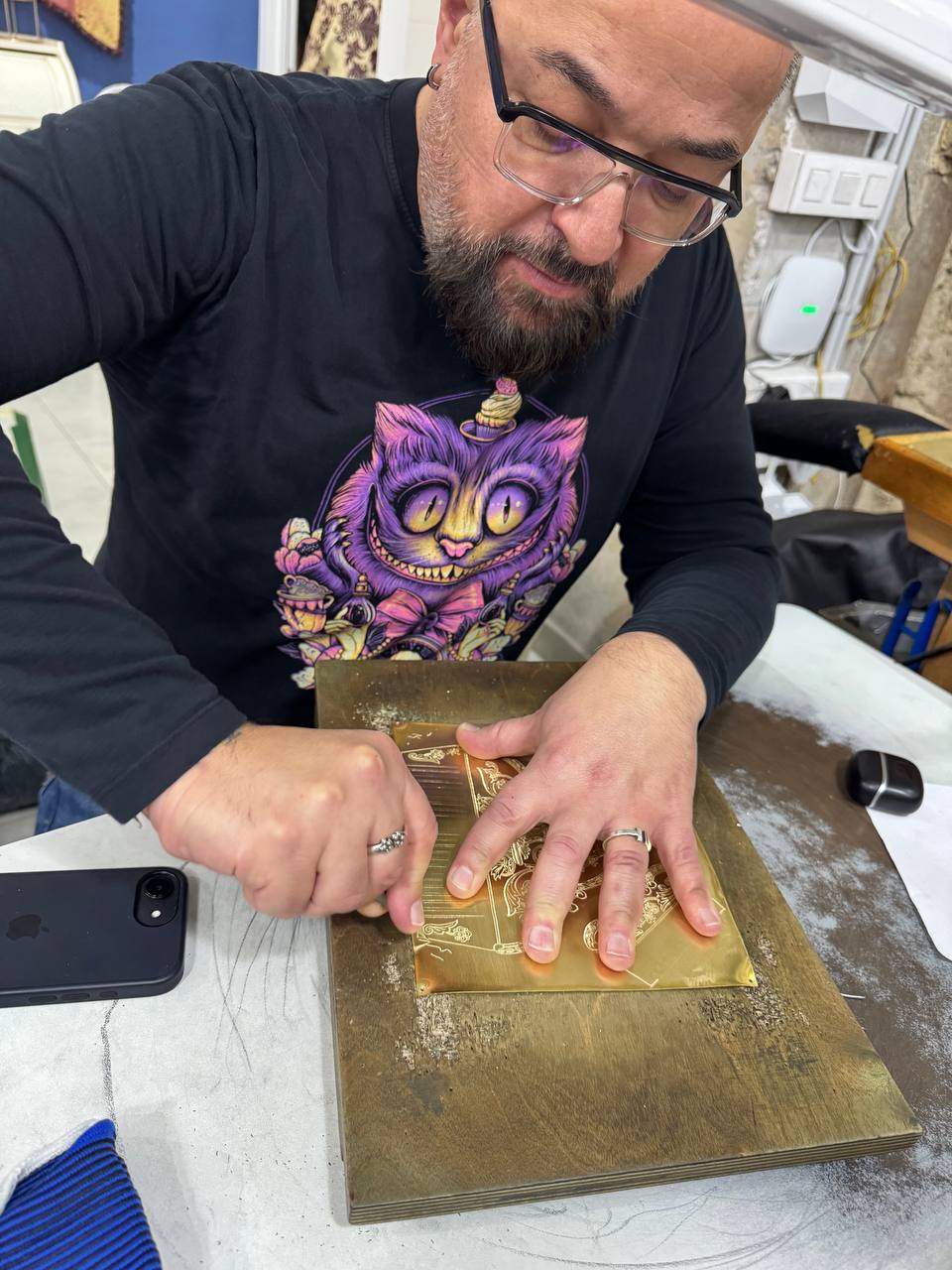
Each comb begins with a brass plate. Guillermo engraves the pattern by hand, then cuts out the silhouette using a tiny saw. The piece is then polished and plated in gold or silver. A full set of three combs with an intricate design can take up to three weeks to complete. Prices typically range from €650 to €2,500.
The workshop’s signature technique is raspado (“scraping”) — an old, entirely manual engraving method where the ornament is scratched into the metal in fine lines. The result is flat but extremely detailed, almost lace-like.
Today, this kind of work is considered premium. But, Guillermo says, in the 19th century, it was the “budget” option: “If a family couldn’t afford something elaborate, the design could literally be scratched into the metal with a nail or any sharp tool.”
Wealthier families commissioned combs made with more complex techniques — like repoussé or intricate openwork — where the ornament is raised in relief and demands far more time and mastery.
Now, that hand-scratched drawing is prized precisely because it is labour-intensive and because the skill is rare.
These combs often carry commemorative engravings — a name, a year, the status of a main fallera. Many are worn for years and passed down through families.
Judit Goris is a fallera herself — and she also helps her clients shine during the festival, doing their hair and make-up. On major days, she can have ten to twelve women in her chair, one after another.
Judit met La Cotorra at 10 am while working with a client named Sofía, who is representing her falla this year. Sofía is a teacher — after the salon, she heads straight to school, and after classes, she attends an official event.
“I could only come to Judit’s in the morning before work, so I’ll spend the whole day at school like this: hair with combs and pins, full make-up, heavy earrings — and jeans and a T-shirt. The kids are used to it, and honestly lots of people do the same. Most companies and institutions in Valencia allow their staff to come to work dressed like this,” Sofía says.
Judit starts with bold, instantly recognisable make-up: a full-coverage base, very strong eyes and lips. That monumental style makes many falleras look similar — something Spanish media sometimes criticise as too uniform.
“In 2005, I was a fallera myself, representing my falla, and the approach was different — the make-up wasn’t as intense and standardised as it is today. But over time, the whole look has become brighter and visually richer, so a face without strong accents can simply disappear against it. That’s why there are now ‘standards’ for the fallera look — we can’t ignore them and do everything purely by personal taste,” Judit explains.
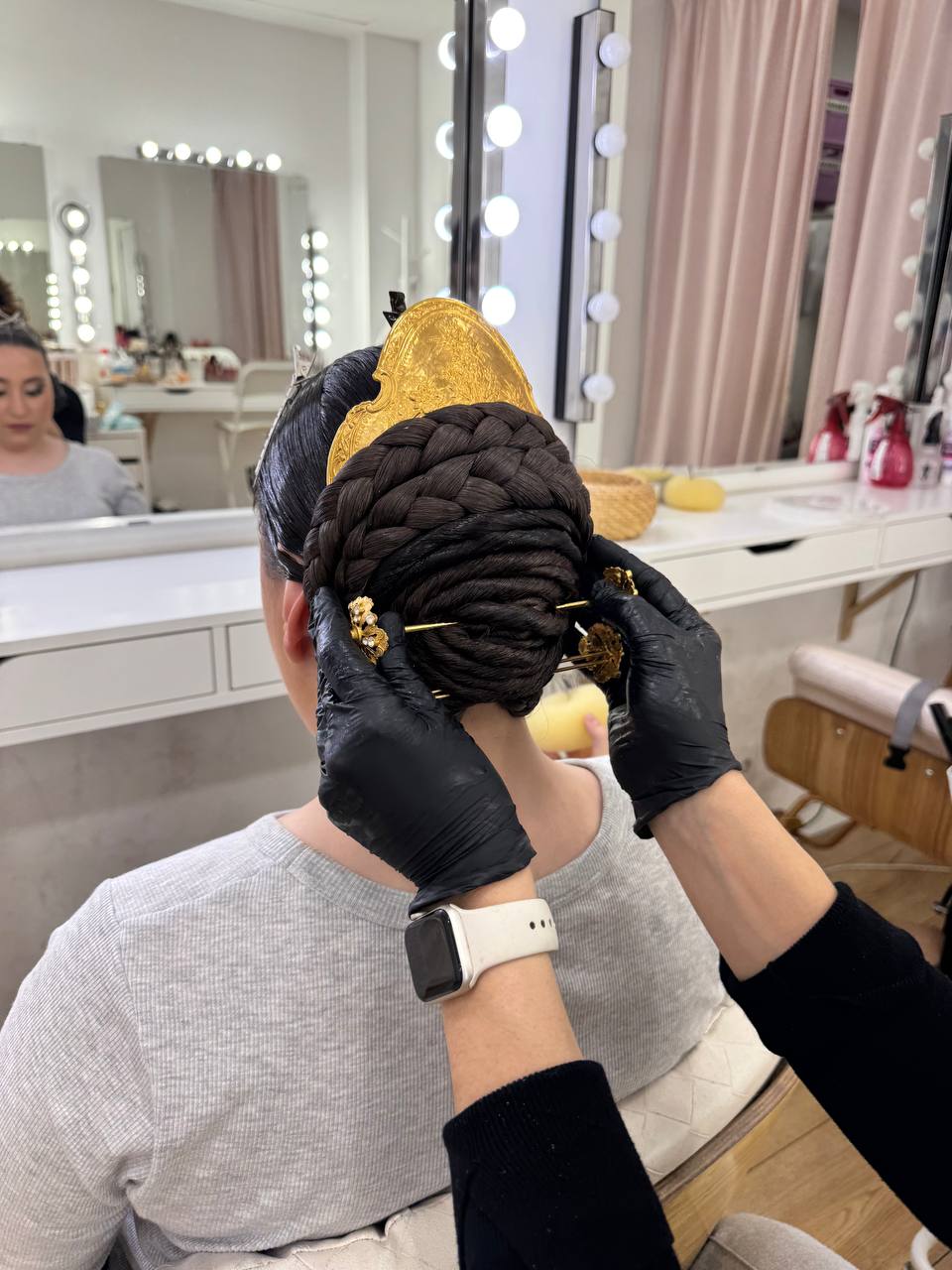
When it’s time for the hair, Judit puts on gloves. For the next half-hour, she works with gel — measured here not in bottles, but in buckets. The hair is saturated throughout to create the signature wave of sleek, glossy strands. The style needs to last at least a full day — sometimes several.
Valencian women once wore simpler updos, but over time, the central bun with two side rodetes (round buns built from braids, fully covering the ears) became the classic. The hairstyle turned into an engineered structure where every pin has a precise place.
The composition of hair, padding and jewellery has to survive parades, receptions, ceremonies and late-night outings — in any weather.
These hairstyles rarely come together without artificial hair — especially for the side buns. The circular pads with synthetic strands are ready-made elements that help stylists quickly build the right shape and keep both sides symmetrical, regardless of how thick someone’s natural hair is.
“The side elements are usually what cause the most discomfort. They’re fixed in a very sensitive area, and the heavy earrings go on first. Then pins are added in that same zone. It becomes quite a weighty construction that can press and rub. To reduce friction, sometimes we even place soft fabric under the pads,” Judit says.
Girls who take part in Las Fallas start getting their hair done very young — sometimes from the age of two, if their hair is long enough. But the full ‘adult’ version with side buns usually starts around age four, to avoid burdening very small children with heavy, uncomfortable elements.
If a woman becomes a main fallera, the elaborate hairstyle and make-up stop being an occasional festive look and become an almost constant part of life for an entire season. Main falleras attend events, parades and ceremonies all year round.
Sofía says that during Las Fallas, she goes to the salon about once a week; each time, hair and make-up together cost her around €100. But it’s not only a financial strain.
“It’s a serious нагрузка on your health, too — many falleras start taking special vitamins in advance, because this hairstyle really damages your hair,” Sofía says.
Some try to keep the hairstyle intact for several days. For that, there are special pillows with a hole in the middle — you sleep so you don’t press on the central bun or the side rodetes, and you deform the style as little as possible.
During Las Fallas, hairdressers become a scarce resource: there aren’t enough appointments, and stylists prioritise regular clients. In many families, mothers and grandmothers know how to do their daughters’ hair themselves. Being able to create this hairstyle at home is a whole separate part of Valencia’s family tradition.
Related Articles
Beyond Paella: Discovering All i Pebre, Valencia’s Best-Kept Culinary Secret
Deep in the heart of the Albufera wetlands, the fishing village of El Palmar preserves a traditional, rich garlic and wild eel stew that tourist traps completely miss
Loading…
Loading…