1
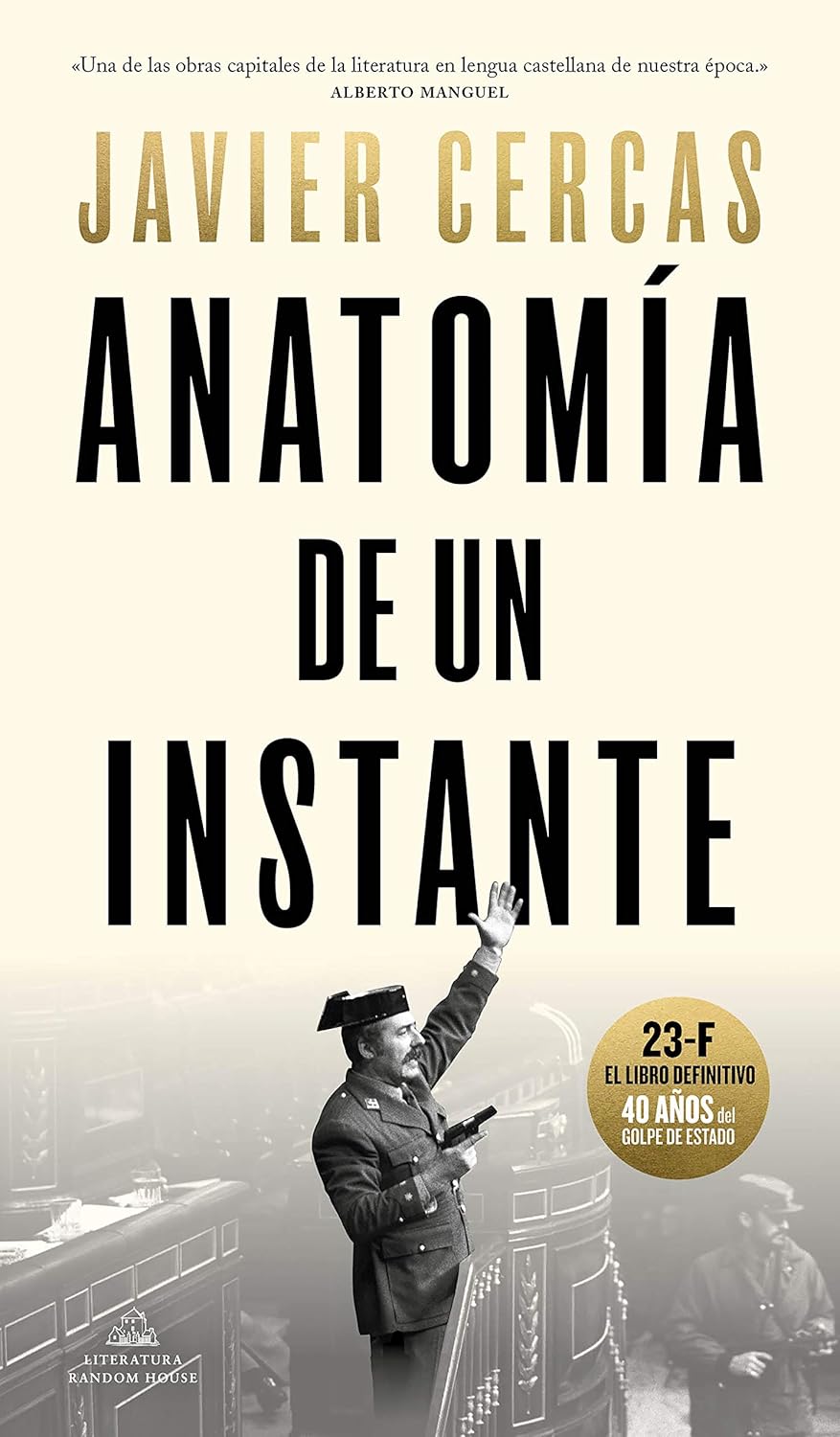
“Anatomy of a Moment” (Anatomía de un instante)
Javier Cercas, 2009

Spain and its people can be discovered not only through travel, gastronomy, and language, but also through literature. La Cotorra has selected a number of contemporary Spanish novels whose authors explore both present-day society and its difficulties, as well as Spain’s turbulent history with its wars, brutality, and the mysteries left behind by previous generations.
Javier Cercas, 2009
Javier Cercas set out to write a novel about the events of February 1981, when civil guards led by Lieutenant Colonel Antonio Tejero stormed the Congress of Deputies in Madrid in an attempt to seize power. They sought to halt the democratic reforms that were reshaping Spain after the Franco era.
The insurgents ordered everyone in the chamber to lie on the floor. Only three men refused: General Gutiérrez Mellado; Santiago Carrillo, head of the recently legalised Communist Party; and Adolfo Suárez, the outgoing prime minister. It is around Suárez that the narrative is built.
Cercas understood that the coup attempt had already taken on a near-mythical status, and therefore focused on its philosophical interpretation, blending historical fact with fiction. Critics described the novel as “a masterful interplay of reality and invention that keeps the reader in suspense to the very end, recounting a historical event whose outcome is well known.”
In 2010 Anatomy of a Moment won the Premio Nacional de Narrativa, a major literary award presented annually by the Spanish Ministry of Culture. The book is available in both Spanish and English.
Blanca Busquets, 2006
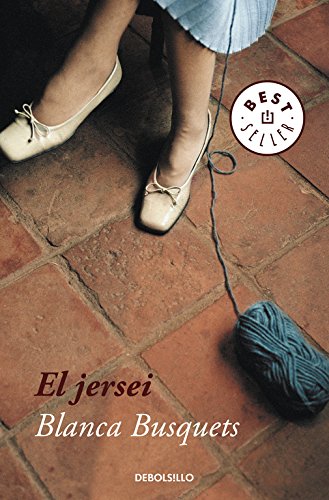
Blanca Busquets is a Catalan writer and journalist, author of nine novels, recipient of the Catalan Booksellers’ Prize and the Italian Alghero Donna Award. She wrote her first story at the age of twelve and won her first literary prize at seventeen.
The protagonist of The Sweater is Dolores, an eighty-five-year-old woman who, after suffering a stroke, has lost the ability to speak. She decides to move in with her younger daughter, but those around her pay little attention to her and assume she can neither hear nor respond. As a result, Dolores becomes a silent witness to the conversations and secrets of the younger generation, unable to intervene. Meanwhile she knits a sweater for her granddaughter and revisits memories of her past.
Jaume Cabré, 2011
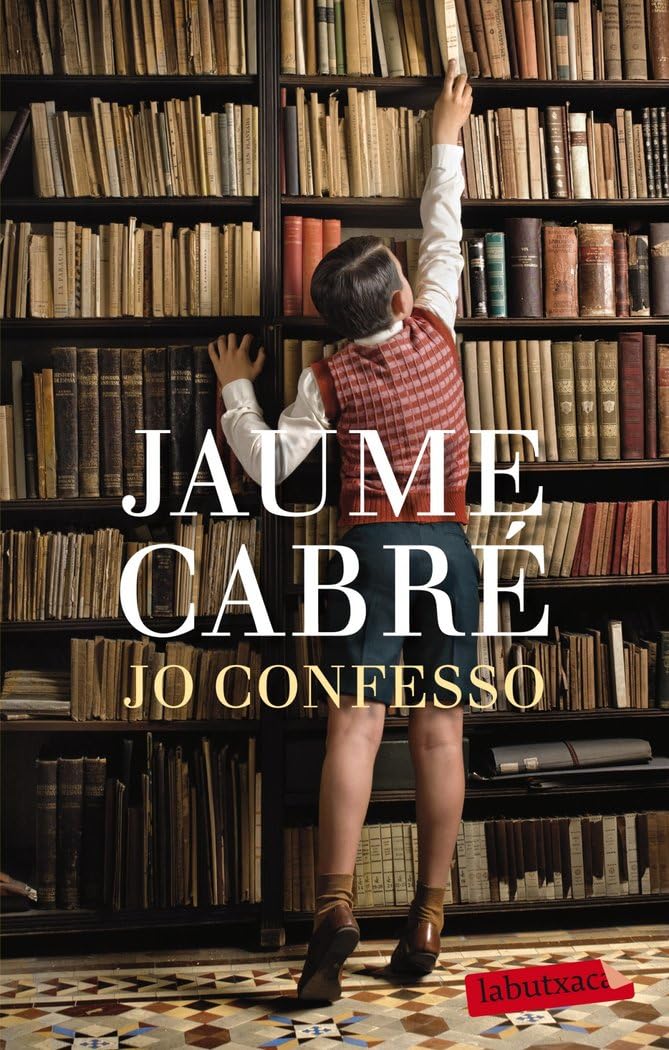
The central figure of the novel, sixty-year-old Adrià Ardèvol, is living with the early stages of Alzheimer’s disease and tries to sift through his memories before they fade. He recalls his childhood: a distant and pragmatic mother; an erudite father, an antiques dealer who insisted he learn foreign languages; and his caring nanny, Lola.
Another “character” of the story is an eighteenth-century violin made by the Italian luthier Lorenzo Storioni. When Adrià steals it from his father to show a friend, his father is murdered, and Adrià is left with an enduring sense of guilt. The violin becomes the key to unlocking the family’s secrets, drawing him repeatedly into the past.
Cabré weaves together numerous narrative strands: from a merciless killer who once planted the tree from which the violin would be made, to the Grand Inquisitor Nicholas Eymerich, and Rudolf Hess, SS officer and commandant of Auschwitz.
As Adrià uncovers the violin’s history, he learns that it passed from owner to owner through morally questionable acts. He writes a manuscript about evil, which ultimately becomes Cabré’s own novel.
Confessions has been translated into more than fifteen languages and has received numerous literary awards.
Carlos Ruiz Zafón, 2001
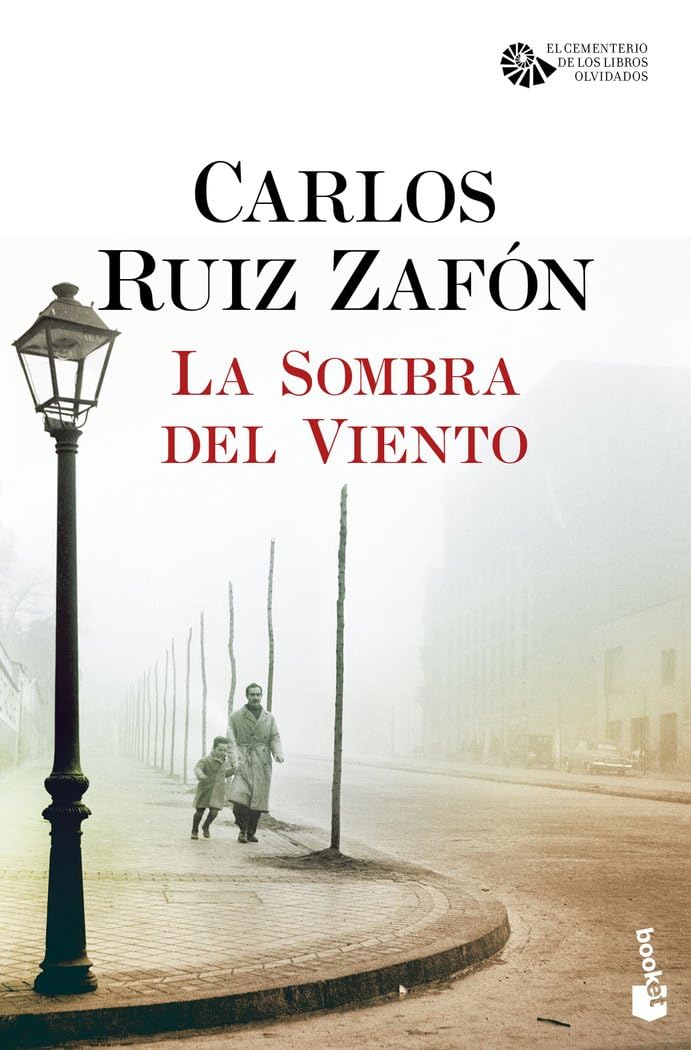
The story begins in 1945, when the father of ten-year-old Daniel Sempere takes him into Barcelona’s Old Town. There they arrive at the mysterious Cemetery of Forgotten Books, where Daniel discovers a novel entitled The Shadow of the Wind by Julián Carax — a book that will intertwine with his own life for years to come.
Daniel soon realises that the book he has found is the last surviving copy, for a shadowy figure, Lain Coubert, has been destroying every edition. In Carax’s novel, this name belongs to the devil. Daniel becomes determined to learn more about the author and begins piecing together his life, secrets and tragedies. Along the way he is drawn into dangers of his own, and uncovers unsettling parallels between Carax’s biography and his own.
Zafón plunges the reader into a gothic world in which characters encounter sinister strangers and enigmatic women, wander through the labyrinths of the past, and attempt to unravel the mystery surrounding the book Daniel found.
The novel is available in English translation.
Fernando Aramburu, 2016
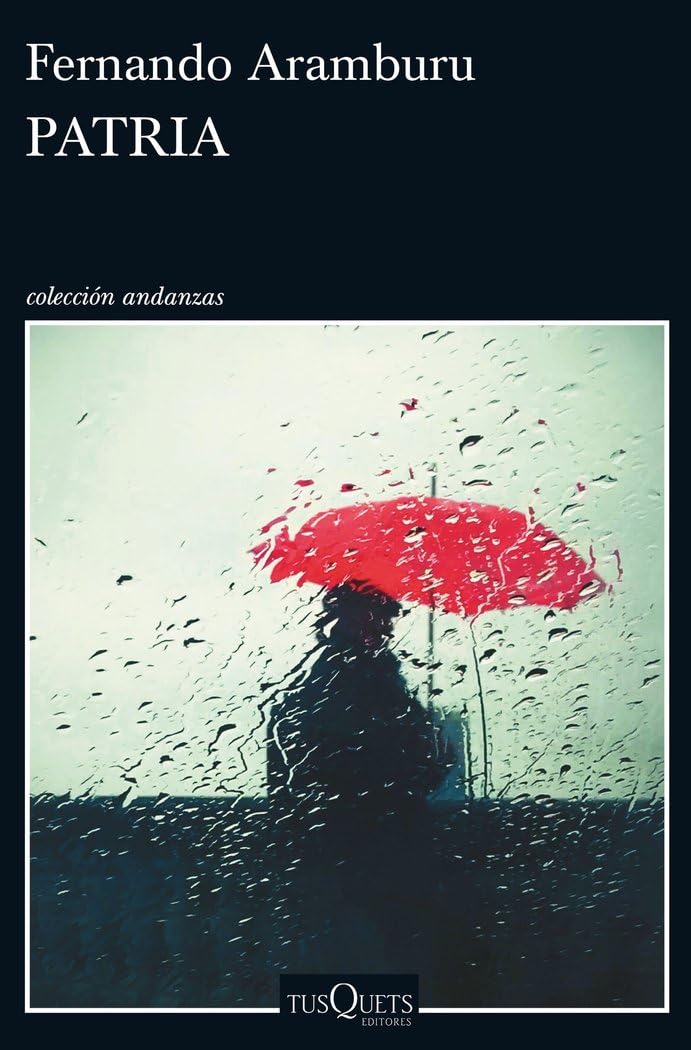
Fernando Aramburu was born in the Basque Country, and Homeland centres on the years of Basque terrorism from the 1970s to the 1990s. He wrote the book after ETA — the Basque radical nationalist separatist organisation — announced the end of its armed activity. The author set out to understand what people experienced during the years of violence, why brutality and murder were often tolerated, and why dissent was met with silence.
At the heart of the narrative are two families from a village near San Sebastián, who find themselves on opposite sides as ETA gains strength. José Mari, from one family, joins ETA’s militants and participates in the murder of Chato, a businessman belonging to the other family. Chato’s widow, Bittori, decides to return to her old home after the end of the terror, but must now live alongside those who supported or participated in the violence — particularly José Mari’s mother, Miren, once her close friend.
Aramburu avoids taking sides and does not act as judge. Critics describe the novel as having two layers: a deeply local story set within a specific community, and a broader historical narrative that becomes “a high tragedy in the classical tradition”.
Homeland received numerous literary awards, including the National Literature Prize, the International Press Club Prize, and the Italian Strega and Lampedusa prizes.
It has been translated into English, and in 2020 was adapted into an HBO series.
Almudena Grandes, 2007
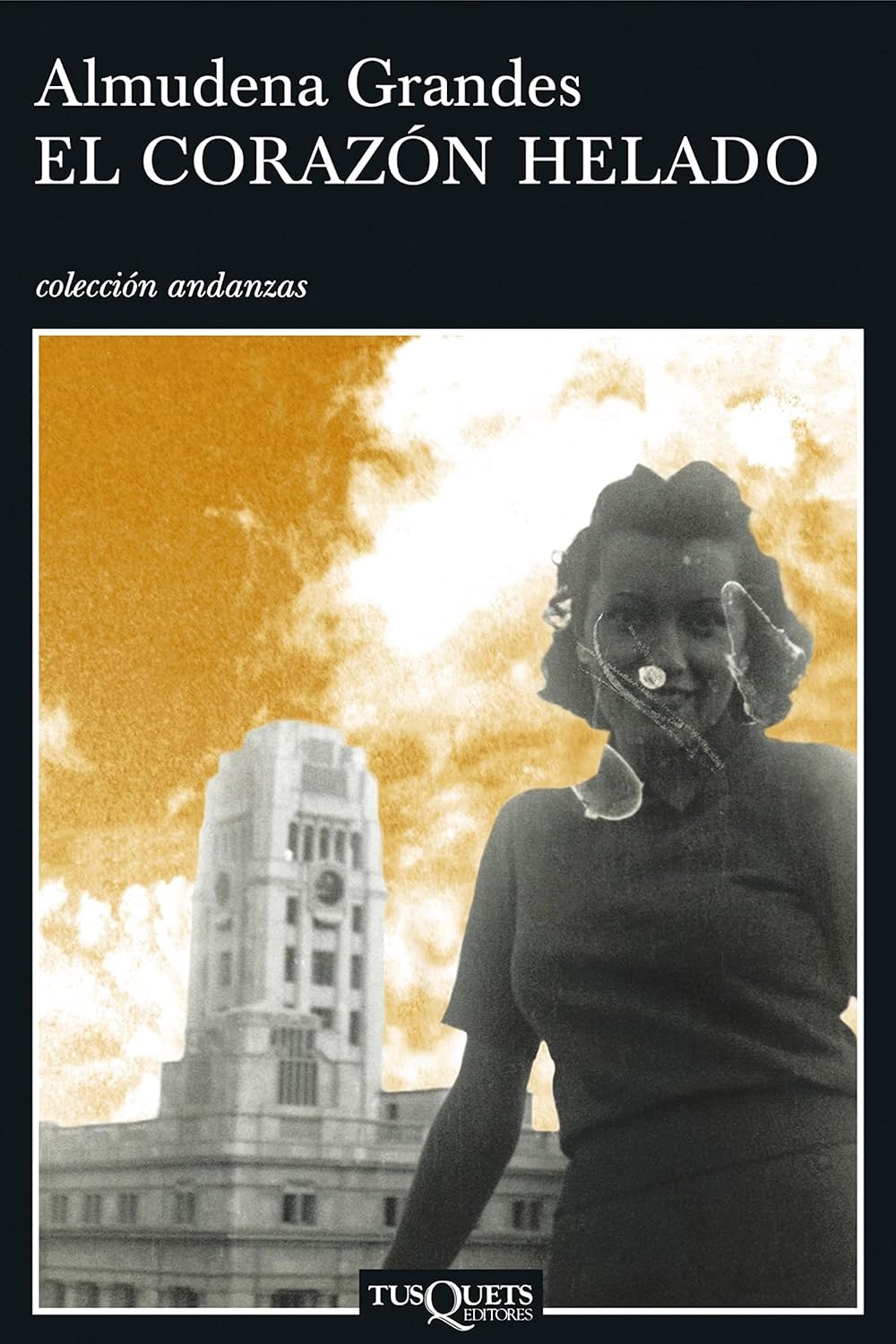
Almudena Grandes is regarded as one of the most influential Spanish-language novelists and “the conscience of an indignant Spain”. The Frozen Heart is an epic work that explores Spanish society from the beginning of the Civil War to the twenty-first century.
The novel opens with the funeral of Julio Carrión González, once a powerful figure in Madrid. At the cemetery, his son Álvaro notices an unfamiliar woman whose presence no one can explain.
Soon after, the family unexpectedly inherits a considerable fortune, and Álvaro discovers in his father’s study a folder containing letters that Julio wrote to Russia between 1941 and 1943, photographs of unknown people, and a locked metal box. Álvaro must unravel the intertwined histories of his own family and that of the mysterious woman from the cemetery — Raquel Fernández Perea, daughter of Spanish exiles who fled during the Civil War — for these revelations will shape his present.
Grandes’ novels are available in Spanish, and several, including The Three Weddings of Manolita from her cycle Episodes of an Endless War, are available in English. Her erotic debut novel The Ages of Lulu was also adapted for cinema.
Javier Marías, 2011
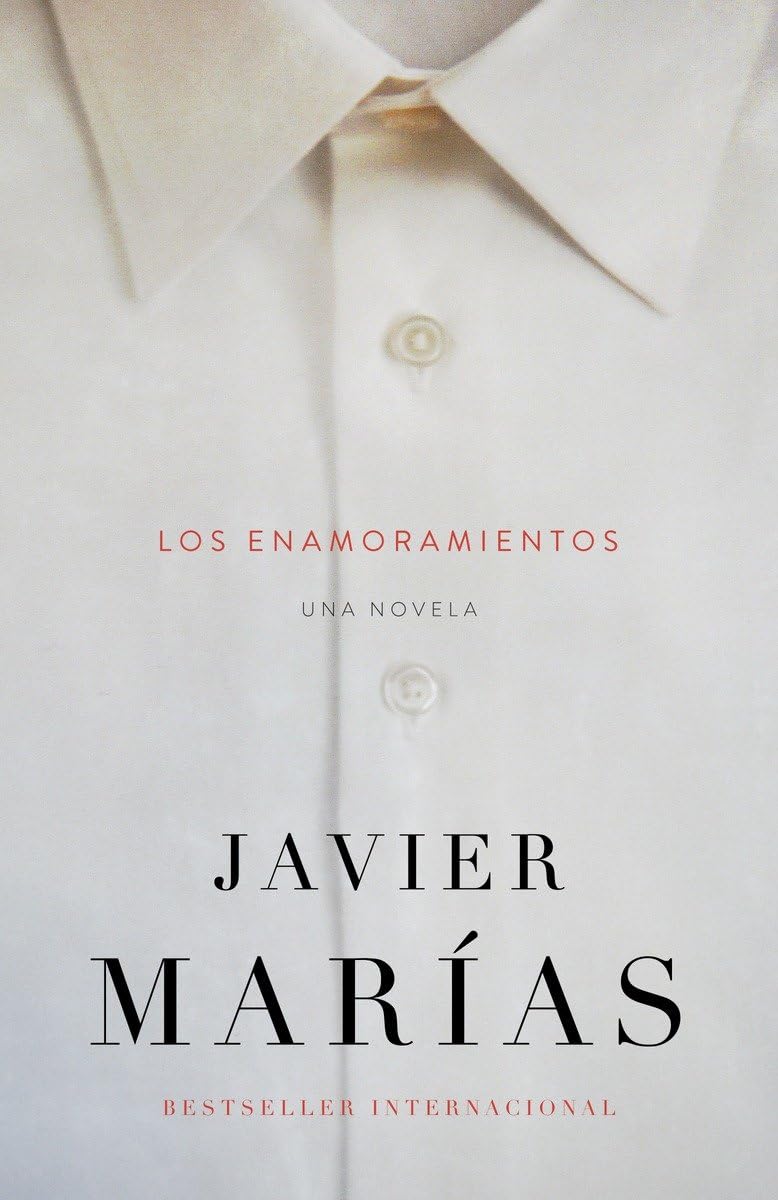
In Javier Marías’s novel, a murder mystery becomes interwoven with reflections on the impunity that love and infatuation can grant — the idea that almost any act, good or bad, can be justified when committed under their influence.
The story follows María Dolz, a literary editor who regularly observes a couple at her favourite café. She later reads in the newspapers that the man, Miguel Deverne, has been murdered by a vagrant. María befriends Miguel’s widow, Luisa, and her circle, and gradually realises that Luisa’s friend Javier may be connected to the crime.
Javier Marías is considered one of Spain’s most influential modern writers and was for many years regarded as a contender for the Nobel Prize in Literature. Although he never received the Nobel, he was awarded many other honours, among them the Fastenrath Prize, the Dublin Literary Award and the Austrian State Prize for European Literature. His translation of Tristram Shandy earned him Spain’s National Translation Prize.
Penguin Books has included The Infatuations in its Modern Classics series, placing it alongside the works of Lorca, Borges, Neruda and García Márquez. The novel is available in English and several other languages.
Related Articles
Beyond Paella: Discovering All i Pebre, Valencia’s Best-Kept Culinary Secret
Deep in the heart of the Albufera wetlands, the fishing village of El Palmar preserves a traditional, rich garlic and wild eel stew that tourist traps completely miss
Loading…
Loading…