








Support La Cotorra on Patreon
Access exclusive content, special perks, and closer connection with us.

Finding new friends when you’ve moved abroad is no easy task. Even if you take the language barrier out of the equation and focus only on people who speak the same language as you. In some cases, this problem solves itself through colleagues at the office or classmates at university. But what do you do if you’re a remote worker, a freelancer, or long past your student years? We didn’t know either. So we asked — and people answered. Now we’re telling you.
Katya is from Minsk and now lives in Vienna, having moved there from Germany. And just recently Katya had a wedding, where most of the guests were friends she’d met already after emigrating. Austria isn’t Germany, Poland, or Spain, where large Russian-speaking communities are common, and Vienna itself isn’t exactly the most popular destination for Eastern European emigrants. And yet Katya’s social circle is something even those who’ve lived in their hometown all their lives could envy.
“The first thing I did when I arrived in Vienna was a little research, and I found out that, for example, Bumble (a dating app — editor’s note, La Cotorra) lets you look for friends. That’s how I met Maya from Kyiv: we went out a couple of times, clicked, and we’re still friends — we meet for coffee, and she was even at my wedding. At one party I met another girl who joked a lot — I noticed how active she was, deliberately spent the whole evening with her, and later suggested having coffee. It’s basically like a date, just without the sexual undertone. After that I started inviting her for coffee, walks, exhibitions — and eventually we became friends. Not the closest, but good ones.”

Katya quickly “trained her initiative muscle” in emigration. Instead of waiting for someone to invite her somewhere or for someone else to organize an event she might like, she did everything herself.
“I still remember my first day of classes — September 5th. I was literally talking myself into meeting people. I found all my classmates, took everyone’s contacts, and organized a chat myself, because I had already been in Vienna before and most of them hadn’t. I figured it could become a great communication booster — I could tell them where to go, what to see, where to shop. And that’s exactly what happened — people started messaging me, inviting me places, and I could give great recommendations like, ‘I know a cool bar, let’s go there.’”
Sometimes she’d overhear students planning to hang out somewhere — and she would start looking for anyone among them she knew even a little, just to join in. “It may sound funny, but it’s also a way in.”
She often looks for events and activities through Facebook. It’s still the main platform in Europe for finding events, groups, and communities. “That’s how I learned from Facebook that Vienna was organizing a Pride march — I signed up as a volunteer, asked how I could help despite my heavy workload. It’s much easier to move from shared activity to personal connection.”
The same approach worked back in Germany: board-game meetups. “I typed ‘board games Bavaria’ into Facebook and discovered a community organizing meetups in my town. I went — and it turned out to be great: new acquaintances and a good time. Later you can invite these people for a picnic or to your place to play or watch a movie.”
Other hobbies helped too. Back in Minsk, Katya played the drums.
“One day in Bavaria I literally saw a flyer on a lamp post about joining a free music group — and I went! I didn’t get any close long-term friends from it, but it helped me socialize and not feel alone. These opportunities really are everywhere — you just have to look around. And remember: if you try something and it doesn’t work, you lose absolutely nothing.”
Tanya Panyushkina moved from Ivanovo to Warsaw together with her husband, Maksim.
“When I had just moved, English lessons helped me a lot. I had a wonderful teacher; we met offline twice a week, and it was important to me that she was a real, live person outside of my home — someone with whom I could safely practice the language without shame or fear about my English. Offline lessons were essential for me: I understood that I needed to leave the house without my husband, because the rest of the time we were together — I didn’t know any Polish at all, my English was weak, so Max was also my ‘talking head.’”

In the beginning she didn’t work, but before emigrating — back in Russia — Tanya had worked as a makeup artist and had brought loads of cosmetics with her, and cosmetics unfortunately have the unpleasant property of expiring. Throwing several thousand dollars’ worth of products into the trash in the near future wasn’t something she wanted to do, so she thought: fine, even if I don’t make any money, at least I’ll get to talk to people.
“So I typed ‘photographer Warsaw,’ ‘model Warsaw’ into Instagram and sent people DMs. I told myself right away: the worst that can happen is that they won’t reply — and I lose absolutely nothing. And in the end, that’s how I made my first acquaintances, which, years later, grew into real friendships. I found a model on Instagram and wrote: ‘Hi, I’m a makeup artist, I haven’t done anyone’s makeup in ages, just come, I’ll do your makeup.’ After that I invited her for coffee, and later Max and I randomly bumped into her and her husband in the city. Her husband (also named Maksim!) turned out to be an IT guy, just like mine. I thought it was a great point of connection and decided we should invite them somewhere and go out to dinner as a foursome — and that’s how we started being friends.”
She met another girl at a Monetochka concert: “I saw her sitting alone and looking sad, so I went up and asked what was wrong. We exchanged contacts. Later I saw a story posted by her husband — that they were going with friends to Hel (a Polish seaside town) and asking if anyone wanted to join. I replied to the story — and the next day I was already on the train to Hel with a group of new people.”
People gravitate toward openness.
“You can just say: ‘Hi, your sneakers are so cool.’ That kind of opening line draws people toward you — simply because you’re open. Recently we were sitting with friends in a bar, and a group of around fifteen people in costumes walked in. I went up and jokingly asked one guy: ‘You work in finance?’ We laughed, started talking, and twenty minutes later he gave me his business card, shook my hand, and said: ‘If you ever need anything — reach out to me, seriously, you’re amazing!’”
A few years ago Tanya tried to find an English conversation club in Warsaw to improve her language skills. When she couldn’t find one that suited her, she organized one herself.
“I first tried looking for a language exchange, but quickly realized that most guys there wanted more than just practice — and that didn’t suit me. So I created my own little safe space for women: I wrote on Facebook that I wanted to gather girls to practice English. Within a day, 30 people joined the chat. I booked a big table at a café, asked who would come, and chose the first ten who responded. It didn’t give me close friends, but it was a great experience: communication, getting out of the house into a comfortable space — plus it fulfilled the initial need I had.”
Vova moved to Vilnius from Belarus a little over two years ago together with his wife and their young son. And while women can freely look for friends through dating apps, social media, or simply on the street, the reality for men is quite different. And here, kids are a powerful advantage.
“I often went outside with my child to the playground near our building, but I can’t say that the parents really talked to each other. Plus, most of them were Lithuanians, and of course, when I first arrived, my Lithuanian wasn’t anywhere near good enough to just go and make friends. And then one day I heard a man scolding his kid in Russian. Our sons were almost the same age. We bonded over the language and started talking.
“At first we just bumped into each other on the playground, then we realized we lived in the same building. After that I invited him over for a beer. That’s how our friendship started — we can go out together now, have a drink, hang out. Our kids are friends too, and now after work I even pick up his child from kindergarten — they go to the same one as my son.”
Lena, unlike Tanya and Katya, moved to a place where she already had friends and a boyfriend. But over time, the relationship ended, and the friends moved away.
“I searched for various local Telegram chats by city, subscribed to Russian-language news channels — they often post announcements about different events. That’s how I found the group ‘IT-Beer Warsaw’ — meetups for IT people in pubs and bars. I went there without expecting much — I thought, well, even if nothing happens, at least I can add a few people on LinkedIn."

In the end, a simple meetup and casual conversations about who writes code in what language turned into a party with karaoke until morning — it was great, new acquaintances appeared, and Lena kept attending from time to time.
“From the organizers I learned that they also host IT-Wine — wine tastings with a sommelier. I went, then went on a trip to a Polish winery, learned about other tastings in Warsaw and other cities — now my friends and I go to these events regularly.”
Last year Lena hosted a “trashy party” at her place — she invited acquaintances she had met at these events to a draniki party — “it was really fun.”
In this Warsaw IT community Lena also met her current boyfriend, but before that she had tried socializing through dating apps.
“That was mostly an unsuccessful experience. I went on three dates, and with one British guy we started talking about music — I used to be a vocalist, so it’s a topic I love. But instead of a deep conversation or a potential friend with shared interests, I ran into his suggestive comments like, ‘I have such a big music collection at home, come over, let’s listen.’ So yeah, I gave up on dating apps.”
Lena also tried socializing through sports, but that didn’t work out either.
“I had this illusion that I’d go to the gym and meet people there, but I miscalculated: getting to know Poles without speaking Polish turned out to be quite difficult. But still — it was another option to at least get out of the house.
Liza has been living in Vilnius for two years already, and during this time she has managed to make close friends and lots of acquaintances, start a blog, and overcome her fear of taking initiative.
“I’m a very extroverted and active person by nature — I always need people around me, so of course, after emigrating, I made it my goal to build a new social circle. I started by launching a blog. Primarily I needed it for work — I’m a marketer and an SMM specialist — but it also brought new people into my life. ‘Hi, I’m Liza and I do SMM, let’s work together,’ I wrote — and she agreed. Later she told me that she really liked my initiative and confidence, even though in reality I was shy about starting the conversation.”

Liza also found a women’s community in Vilnius, where one could build useful contacts, ask for help, invite someone for coffee, or find out that someone is organizing an art evening with painting and sparkling wine. “I went to dozens of such events.”
The chances of finding friends or companions at an event that already interests her are obviously higher: “At the very least, if both of us are here, it means we already share an interest and have some point of connection.”
For Artyom, the bar near his building became a sort of personal Mecca — a significant part of the friends he made in emigration appeared in his life thanks to a small, cozy bar just five minutes from his doorstep.
“That’s where I met a very good friend of mine. I would just come there alone after work, sit down at a table or by the bar. And one day a guy just like me sat down next to me. We started talking, and it turned out he was also an immigrant, also from Belarus, and even my neighbor. And that’s how we started going to the bar together.”
“And most of my acquaintances happened like that. I feel like an immigrant can always recognize another immigrant — I don’t know by what exactly, maybe by the sad eyes, haha. But I also understand that other immigrants are just as lonely as I am, they’re looking for communication and new connections the same way I am. And if you keep that in mind — that they need you just as much as you need them — the fear of talking to people disappears.”

Artyom, by the way, also met his wife already while living abroad.
“I was just walking around one day and ran into a friend who was with two women. I knew he had a wife, but had no idea what she looked like. And I immediately liked one of the women — at first sight. And I was worried she might turn out to be his wife. While we talked, I carefully figured out who was who, and the girl I liked turned out to be single. I immediately suggested we all go to a bar since they were just out walking, and that’s where she and I really started talking. I arranged the next meeting right away, and that’s how our relationship began.”
Veronika has been living in France for three years now — all this time across three cities: Paris, Bordeaux, and the small southern town of Brive-la-Gaillarde.
“France isn’t my first emigration. Before this, I spent several years living in Poland, and then I moved here to join what was then my potential boyfriend — now my ex.”
The French aren’t known for being especially friendly or open. And yet, most of Veronika’s social circle consists of native French people from all over the country.
“For the first few months I didn’t need anyone at all — I was in Paris! You just step outside, and you’re already on the best sightseeing tour of your life. But then the desire to socialize kicked in. And my first acquaintances here were beauty technicians. As a girl from the post-Soviet world, of course, I was looking for ‘my people.’ If I liked a nail tech, a hairstylist, a brow or lash master, or someone doing waxing, I would definitely invite them for coffee or suggest meeting in a more informal setting.”

Another unusual way Veronika meets people is the social app Treads.
“For those who want to find specifically Russian-speaking company, Treads is an amazing tool, because posts like ‘Who wants to go to an exhibition in Paris today?’ appear there all the time. Someone might be looking for company for an evening stroll or inviting people over. Once I even went to a housewarming party of a person I didn’t know — he just posted on Treads that he had finally moved to Paris, was throwing a party to celebrate, and was inviting anyone who wanted to come.”
Another great platform for meeting people is Tinder. “I wouldn’t consider it a place to look for serious relationships — French people don’t use it like that. But there are plenty of those who are looking for friends or ONS (one-night stands). Lots of locals there — and it’s fun to go on dates with them: they can show you the city from a non-touristy angle, they know cool spots and hidden bars.”
And the main secret behind Veronika’s social life is something familiar to anyone who’s been to university — the smoking area. If you smoke, of course. If not — starting just for the sake of making friends is definitely not worth it.
“‘Excuse me, do you have a light?’ — that’s how most of my conversations with the French began. It’s probably the most natural way to start a dialogue, and most people are happy to respond. And often, in a bar, if I see a man I like or just an interesting group, I might ask what cocktail they’re drinking, saying I really want to try the same one — and suddenly we’re talking, and then walking around Paris together or exchanging contacts.”
It’s important to understand from the beginning which places give you a better chance of meeting “your crowd.”
“So if I want to meet lawyers, doctors, and businesspeople, I definitely won’t go to a student bar.”
The main thing after meeting someone is to take the initiative and message first. “At least with the French, that’s how it works — they rarely text you first after meeting.”
Anya’s emigration to Vienna wasn’t her first. As a child she moved from Odesa to New York with her family, and later she moved on her own to live and study in Austria.
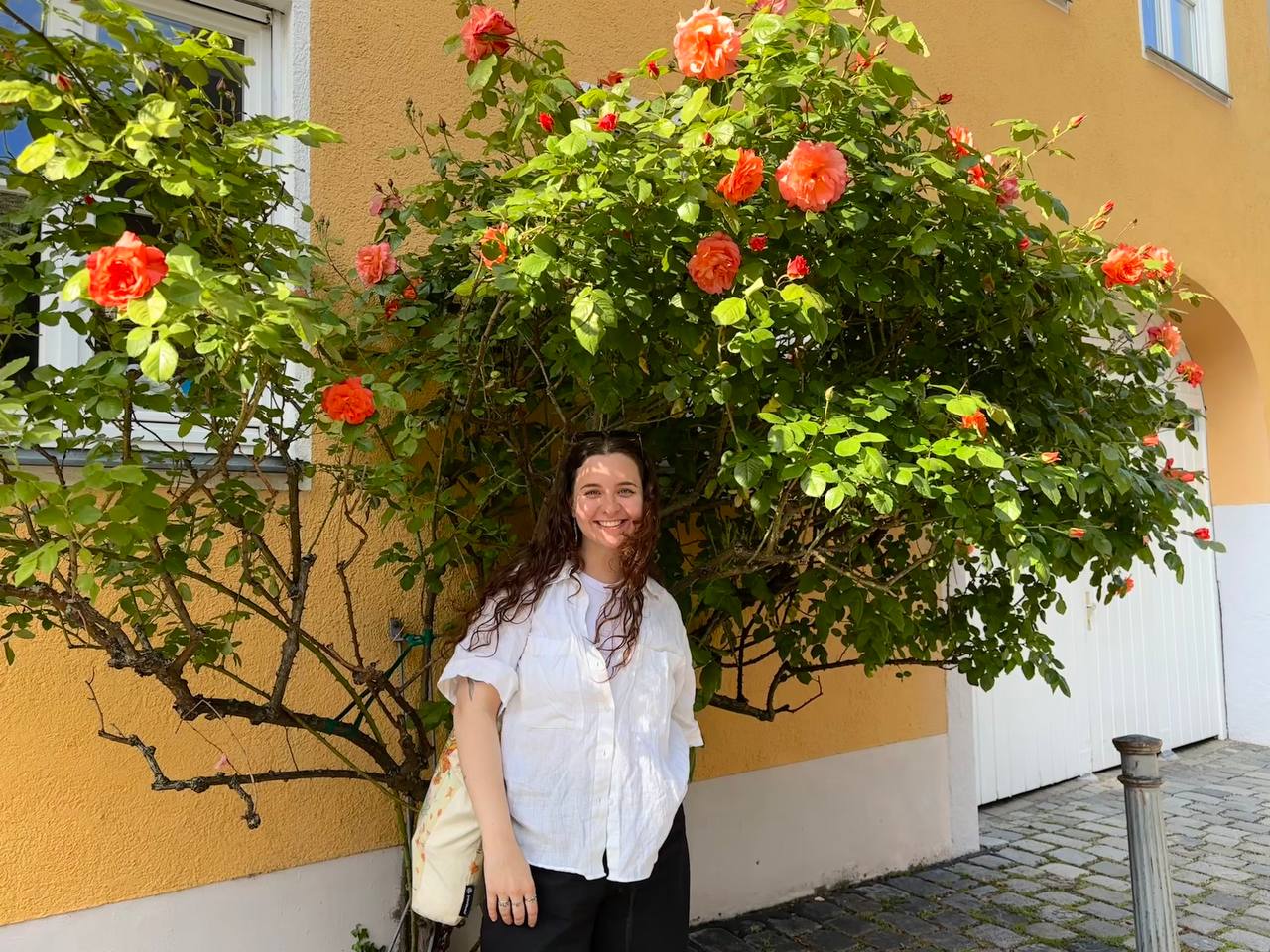
“Initially, I wasn’t very lucky — I was counting on becoming friends with my classmates, but they turned out to be totally not my people, the communication just didn’t flow. In the dorm I met my neighbor Manuela and basically invited myself to hang out with her classmates. I just walked up and said: ‘I’m free today — will you take me with you?’”
“At that gathering I overheard a girl mentioning she was taking antidepressants, and I jumped into the conversation: ‘Oh, you take antidepressants? Which ones? I used to take these. By the way, my name is Anya!’ So basically, you can start a connection with absolutely anything.”
Nika has been living in Valencia for a year now, but her first stop in Spain — together with her boyfriend, who works as a sailor — was probably the most international city in the entire country: Torrevieja.
“Torrevieja is not the best place for active young people. Although it probably has the biggest Ukrainian- and Russian-speaking community, most of them are families or older people. So I insisted on moving to Valencia, and my boyfriend and I changed cities.”
One of Nika’s early realizations about looking for friends was that large expat chats are almost useless.
“They’re full of thousands of questions about documents, stores, healthcare. But no one is looking for friends there — I figured that out quickly.”
Small, local chats are a different story. “I started looking for more targeted groups on Telegram — for example, ‘girls of Valencia.’ That’s where I found chats of 20–30 people where you really can make acquaintances. They’ll recommend nail techs, invite you to parties.”
The key is to be active — constantly write, initiate conversations.
That’s exactly what I did. I kept inviting myself to events, stayed active in the chat, and always agreed to go out even when I was tired or just wanted to stay home. And after some time people remembered me and started inviting me places
She also kept finding announcements for themed brunches in Valencia — “I adore those! Sure, sometimes the events were disappointing, but the good ones outweighed the bad.”
Another indispensable tool for finding friends, she says, is TikTok.
“TikTok’s algorithms work really well, so it quickly started showing me Ukrainian- and Russian-language content from creators in Valencia. And I started commenting on everything. If someone posted a video about a café or a bar, I could ask a question to start a conversation, invite them to meet — and it actually works.”
Related Articles
Beyond Paella: Discovering All i Pebre, Valencia’s Best-Kept Culinary Secret
Deep in the heart of the Albufera wetlands, the fishing village of El Palmar preserves a traditional, rich garlic and wild eel stew that tourist traps completely miss
Loading…
Loading…