


Support La Cotorra on Patreon
Access exclusive content, special perks, and closer connection with us.
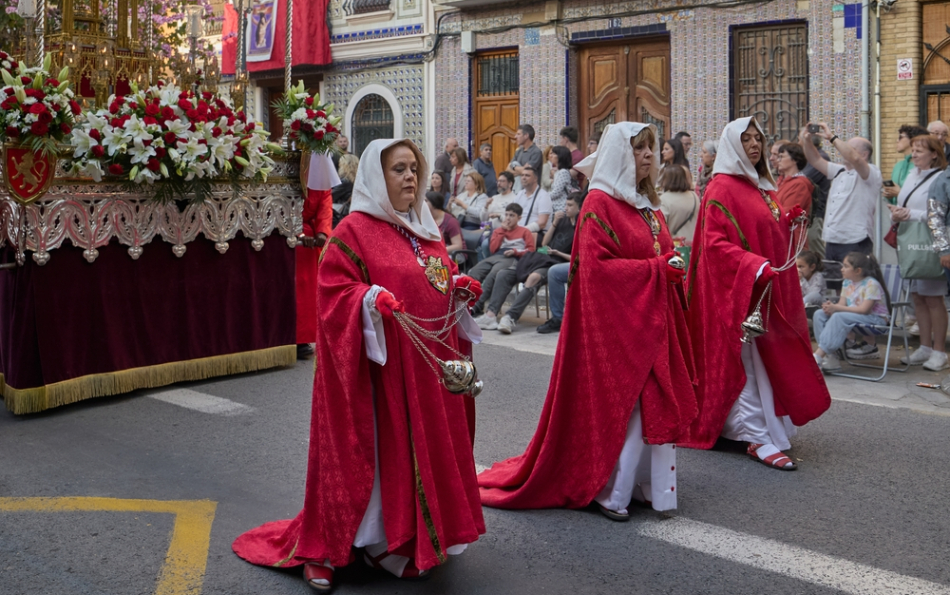
In Spain, Easter is not just a Sunday lunch as it is in many European countries; it is an entire week of grand and often even startling religious processions. In scale and emotional intensity, these days rival the famous Las Fallas. The streets fill with parades of people in high pointed hoods, costumes of Roman legionnaires, and biblical characters. Participants typically carry sculptures of saints and perform reenactments of biblical scenes. Yet, even against this backdrop, Valencia’s Semana Santa Marinera — Maritime Holy Week — manages to surprise both foreigners and Valencians from inland districts alike. La Cotorra sat down to discuss this with Alejandro Lorente, Vice President of the Junta Mayor de la Semana Santa Marinera (the association of Valencia's maritime Easter brotherhoods).
— How does Maritime Holy Week fundamentally differ from "classic" Spanish Easter?
— Our Semana Santa is very much of the people and very Mediterranean in temperament. We commemorate the suffering and death of Christ and, ultimately, celebrate the resurrection. But our Holy Week is brighter, more alive, and closer to the people. Its origins are tied to the sea—that’s why it’s called Marinera. The districts of Cabanyal, Canyamelar, and Grao were once fishing settlements. When fishermen went out to sea, their families prayed for their safe return. The tradition grew out of this need for prayer, protection, and hope.
— One of the most surprising traditions is taking statues from churches and setting up chapels directly inside private apartments. How does that work?
— Yes, that is truly hard to imagine in other Spanish cities. Elsewhere, the images of saints, Christ, or the Virgin Mary always remain within the churches.
In our case, during Semana Santa, certain religious sculptures are moved from the parish churches directly into homes or apartments. For one week, these spaces literally transform into impromptu chapels.
This doesn’t mean the image is simply placed in a living room behind a closed door. Quite the opposite. The whole point is that these homes are open to the public: you can walk through the neighborhood and step inside—to look at the image, be near it, pray, or just stand in silence. Many visitors don't know the homeowners, but they enter as freely as they would step into a church.
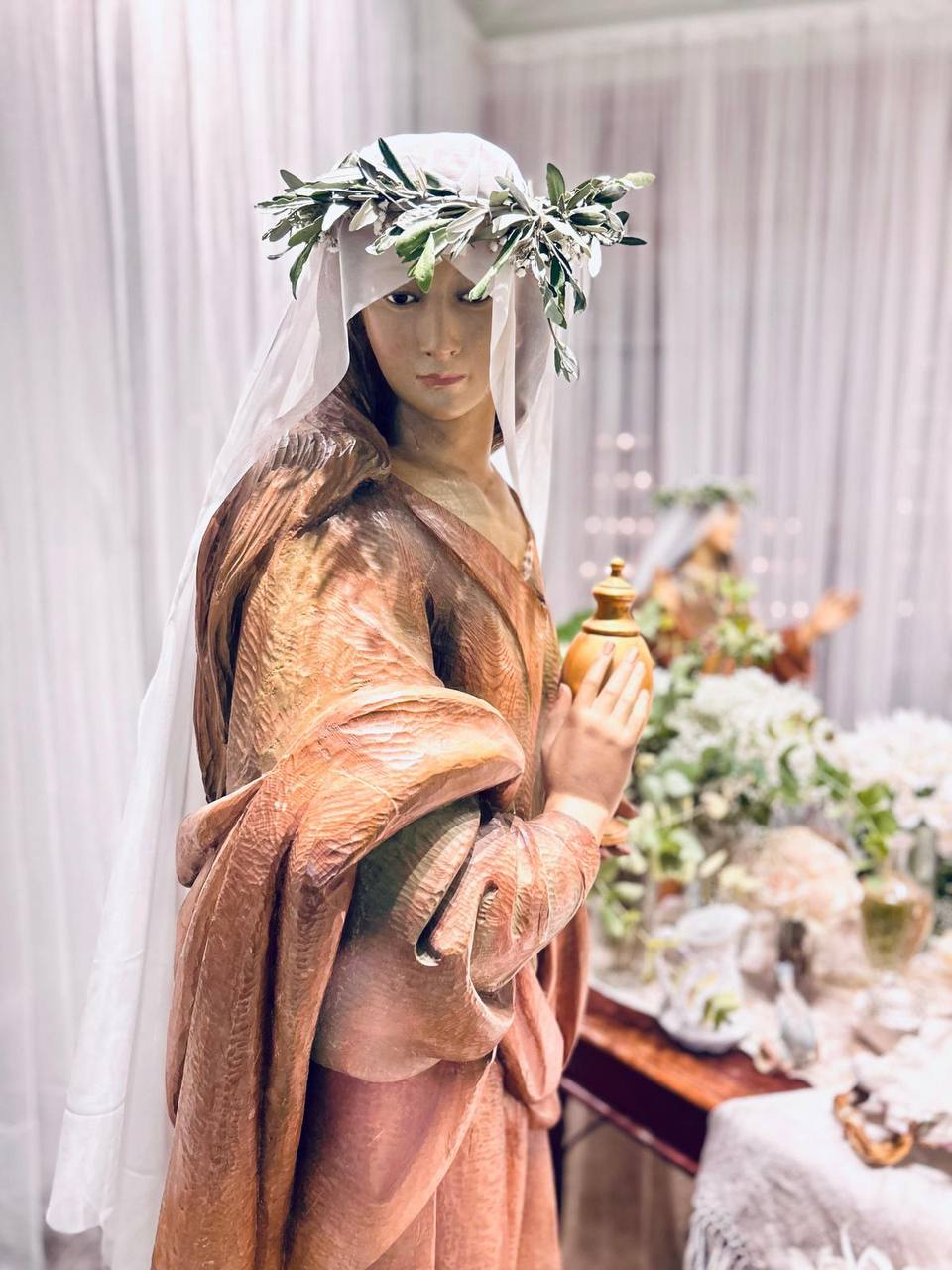
Photo: Carla Ortega
— Are there many people who want to host a sculpture?
— Some images are particularly beloved by the people. They might be tied to a specific brotherhood or the history of a particular block. Sometimes the number of people wishing to host an image is so high that waitlists are created or lotteries are held. There are images for which people truly "fight," so to speak.
Families prepare very seriously for the arrival of a sculpture: they might rearrange their furniture or even renovate. The room is decorated with flowers, fabrics, and candles; many hire professional decorators. The decor changes throughout the week: dark tones prevail at the start of Semana Santa, representing the suffering of Christ. After the Holy Burial, the homes close for a few hours, and on Saturday night, the decor is swapped for light colors—white and cream fabrics, bright flowers. This symbolises the resurrection. Essentially, the same apartment can completely change its atmosphere twice in one week.
— If I am just walking through the neighbourhood during Holy Week, how do I know which house I can enter?
— The owners of the houses hosting sculptures don't hide them; they invite everyone in. You’ll often see a dark carpet at the entrance, the door is kept open, and candles are burning inside. Neighbours point out to each other where a certain sculpture is displayed that day. Gradually, the whole neighbourhood turns into a chain of small stops—between processions, people move from house to house as if visiting tiny, makeshift temples. During these days, the maritime districts have a truly unique atmosphere.
— During Holy Week, there are processions involving thousands of people. These aren't actors, but ordinary people—do they rehearse in advance?
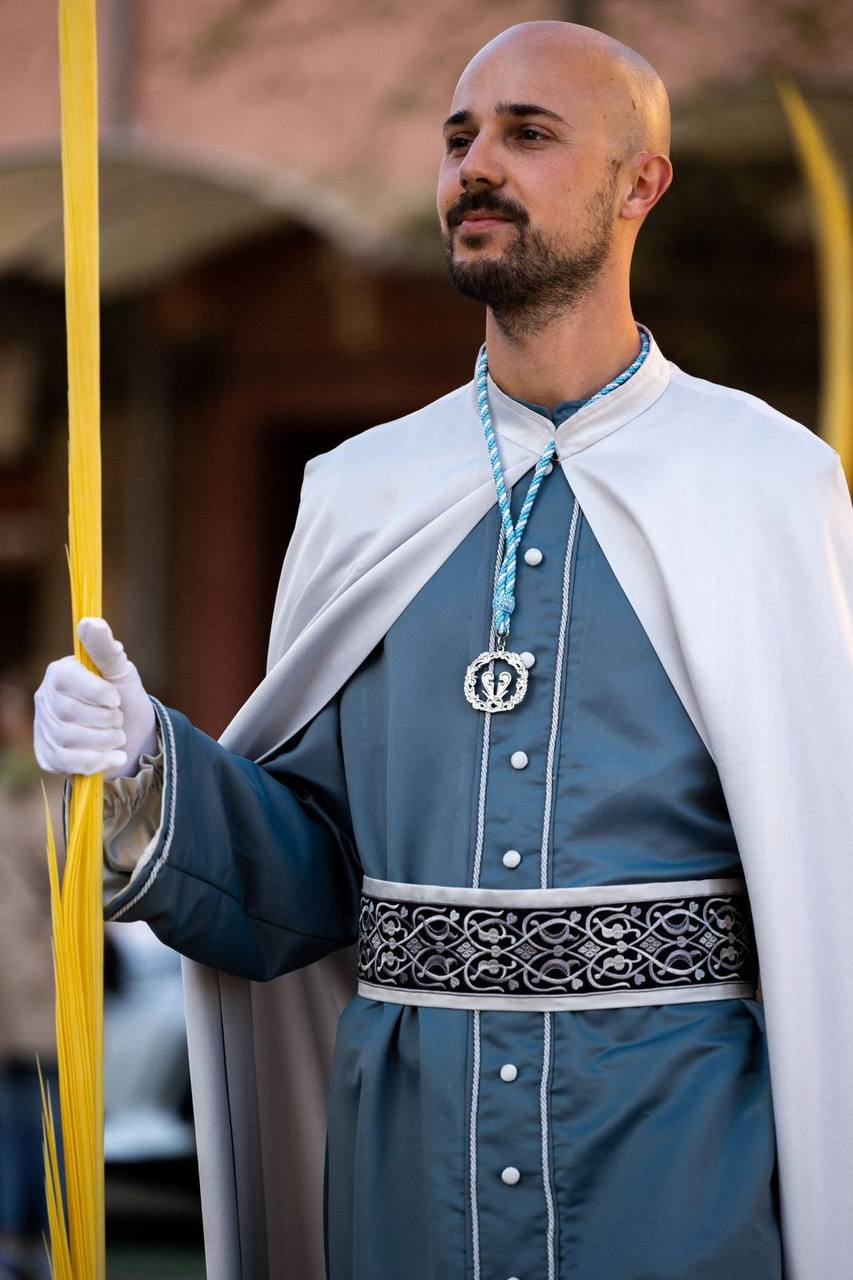
— Semana Santa Marinera unites 31 religious brotherhoods under the Junta Mayor—the structure that coordinates collective actions, processions, and the overall organisation. But more importantly, it’s not just 31 organisations; it’s 31 families. The brotherhoods don't just exist for one week; they live their traditions and festivals all year round. It’s a vital part of the local identity.
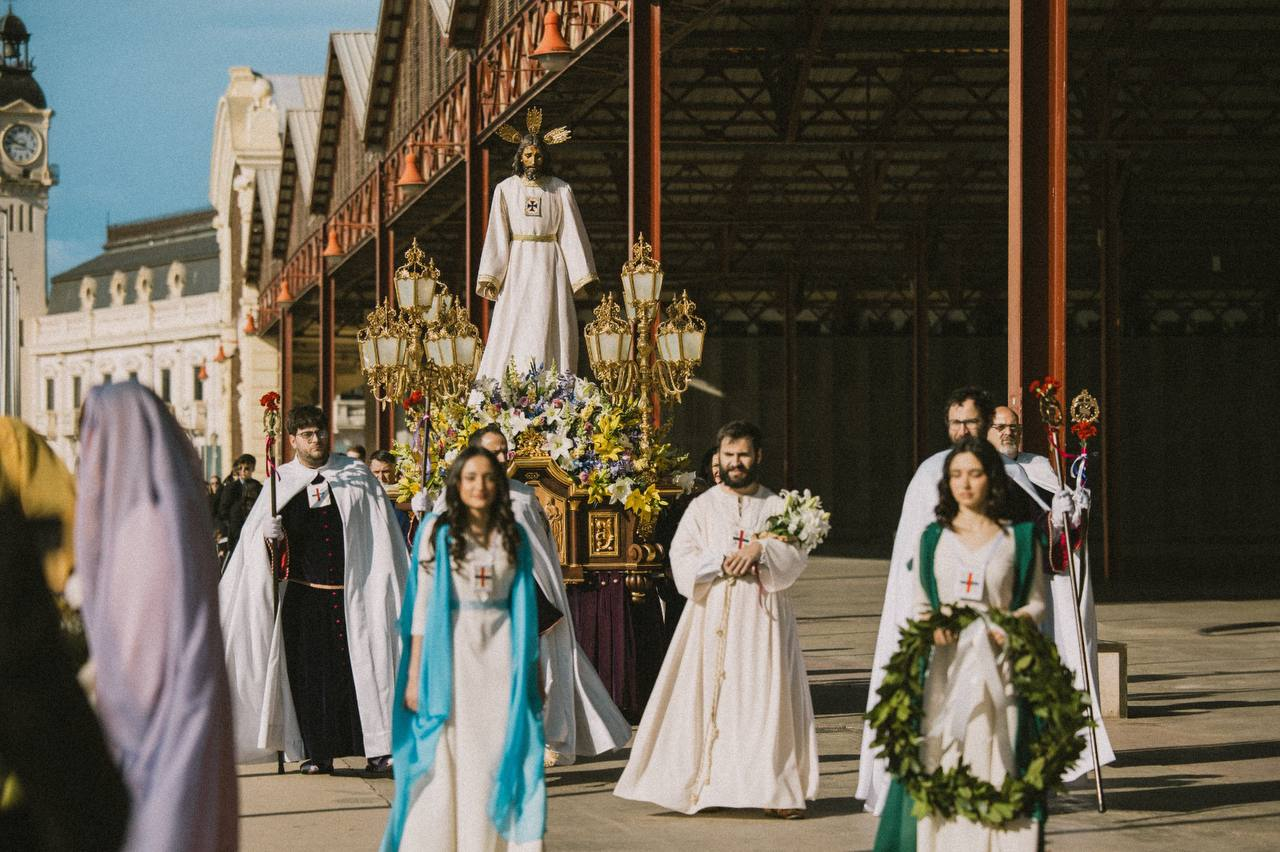
Photo: Carla Ortega
It’s different in other Spanish cities, where a person can simply buy a costume, pay an annual fee, and join a procession. For us, it’s more personal. Each brotherhood has its own processions and participates in collective events that gather up to three thousand participants. There are no rehearsals as such, but the preparation requires strict order, route planning, sequencing, and logistics. One of the most important processions shows the entire chronology of the Passion of Christ, from the Last Supper to the Crucifixion. It is a very beautiful and visually fluid form of catechesis.
Even if a person isn't religious, they can see and "read" the sequence of events told through images, scenes, and costumes.
— In other parts of Valencia, processions look like parades with platforms carrying sculptures, accompanied by nazarenos in pointed hoods. In Semana Santa Marinera, living biblical characters walk alongside them. That is also a striking difference.
— In the beginning, like in many other regions of Spain, we didn't have sculptural groups that could show individual episodes of the Passion of Christ. We only had individual images of Christ, the Virgin Mary, or a Nazarene with a cross. But if we needed to show, for example, the scene of Saint Veronica wiping Jesus’ face with a cloth, a single statue wasn't enough. So, they used living people. Today, each brotherhood has its own list of characters: Pontius Pilate, Veronica, the Virgin Mary, the apostles, Roman soldiers, and Old Testament figures. Some "roles" are highly coveted, with waitlists spanning years. A role is given to a person until they choose to step down. It’s a very serious system, not something spontaneous: the costumes are expensive and tailored to the individual. For members of the brotherhood, participating isn't a carnival—it's a way to hold their place within a living tradition for decades.
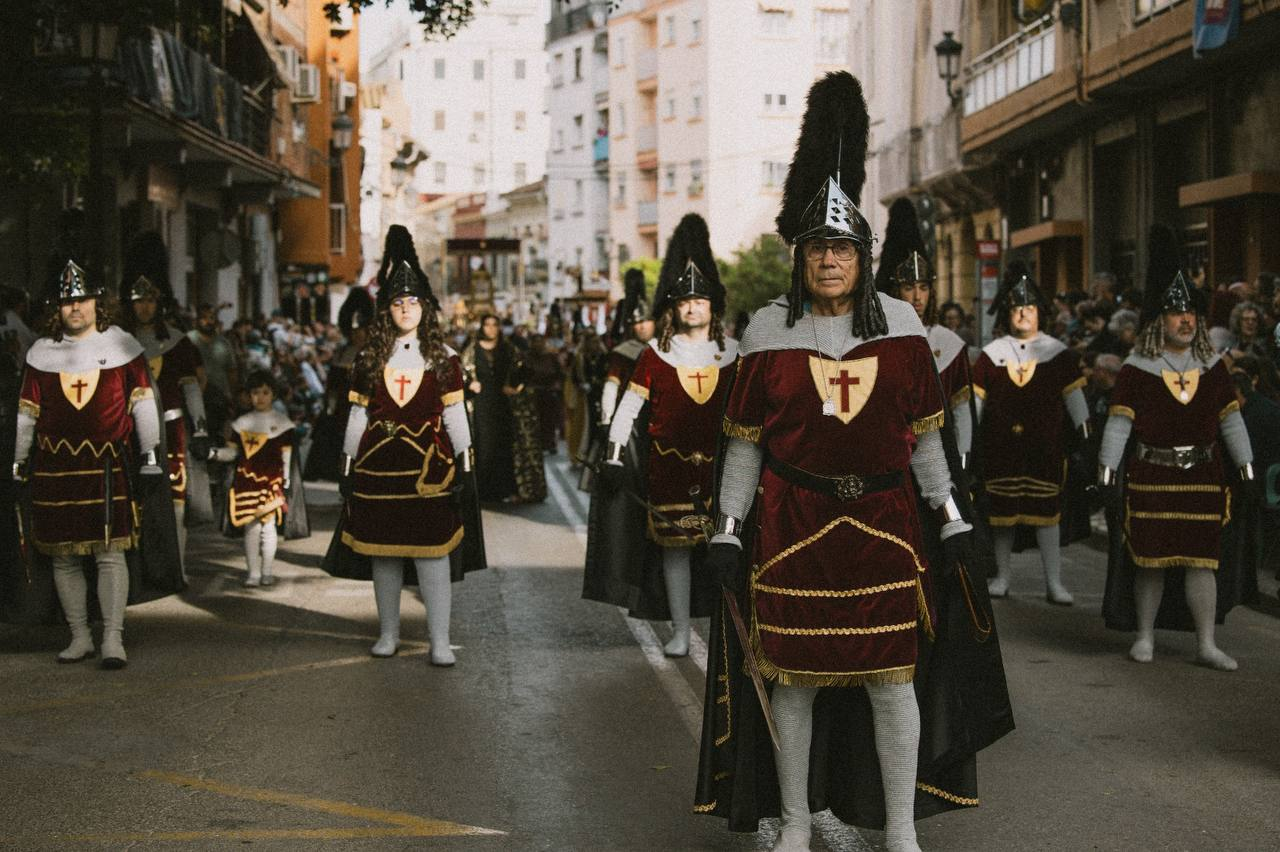
Photo: Carla Ortega
— To an outside observer, the scenes, costumes, and music of Holy Week can look quite intimidating. How do children perceive it?
— For those who grow up in the maritime quarters, it’s just part of the tradition. Many are signed up for a brotherhood at birth; they grow up beside the processions and know all these people without their costumes. Life in the brotherhoods goes on year-round—they host festivals and meetings beyond Holy Week. A child knows who is hidden behind the hood because they see that person at a regular dinner table or a neighbourhood party on any other day.
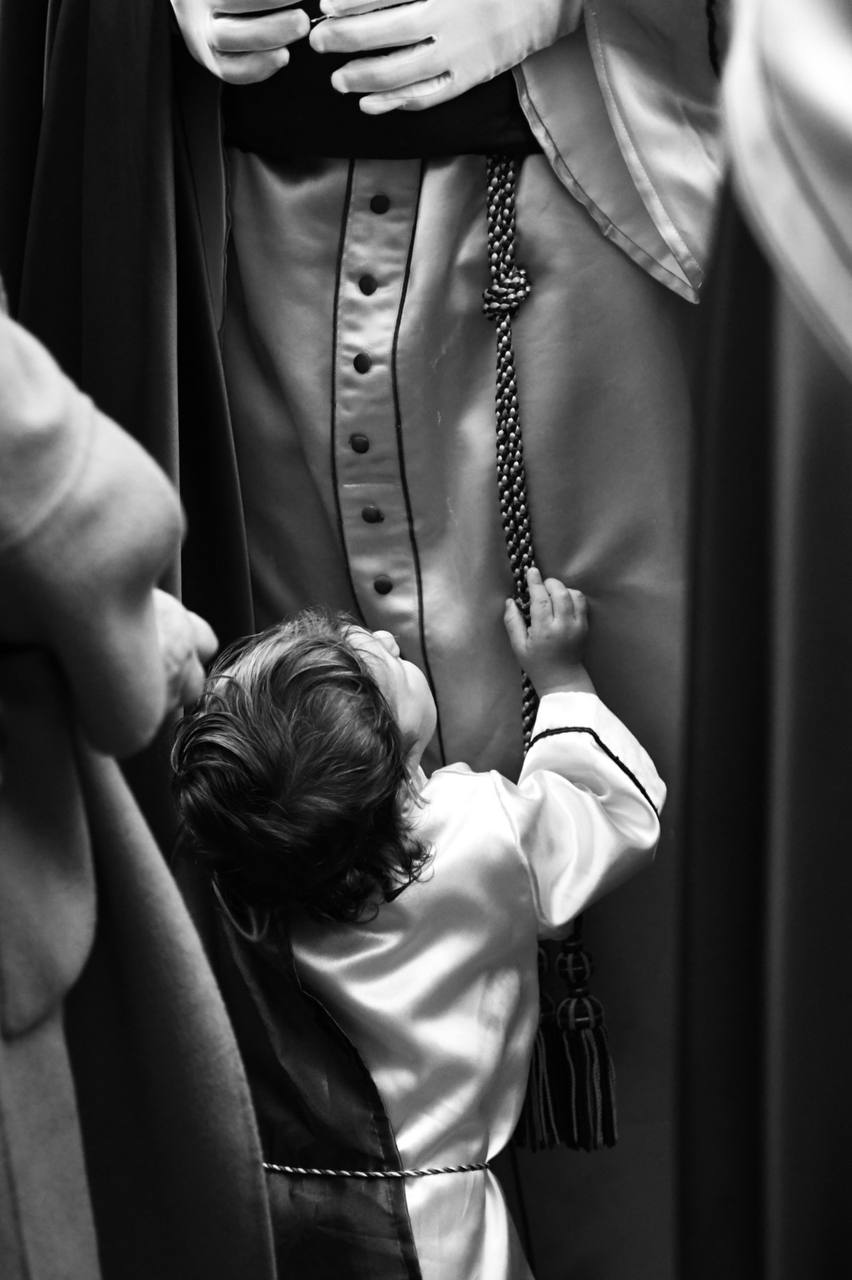
Photo: Carla Ortega
Of course, for children visiting from other districts or seeing it for the first time, the impression might be different. But that fades quickly because the atmosphere of Semana Santa Marinera is very open: people talk, they invite each other for dinner, and children see that it’s a living family tradition.
— There is another tradition that particularly shocks first-time visitors: at midnight before Easter Sunday, people might pour water out of windows, throw old ceramics, and set off firecrackers. What is behind that?
— Yes, this tradition can be a shock: you’re walking down the street and suddenly water pours from above or a plate flies down—whether from the first floor or the fourth. The ritual is about leaving the past behind, casting off the old self to enter a new stage. It is a very vivid symbol of the transition to the resurrection, to hope and new life.
Even some Valencians from other districts don't know about this custom and are just as surprised as tourists. You could hardly call it "beautiful" in the conventional sense, but it certainly leaves a strong impression.
Overall, Semana Santa Marinera is very much alive; it isn't an abstract, solemn church ritual, but a part of everyday life in these quarters. Everyone experiences this week in their own way: some as a religious experience, some as a family tradition, and some as a time to meet neighbors and friends. I always say that this is a very "neighborly" Semana Santa—close to the people and open to everyone.
Related Articles
Beyond Paella: Discovering All i Pebre, Valencia’s Best-Kept Culinary Secret
Deep in the heart of the Albufera wetlands, the fishing village of El Palmar preserves a traditional, rich garlic and wild eel stew that tourist traps completely miss
Loading…
Loading…