






Support La Cotorra on Patreon
Access exclusive content, special perks, and closer connection with us.
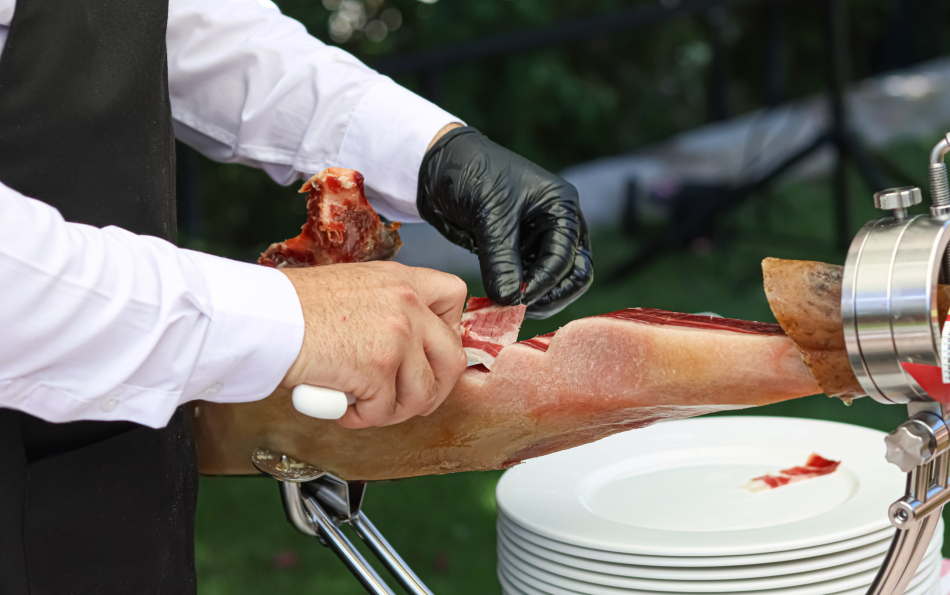
How did a rural tradition of slicing cured pork turn into a profitable and highly respected profession in modern Spain? La Cotorra spoke with the founder of the European School of Jamón Carving about the art of presenting this traditional product and why the skills of a cortador — the name of this profession — have become one of the most sought-after gastronomic abilities today.
A cortador de jamón, or jamón carver, is a Spanish profession that grew out of the ancient need to preserve meat in good condition for long periods of time.
For countless years, pigs have been raised on the Iberian Peninsula and their salted meat consumed. In rural Spain, hams would hang for years in kitchens and cellars, surviving wars and crop failures and even accompanying long sea voyages. The classic curing formula is simple: one kilogram of meat, one kilogram of salt, and one day of curing.
Julián Moreno, a Madrid native and founder of the European School of Jamón Carving, is one of those who turned the skill of working with a pork leg into a distinct gastronomic discipline, a structured system, and a profitable business.
Julián came to the craft almost by chance. As a teenager, he found himself at a wedding where a professional cortador was working, he told La Cotorra.
“I saw a man who spent two hours doing nothing but slicing jamón. I went up to him and asked how much he was paid. He said he earned €150 for a single leg. I was seventeen, completely broke, and I immediately decided I wanted to learn how to do that,” Julián recalls.
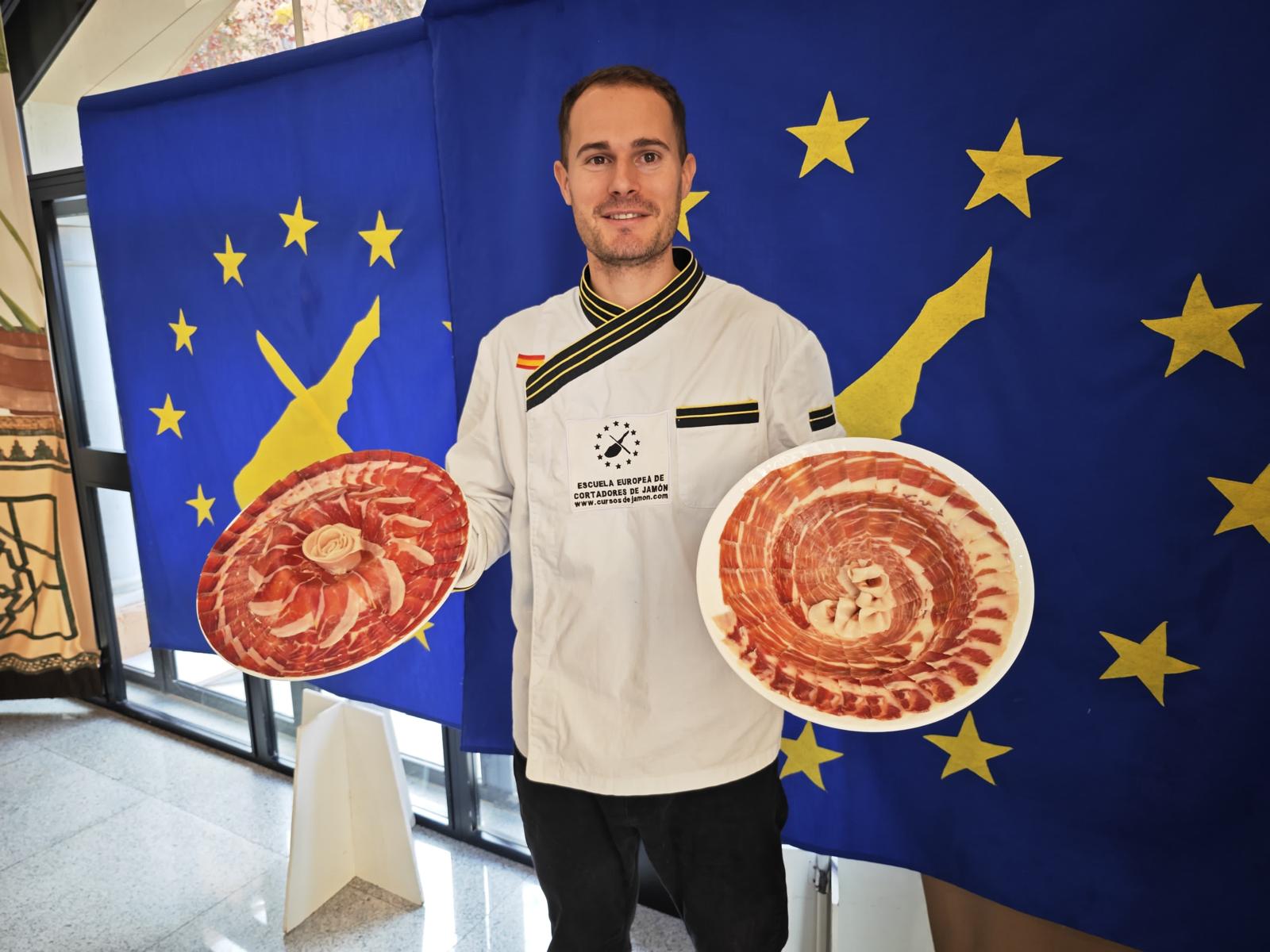
He enrolled at university in Madrid to study engineering, while at weekends he worked as a carver at weddings and celebrations. Later, he worked in restaurants in Granada and Madrid, and travelled between supermarkets, slicing and selling hams in an attractive way. At some point, Julián compared an engineer’s salary with what he was earning as a cortador.
“I realised that I was earning more from a single carving job than from a full day in the office. In the end, I left engineering and committed to jamón professionally,” he says. For a student or someone combining jamón carving with another job, this kind of work can become a very substantial source of income. And when pursued full-time, the craft grows into a profitable business.
Over time, Julián founded his own carving school, which has been operating for more than twelve years. The team is based in Andalusia, but courses are held all over Spain. The programme consists of two stages: an online theoretical component followed by in-person practical training.
Students study pig breeds, the anatomy of the ham, the characteristics of its different sections, standards and classifications, regulations, curing times, tools, and various carving techniques.
Sceptics often ask the same question: why is a person needed to slice jamón when there are machines, like those used in supermarkets? According to Julián, machine slicing inevitably heats the product and alters its flavour, as the blade spins at very high speed. Moreover, a machine does not understand the structure of each individual leg — the thickness of the muscles, the curve of the bone. To come close to the level of a professional cortador, a machine would need an X-ray image of every ham, Julián says, and even then the result would not be the same. A cortador, by contrast, approaches each leg individually. His goal is to extract as much meat as possible with minimal waste.
“The main knife is long — about thirty centimetres — thin and flexible. The blade has small indentations called alveoli, which prevent the slice from sticking. The blade is sharpened at an angle of about twelve degrees, with a straight tip. A separate short, rigid knife called a puntilla is used to work close to the bone. The ham is fixed in a jamonero — a heavy wooden and metal stand that allows the leg to be rotated and its angle adjusted,” the cortador explains.
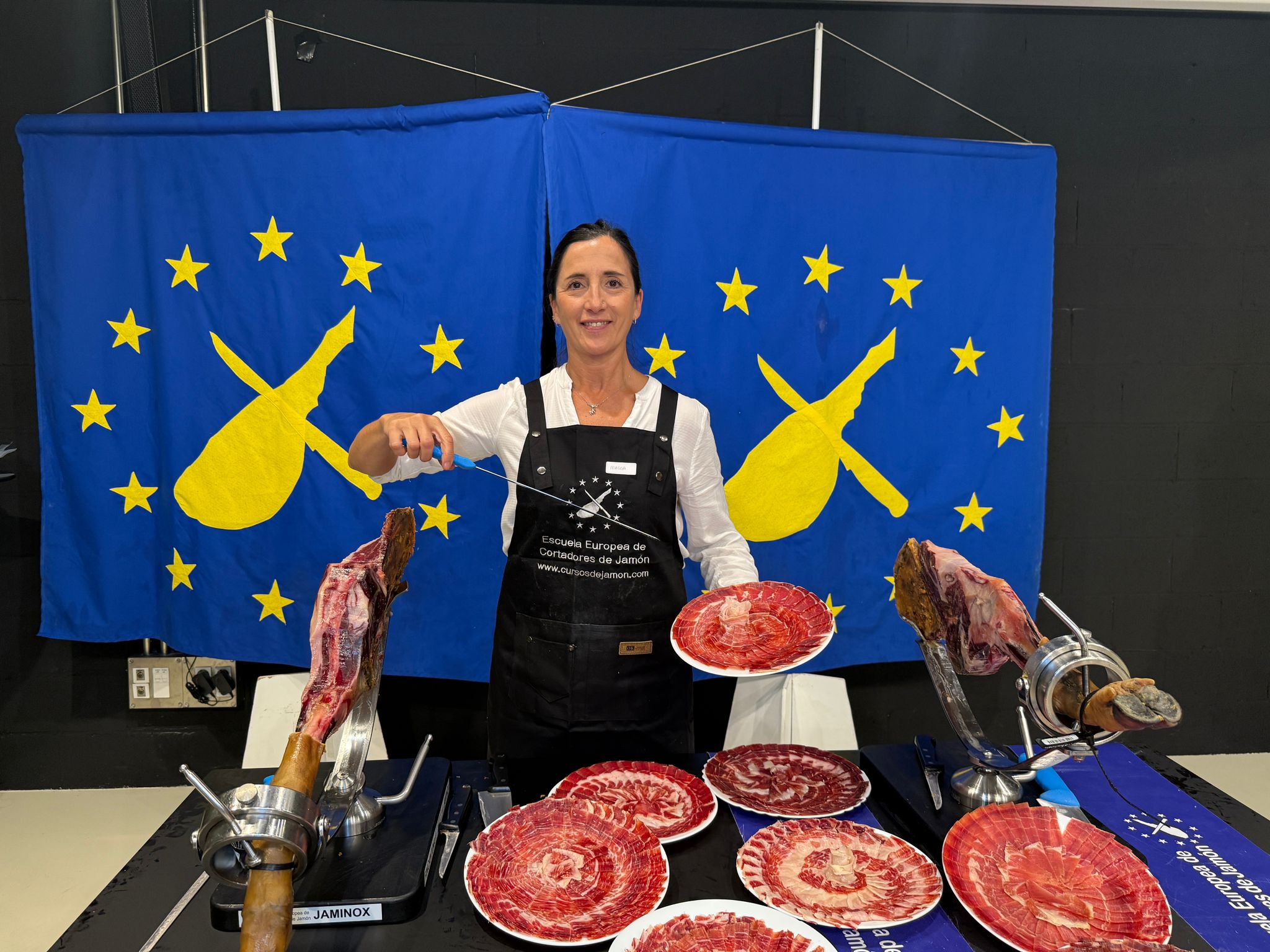
There are basic techniques and more complex ones. One of them is known as the “third cut”, in which the cortador slices the central, meatiest part of the ham parallel to the axis of the leg, achieving an optimal balance between meat and fat. This cut produces a striking fibre pattern.
The way the knife moves affects not only the appearance of the slices but also their flavour. A poor cortador can ruin a good jamón, while a skilled one can turn a ham of average quality into something exceptional, Julián says with a smile. He adds: “Proper technique is also essential for the carver’s own health. If you hold your body incorrectly, everything will start hurting after a couple of hours.”
A separate part of the training focuses on the effects of jamón on the human body. The product is often considered far from healthy, but according to Julián, the fat of Iberian jamón, produced from Iberian-breed pigs, can in fact be beneficial.
Studies by Spanish universities show that this fat has a positive effect on cholesterol levels and the cardiovascular system. “Simply put, jamón makes the skin smooth and healthy, and the body stronger,” Julián explains.
After mastering the theoretical foundations and carving techniques, cortadores can work in gourmet shops, catering, or on cruise liners. A carver working on a liner spends nothing on accommodation or food — it is pure profit, Julián says. A standard contract lasts around six months, after which one can take a break and return later.
The profession is gaining popularity beyond Spain as well. Julián’s school has already opened a branch in China, where interest in jamón is growing. Another world altogether is the competitive circuit: carving competitions held across Spain. Judges weigh the ham before and after carving, calculate the percentage of usable meat, and assess the thickness and uniformity of the slices. Presentation of the plate also matters. Julián’s students regularly take top prizes at national championships — a particular source of pride for their teacher.
“I’ve always liked the fact that jamón requires nothing unnecessary,” Julián says. “All you need is a ham, a stand and a knife. Then the magic begins”
Related Articles
Beyond Paella: Discovering All i Pebre, Valencia’s Best-Kept Culinary Secret
Deep in the heart of the Albufera wetlands, the fishing village of El Palmar preserves a traditional, rich garlic and wild eel stew that tourist traps completely miss
Loading…
Loading…