






Support La Cotorra on Patreon
Access exclusive content, special perks, and closer connection with us.
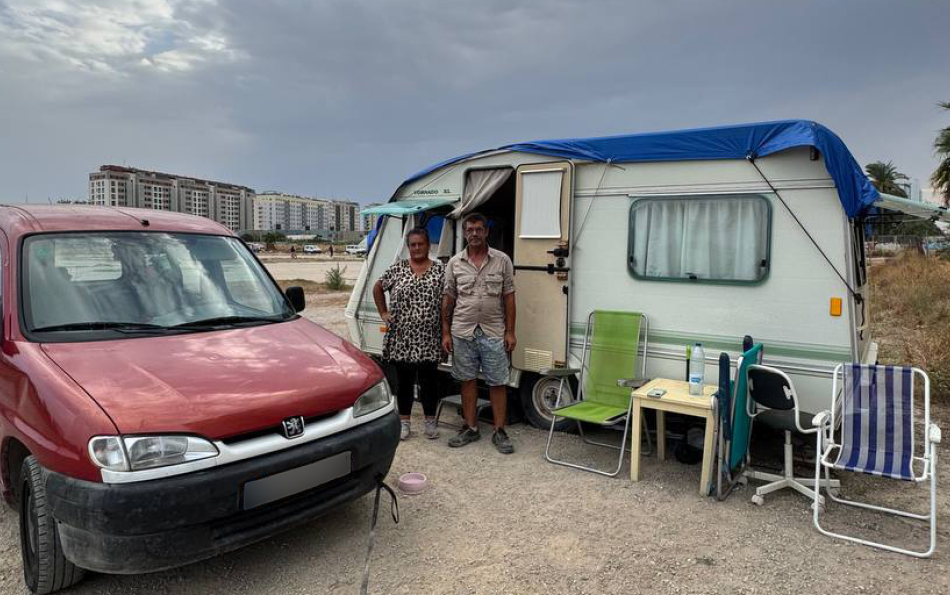
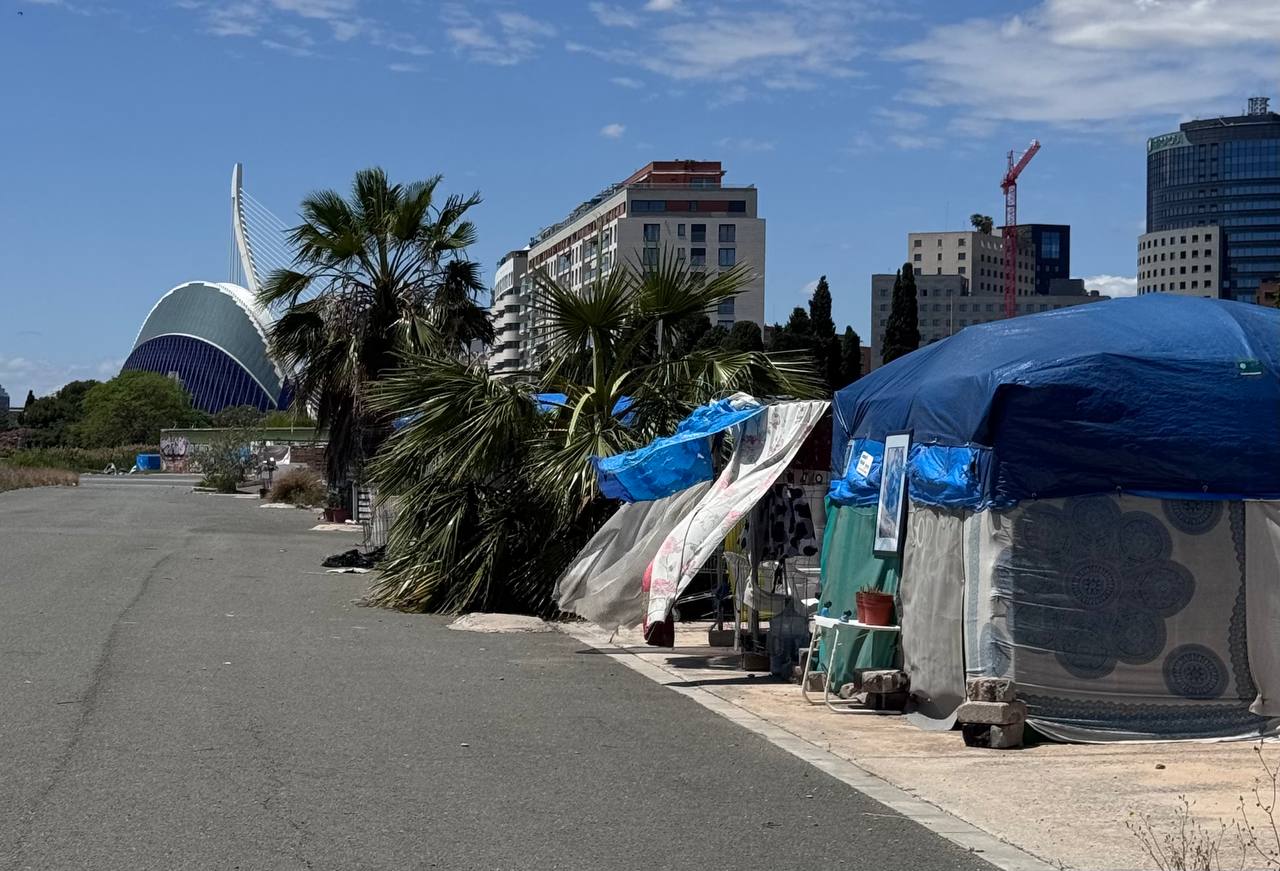
A few minutes from the City of Arts and Sciences, next to the former Formula 1 circuit, behind construction fences and wasteground, lies a space that most tourists will never see. At first, all you notice among the grass are pieces of tarpaulin and plywood roofs — but the further you walk into the field between the Nazaret and El Grau neighbourhoods, the clearer it becomes: a large informal settlement has grown up here.
Rows of chabolas — the Spanish word for shacks made from wood, plastic, tarpaulin, and materials salvaged from skips — are laid out almost like streets. Between them, washing lines are strung, old trailers stand alongside trolleys loaded with scrap metal and plastic chairs. Above some of the dwellings hang the flags of Spain and Valencia.
Dozens, possibly hundreds of people live here — no one knows the exact number. Most are migrants and refugees from Algeria and Morocco. But there are also Spaniards who can no longer afford to pay for housing in the city. Some have no documents, others have no steady work, and others still have no way of renting even the cheapest room in Valencia, where rents continue to rise.
La Cotorra spoke with residents of this unofficial settlement — people living without electricity or running water, collecting scrap metal, waiting for documents, looking for work, and trying to build some semblance of a normal life in the middle of a wasteland.
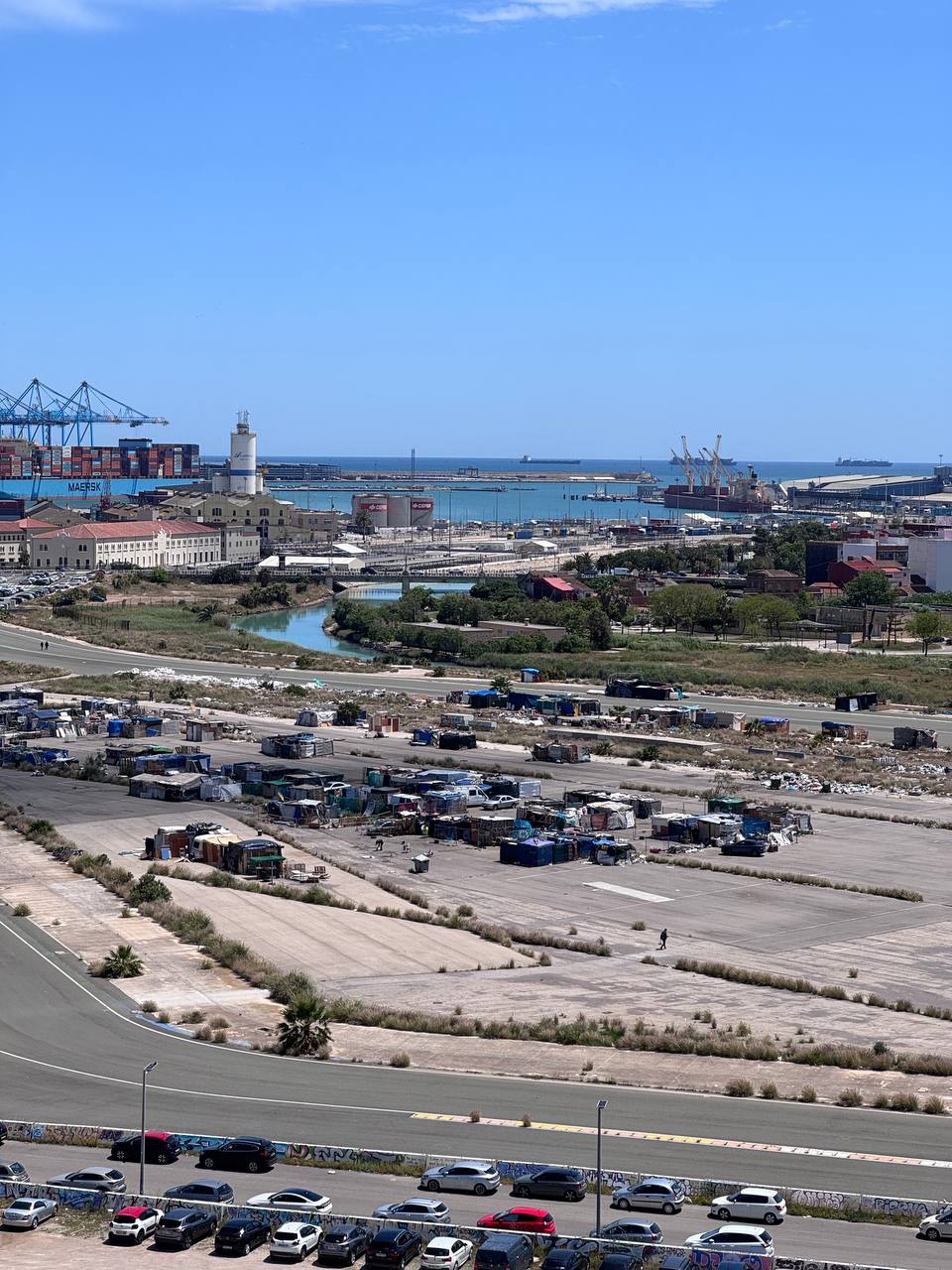
At the edge of the field stands an old motorhome, with plastic garden furniture and a dog bowl beside it. This is where Rosa and her husband live. A few years ago, they rented a small flat in Valencia for €500 a month. Then the landlord raised the rent by another €100.
"We realised: either we pay the rent and have nothing left at all, or we find another way," Rosa says.
After a family discussion, the couple decided to buy an old trailer and move here. They got a dog — "for security." Their children come to visit at weekends. But the family has almost no contact with their neighbours in the settlement.
"Most of them are from Algeria and Morocco. We don't get in each other's way, and that's what matters," says Rosa.
The family has never managed to access any social assistance programme. Rosa's husband earns money by collecting and selling scrap metal. Saving enough to rent a flat remains out of reach.
In recent years, renting in Valencia has become an especially acute issue. According to Idealista, even the cheapest housing in the city now starts at around €450 for a room, and a full long-term flat rental rarely costs less than €900–1,000 a month.
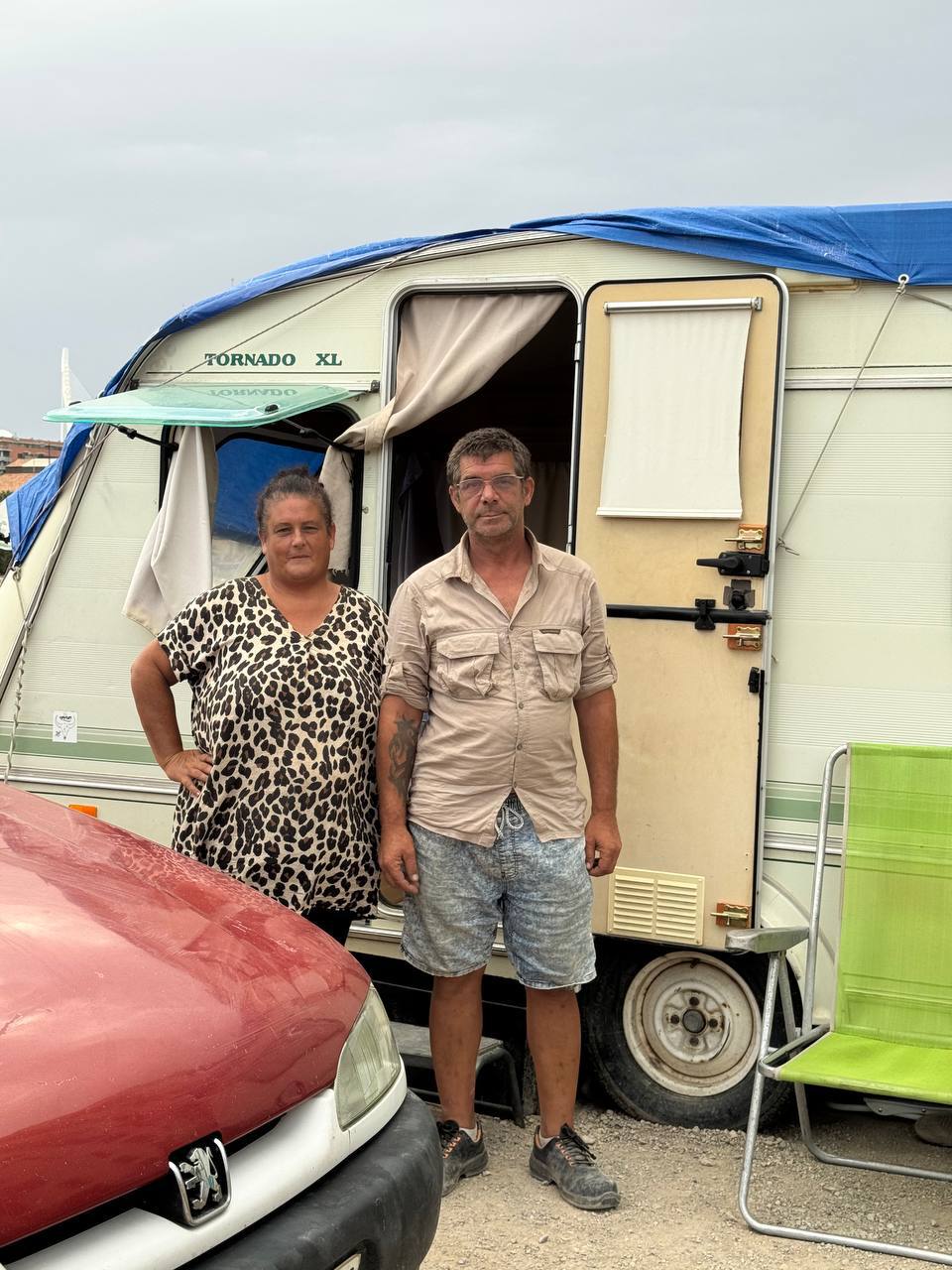
A little further on, beyond Rosa's motorhome, the informal settlement begins in earnest. Shacks made from whatever materials come to hand are packed almost wall to wall, as though some private town planning scheme were in operation. A path runs through the field, used by residents of El Grau and Nazaret as a shortcut going about their daily business.
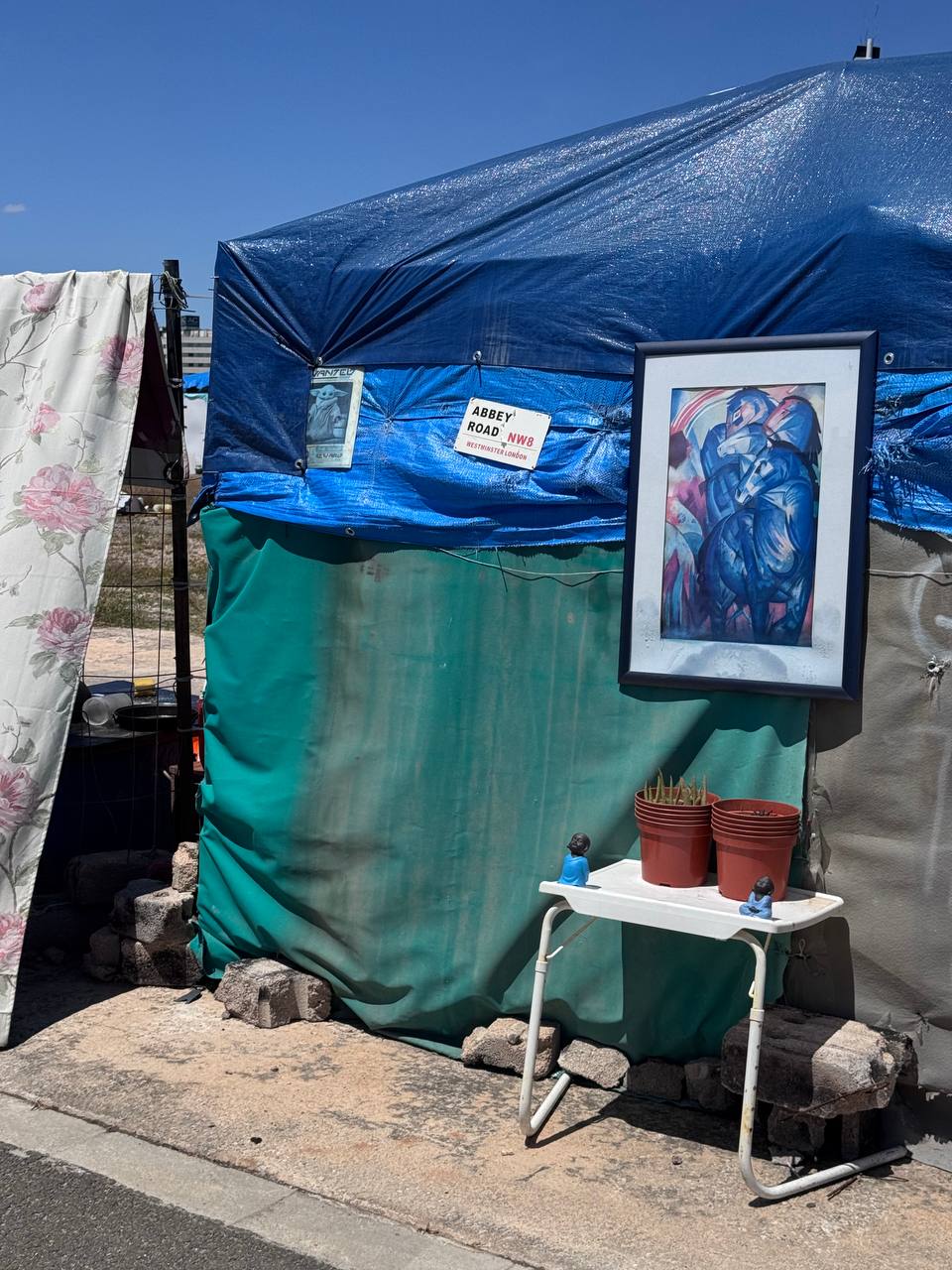
Many of the dwellings are decorated with posters and paintings. Improvised flower beds, makeshift fences, and gates stand beside the entrances. Some residents are trying to turn their temporary shelter into something resembling a home.
Abdel is a refugee from Algeria who has been living in this field for several months. Before coming to Spain, he worked as a barber and hopes one day to return to the trade.
"I am a barber. I worked with hair and beards for many years," he says, switching between English and French.
Abdel knows only a few words of Spanish. Communication is difficult: he speaks mainly Arabic, a little French, and very little English.
His living conditions are far from normal. Abdel explains that there is a cemetery nearby, and that is where many settlement residents go to use the toilet. The only way to wash is in a shower in the par, which operates just a few times a week.
This winter, according to Abdel, residents had to rebuild many of their dwellings from scratch. Several weeks of heavy rain and wind destroyed part of the settlement: tarpaulins were torn away by gusts, wooden frames became waterlogged, and some shacks simply collapsed under the torrents of water.
"There are people here who have no plans for the future — they simply don't think about it. I want to get my documents sorted and find work as a barber," Abdel says.
The informal settlement occupies one of Valencia's most potentially valuable pieces of land — between the City of Arts and Sciences and the sea. The Formula 1 circuit once ran through here: grandstands, live broadcasts, and multimillion-euro investments. After the races left in 2012, the land was never given a new purpose.
The authorities now have ambitious plans for the El Grau district — new housing, infrastructure, and an extension of the Turia park all the way to the sea. The project has been discussed for years, but its implementation has been repeatedly delayed, partly because of the unresolved question of the railway lines that still cut through the area.
While the authorities discuss the district's future, the wasteground is gradually filling with chabolas. Residents say the number of structures is growing.
The number of people living in chabolas in Valencia continues to rise. The current figure stands at 1,342 homeless people — 8% more than the previous year. And those are only the official numbers.
Several large informal settlements exist across Valencia beyond the field near the City of Arts and Sciences. They most commonly appear alongside old roads, railway lines, and industrial zones.
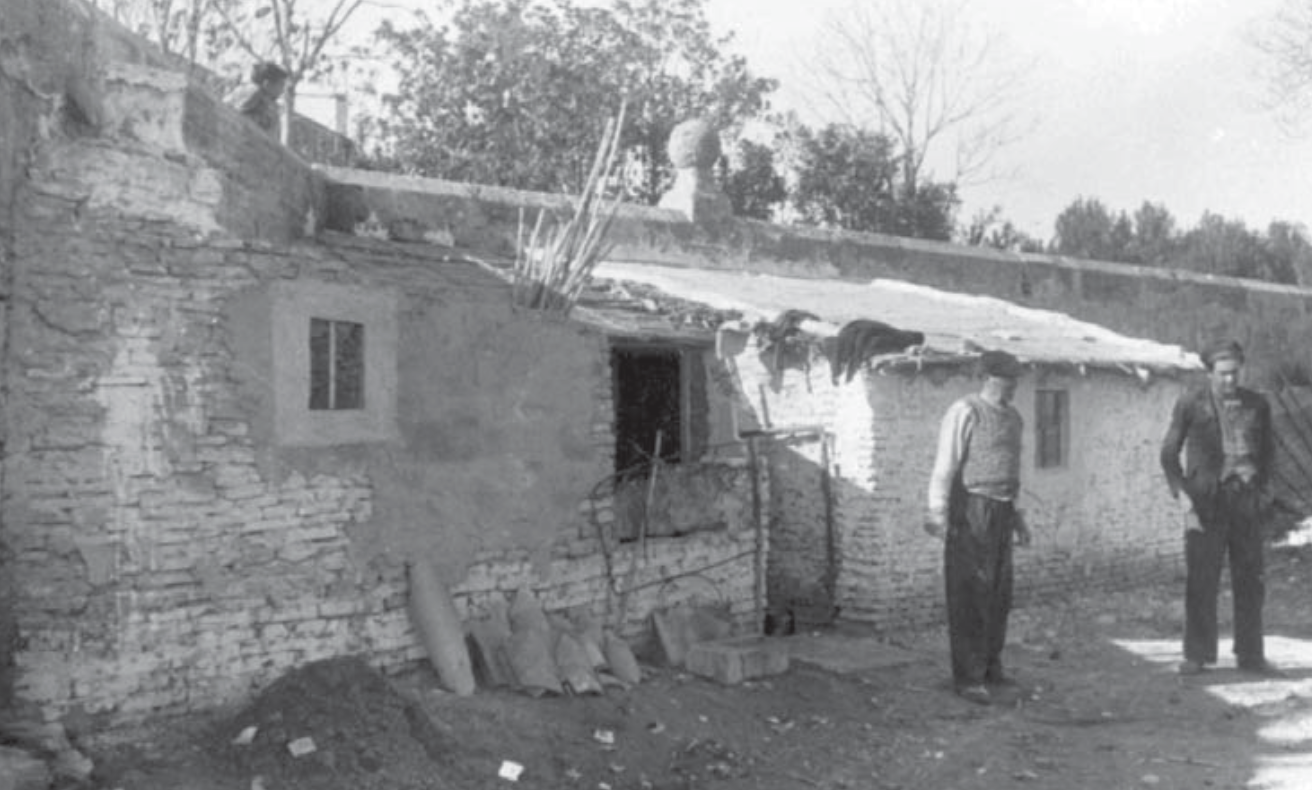
Chabolas are not a new phenomenon in Valencia: during the 1949 flood, the Turia swept away thousands of makeshift dwellings that had been built directly in the riverbed.
But in recent years, homeless people have become far more visible in ordinary residential neighbourhoods too. Residents report that people regularly come to sleep in children's playgrounds and parks. During the day, children play on those swings and slides; at night, homeless people sleep there. For many Valencia neighbourhoods, this has already become a familiar part of urban life that barely surprises anyone.
Spanish journalists quote the city's social affairs councillor Marta Torrado: "One of the key priorities remains creating new places in shelters for people without a home."
Yet even official data show that those living in settlements are not only people with severe addiction issues or without papers. Families with children also live there, and some residents continue to work while remaining outside the formal housing market.
Valencia does not have a single large homeless shelter. Instead, a whole network of organisations operates across the city — from emergency overnight accommodation to programmes for finding housing and employment.
The main entry point into the system is the municipal social services and the CAST centre (Centro de Atención a Personas Sin Techo) in the Campanar neighbourhood. From there, people are directed to shelters, helped with documents, and supported through ongoing case management.
Beyond the municipal provision, several major charitable organisations operate in the city. Casa Caridad provides daily meals and temporary accommodation. Cáritas helps with documents and job-seeking. Sant Joan de Déu runs transitional housing programmes for those already trying to rebuild a stable life.
There is also outreach support directly on the streets. Mobile showers and humanitarian vans regularly appear in the Cabanyal area, around the port, and near informal settlements — where people can wash, get clean clothes, and sometimes receive basic medical care.
The reasons why people do not go to shelters are well understood by the settlement's own residents. According to one of the shack owners, night shelters come with strict rules about when you can be there. Many people have been living in chabolas for years, have made them their own, and have grown accustomed to that way of life.
In the evenings, residents return to the field from the city, many pushing heavy trolleys loaded with scrap metal. Others look as though they are simply coming home from a normal job. If you passed such a person in the centre of Valencia, you would never guess they live in a chabola on the edge of a wasteland beside the City of Arts and Sciences.
Related Articles
Beyond Paella: Discovering All i Pebre, Valencia’s Best-Kept Culinary Secret
Deep in the heart of the Albufera wetlands, the fishing village of El Palmar preserves a traditional, rich garlic and wild eel stew that tourist traps completely miss
Loading…
Loading…