


Support La Cotorra on Patreon
Access exclusive content, special perks, and closer connection with us.
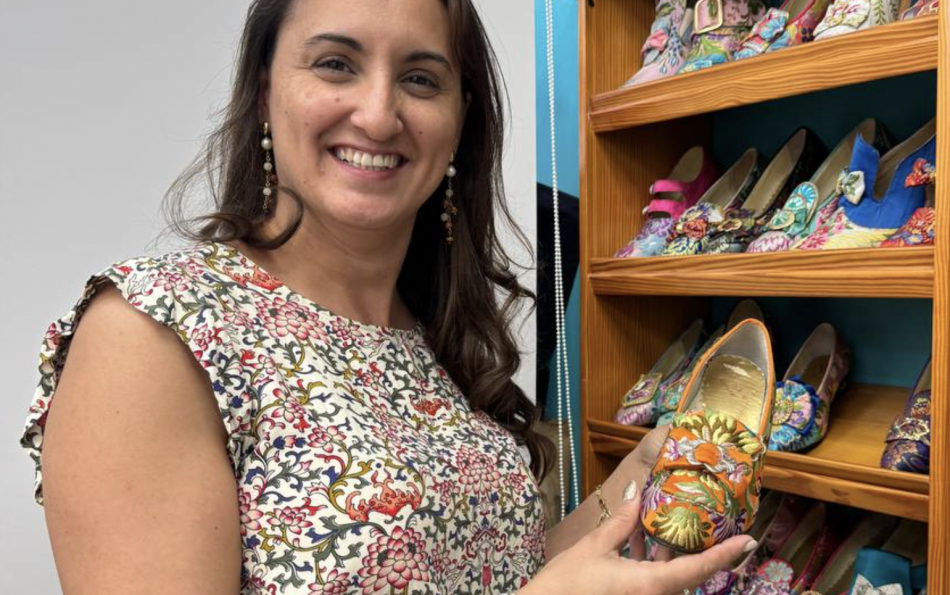
Women in Valencia wear traditional fallera dresses. These iconic outfits of the city’s main festival, Las Fallas, can be seen all year round. Local districts hold Fallera Mayor competitions, while families organise photoshoots and small celebrations, often without a special reason. But in February, as the city approaches the start of Las Fallas, women in traditional dresses appear everywhere: on the metro, in cafés, at street crossings. Vivid gowns become the season’s unofficial dress code. La Cotorra takes a closer look at the dresses and the people who make them.
Las Fallas takes place in March, but preparations begin a year in advance. Valencians love the festival so much that they spare neither time, nor effort, nor money when it comes to its traditions. Choosing a costume is one of the most important steps: it’s a serious process with a substantial budget. Many women line up at ateliers long before the festival begins.
These outfits are the result of the work of many specialists: weavers, dressmakers, shoemakers, accessory artisans and hair stylists.
These are small family-run workshops with no websites or social media presence, working with the same clients year after year.
They rarely are in the spotlight, yet it is because of them that the city transforms each year into a vibrant historical reconstruction.
Fallera dresses closely follow the silhouettes of 18th- and 19th-century costumes. What began as festive rural clothing gradually evolved into a complex ceremonial outfit full of details. Inés Milián, owner of the traditional Valencian dress atelier Creaciones Talada, was a fallera in her youth. She learned the craft from the previous owner of the workshop, which has been operating in Valencia for over 40 years.
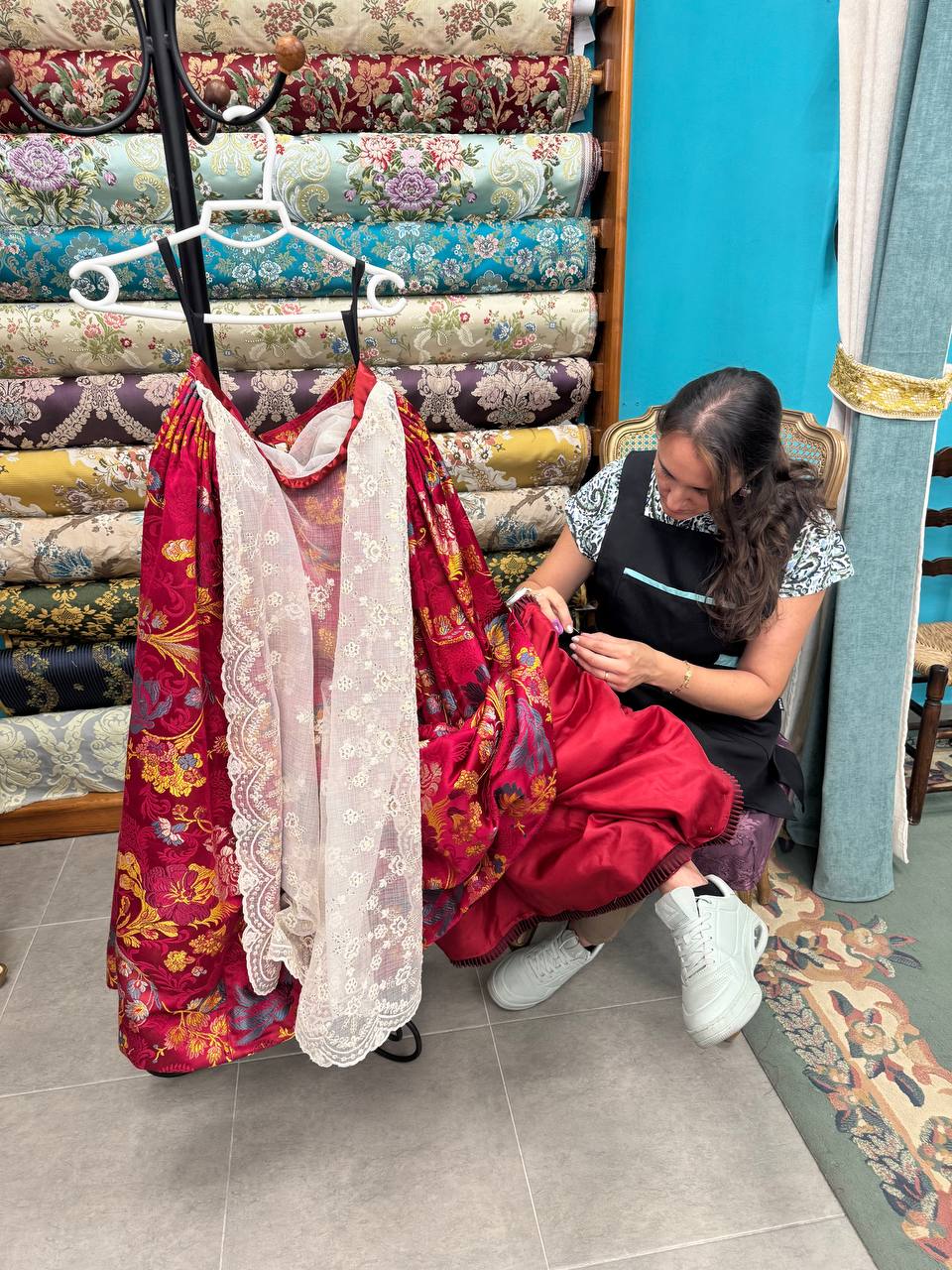
At the atelier, only the corset and skirt are made. The voluminous underskirt with dozens of ruffles resembling a wedding cake is produced in a different atelier and later delivered to Inés.
«All the dresses I make are handmade and bespoke. A costume like this can be astonishingly expensive: prices go up to €6,000. People spend more on Las Fallas than on a wedding» – Inés says.
Traditionally, the fabric is decorated with floral patterns. A dressmaker’s skill is ensuring that the pattern aligns perfectly where the fabric pieces join. This task requires extremely precise calculations.
According to Inés, light blue fabrics and gold threads are especially popular this season. “We choose fabrics together with the client, separately for the top and the skirt. There are no strict rules here; what matters is the combination that feels right. The colour should suit the eyes and skin tone. The corset usually differs in colour from the skirt, and they’re made from different fabrics,” she explains.
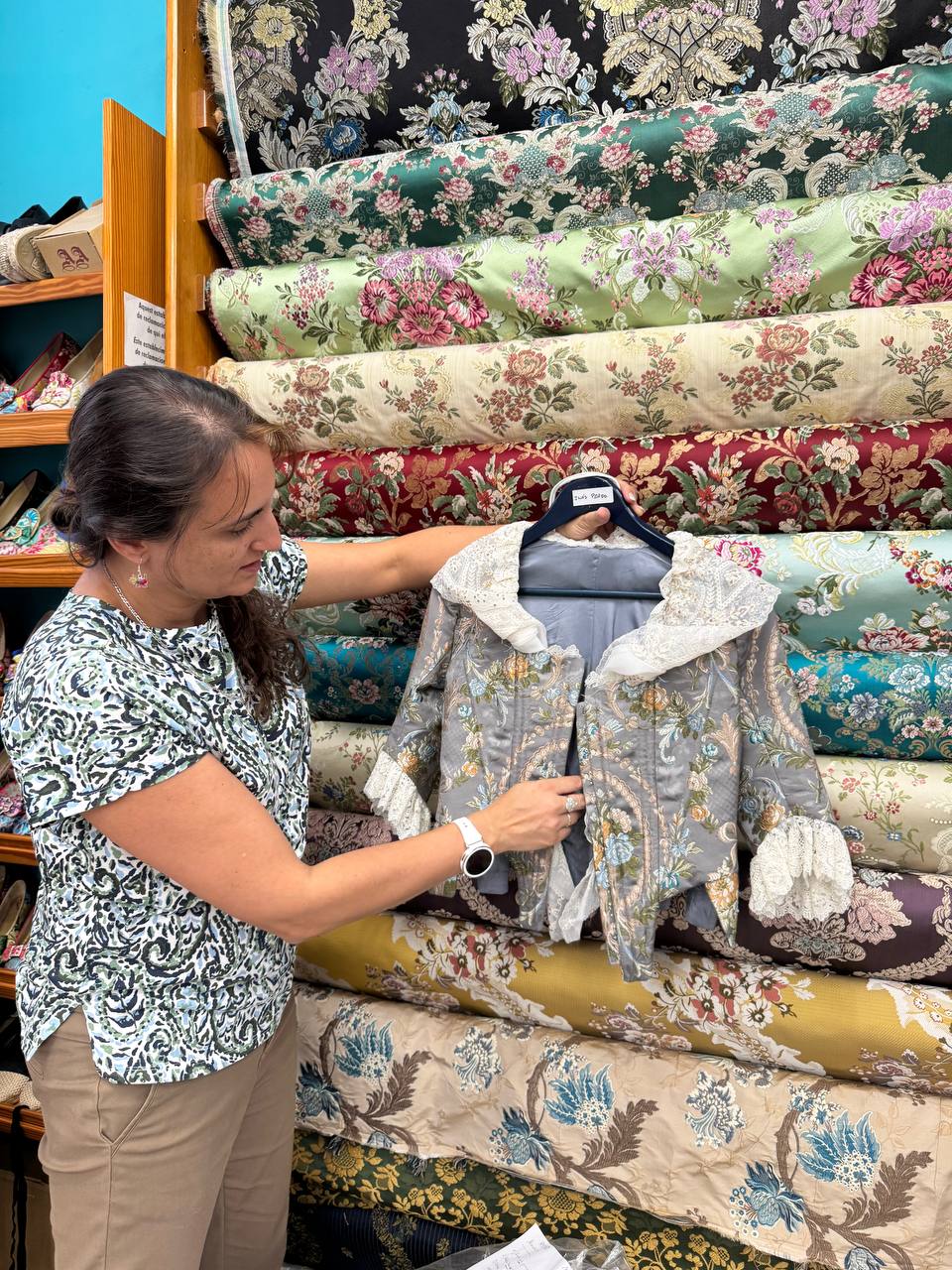
The tradition of making the corset and skirt from different fabrics is also practical: the outfit can be refreshed year after year without buying an entirely new dress. Many of Inés’s clients keep a skirt, the most expensive part, and update the look with a new corset, ribbons, lace or accessories.
To complete a fitting, clients need to visit the atelier at least four times. The outfit is multilayered, and each stage requires careful adjustment and approval of every detail.
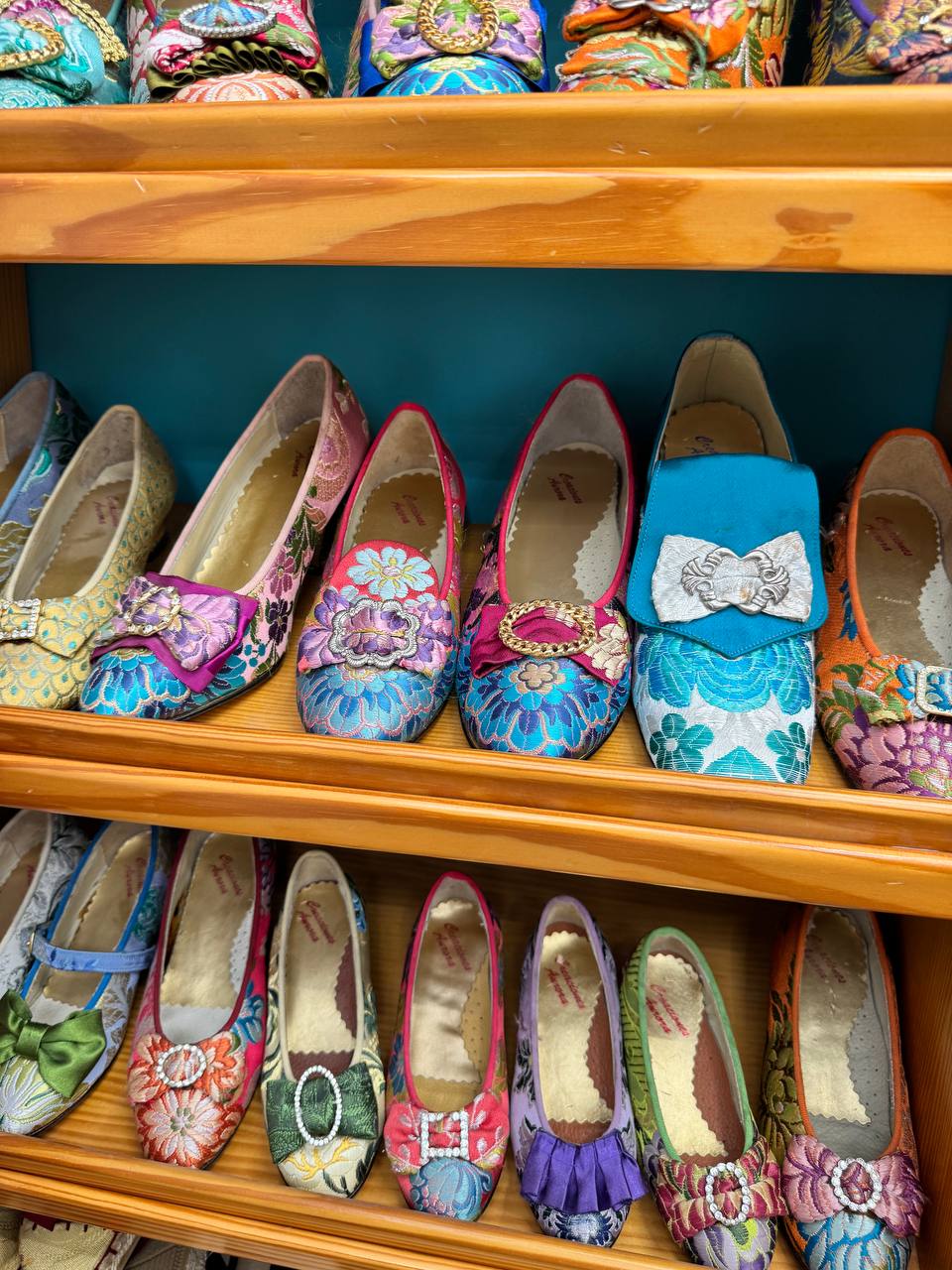
The final fitting is done in the shoes to ensure the skirt length is perfect. Footwear is also custom-made. Shoemakers typically use fabric chosen at the atelier to match the dress. A pair of shoes can cost between €65 and €160.
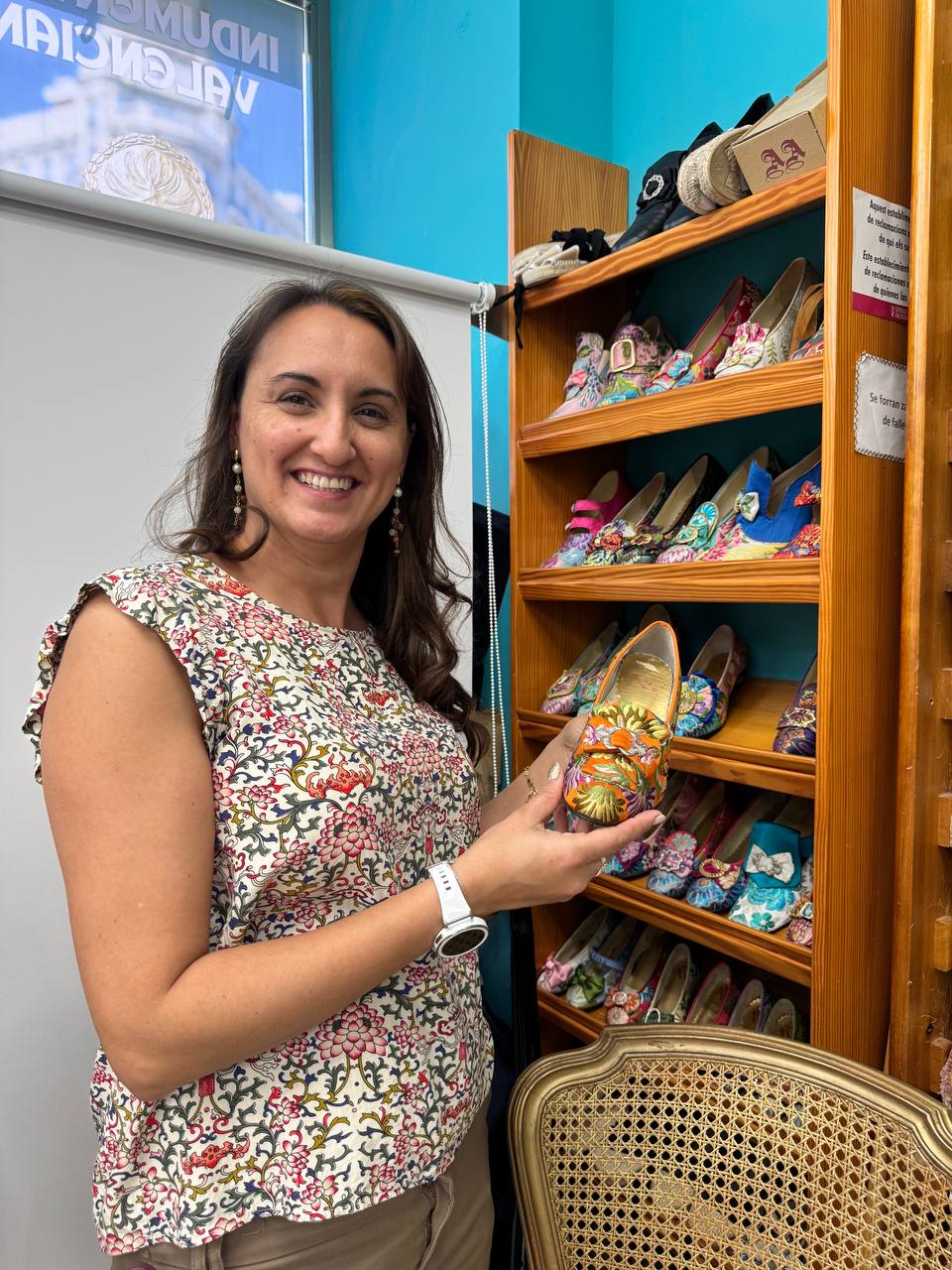
The dresses are made in strict accordance with historical canons. However, there are modern additions: at clients’ request, Inés often sews discreet hidden pockets into the dresses for mobile phones.
«Traditional outfits don’t include handbags, and a fallera can spend several hours at an event. Staying disconnected for that long is difficult», — says Ines.
Inés no longer wears these dresses. Full participation in the festival and religious processions demands both time and money. All her resources now go into making outfits for others — and as she puts it, such luxury is beyond her reach as a dressmaker. It’s hardly surprising: some of the most expensive fabrics in her atelier are displayed under glass, like museum pieces.
Related Articles
Valencia's City of Arts and Sciences Unveils Its Summer Program
Highlights include an interactive dance exhibition making its Spanish debut, a new fractal show at the Hemisfèric, and free solar telescope viewing ahead of August's eclipse
Loading…
Loading…