
Support La Cotorra on Patreon
Access exclusive content, special perks, and closer connection with us.
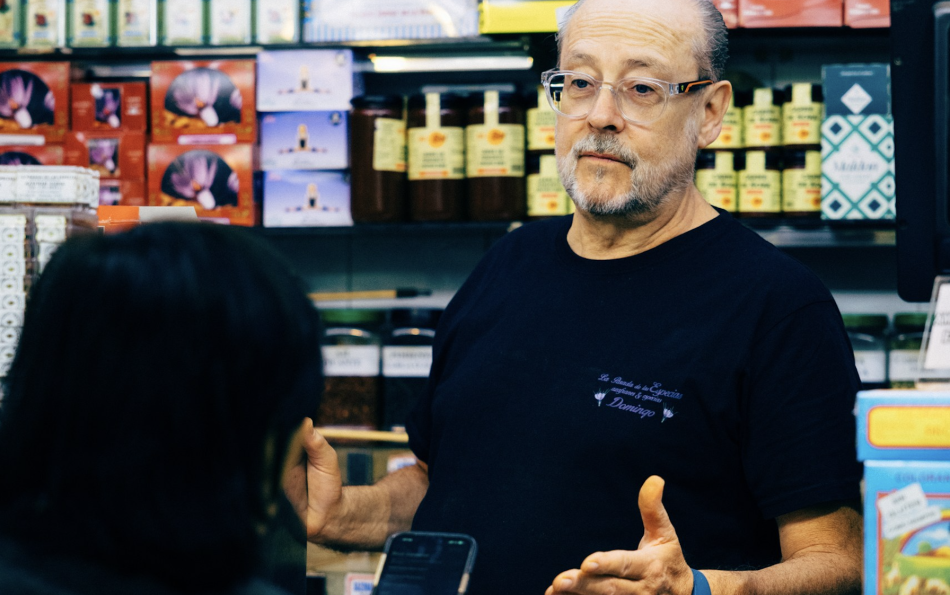
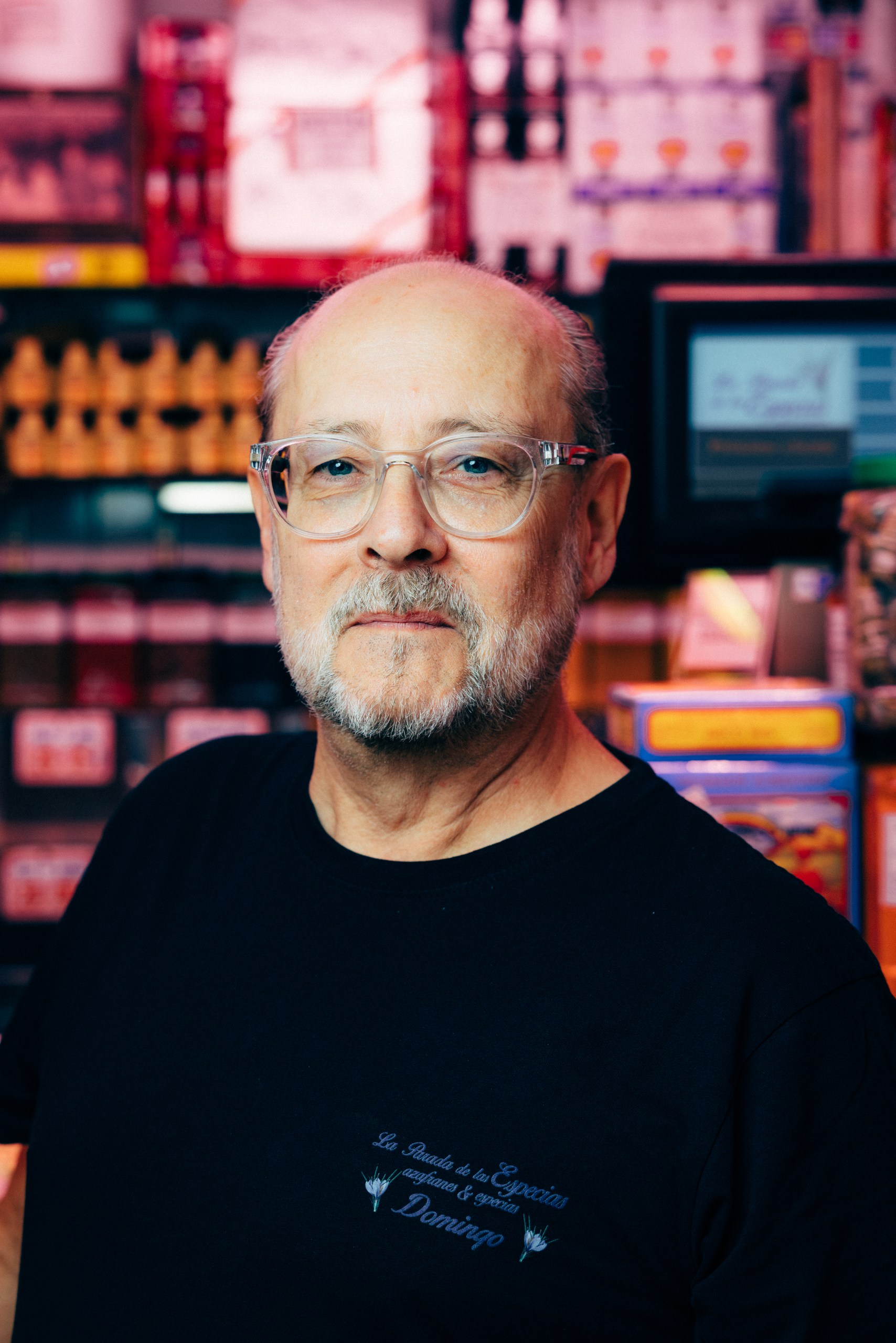
At Valencia’s Central Market one can quite literally smell the old city. Between the rows of ham and cheese stands there is a small stall that has been selling spices for more than a century. Its current owner, Domingo Rodríguez López, continues the trade of his great-grandfather, a saffron merchant from La Mancha. He stands behind the same counter as his predecessors, surrounded by jars of turmeric, coriander, rosemary and saffron. In a conversation with La Cotorra, Domingo explained how to recognise truly high-quality saffron, how customers have changed since his great-grandfather’s time, and why he will not pass his craft on to the next generation.
Domingo asked us to come for the interview early in the morning, before the crowds arrive. From eight o’clock onwards, a queue forms at his counter for the essential spices found in every Spanish kitchen.
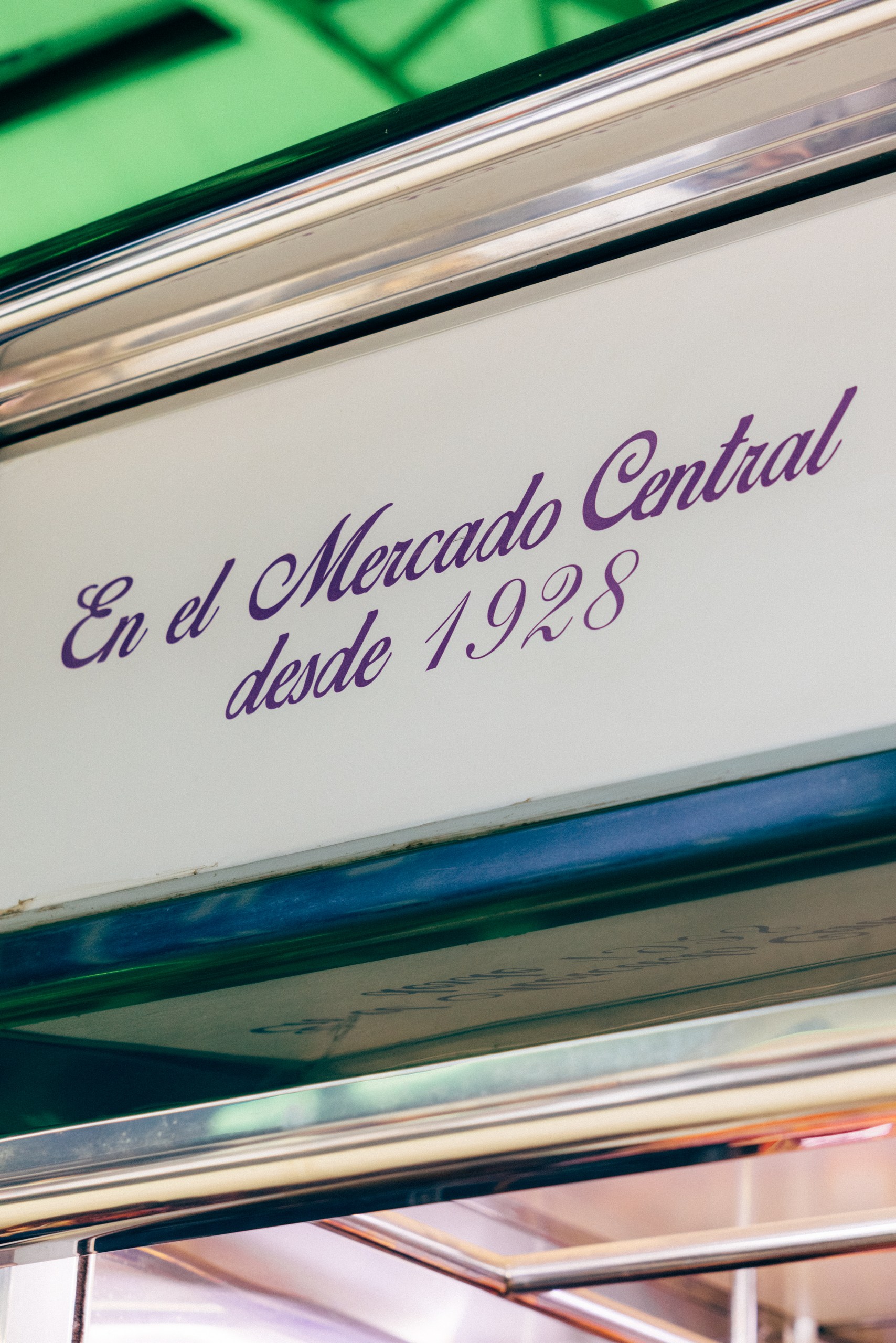
Even before the famous Central Market building opened in 1928, Domingo’s great-grandfather sold spices on the steps of the Silk Exchange nearby. “He came to Valencia from the province of Albacete to sell his saffron, and over time the stall became what you see now. My great-grandfather grew saffron in La Mancha and brought it here; those who sold saffron usually sold other spices as well. This route, you could say, was classic — from the fields of La Mancha to the markets of Valencia,” Domingo explains.
As the owner recounts, in the late nineteenth century intermediaries (corredores, literally “runners”) travelled to the saffron fields. They bought the harvest from farmers and often tried to deceive them by lowering the market price. Because of this, producers sought a direct route to the market; those who could travelled to larger cities such as Valencia.
The family business later passed to Domingo’s grandmother, who taught everything to her grandson.
“I grew up in this stall. After school I would run here to help my grandmother sell. It became a habit. I could not understand how some people retired: for my family this was not simply a job, it was a way of life. My mother sometimes came to help, but most of the work fell on me. I never thought I would continue the business; I dreamed of living not in the city but in the countryside. But life turned out differently: my sister, who was meant to take over, died, and I had to stay,” Domingo says.
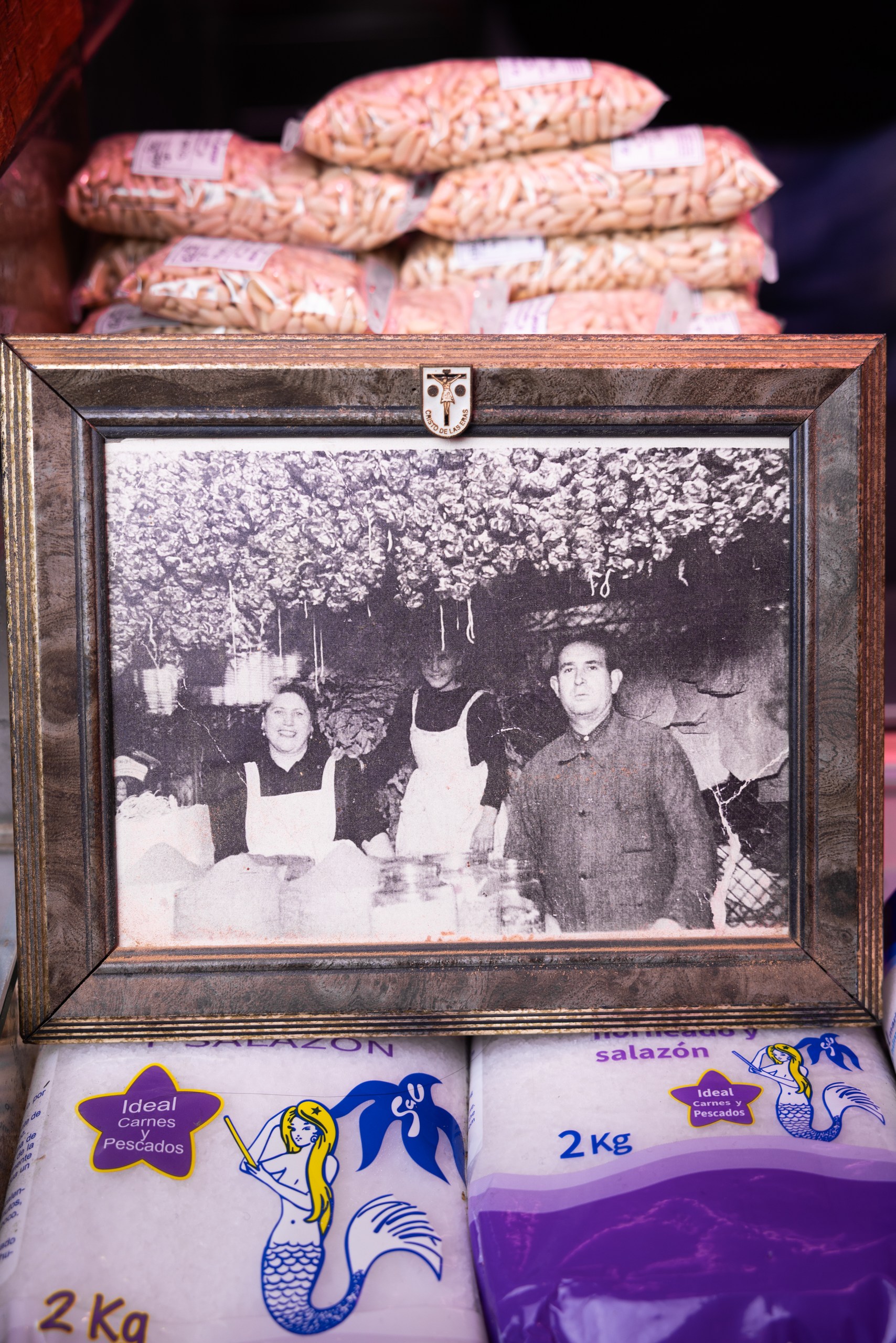
A black-and-white photograph hangs above the counter: it shows a little girl, Domingo’s mother, standing in the very spot where fifty years later her son would sell spices.
“It is a curious story,” Domingo says. “The photograph was taken by an American man walking through the market around seventy years ago. When my mother saw the photographer, she tried to stand in the most visible place. She climbed onto a sack lying on the floor to be taller. But no one noticed that the shadow of a paprika garland hanging from the awning covered half her face. The American later sent us the photograph by post, and it became a family keepsake.”
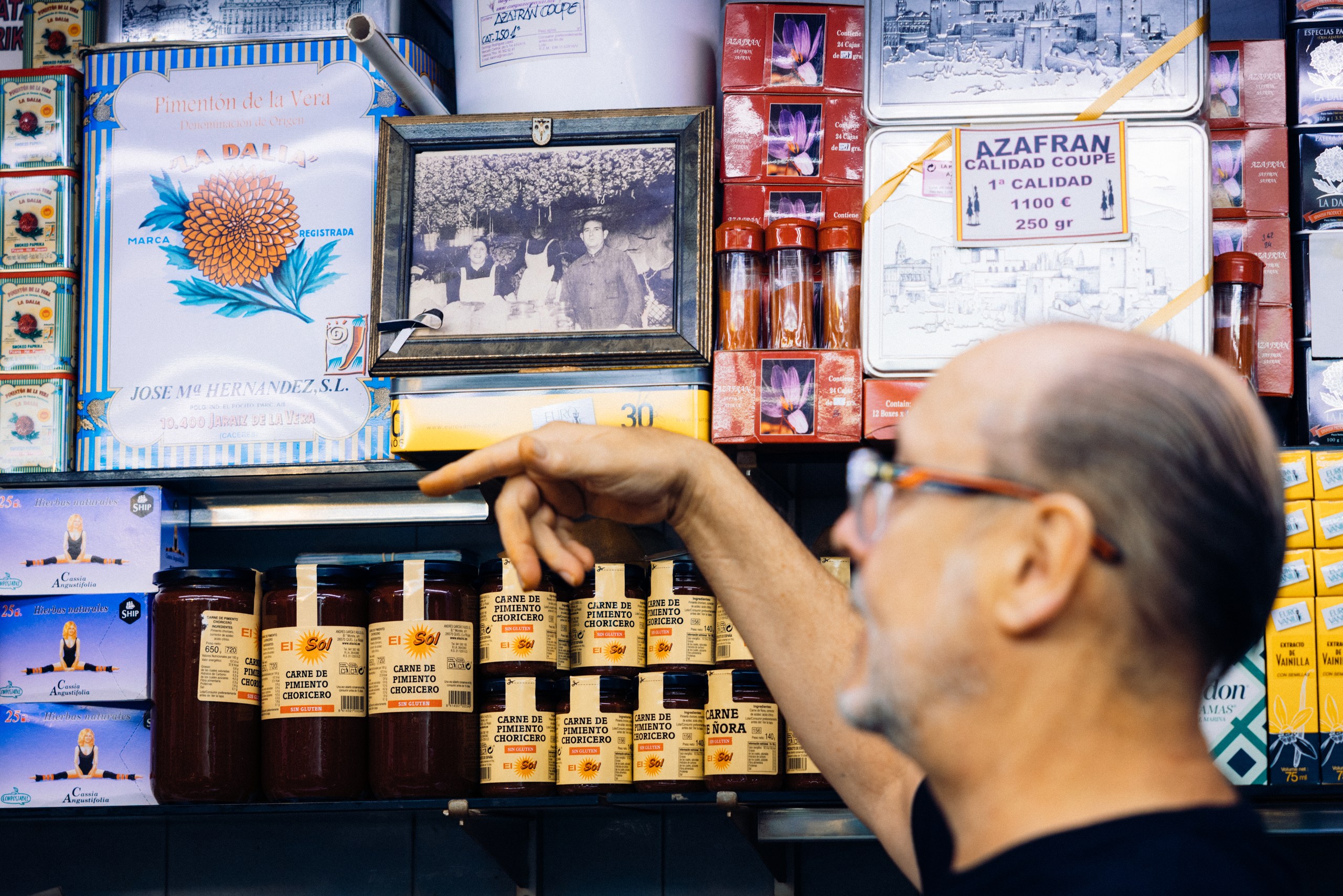
According to Domingo, the Central Market has changed significantly in recent years. It has become far more tourist-oriented, and the number of foreign customers is rising. Local residents now find it harder to reach the market — parking in the historic centre is extremely difficult. Numerous shops and supermarkets across the city have also deprived the market of its former status as the main trading hub. For this reason, his stall now features small souvenir-style boxes of Spanish saffron that tourists can easily take home as gifts.
Around 150 spices can be found at the counter, but the jars of saffron occupy the central place. Two glass containers display, for comparison, first- and second-grade saffron.
“I did this to show customers the difference,” Domingo says, pouring a small amount of each onto his palm. “The purest saffron is a deep purple colour, without pale, golden threads. Second-grade saffron is mixed: there are many yellow particles. These come from the lower part of the plant, which has no real value. But it adds weight and volume, and therefore appears in cheaper categories.”
According to Domingo, supermarkets often sell saffron of the lowest quality at unjustifiably high prices. Spain once used a five-level classification system: Coupé, Selecto, Río, Estándar and Sierra. These terms were later replaced by clearer international standards such as ISO 1 and ISO 2, to simplify understanding for both consumers and traders. This change standardised the system internationally. Today, saffron in Spain is graded according to ISO 3632: ISO 1 is the highest quality, with the greatest concentration of active compounds; ISO 2 is high quality; and ISO 3 is standard quality suitable for everyday use
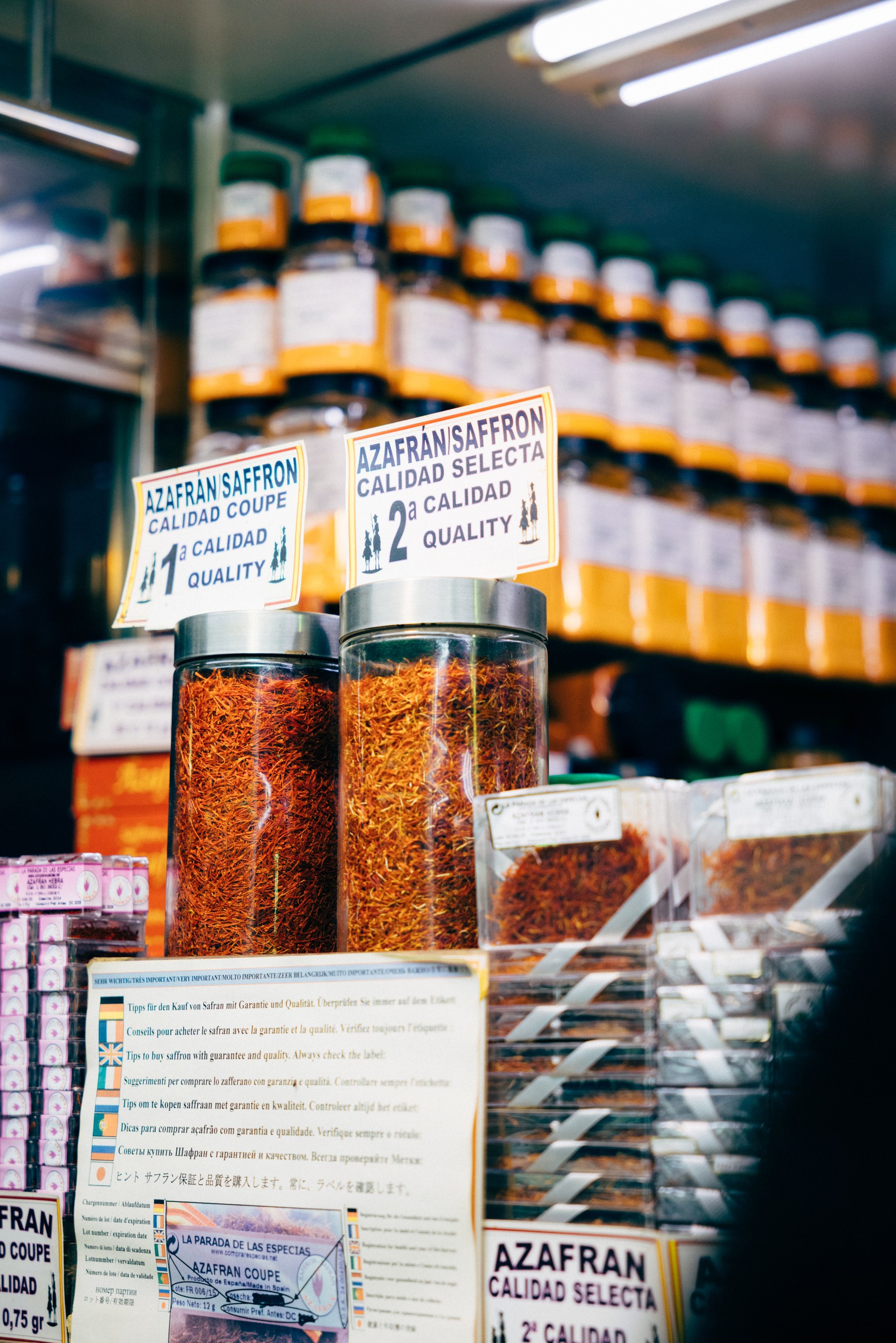
Domingo advises: “Always look at the packaging. It must be sealed and marked with the category of saffron. Open packaging can be mixed with lower-grade saffron.”
Compared with other spices, saffron is expensive: harvesting and processing are done entirely by hand, and each purple thread is the stigma of a single flower. In Spain it is called “red gold”; it provides aroma, flavour and colour, all essential in Spanish cooking, Domingo explains.
The most expensive box of saffron in his stall costs 1,100 euros. It contains a quarter of a kilogram of the highest-grade spice. Once, Domingo says, the renowned Spanish-American chef and humanitarian José Andrés bought one. Andrés is the founder of World Central Kitchen (WCK), a non-profit organisation that provides food to people in regions affected by natural disasters.
Domingo knows many of his customers personally. “Grandmothers bring their granddaughters to show them how to choose spices. They used to buy from my grandparents. There are restaurants that my grandparents supplied, and people in Valencia know us well. Some still call the stall not ‘The Spice Shop’, as I named it, but ‘Señor Damián’s shop’ — that was my grandfather’s name. By the way, my elder son is called Damián, and it is also my second name,” he says.
For more than thirty years Domingo has worked without holidays. He wakes at five in the morning and does not finish his work when the market closes; at home he checks the accounts and arranges new orders.
I do not encourage my children to continue the family trade. When you work a regular job, in employment, you have a salary and holidays — that is stability. I suppose that in time I will simply sell this stall, although it has supported several generations of my family. But for now, I continue the work of my great-grandfather
Related Articles
Beyond Paella: Discovering All i Pebre, Valencia’s Best-Kept Culinary Secret
Deep in the heart of the Albufera wetlands, the fishing village of El Palmar preserves a traditional, rich garlic and wild eel stew that tourist traps completely miss
Loading…
Loading…