




• News
  • Valencia
  • Life in Spain

Follow us:

Search

From 17 Euros to 15,000: A Valencian Fan Workshop

From 17 Euros to 15,000: A Valencian Fan Workshop

One might assume that, once summer ends, a fan should be put away together with beach pareos, swimsuits, and sun hats. Yet Spanish señoras, señoritas, and even caballeros are so fond of their fans that they carry them all year round. La Cotorra visited Abanicos Carbonell, the oldest fan workshop in Valencia, where traditional Valencian fans have been made for more than 160 years.

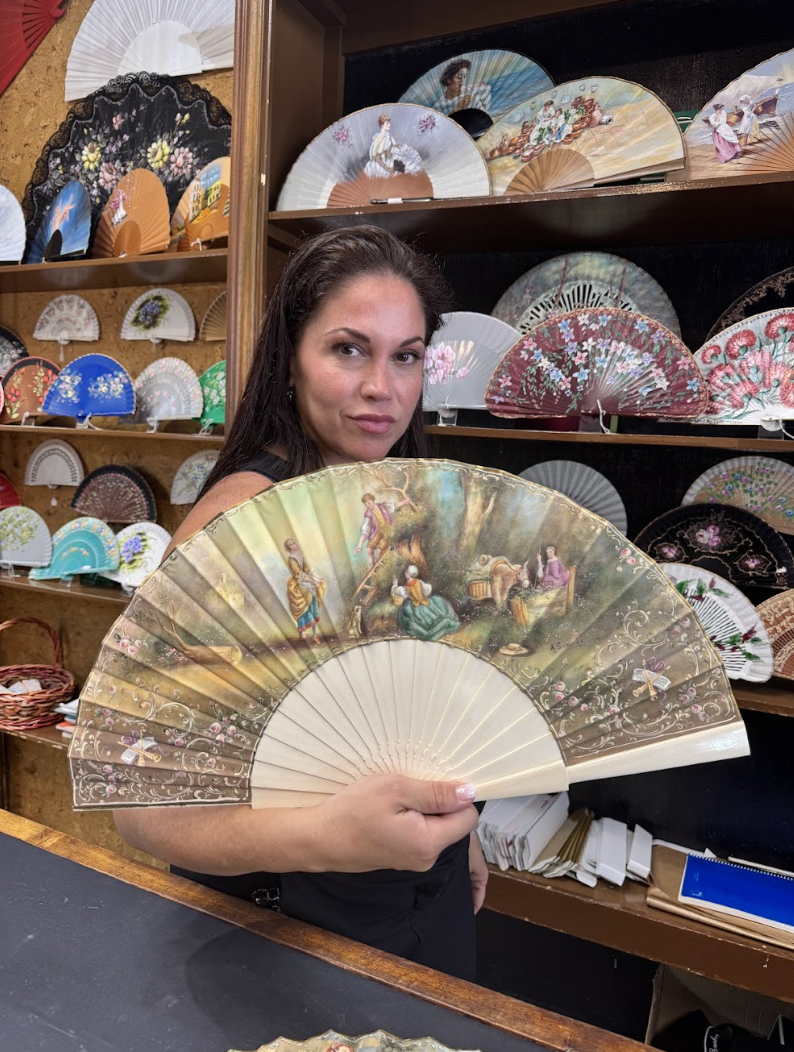
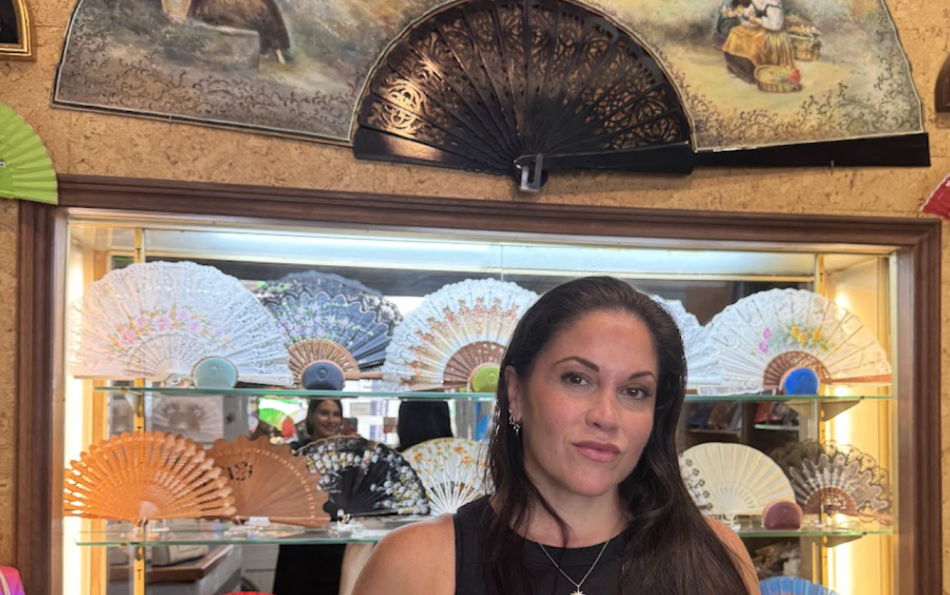
In the very centre of Valencia stands a small but culturally significant workshop owned by the Carbonell family. Paula Carbonell, a representative of the family’s fifth generation, is the guardian of the craft. In 1864, the founder of Abanicos Carbonell, Arturo, purchased an old factory built in 1810 and managed to turn it into a model of successful artisanal production.

Paula Carbonell, La Cotorra

As in the nineteenth century, every fan is made entirely by hand, yet the traditional craft is placed within a modern context. Carbonell fans appear on fashion runways, and their collections have been exhibited in many museums across Spain.

How Much Does an Authentic Valencian Fan Cost?

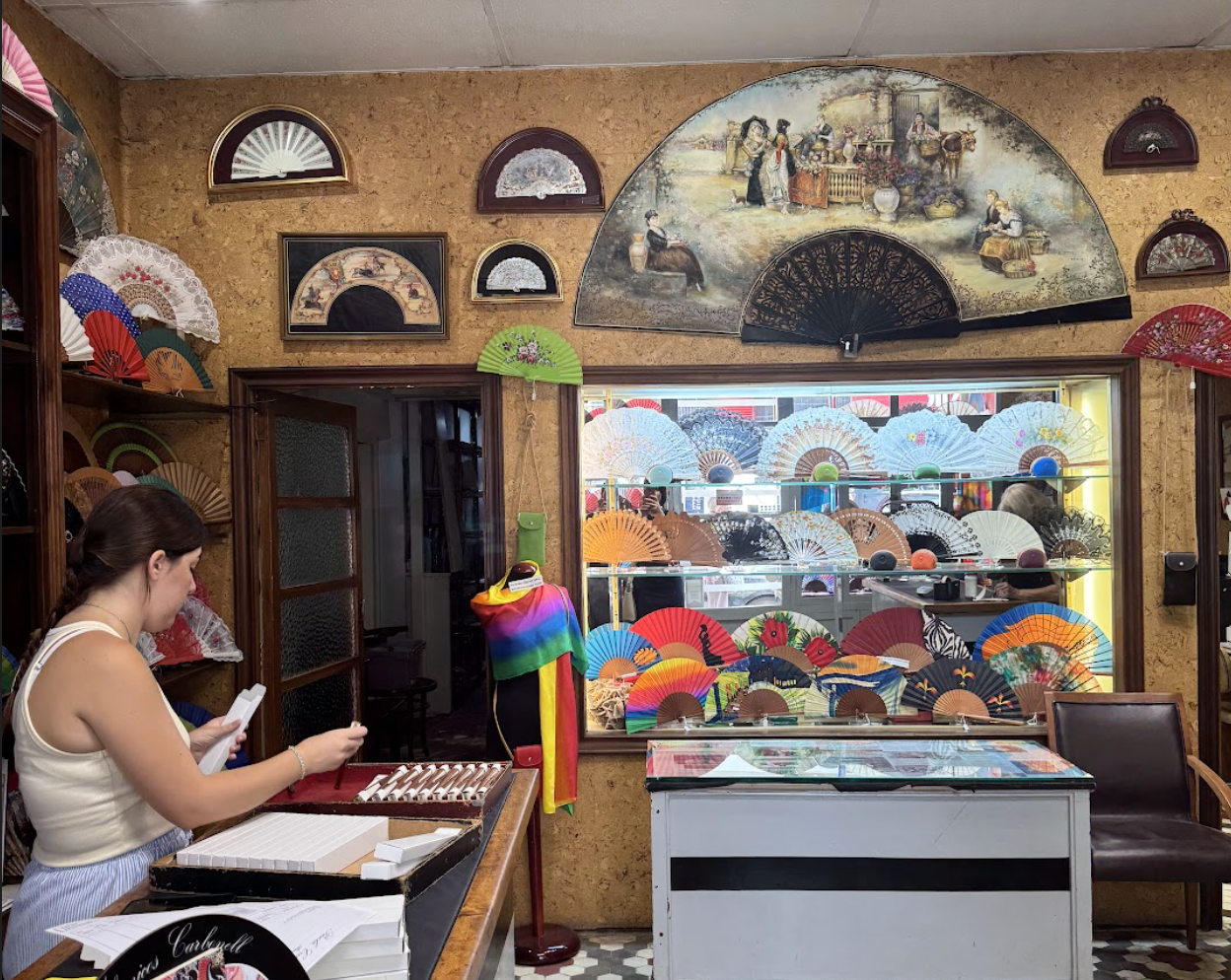
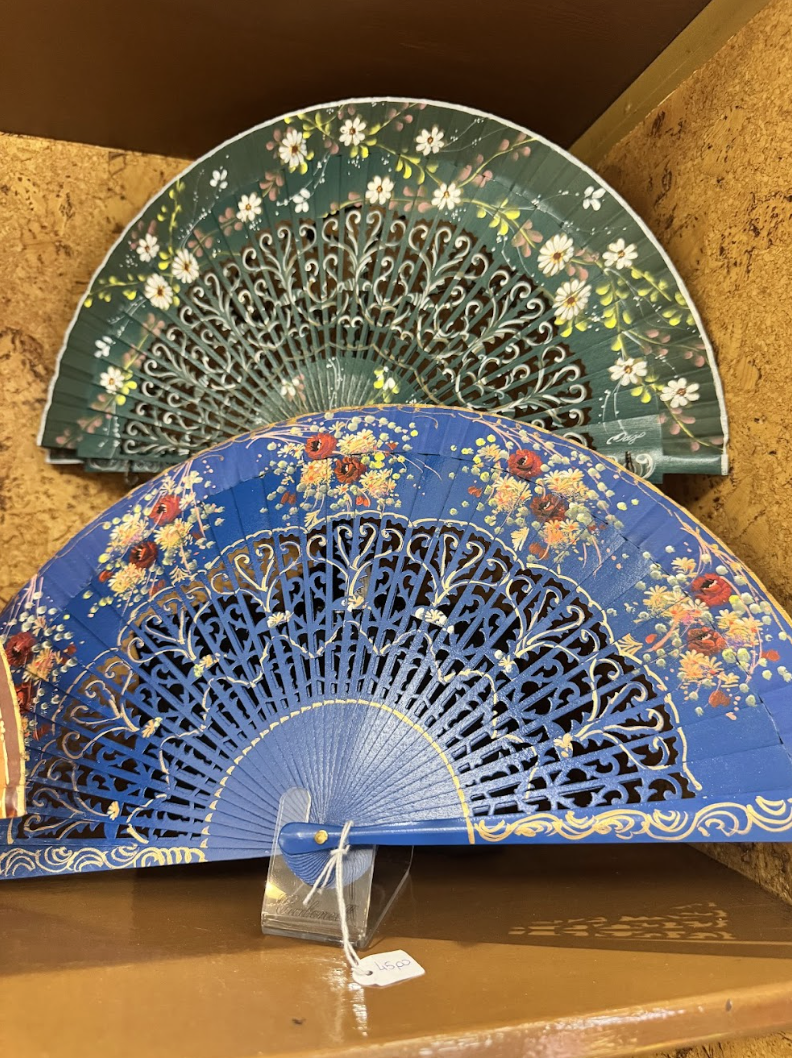
Here you can find fans in every possible format: plain cotton ones (from 17 euros) and painted silk fans (from 70 euros). There are also decorative panels, traditionally used to adorn Valencian homes.

“Here is the giant fan, two metres wide. It took twelve years to complete; my father began the work. The painting was done in collaboration with the well-known Valencian artist Antonio Gavarda. It is a pastoral scene, with every figure rendered in great detail. It is, in fact, a real painting. Naturally, this is the most expensive fan in our shop — it costs 15,000 euros. But I am sure it will eventually find its buyer,” says Paula Carbonell.

La Cotorra

Next to the display of finished pieces are fabrics stretched on a wooden frame. The fine lines gradually form a floral pattern, traditional for Valencian fans.

Fans for Caballeros

“We often receive orders for gifts. We add monograms and secret messages hidden within the folds of the fan so that only the owner knows they are there. And sometimes the owner is a man. Men also use fans. They are sturdy and functional, usually black. They are smoother, without extra embellishment, so that they do not catch on clothing when taken out of a pocket,” Paula explains.

Indeed, Valencian men carry their fans just like their keys or mobile telephones — simply slipped into the pocket of jeans or shorts.

How to Choose the Perfect Fan

“If someone wants a simple, reliable, functional fan for everyday use, I recommend choosing it not with the eyes but with the hands,” says Paula. “Firstly, it must not be too heavy; otherwise the arm will tire quickly and the fan will end up on a shelf. Secondly, the length of the folded fan should not exceed the height of the forearm, so that it is comfortable to use. And thirdly, the fan should ideally match the size of one’s bag — many Spanish women choose theirs this way, so that they can carry it with ease.”

La Cotorra

Who Is a Teladora?

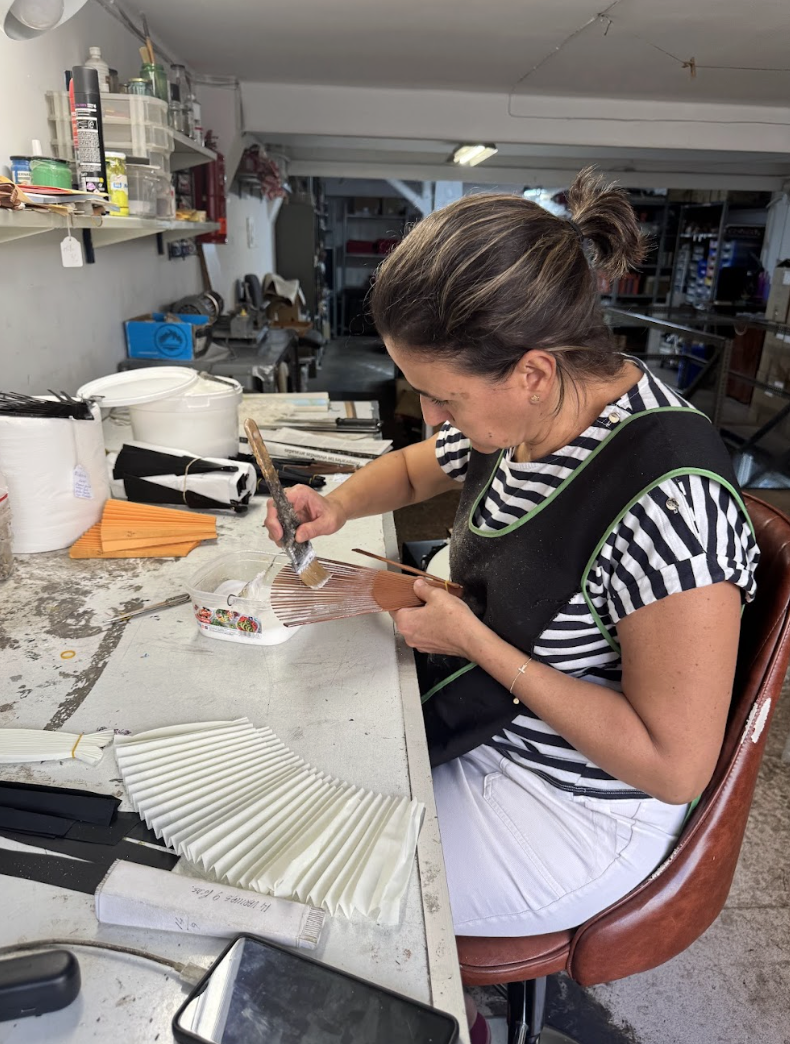
On the workshop’s upper floor works Inma Cases, whose profession is teladora (from the Spanish tela, meaning “fabric”). She is responsible for assembling the pieces.

This is how it happens: the semicircular fabric panel is placed on a corrugated base, and with quick movements the fabric is guided into the folds that create the characteristic pleated “accordion”. The fabric is treated with a special solution that allows it to retain its shape. It is then glued to the wooden ribs, the edges are finished, and a simple fan is ready. More elaborate fans — wooden, painted, or lace — each follow their own complex production process.

La Cotorra

Fans arrived in Spain from Asia, and in the eighteenth and nineteenth centuries the craft flourished, becoming one of the symbols of the country and its culture. Ironically, the famous Spanish fans now have to coexist with mass-produced Chinese imitations sold in tourist shops for two euros.

Visitors may take a small glossary explaining the meanings of the traditional “fan language”. In Valencia, women actively used it centuries ago to hint at their feelings during an era of strict social conventions.

Some of the Most Common Gestures from That Time

  • •    Opening the fan and holding it against the right cheek — “Yes” or “I agree”
  • •    Opening the fan and holding it against the left cheek — “No” or “Refusal”
  • •    Looking constantly at the fan’s decoration — “I like you”
  • •    A closed fan hanging from the right hand — “I am looking for a match”
  • •    A closed fan hanging from the left hand — “I am not looking for a match”
  • •    Face covered with the fan — “We are being watched”
  • •    Fanning oneself slowly — “Nothing can be done”
  • •    Placing the fan against the left ear — “Leave me alone”
  • •    Adjusting one’s hair with a closed fan — “Do not forget me”

Related Articles

Wild Atlantic Arches And Boho Balearic Coves: Spain’s 14 Absolute Best Beaches

Wild Atlantic Arches And Boho Balearic Coves: Spain’s 14 Absolute Best Beaches

Galicia’s dramatic tidal cathedrals and Asturian hidden lagoons to the pristine, wind-swept shores of the Canaries—discover the ultimate coastal havens handpicked by La Cotorra

Your Guide to the Trendiest Bikinis of Summer 2026

Your Guide to the Trendiest Bikinis of Summer 2026

You can never have too many swimsuits — La Cotorra scoured dozens of online stores to find the most stylish bikinis and bandeaus currently in stock at great prices

How to Find Your People: Guide to Valencia's Offline Communities

How to Find Your People: Guide to Valencia's Offline Communities

From padel courts and silent book clubs to naturist beaches and pottery studios — La Cotorra's big guide to finding your people in Valencia

10 Spanish Destinations to Discover This Summer

10 Spanish Destinations to Discover This Summer

From the fishing village of Navia to the beaches of Cádiz and the coves of Begur — La Cotorra's broad-brush guide to Spain's best spots for 2026, based on this year's trends

What to Do in Barcelona This July: Tour de France, Festivals & Beach Cinema

What to Do in Barcelona This July: Tour de France, Festivals & Beach Cinema

Barcelona hosts the Tour de France start for the first time, the 50th anniversary of the Grec festival, major music festivals, and open-air concerts in parks and on the beach — La Cotorra's picks

What to Do in Madrid This July: Festivals, Concerts & Open-Air Cinema

What to Do in Madrid This July: Festivals, Concerts & Open-Air Cinema

From Mad Cool and Río Babel to Bruno Mars, ballet, open-air film screenings, and must-see exhibitions — La Cotorra's guide to the month's biggest events in Madrid

Spain's Wine Battle and the Long, Troubled History of Spanish Wine

Spain's Wine Battle and the Long, Troubled History of Spanish Wine

On the eve of Haro's Batalla del Vino, La Cotorra explores where Spanish wine came from, how to read its labels, and why winemaking is facing its worst crisis in decades

Surfing Spain's Atlantic North: A Guide to the Basque Country, Cantabria, Asturias, and Galicia

Surfing Spain's Atlantic North: A Guide to the Basque Country, Cantabria, Asturias, and Galicia

From the world-famous left-hander at Mundaka to the championship waves of Pantín and the beginner-friendly beaches of Somo — schools, spots, and seasons across northern Spain's surf coast

Can You Cut Off Utilities to "Okupas"? Spain’s Supreme Court Sets Crucial Legal Boundary

Can You Cut Off Utilities to "Okupas"? Spain’s Supreme Court Sets Crucial Legal Boundary

While cutting off water and electricity to illegal squatters is ruled legal, the court warns that using the same tactic against a divorcing spouse remains a punishable crime

Valencia Unveils Free Nature Guide Featuring 69 Stunning Water Routes

Valencia Unveils Free Nature Guide Featuring 69 Stunning Water Routes

From free open-air screens at major town squares to indoor mega-venues like the Roig Arena and Movistar Arena, here is the complete guide to catching Sunday's historic final live

Beyond Paella: Discovering All i Pebre, Valencia’s Best-Kept Culinary Secret

Deep in the heart of the Albufera wetlands, the fishing village of El Palmar preserves a traditional, rich garlic and wild eel stew that tourist traps completely miss

Historic Milestone: The Gibraltar Border Fence is Down as Schengen Integration Begins

A new era dawns for the Campo de Gibraltar region as a temporary EU-UK treaty takes effect, ending 117 years of physical separation and removing daily controls for 15,000 cross-border workers

The World Cup 2026 Final: Best Big Screens and Fan Zones in Valencia, Barcelona and Madrid

From massive public screenings at Roig Arena and beachfront hubs to open-air gardens and local cinemas—here is your ultimate guide to the best spots to watch the historic match in the Valencian Community

View All

Support La Cotorra on Patreon

Access exclusive content, special perks, and closer connection with us.
Become a Patron