

Support La Cotorra on Patreon
Access exclusive content, special perks, and closer connection with us.
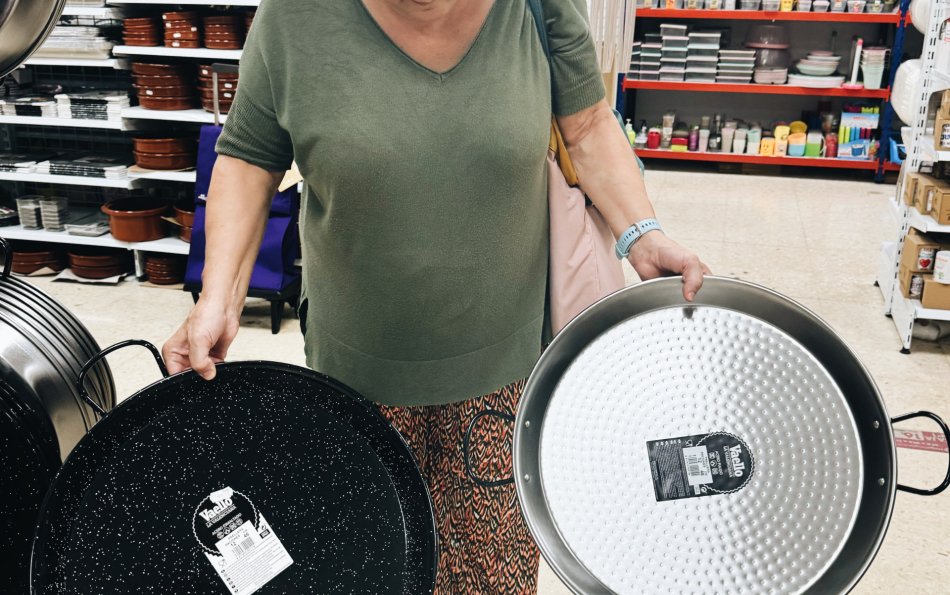
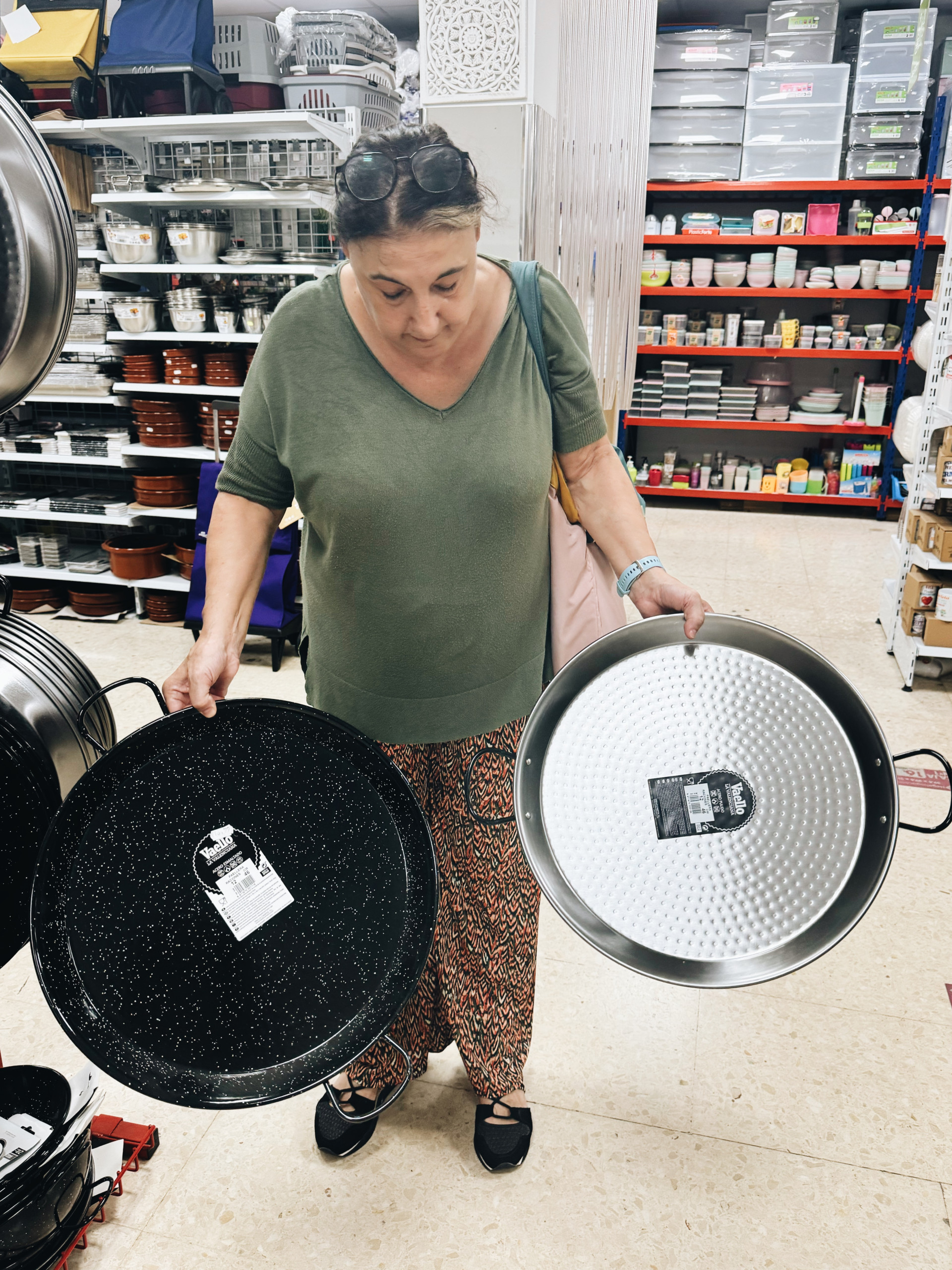
Paella pans in Valencia are sold at markets, in household-goods shops and even at petrol stations. Contrary to what one might assume, given the Valencians’ love of paella, these pans are not passed down from grandmother to grandchildren. A paellera is a consumable item, and every resident can buy one without having to walk more than a block from home. The pans wear out quickly and need to be replaced. They come in steel, enamel or Teflon (although Valencians generally refuse to consider the Teflon option at all), and in the most astonishing sizes — from gigantic, taller than a person, to tiny ones that sit in the palm of your hand. The main question is not which type is “the best”, but which one is ideal for a particular family or for a specific celebration.
In every Valencian household there are at least two paella pans: a “small” one (which is, in fact, very relative) for home use, and a large one for cooking outdoors.
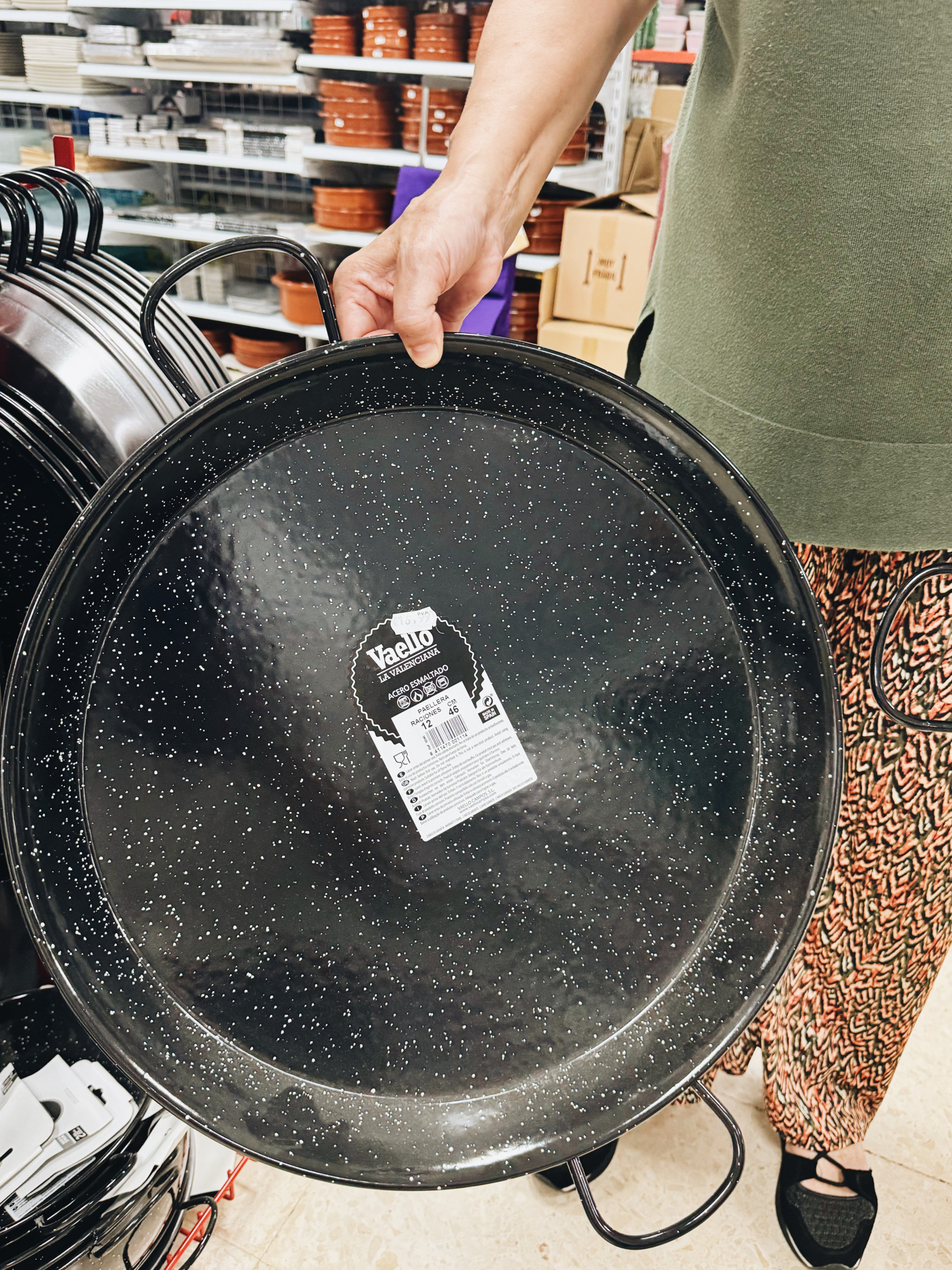
A medium-sized family paellera costs around EUR 11–15. The size is not measured in centimetres but in portions. “It is stated right on the label — ‘for twelve’, for example,” explains Maite, a native Valencian. She buys her paelleras in the nearest homeware shop.
Her family consists of five people: Maite, her husband and their three sons. That is why her pan is not for five portions, but for twelve — with a small margin. This is exactly how Spaniards calculate the size of their paella pans: they multiply the actual number of diners by at least two.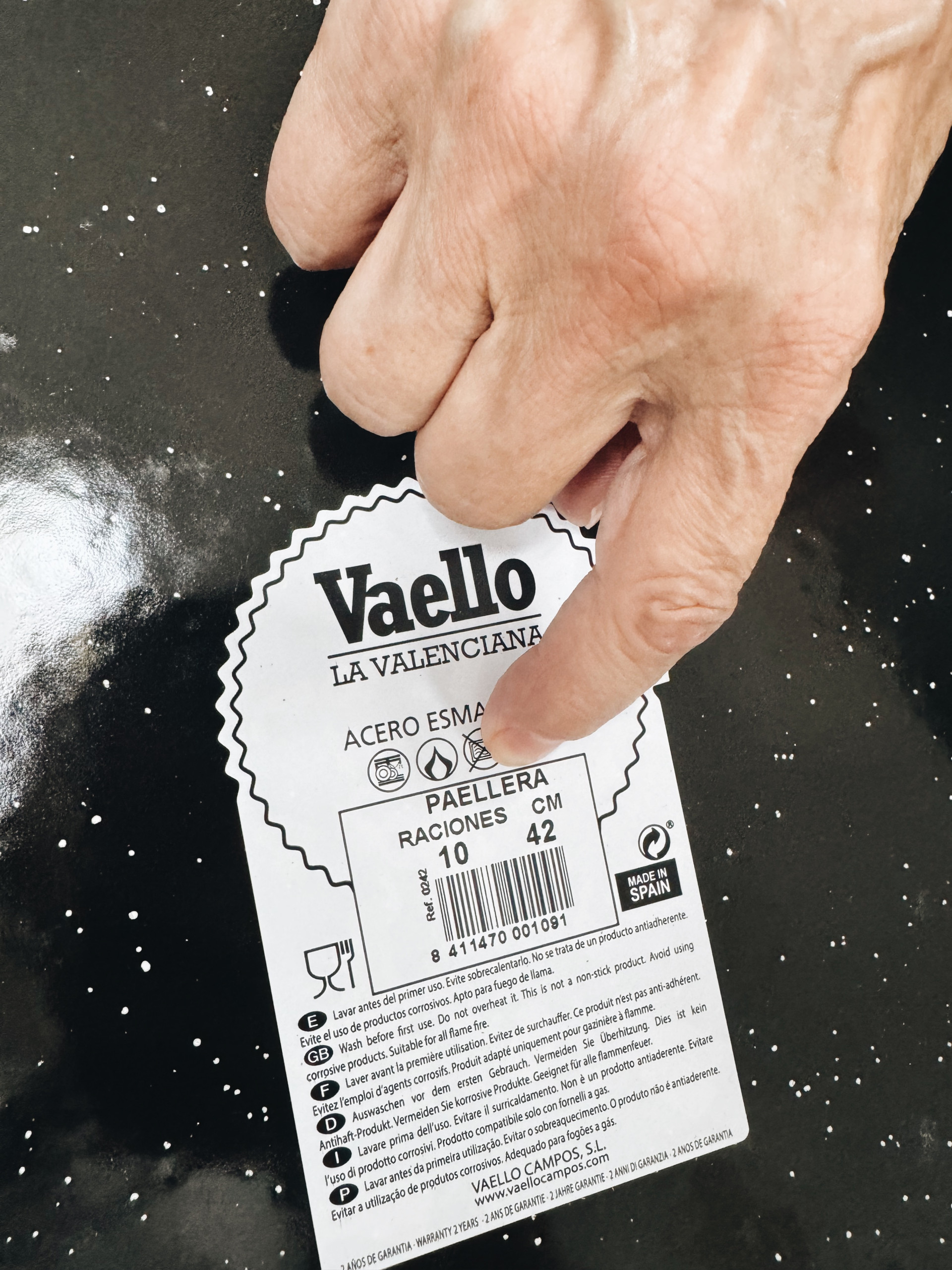
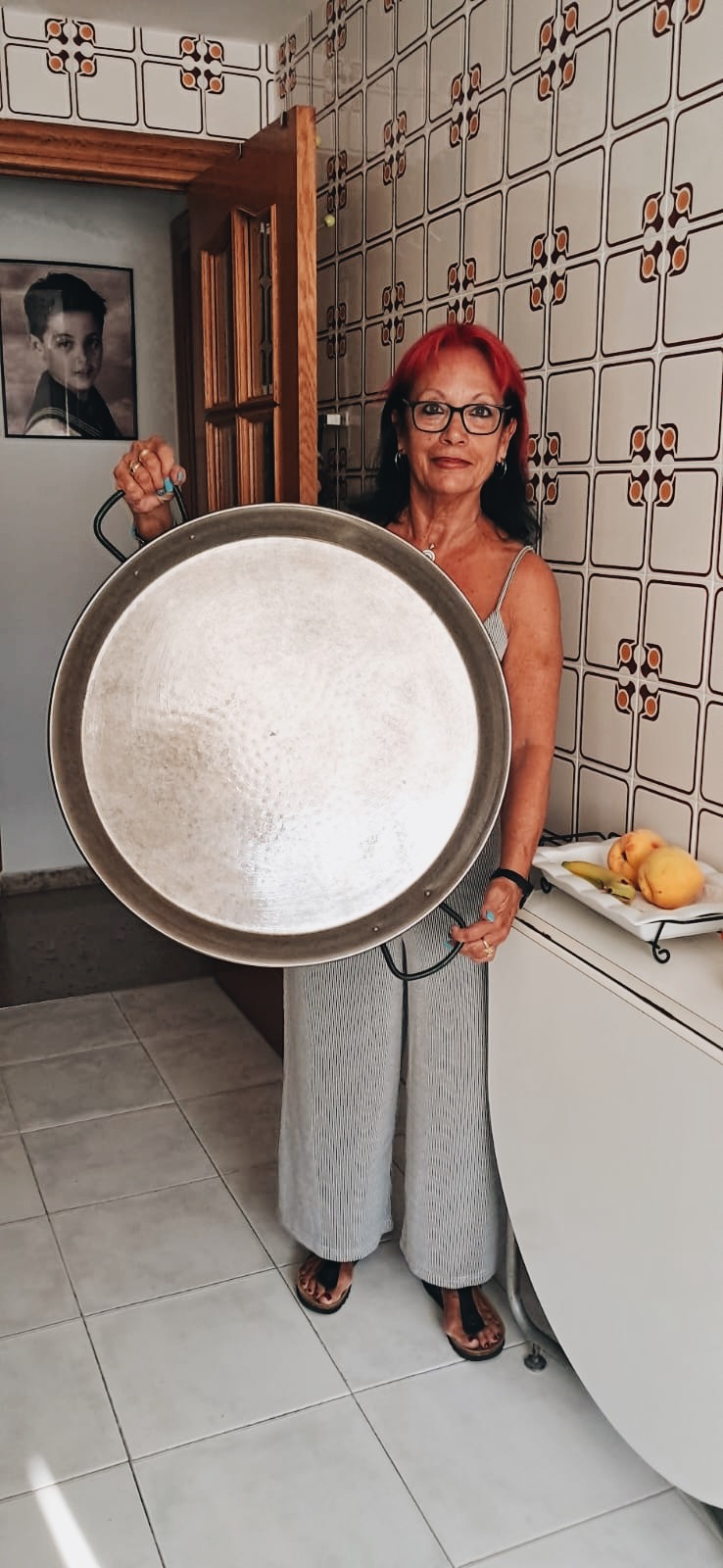
An authentic paellera is made of polished steel. It produces especially flavourful paella with the correct golden crust on the bottom — the socarrat. However, washing and maintaining such a pan requires a certain degree of self-sacrifice. Not only must the burnt rice be scraped off, but the inner surface then has to be rubbed with oil; otherwise, rust will appear very quickly. These pans are stored wrapped in newspaper, which helps preserve the oily layer and keeps out dust.
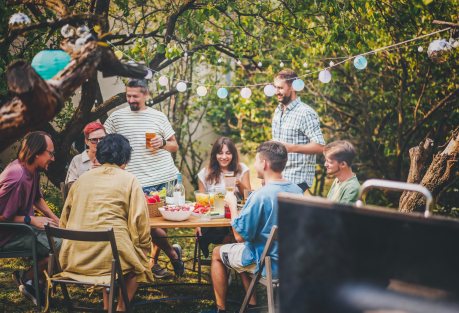
Maite’s neighbour, Concepción, prefers only true, steel paella pans. For her it is a hobby in its own right: she and her husband belong to a neighbourhood social club and often cook paella for dozens of friends and neighbours.
Maite, despite her love for the national dish, opts for less authentic but far more convenient enamelled pans — the black ones with white speckles. The non-stick surface is easy to clean and, unlike the classic steel pans, they can be washed in the dishwasher. They also do not need to be oiled. This type of pan lasts much longer than the steel version, which scratches and rusts despite all the owner’s efforts.
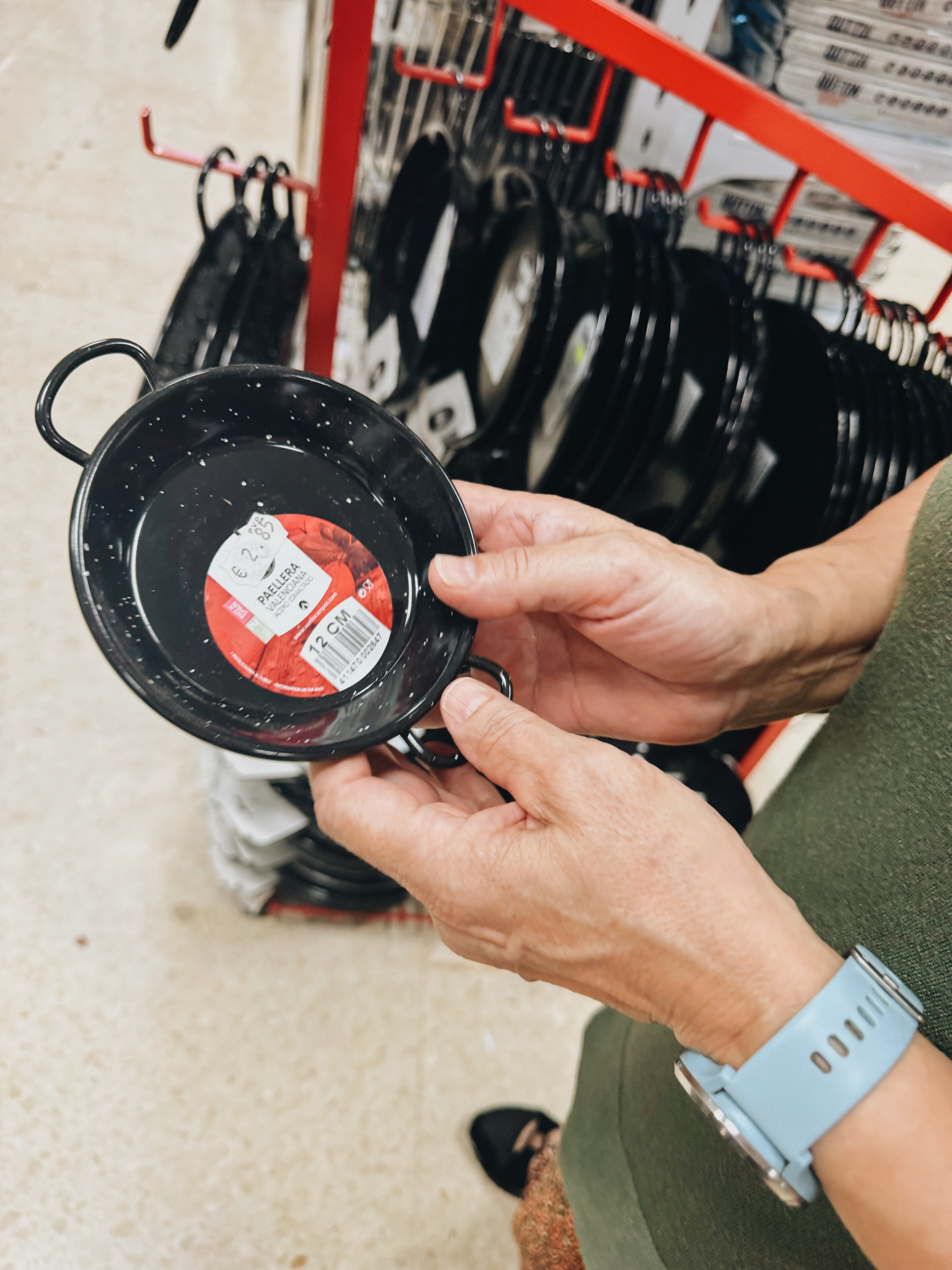
Maite also has small, almost doll-sized paelleras. In these, one can fry prawns, eggs or any individual tapas. Such miniature pans look beautiful on the table. Although, of course, paella itself is eaten directly from the large pan, each person with their own fork. Only a guest will be asked whether they would like their paella served on a separate plate.
Traditional Valencian paella is made with chicken, rabbit and vegetables. “The ratio of rice to water (or stock) is suggested by the pan itself,” explains Maite. First the meat and vegetables are fried, and then comes the main trick: water or stock should be added up to the level of the rivets that hold the handles — those small metal studs visible on the inside of the pan. The rice is poured in a ridge across the diameter of the pan, from one handle to the other, so that the top of the ridge is just visible above the water. The pan is then moved so that the rice spreads evenly across the surface, or gently stirred with a spatula.
Interestingly, there is no such thing as a lid for a paellera. When the liquid evaporates, the paella is covered with a kitchen towel that has been soaked in water.
During the Civil War, when meat was in severe shortage, the people of Valencia even added the field mice that live in the rice paddies. This desperate measure saved many from hunger. Today, authentic paelleras in restaurants around the city carry all manner of exotic variations: lobster paella, paella with an egg crust, or even sweet versions with black Thai rice and coconut milk. These, of course, are mainly for tourists. Spaniards themselves are fairly conservative, and despite the abundance of products available, they prefer traditional recipes (which are also the most economical).
Paella with chicken and rabbit is usually cooked on Sundays — and it is at its best the next day, once the rice has absorbed the flavours. On Mondays many Valencians take leftover paella to work in a container: a delicious lunch and a small reminder of the warmth of home, gathered around that very paellera.
Related Articles
Beyond Paella: Discovering All i Pebre, Valencia’s Best-Kept Culinary Secret
Deep in the heart of the Albufera wetlands, the fishing village of El Palmar preserves a traditional, rich garlic and wild eel stew that tourist traps completely miss
Loading…
Loading…