



Support La Cotorra on Patreon
Access exclusive content, special perks, and closer connection with us.
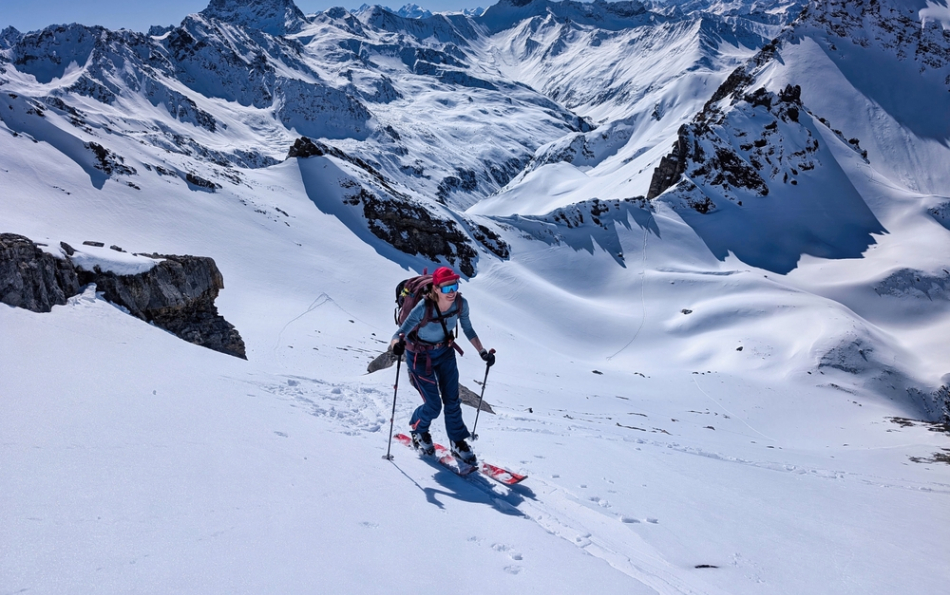
The Winter Olympic Games in Milan and Cortina d’Ampezzo came to an end. Athletes from Spain brought home three medals. All of them were won in ski mountaineering — a sport that appeared for the first time in the Olympic Games. La Cotorra tells you more about this sport, how the Spaniards achieved such success in it, and where you can try it yourself.
Ski mountaineering combines elements of skiing and mountaineering. The roots of the discipline, practised in the Alps, date back to the late 19th century, but the first ski-mountaineering world championship was not held until 2002 in France. The world championships are now staged every two years, alternating with continental competitions. A World Cup is also held every year. Skimo — the shorthand for ski mountaineering — was added to the Olympic programme in 2021.
The International Ski Mountaineering Federation (ISMF) was founded in 2007 and represents 55 national federations across five continents. France, Switzerland, Italy and Spain are the sport’s main trendsetters.
At the 2026 Games, medals were contested in three events: the men’s and women’s sprint, and the mixed relay. Three other, non-Olympic disciplines in ski mountaineering are the vertical race, the individual race and the team race.
A sprint lasts a couple of minutes and includes an uphill section: first on skis, then on foot with the skis on your back (the kit is attached to a rucksack), and then back onto skis again. To stop themselves sliding backwards during the climb, athletes use special anti-slip skins — known as skins. At the top, they remove the skins and ski down to the finish.
At the Olympics, 36 athletes competed in the individual events — 18 men and 18 women.
The competitions were held at the ski centre in Bormio. The sprint course, which started at an altitude of 1,200 metres, measured 725 metres with 65 metres of total ascent. In the mixed relay, where 12 teams took part (one man and one woman per team), the figures were 1,410 metres and 137 metres respectively.
The first-ever Olympic champions in the history of this sport were Spaniard Oriol Cardona and Swiss athlete Marianne Fatton. Oriol beat Russia’s Nikita Filippov by 1.52 seconds, and France’s Thibault Anselmet by 2.31 seconds. Another Spaniard, Ot Ferrer, also made the final and finished fifth.
In the women’s race, Fatton beat France’s Émilie Harrop by 2.38 seconds. Third place went to Spaniard Ana Alonso, who finished 10.45 seconds behind Fatton.
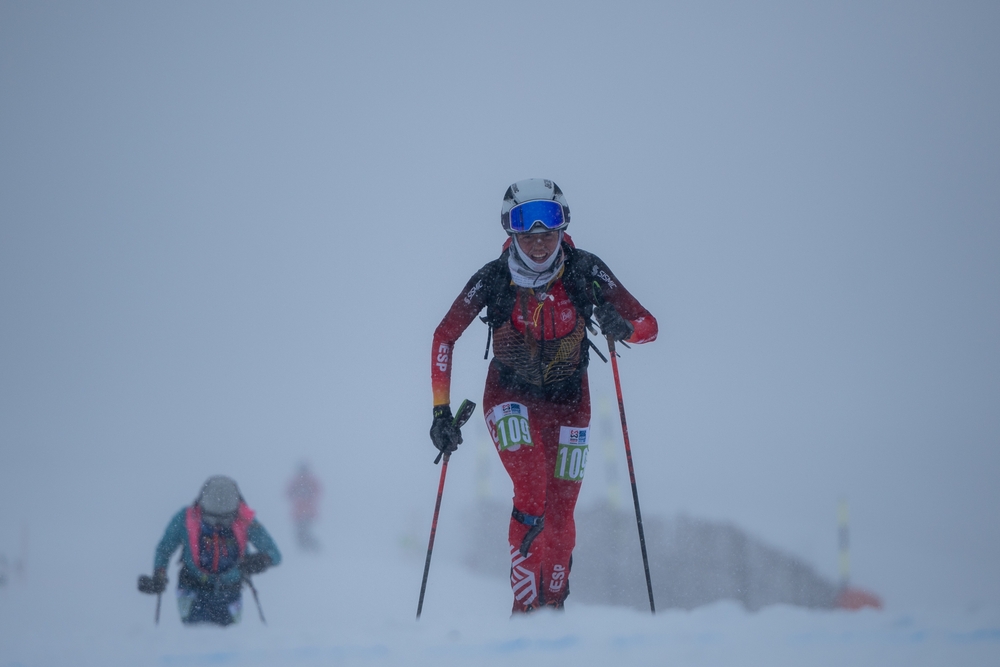
The team event, made up of two women’s and two men’s legs, was won by France. They covered the course in just under 27 minutes. Oriol and Ana finished 26.5 seconds behind the winners and took bronze.
Before the 2026 Games, Spain had only one Olympic gold in the history of the Winter Games — in 1972, when alpine skier Francisco Fernández Ochoa won the slalom.
Cardona and Alonso are both 31. Cardona was born in Banyoles (a small town near Girona), while Alonso is from Granada.
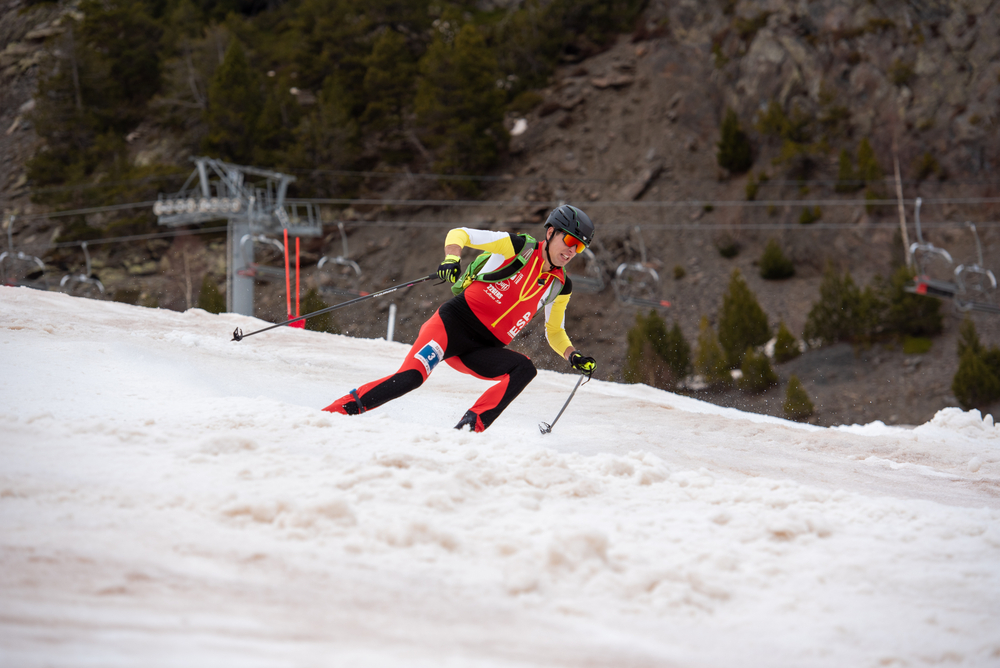
Oriol got into hiking early and picked up a competitive streak thanks to his father. Cardona is a two-time world champion in individual events. He won the sprint in 2023 and 2025, and also finished second in 2021 and third in 2017.
" I’d dreamed about being here so many times, dreamed about winning an [Olympic] race so many times — and now the dream has come true. Winning the world championship last year was incredible, but an Olympic medal multiplies the emotions many times over". – said Cardona after winning the gold medal
Ana Alonso’s introduction to ski mountaineering came about because of her friends and father. Gerardo Alonso — Ana’s father, known as “the Sierra Nevada Yeti” — died in a rockfall in 2010.
Alonso won sprint silver at the 2024 European Championships, but had never finished in the top three in this discipline at the World Championships. In the mixed relay, however, Cardona and Alonso finished second at the 2025 World Championships and won the European Championships in 2024.
Alonso’s achievements at the most important event are also a story of pushing through pain. On 24 September last year, the athlete was hit by a car while training on her bike. She tore the anterior and medial cruciate ligaments in her left knee and broke her ankle.
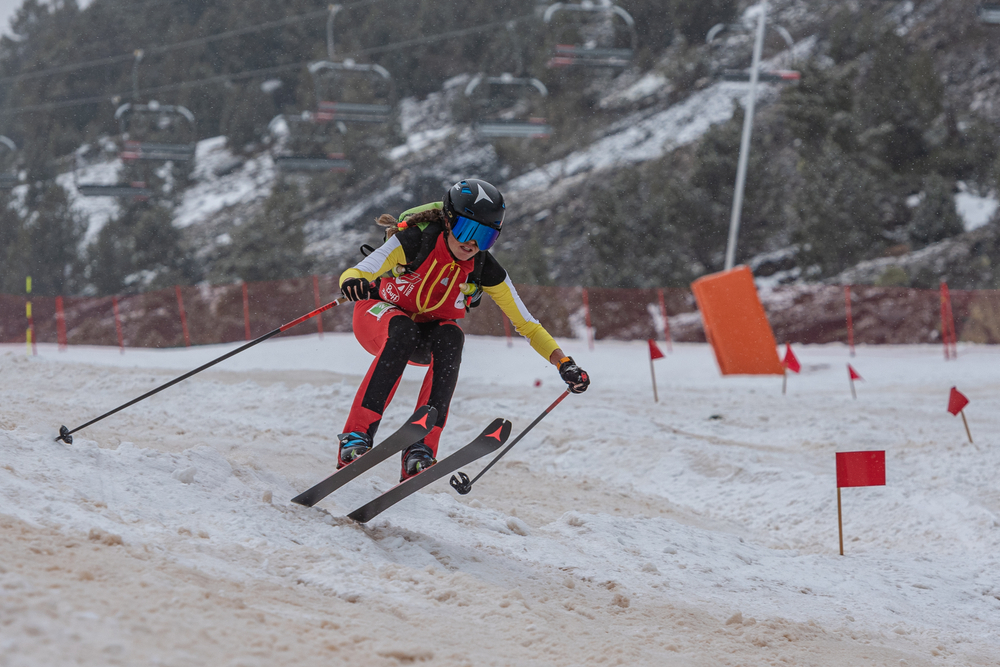
The Spaniard made a risky decision: to refuse surgery in favour of painful rehabilitation sessions and muscle strengthening. By mid-January, Alonso was already back competing.
"I’ve always said I wasn’t going to change my goals — that I would fight for gold in the relay and for a medal in the sprint. People looked at me like I was mad, like someone who wouldn’t make it to the Games." – said Alonso after her medal-winning sprint
Oriol Cardona puts the “charms of skimo” like this: “Skimo can be competitive, tough and aggressive, but at the same time it’s a sport that lets you hike, climb mountains and enjoy the views. That’s the beauty of ski mountaineering.”
Almost every search result will take you to the Boi Taüll ski resort, in the province of Lleida in the Catalan Pyrenees, and to the Sierra Nevada routes where Ana Alonso trains. In Boi Taüll, major ski-mountaineering tournaments have been held regularly in recent years, such as the 2022 European Championships, the 2023 World Championships, and World Cup rounds. For skimo enthusiasts, the centre offers four routes of varying difficulty.
Other options include mountain routes in the province of Huesca — for example, an almost eight-kilometre route up Pico de Paderna. Another famous spot in Huesca is Monte Perdido. This is the third-highest mountain in the Pyrenees (fans of Spanish thrillers may recognise it from the series “The Hunt: Monte Perdido”).
Related Articles

Should Women Lift Heavy Weights ? The Debate Explained
Physiologist Stacy Sims says women are "not small men" and need an entirely different approach to fitness. Her critics say the science doesn't yet support such sweeping rules — and that telling women to skip moderate cardio could do more harm than good.
Beyond Paella: Discovering All i Pebre, Valencia’s Best-Kept Culinary Secret
Deep in the heart of the Albufera wetlands, the fishing village of El Palmar preserves a traditional, rich garlic and wild eel stew that tourist traps completely miss
Loading…
Loading…