



Support La Cotorra on Patreon
Access exclusive content, special perks, and closer connection with us.
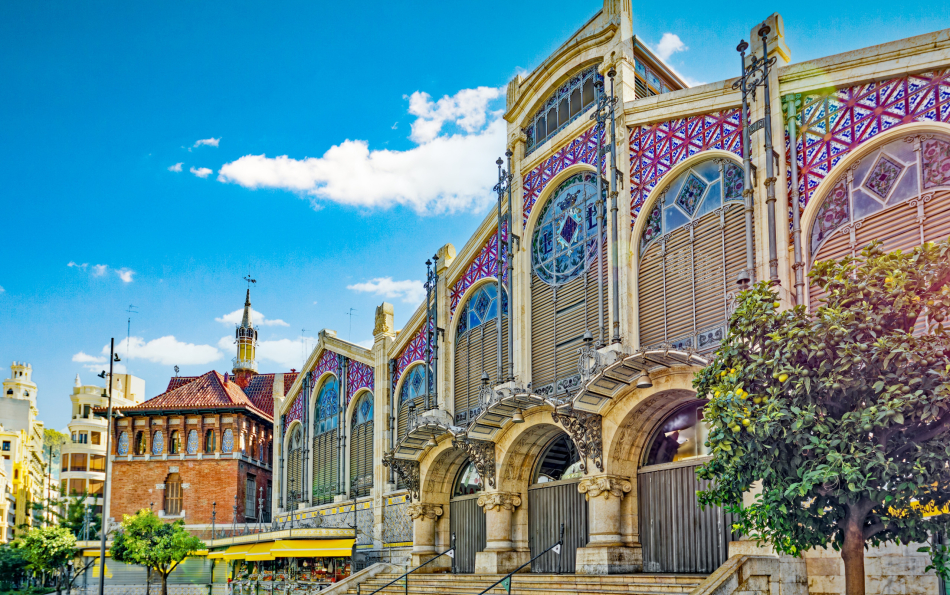
Valencia’s Central Market (Mercat Central) stretches across more than 8,000 square metros. The locals call this majestic, stained-glass-fronted building the “Cathedral of the Senses”. Here, you can buy fresh local produce directly from farmers and fishermen and feel initiated into Valencia’s gastronomic culture. Yet a warm smile, genuine curiosity, and the rooftop view crowned by a green parrot mascot are among the few things money simply cannot buy. La Cotorra takes a closer look at the Mercat Central.
The square that hosts the market building was once known as Market Square — although its older name translates as “Witches’ Square”. It was founded after the Iberian Crusades of Jaume I and traditionally used for public executions, bullfights, and city gatherings.
A legend tells of a convent of Magdalene nuns that supposedly stood here before the market, said to have been built by a nobleman intent on shutting away his unfaithful wife.
In 1839, an open-air market was established here, and in 1914, two architects from Barcelona won the municipal competition to design the new Central Market building.
King Alfonso XIII began clearing the site as early as 1910. During the ceremonial launch, he struck the wall of house No. 24 on Market Square with a silver pickaxe. After years of preparation, the present-day Central Market of Valencia was officially opened on 23 January 1928. More than a century has now passed since the laying of its first stone. Their Majesties King Felipe VI and Queen Letizia visited the market on 24 November 2016 to congratulate its workers on the centenary.
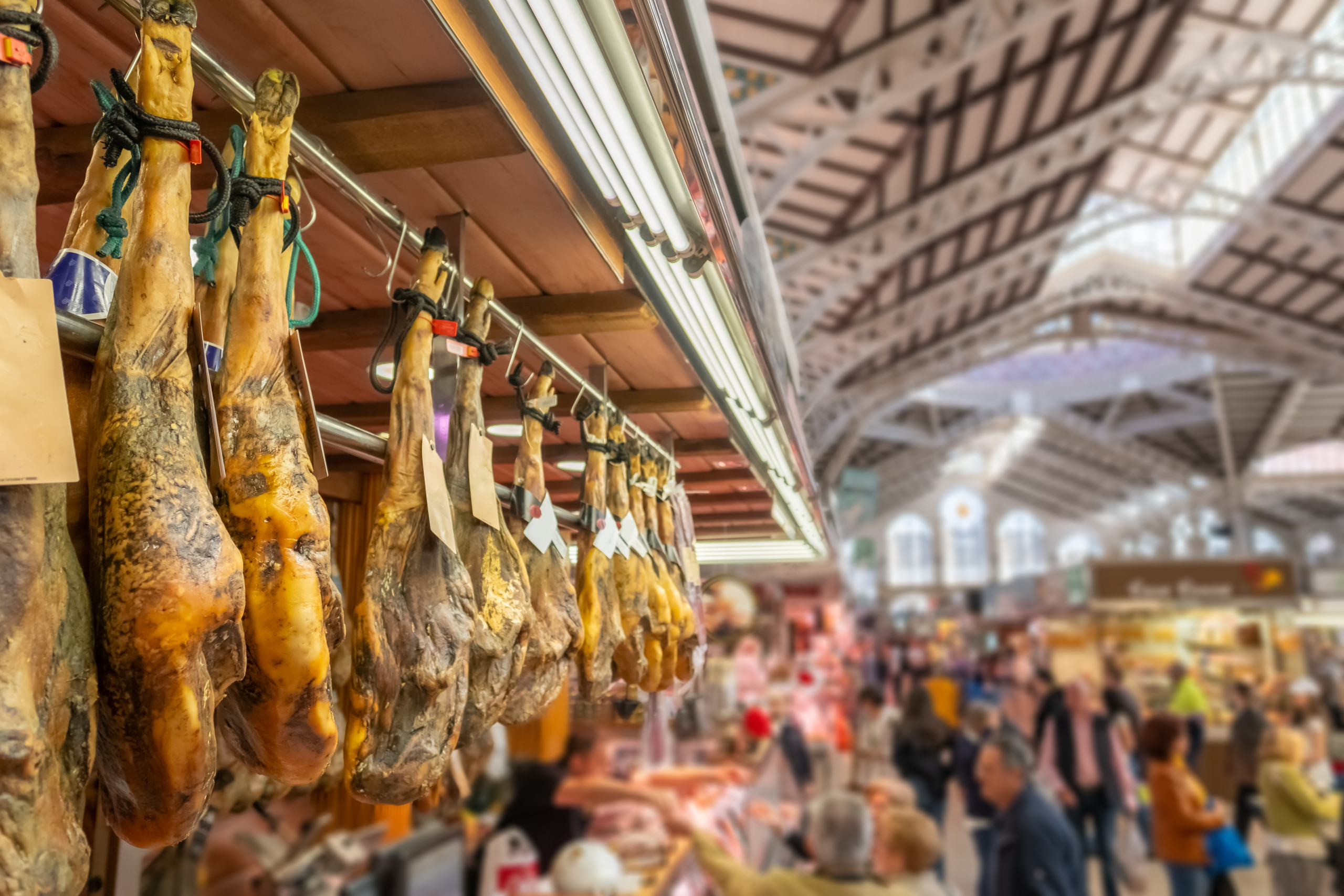
The grand, vivid market building — designed for 959 stalls — quickly became a favorite with tourists. Farmers and vendors easily distinguish locals who come not to take photographs but to buy perishable goods: fresh fish, vegetables grown near Valencia, or the city’s famous tomatoes.
Buy from the same vendor two or three times, and they will remember you — and greet you when you pass. Here they will gladly explain how best to cook each ingredient, share tips on where to forage for mushrooms, and help you prepare poultry or fish. There are many ways to cut and clean produce, from full filleting to minimal preparation, and the vendor will always ask how you intend to cook it — pan-fry or roast. Butchers are happy to engage in small talk and recommend the optimal cut, whether you are planning a barbecue or looking for juicy mince for burgers. Haggling is not customary, though vendors often add a small complimentary extra — a bunch of parsley or a piece of fruit.
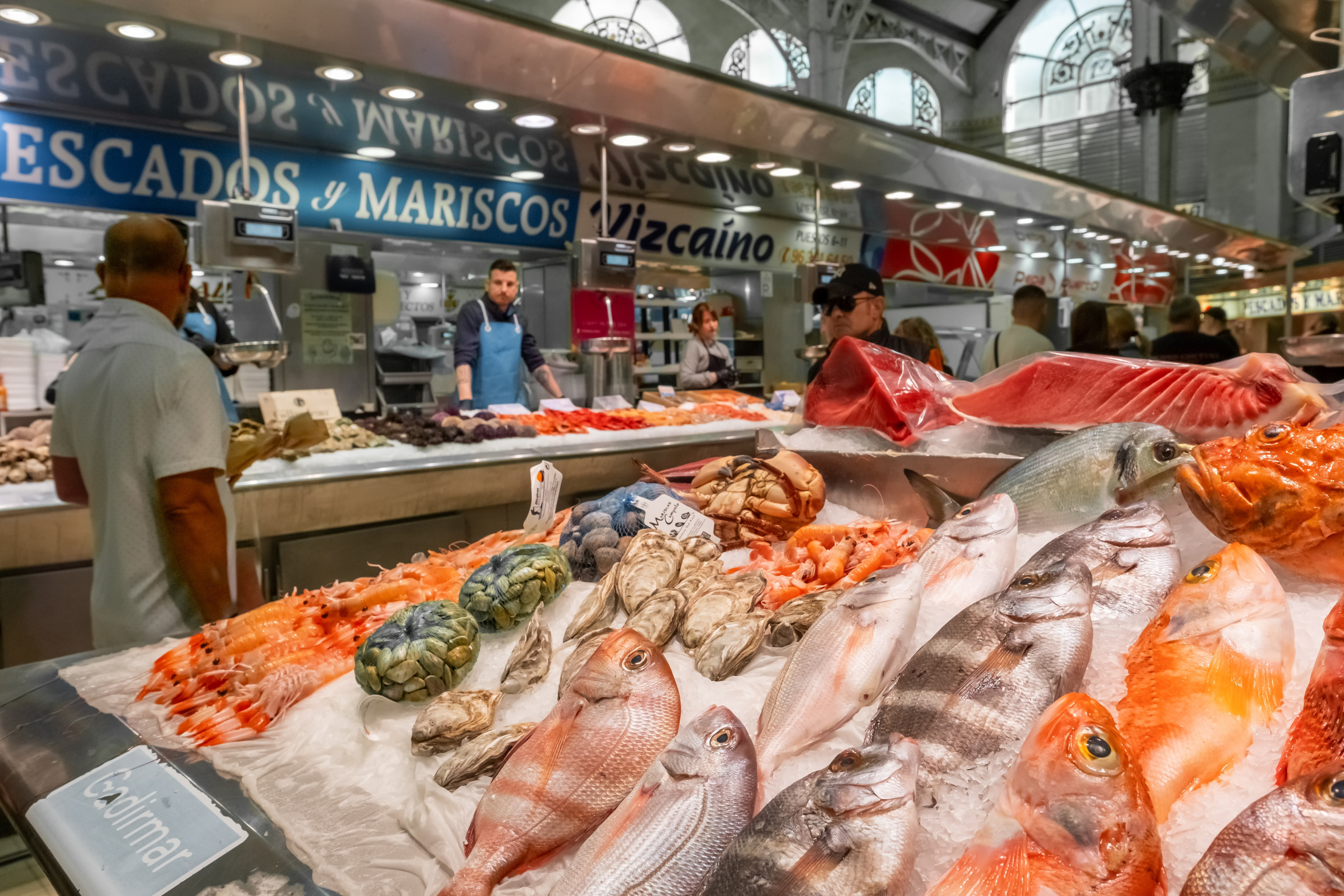
Tuesday is the best day to buy fish at this market. If you want the freshest catch, come early. By around midday, less than half the stock remains on display, and by 2 p.m., the fish stalls begin to close.
Ultra-fresh seafood, wild sea bass, bottom-dwelling species such as turbot and sole, and delicate red prawns — best eaten raw — make the fish aisles of the Central Market endlessly fascinating. Ask about seasonal trends, and you’ll learn when it’s the right moment to buy cod and when — sardines. All fish are weighed whole first, and only then gutted and prepared according to the buyer’s preference.
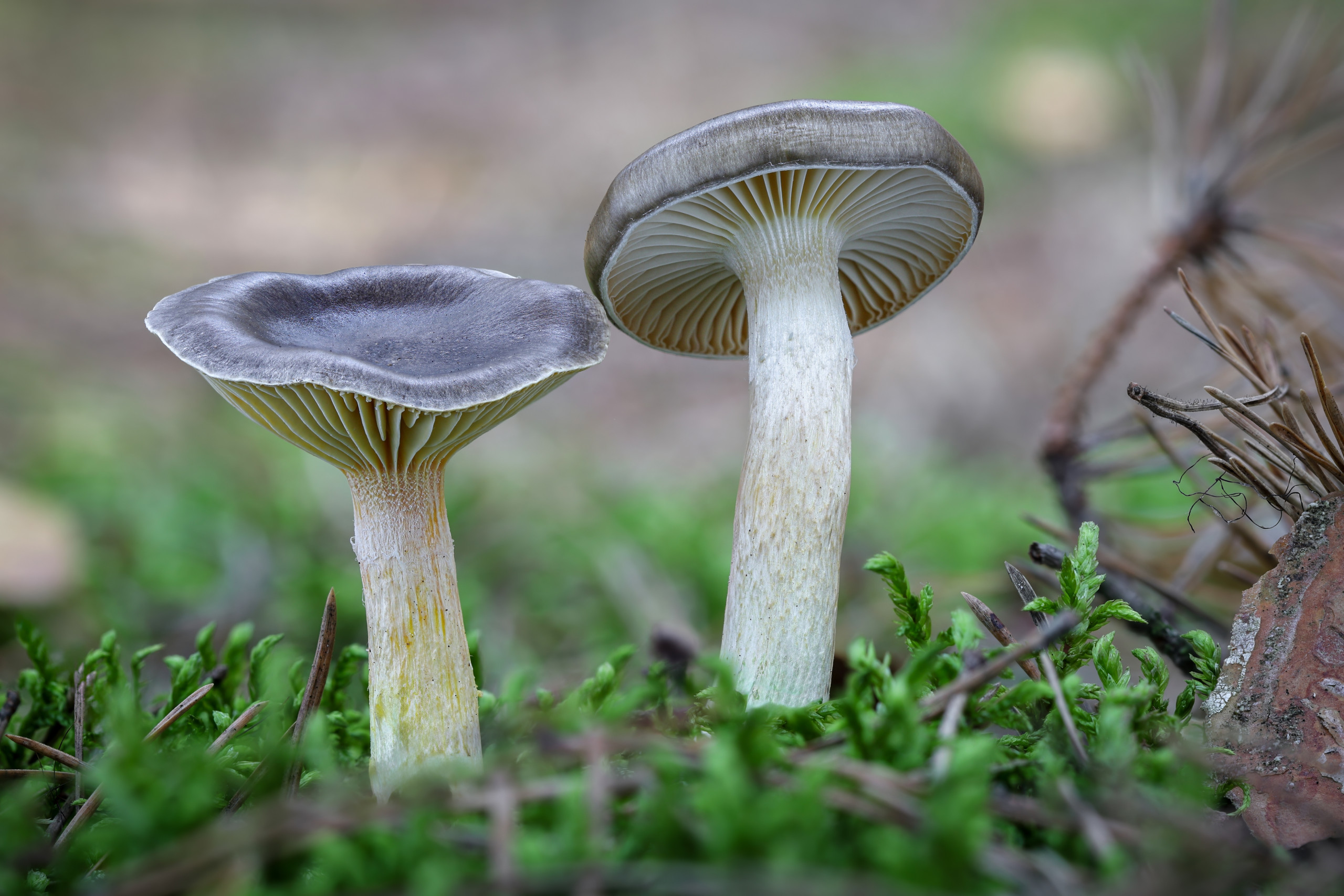
The mushroom season in Valencia begins as early as March. This is when you may spot marzuelos — rare mushrooms of the species Hygrophorus marzuolus.
At different times of year, you can find wild strawberries, mountain-grown wild asparagus, linden blossoms, and fresh honey.
Herbs are rarely displayed openly; you usually must ask sellers of salads and vegetables. After your request, they will typically bring out everything from the fridge: different types of mint, basil, dill, coriander, parsley, rosemary, and thyme — and sometimes even tarragon and oregano.
If you enjoy offal, the butchers will find liver, beef tongue, and more. For holidays (especially Christmas), they prepare special ready-to-cook dishes: delicacies stuffed with chestnuts and foie gras, as well as traditional festive items. Lovers of international cuisines can explore Turkish and Greek stalls.
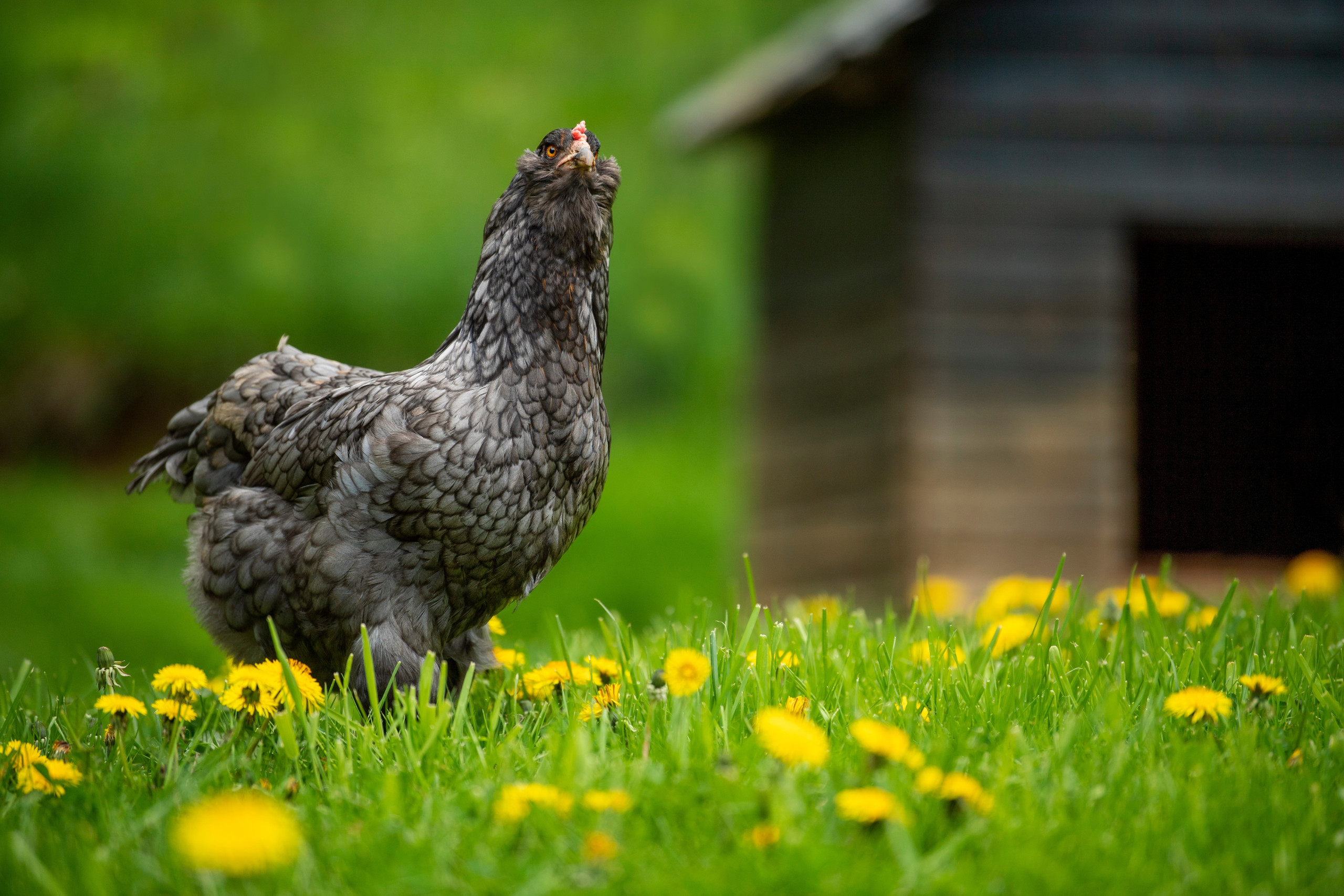
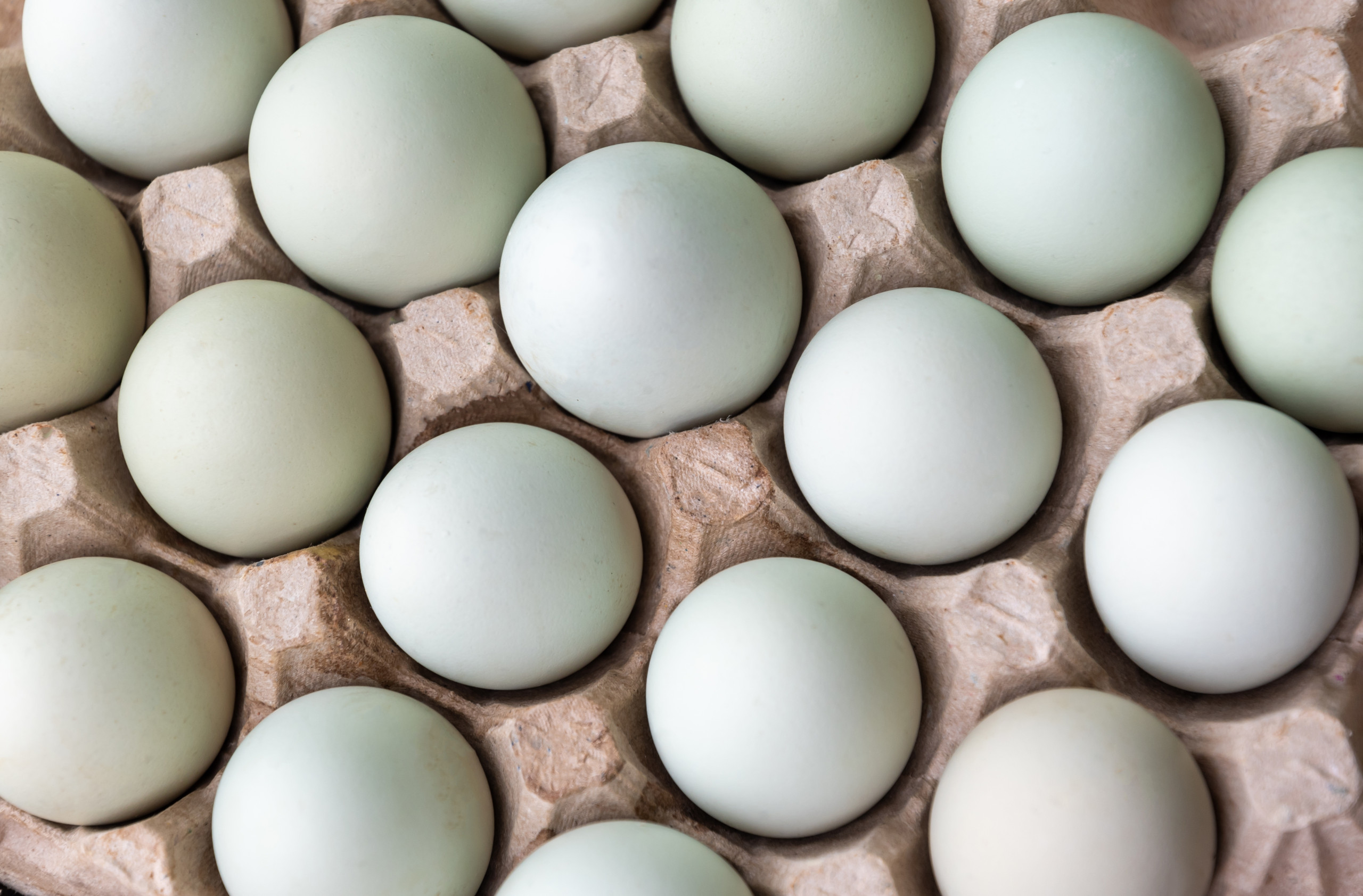
Egg stalls attract curiosity: alongside familiar chicken and quail eggs, they also sell ostrich, goose, and duck eggs. The blue eggs are still chicken but considered delicacies. They come from the ancient Chilean Araucana breed.
The Central Market is also a community of farmers, fishermen, butchers, fruit and vegetable sellers, and a venue for presentations, cultural events, and even theatre performances. In its 2024 Christmas nativity scene, many figurines wore mud-splattered rubber boots — a tribute to the Valencian volunteers who supported the city and its suburbs after Storm DANA.
If you’d rather skip the language barrier, the market’s online shop is well worth a visit. Delivery times vary by stall, but you can order almost anything. And if cooking isn’t part of your plans, La Cotorra recommends a discreet favorite — the Central Bar.
The bar belongs to Ricard Camarena, a Valencian chef with two Michelin stars and three Repsol Suns. There are several signature dishes, but the team will first offer you something seasonal — prepared from ingredients bought right here at Valencia’s main market, the Central Market.
Opening hours: Monday–Saturday, 7:30 – 15:00
Related Articles
Beyond Paella: Discovering All i Pebre, Valencia’s Best-Kept Culinary Secret
Deep in the heart of the Albufera wetlands, the fishing village of El Palmar preserves a traditional, rich garlic and wild eel stew that tourist traps completely miss
Loading…
Loading…