




Support La Cotorra on Patreon
Access exclusive content, special perks, and closer connection with us.
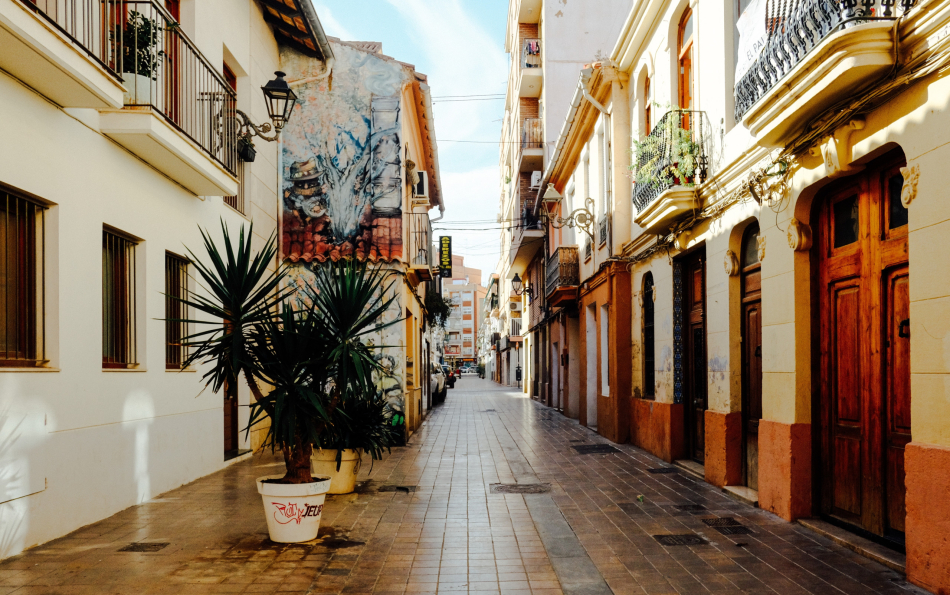
If you haven’t lived in Valencia for very long, yet already look at the city through the eyes of a local, it’s the perfect moment to get to know the district of Benimaclet. This is the city’s unpolished side, where you’re more likely to hear Valencian than standard Spanish on the streets. Tourists rarely come here, and you won’t find the typical set of attractions — instead, you’ll find real life, with its own iconic places and characters who, without exaggeration, are writing the district’s history. And here, every resident can have their own allotment.
Evgenia Alikyan — philologist, guide, specialist in Valencia’s history, and creator of the project “Another Valencia” — has loved Benimaclet since her student days. While studying Spanish philology at university, she rented a flat here — as did many other students. Now she takes visitors to see her favourite spots in this unique district.
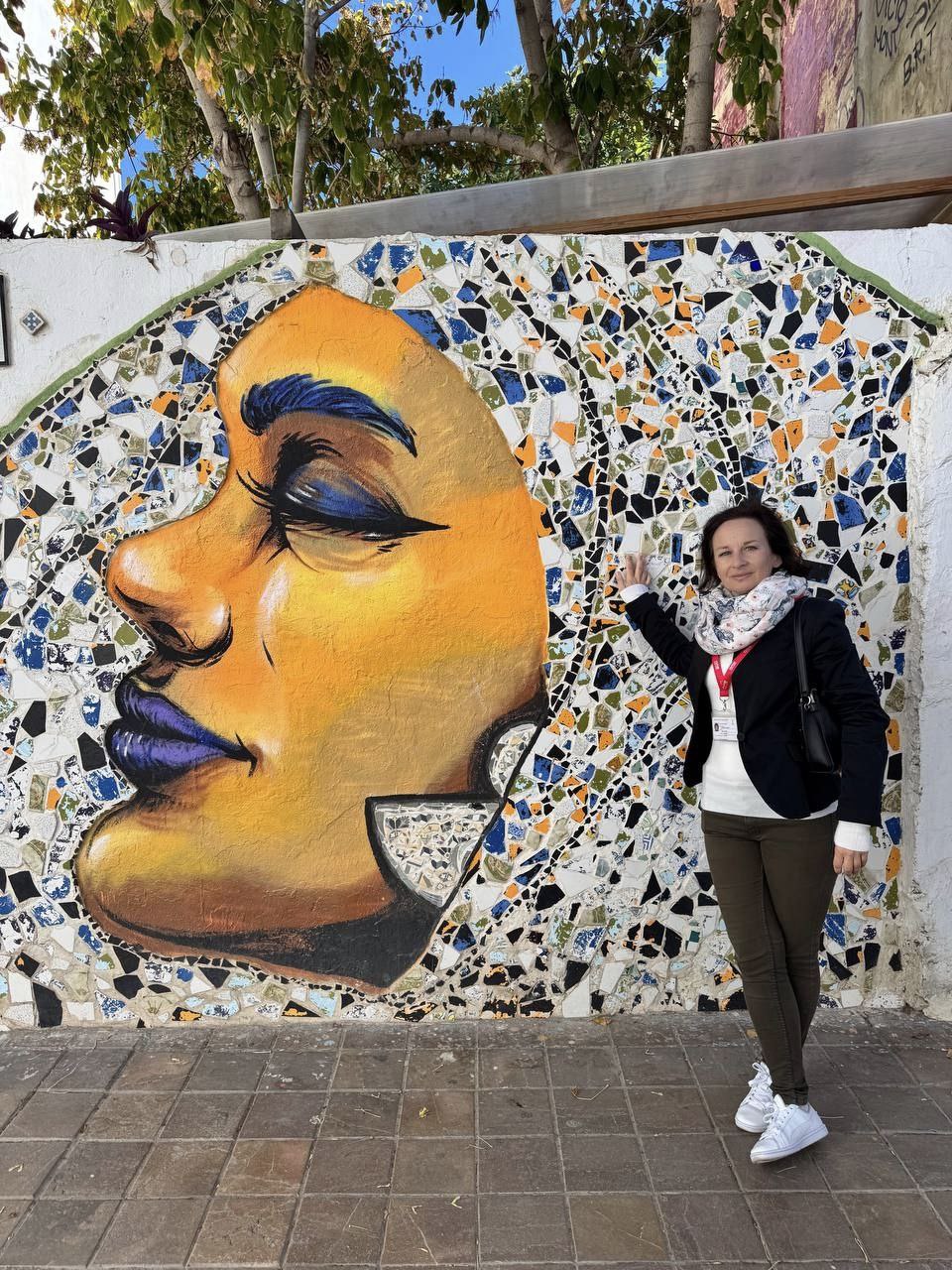
Young people love renting here because it’s close to the university — which explains that unmistakable spirit of student freedom and defiance. On buildings and in local bars you’ll often see protest posters, social street art and other expressions of regional identity. Benimaclet has always lived somewhat apart: once a separate town, it became part of the Kingdom of Valencia under King James I in 1238 but was not officially annexed to the city until the late 19th century
Standing by the Church of Benimaclet, it’s easy to imagine how, centuries ago, locals dressed in their Sunday best walked here for mass, children bought sweets from the chocolatier whose house faced the small square, and little ones splashed in an irrigation canal where the current fountain now stands. By the way, on weekends there is still a market here, just as there used to be, where you can buy products from local farmers. Most residents have always worked in agriculture, and the ceramic panels depicting pastoral scenes on the buildings serve as a reminder of that.
The name Benimaclet comes from Arabic: the word Beni means “sons of”. “Maclet” is a transformed version of “Mikhlat” — the name of the man who, historians believe, once managed this land. The district’s modern name first appears in the royal land-distribution records compiled by order of King James I after the conquest of these territories from the Moors.
When heading to the city centre, locals still say, “I’m going to Valencia”, as if Benimaclet were still a small village set apart from the city walls, just as it once was. Much still recalls those times: low, colourful houses, the intimate feel of the historic centre and a strong sense of neighbourliness and mutual support.
Every house here holds a story that locals carefully preserve and pass down from grandmothers to grandchildren. Evgenia shows us the district’s famous Baker’s House: “The bakery was on the ground floor, and the family lived upstairs. During the Civil War, when confiscations began, the owner hid two sacks of flour under pillows, claiming they were sleeping children — and in doing so, he saved his family from reprisals. Stories like this are passed down here as family legends,” Evgenia says.
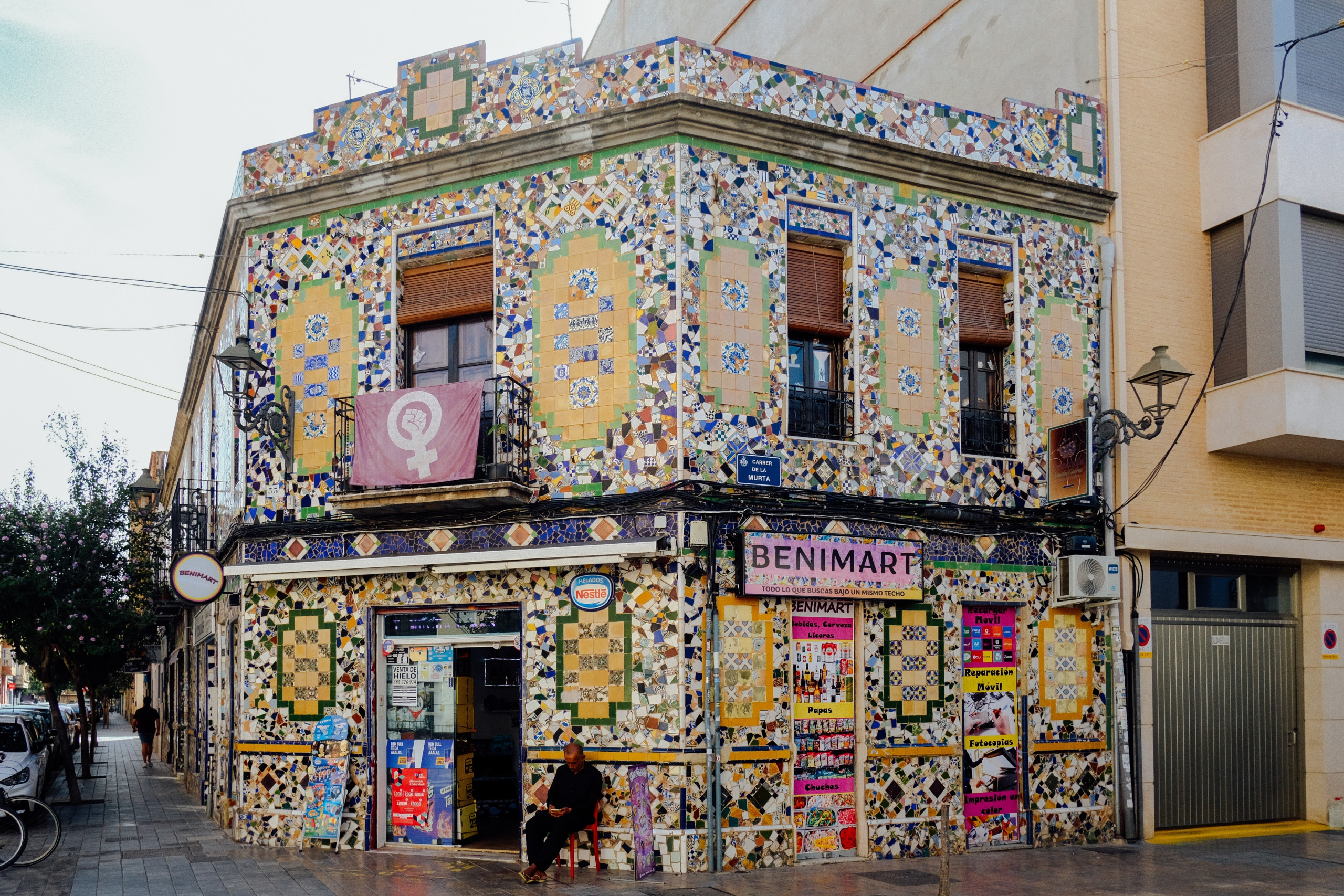
One of the local landmarks is the Casa de Trencadís. Trencadís is a mosaic technique using broken ceramic tiles, made famous by the architect Antoni Gaudí. The house belonged to José Sanmartín Zarzo, a simple labourer, great admirer of Gaudí and lover of unusual architecture. He covered the entire façade with colourful ceramic mosaics in honour of his favourite architect.
This house appears in one of the scenes of Pedro Almodóvar’s film Bad Education. The arrival of the film crew became an event that residents still talk about today.
The granddaughter of the Casa de Trencadís creator recorded her memories, and by scanning the QR code on the wall you can listen to her story in Valencian. Benimaclet locals are proud of this symbol of folk creativity and believe the house should be granted heritage status, with a cultural centre established inside.
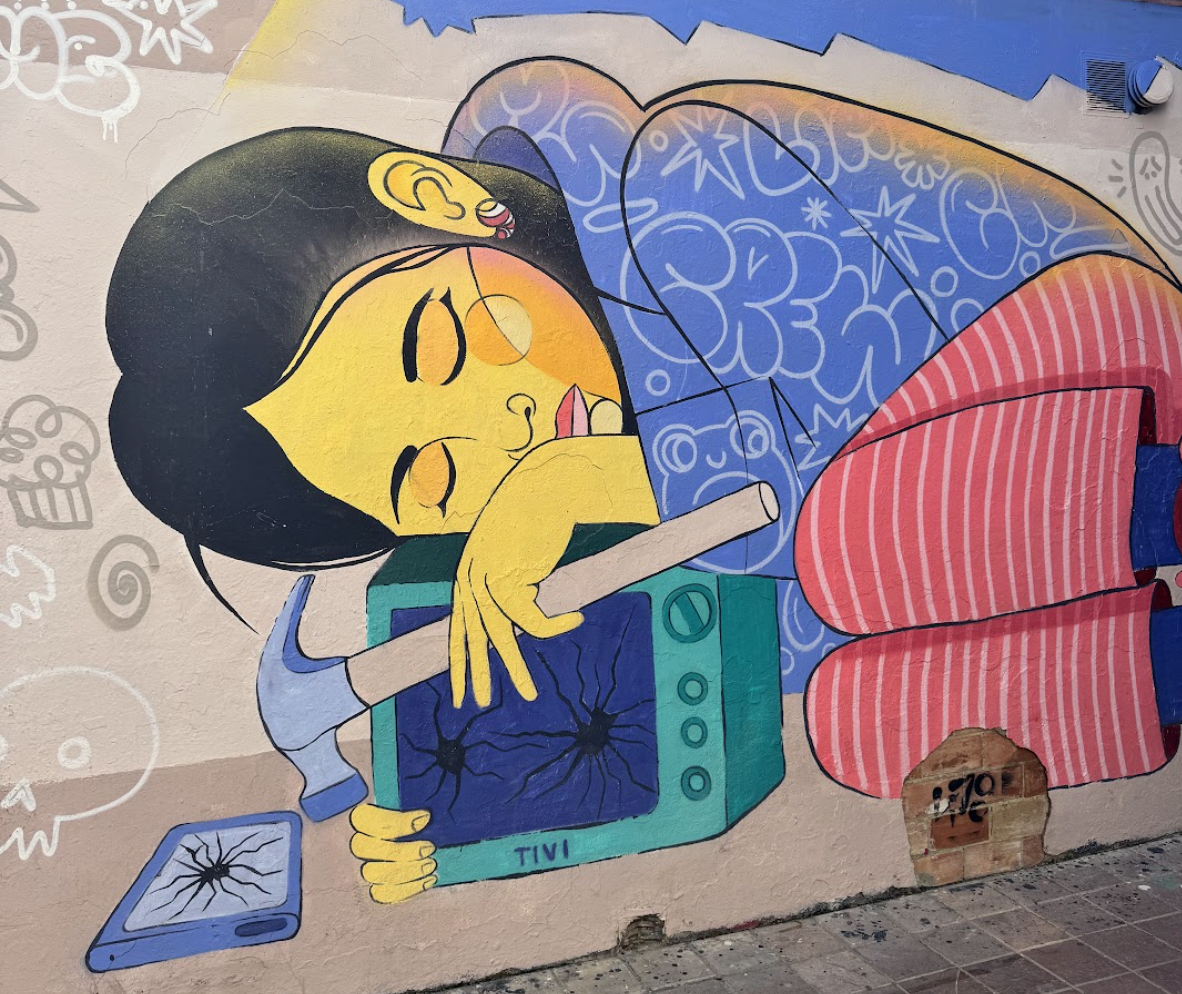
Every year, Benimaclet hosts the ConFusión mural festival, which brings new artworks to the streets. One of the most famous shows is a little girl who has smashed a television and a mobile phone and now sleeps peacefully on the debris. The mural, created by artist Greta Ums, reflects exhaustion with the digital world.
Evgenia’s favourite mural is called “Seven Differences”. The well-known Valencian artist @j.warx created a kind of diptych showing a local resident and a tourist.
“Locals are very wary of tourists, fearing noise, litter and disrespectful behaviour. This mural depicts the ‘unwelcome tourist’: suitcase in hand, a cap that says NYC, and the classic meme combination — socks with sandals. A crushed beer can lie nearby,” Evgenia explains.
According to her, residents fight to keep Benimaclet a comfortable place to live. They nearly managed to block the opening of a new hotel by splashing its façade with paint.
The locals’ desire for comfort, seclusion and a deep connection with nature found expression in one of the district’s most remarkable architectural works — Espai Verd (“Green Space”). This complex, with its intricate, asymmetrical architecture, is immersed in greenery and reminiscent of the Hanging Gardens of Babylon, says Evgenia. Numerous internal corridors, staircases and interconnecting spaces linking different levels make a striking impression.
“In this building there are 108 flats, and each one has its own greenery — from small flowerbeds outside the windows to huge open terraces, some with actual trees. According to the rules of this housing cooperative, residents are required to care for the plants on their property. The project was created by the renowned Valencian architect Antonio Cortés. His idea was that Espai Verd should be a commune where people live alongside nature and care for it. The building even has its own library, church and choir,” Evgenia explains.
She adds that, at first, the architectural community rejected this innovative project, and Antonio Cortés nearly lost his licence. In the 1980s, when he presented his idea, environmentalism was far from mainstream, and the concept wasn’t appreciated. Eventually, however, the city offered him a remote plot of land where he was able to bring his vision to life.
“Now many Valencians dream of living here. Incidentally, the architect himself lives on one of the top floors — and even sings in the church choir,” she says.
According to Evgenia, many people who join her tours of Benimaclet would love to see the inside of this extraordinary building, but access is restricted. The rare opportunity to visit the courtyard with its fountain and one of the hanging gardens comes during the Open House Valencia architecture and urbanism festival, which offers tours of significant city buildings usually closed to the public. Espai Verd is shown to visitors either by Antonio Cortés himself or his daughter — and tickets sell out instantly.
From their windows, residents of the house-garden look out onto the Benimaclet allotments. According to Evgenia, this is one of the city’s earliest and most successful community-garden projects. Any resident can rent a plot of land for personal cultivation. She once had a small plot here herself, where she grew herbs, and was saddened to learn of the city’s plans to give part of the area over to development.
“Some of the land used for the neighbourhood allotments is part of the Benimaclet PAI development project. Housing blocks and a large park are planned there, so it’s a disappearing landscape,” Evgenia says.
Benimaclet is full of unusual buildings, communities and institutions. One of them is the Cottolengo del Padre Alegre, named after the Italian priest Giuseppe Cottolengo, founder of a movement supporting the poor and sick. After the 1957 flood in Valencia, the monastery was moved from the ruined city centre to Benimaclet. Since then, a monastic community has lived here in complete self-sufficiency.
Cottolengo is entirely self-supporting. Several dozen people with severe illnesses live here, along with monks who care for them. They cultivate their own garden, receive donations of food and money, yet largely provide themselves with everything. Patients help as much as they can — painting, cleaning, gardening. It is not a poorhouse or a care home but a kind of monastic commune built on labour, dignity and mutual assistance, Evgenia explains.
If you’re in the mood for music and fun, Evgenia recommends stopping by El Musical. It is a cultural centre with its own orchestra and also serves as the local music school. Over four hundred students study here, and several orchestras and wind ensembles operate within the centre. There is even a bar: in the evenings you’ll find live music, and during the day distinguished señores gather for games of chess or backgammon.
One of the balconies on a narrow Benimaclet street has long been a local attraction. From it, the flat’s owner, José Miguel, displays exhibitions of old toys, drawing children from across the district who gather below to see what new treasures appear on Pani’s balcony today. Locals call the solitary man who lives here “Pani” because he seldom leaves his home and communicates with the world through the toys he has collected for many years.
“People call him Pani because his mother was a baker — a panificadora. Everyone in Benimaclet knows this sad story: Pani suffered a serious injury as a child, and perhaps that’s why he loves toys so much — they remind him of the happy childhood he had before the accident. When the neighbourhood holds parades or processions, people deliberately plan the route to pass his house, so he can see the celebration from his windows. Often residents even throw toys onto his balcony, adding to the collection that has become his unique way of communicating with the world. These are the stories I find most valuable — they help us understand the city and the mindset of its people,” Evgenia says.
Related Articles
Beyond Paella: Discovering All i Pebre, Valencia’s Best-Kept Culinary Secret
Deep in the heart of the Albufera wetlands, the fishing village of El Palmar preserves a traditional, rich garlic and wild eel stew that tourist traps completely miss
Loading…
Loading…