





Support La Cotorra on Patreon
Access exclusive content, special perks, and closer connection with us.

For someone living in Spain, news of a "Spanish startup boom" may sound a little strange. On the one hand, in recent years' reports, this country increasingly features as one of Europe's notable tech markets. But in reality, if a founder needs major investors, experienced operational people, or serious corporate clients, the focus still shifts towards London, Zurich, or Berlin.
The fresh Spain Tech Ecosystem Report 2026 is important not merely as yet another report on startups. It shows how much Spain has grown as a tech market in recent years, and where the weak spots in that growth remain.
The report was prepared by the analytics platform Dealroom, which tracks startups, investments, and tech ecosystems, together with key players in the Spanish venture market.
According to the report, the Spanish tech ecosystem reached a valuation of €125 billion in 2025. Since 202,0 it has grown 2.3-fold and become the eighth-largest tech ecosystem in Europe.
In the headline, es this sounds like a success story: Spain is one of the fastest-growing startup countries in Europe, AI projects are driving the market, venture funds are declaring growth, and local companies increasingly appear in international rankings.
But if you're a founder, an investor, a digital nomad, or simply someone considering Spain as a place to live and work, other questions matter more. Is this really already a mature environment where you can launch startups, implement innovation, and build future unicorns? Or is it for now a beautiful shop window behind which the old limitations remain: the concentration of capital and resources in Madrid and Barcelona, a shortage of venture capital, regional fragmentation, and the familiar bureaucracy?
For a reader outside the startup environment, this isn't abstract statistics either. Such reports show where new jobs are appearing in Spain, which cities are attracting international capital, where demand for strong specialists is growing, and why some regions become part of the European tech economy faster, while others develop noticeably more slowly and end up in the focus of international investors and the tech sector.
According to the Spain Tech Ecosystem Report, in 2025, Spanish startups attracted €3.1 billion in venture capital. This is one of the best figures in the history of the local market — only the overheated years of 2021 and 2022 were higher. Among the largest deals, the report highlights Multiverse Computing (€189 million), Perk (€182 million), and Auro Travel (€180 million).
There are other signs of maturity,g too. According to Enisa (the Spanish state company that finances innovative projects and startups — La Cotorra), in 2025, there were 44 exits on the Spanish market — investor exits from their investments, including the sale of stakes, M&A deals, IPOs, and other mechanisms. Among the most notable deals were the acquisitions of the companies vLex, Wallapop, and Onum.
For the ecosystem, this matters not only because of the money. After major exit deals and the growth of successful companies, a new generation emerges: former employees of unicorns and fast-growing startups launch their own projects and become business angels, investors, mentors, or operational managers. The report calls this the multiplier effect — when experience from strong companies is passed on through new startups and accelerates the development of the entire ecosystem. This is one of the clearest signs that what is forming in the country is not a set of separate successful companies but a mature entrepreneurial environment.
The global boom around artificial intelligence (AI) has not bypassed Spain either.
Almost one in five startups founded in Spain since 2021 is connected with AI. Spanish AI companies have attracted €3.3 billion since 2020, and AI's share of the total value of the tech ecosystem has grown from 7% to 12%.
This is no longer just apps and marketplaces. More heavy, science-intensive areas are appearing in the Spanish picture: from quantum computing and medical technology to robotics, defence, and space.
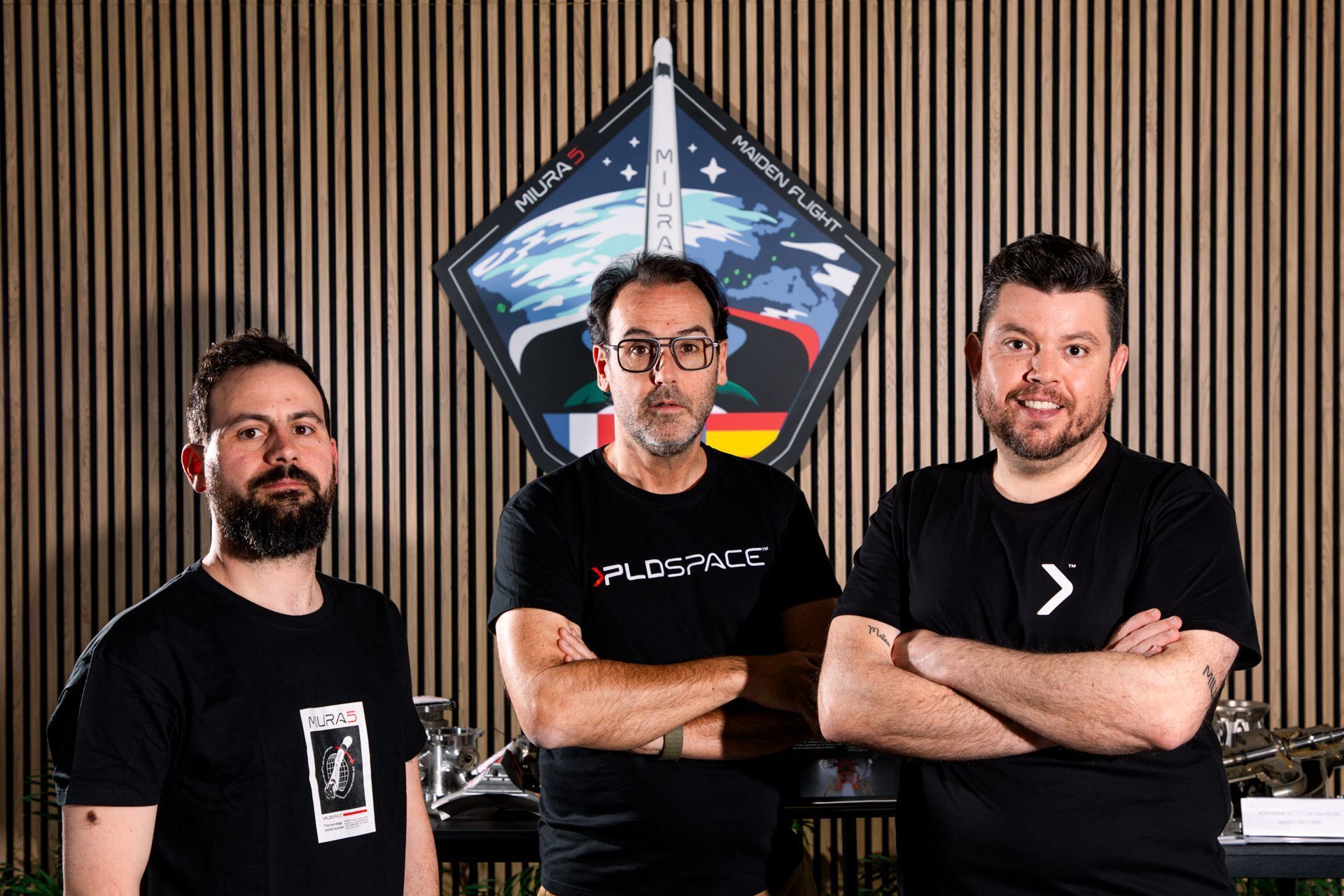
For example, the private aerospace company PLD Space from Elche closed an investment round of €180 million in March to develop its Miura rockets, and then received a further €30 million in venture debt financing from the European Investment Bank. Madrid-based Xoople raised $130 million in Series B for geodata and AI infrastructure.
Such deals help the Spanish market look more mature. But behind this lies an important feature — the sense of growth is largely made up of individual large deals.
If you look only at 2025, the picture looks optimistic. But the start of 2026 is already showing more restrained dynamics.
According to the Observatorio de Startups de la Fundación Innovación Bankinter, in the first quarter of 2026, investment in Spanish startups amounted to €731 million — still a significant volume, but 30% less than in the same period of 2025. The number of deals, meanwhile, fell to 79, 21% fewer than in the first quarter of 2025.
Another important detail is that the market is shifting ever more strongly towards large rounds, which make up a significant part of the total volume of investment. Thus, in the first quarter, more than half of all capital for the quarter — €370 million — was provided by three megadeals: PLD Space, Preply, and Universal DX. The alternative tracker El Referente gives similar but slightly different figures: €706.9 million and 69 deals. The difference is explained by methodology, but the trend holds — the capital market has become more selective.
For a founder, this means a simple thing: if the report says the ecosystem is growing, that doesn't mean raising money (especially at early stages) will become easier. Rather, the opposite — investors have started looking more closely at teams, revenue, the market, growth rates, and the ability to quickly expand beyond Spain.
Right now, almost one in five startups in Spain is connected with AI, and its share of the value of the entire tech ecosystem has grown from 7% to 12%. Such results show that AI isn't just a buzzword in presentations — the market really is changing.
The word "AI" in 2026 easily turns into cosmetics. Almost any service can add "smart" recommendations and call it artificial intelligence.
So the main question isn't how many Spanish companies now call themselves AI startups, but how many of them are really building a technological advantage that can't be quickly copied.
If Spain wants to be not just a convenient country for remote workers but a serious tech hub, it needs more than websites with the word "AI" on them. It needs research, data, sales to large companies, strong talent, scaling experience, and capital for later stages.
Spain is clearly moving in this direction. But the path from "lots of AI startups" to "an AI country" is longer than it seems in presentations.
Geography is one of the main tests of an ecosystem's maturity.
According to the Spain Tech Ecosystem Report, Barcelona's ecosystem is valued at around €51.8 billion, and Madrid's at €48.1 billion. In 2025, each of the cities attracted more than a billion euros in investment: around €1.1 billion in Barcelona and €1.2 billion in Madrid.

For Spain as a country, this is good news. For all the other cities, it's a more complicated signal.
Of course, striking cases are appearing beyond the two capitals. Elche suddenly finds itself on the map thanks to PLD Space. Valencia is trying to sell itself as a calmer and more affordable alternative to Barcelona. Málaga is building an image of a tech city by the sea. Bilbao and San Sebastián are strong in industrial and deep-tech areas.
But one big investment round doesn't yet make a region a fully fledged ecosystem.
A real ecosystem isn't just one successful company and a few events. Behind it stand a density of people, money, corporate clients, business angels, funds, lawyers, accountants, universities, and serial entrepreneurs or startup founders who have already been through similar problems.
By these criteria, Madrid and Barcelona are still playing in a separate league.
For Valencia, Málaga, Bilbao, Seville, or Alicante, this isn't a death sentence. You can live, work, build an international team, and develop a product for the external market there.
But if a startup needs major investors, corporate clients, experienced specialists, and a living circle of people who have already built and financed such companies, the gap with Madrid and Barcelona is still felt.
The soberest counterpoint to the pretty headlines comes from the fresh OECD Entrepreneurial Ecosystem Diagnostics of Spain report.
The OECD describes the Spanish entrepreneurial environment as alive and rapidly developing, but says directly that it is still young and not yet mature. Among the weak spots are growth-stage capital, attracting specialists, the commercialisation of university research, the link between regions, and support for companies at the scaling stage.
In other words, Spain already knows how to create startups, but doesn't yet always know how to help them become big companies.
At the early stage, there are plenty of tools: programmes, accelerators, grants, regional initiatives, and startup events. But when a company needs to hire expensive specialists, enter large markets, and raise major rounds, the system begins to creak.
The OECD separately notes the weak links between regional ecosystems. For a founder,r this is an additional headache: in different autonomous communities, es there are different programmes, rules, institutions, and networks of contacts.
This is precisely why Spain often looks paradoxical. From the outside — a pleasant country to live in, with strong cities, good internet, and a growing reputation as a startup country. On the inside — many scattered doors, and it's not always clear which to knock on first.
The question of unicorns only seems simple until you start comparing who counts them and how.
A "unicorn" is usually a private tech company with a valuation above $1 billion. But different databases count differently: some include only independent private companies, others include companies after major sales or IPOs, or use broader valuation algorithms.
For example, StartupBlink in its ranking lists nine Spanish unicorn startups, among them Fever, Cabify, and Factorial. But its methodology differs from the classic list of private companies with a confirmed current valuation above $1 billion. The company Tracxn counts differently and speaks of six Spanish unicorns.

So the figure itself is less important than the question: do companies of this scale appear in Spain regularly?
The presence of Fever, Cabify, Glovo, Wallapop, Factorial, and Perk shows that Spain is capable of growing notable tech companies. On the other hand, a few such stories don't yet mean that any good founder automatically lands in a mature support system.
A more important indicator is what happens after these companies. If their former employees create new startups, invest, become operational managers, and help the next teams, that is already genuine ecosystem maturity.
On the whole, Spain in 2026 looks like a good but not universal choice.
If you're building an international product, aren't tied to the Spanish market, and are ready to seek out clients, capital, and partners, you can work and develop projects here. Especially if it's a matter of AI, cloud services for business, travel technology, urban mobility, medicine, climate, or other science-intensive areas. Here you can live in Europe, spend less than in London or Paris, and gradually integrate into the local environment.
If you expect a startup country to automatically mean easy access to money, fast decisions, a simple administrative system, tax breaks, and a dense network of investors in every city, then Spain may quickly disappoint. A founder often has to put together the map themselves: where Enisa is, where CDTI is, where a regional programme is, where a private fund is, where a corporate client is, and where a real mentor is.
Registering a company, taxes, reporting, grants, banking procedures, and getting through the local bureaucracy often require far more time and patience than you'd expect from a true startup hub. On paper,r a support programme may look ideal, but in practice, you still have to find it, understand it correctly, submit the documents, wait for a response, and not get lost between the national, regional, and local levels.
Against the backdrop of other European countries that aggressively compete for entrepreneurs with tax regimes, grants, or a simpler administrative system, Spain often wins on quality of life, but not on the speed, simplicity, and predictability of procedures.
By the figures — yes, Spain really does look like one of the fastest-growing tech ecosystems in Europe. €125 billion total valuation, €3.1 billion in venture investment for 2025, AI growth, strong sectors like space and quantum, and increasingly notable companies at the scaling stage.
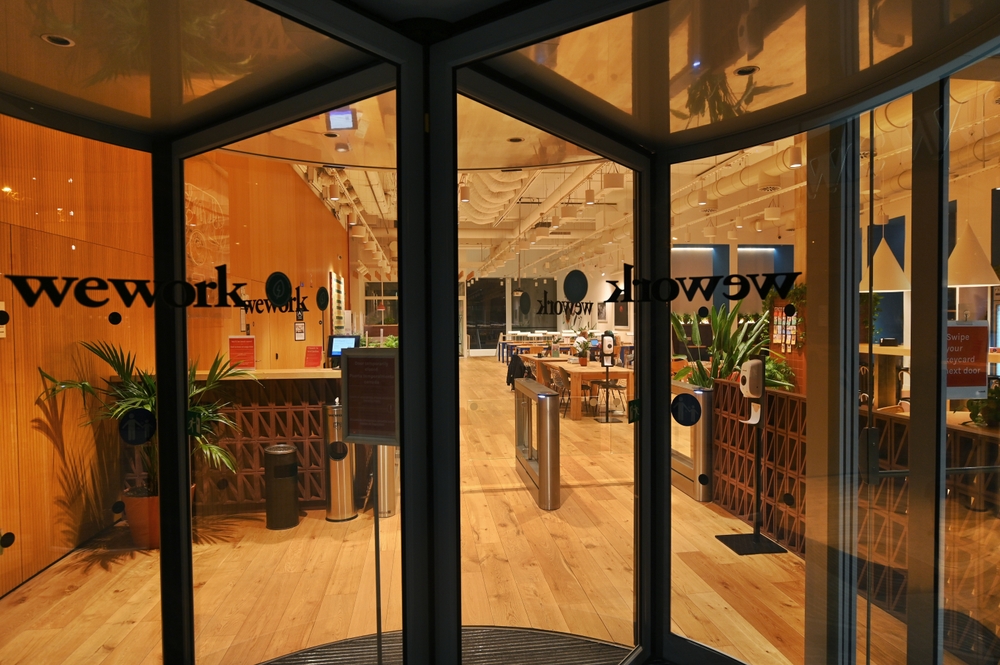
By a founder's feel — it's all much more complicated. Spain has already outgrown the status of "a nice country for digital nomads" and has become a real player on the European tech map. But it's still a long way from a mature, dense, and predictable startup environment.
For founders, this isn't necessarily bad news. Opportunities often appear precisely where there are already enough resources,s but the market hasn't yet been divided up among the old players. Besides, in cities with ambitions but without an established ecosystem — such as Valencia or Bilbao — local administrations are often ready to actively support startups: with grants, contacts, and backing for initiatives. And sometimes this opens up opportunities that are already harder to obtain in Barcelona or Madrid, where working with startups has long been put on a conveyor belt.
Ultimately, it all depends on what you compare it with and by what criteria.
In my experience, for example, Spain falls far short of Switzerland in the area of taxation and bureaucracy, but wins on the level of operational costs, local support, and access to European infrastructure.
It's important to pay attention not only to news about rapid growth, but to the details: where the money is, where the strong talent is, where the clients are, where the state helps, and where it simply creates another layer of bureaucracy. After all, a startup ecosystem also shows itself in how much the local environment helps a company grow or instead drains its resources just on working out how everything is arranged inside.
As a result, if you look at the living experience of entrepreneurs — with banks, taxes, grants, and administrations — that's where a separate story begins. Perhaps it's precisely that story that is worth telling in our next article.
Related Articles

Pope Leo XIV's Historic First Visit to Spain: Seven Days Across Madrid, Barcelona, and the Canaries
From a 1.6-million-strong Corpus Christi Mass and a first-ever papal address to parliament to the Sagrada Família's tallest tower and an engine failure that grounded his plane — a recap of every key moment

Footballer Rafa Mir Sentenced to 8.5 Years by Valencia Court in Sexual Assault Case
The Elche player, on loan from Sevilla, was also ordered to pay €64,000 in compensation. A second footballer, Pablo Jara, received 2.5 years in a related case; the ruling is not yet final
Pope Leo XIV's Historic First Visit to Spain: Seven Days Across Madrid, Barcelona, and the Canaries
From a 1.6-million-strong Corpus Christi Mass and a first-ever papal address to parliament to the Sagrada Família's tallest tower and an engine failure that grounded his plane — a recap of every key moment
Valencia Approves the 2026/2027 School Calendar — Term Starts 9 September
Nurseries, primary, secondary, baccalaureate, and vocational students return on 9 September and finish on 18 June 2027, for a total of 179 school days. Christmas and Easter break dates are confirmed
Loading…
Loading…