01
Canaleta Park
Parque de la Canaleta
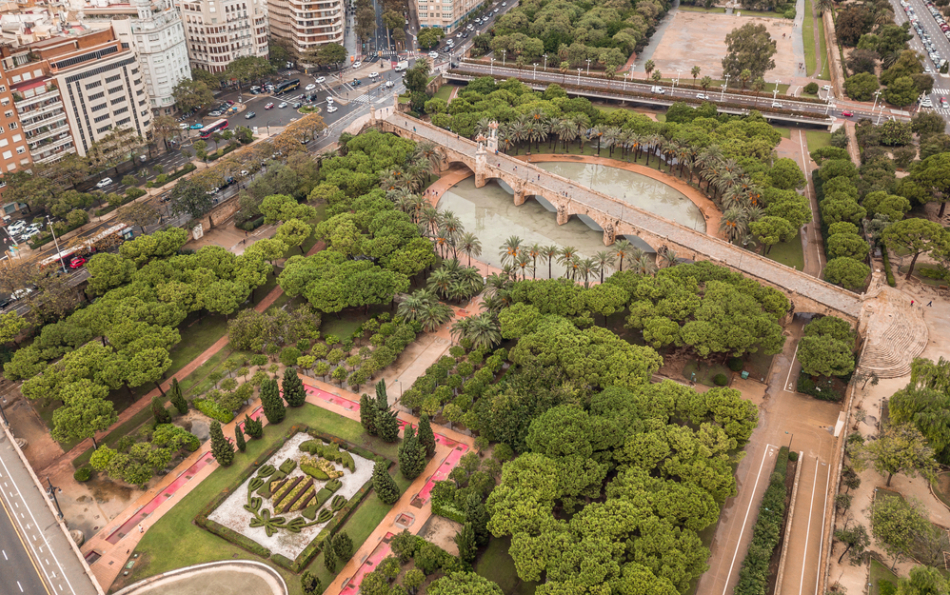
Valencia is an excellent city for family time — and a particularly large number of themed museums, parks and playgrounds are concentrated in the Turia Gardens. Climbing over the giant Gulliver, watching sharks at the Oceanogràfic, exploring models of space rockets and shuttles — is that not what an ideal weekend looks like? Exploring every corner of the gardens, which were once the riverbed, can easily take several full days.
The Turia Gardens (los Jardines del Turia, *Paseo de la Pechina y Avenidas Manuel de Falla y Tirso de Molina) are Spain’s largest urban park, with a remarkable story behind it. In 1957, after another devastating flood, the city authorities decided to divert the River Turia into a new artificial channel south of the city. In 1986, an urban park opened on the former riverbed, covering 110 hectares and stretching for roughly 9 km. There are countless places for picnics and family downtime, 20 playgrounds of different sizes, 3 skate parks, 4 chess tables, cycle lanes, and palm-lined paths with orange trees, fountains and pines. The park lies below the level of the surrounding city, which gives it a sense of quiet and calm; there are also many cafés and restaurants along its edges.
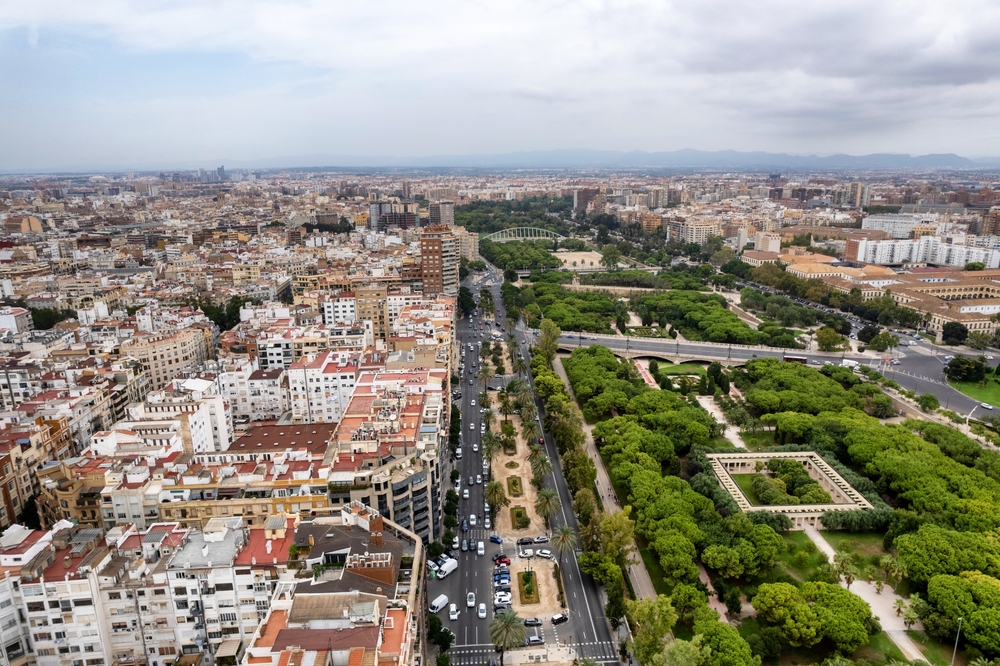
The gardens are divided into 16 sections, usually separated by bridges. The first section begins just after Puente Nou d’Octubre, and the greener area above it is the so-called “Source of the Turia” (La Cabecera de Turia), where Cabecera Park is located. Work on sections 17–18 has not been completed; it is expected that a “Great Green Delta” will eventually be built there, linking the vast garden area to the Mediterranean Sea.
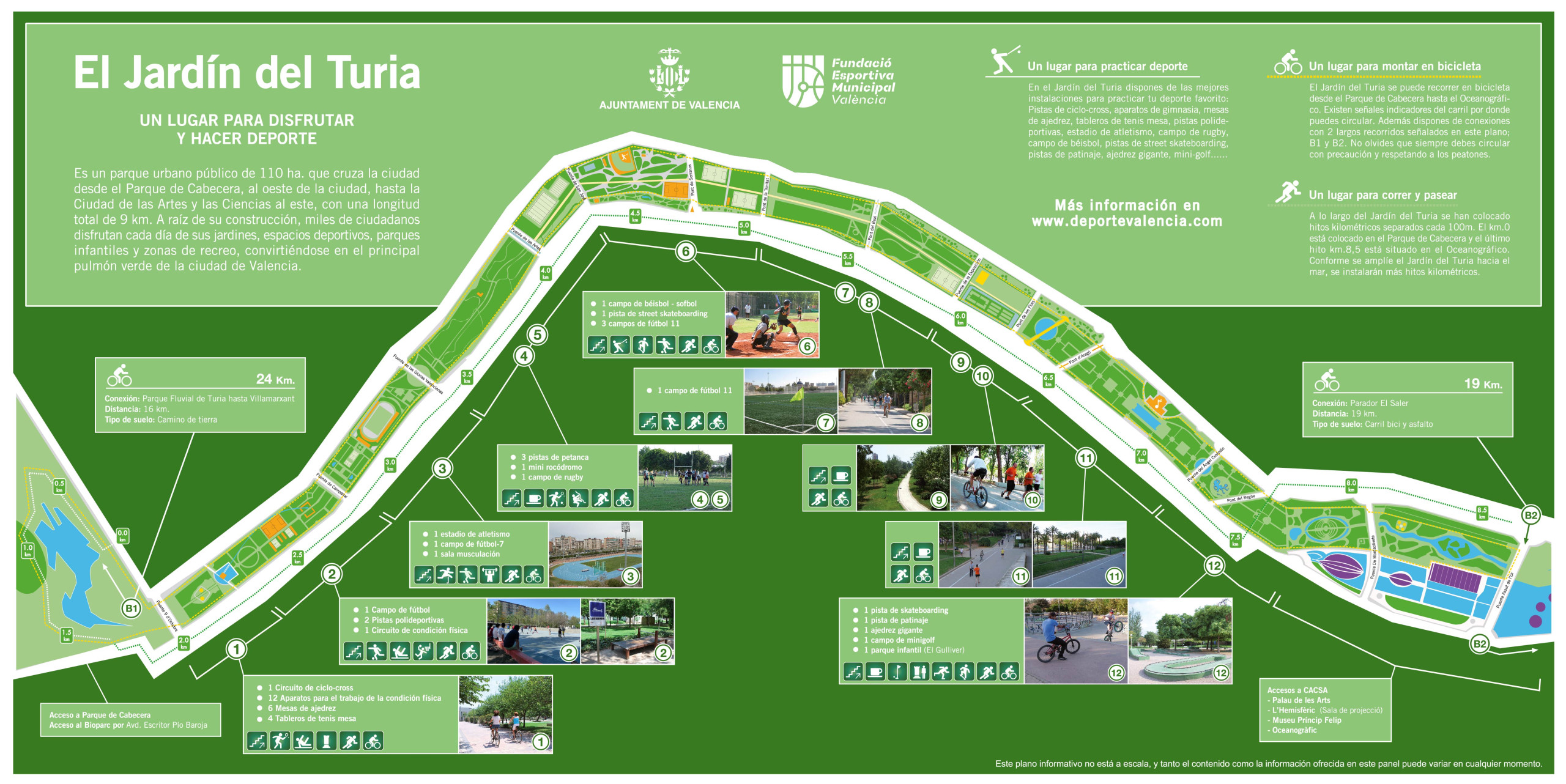
The first several sections are largely dedicated to sports facilities. In the first section, closer to the sea, you can play table tennis, chess and pétanque; in winter, ice rinks for adults and children operate here. For very young children, there is a track for bicycles and scooters.
There are many places in the gardens to relax near water. By Puente de la Exposición you will find a photogenic fountain with little bells. Under Puente del Mar there is a small pond, and in front of the Palau de la Música there is a “red pond”, surrounded by Japanese trees. The water is coloured red by special panels placed on the bottom. The park is home to many birds, squirrels and colonies of cats; there is an avenue of jacarandas (between Puente del Real and Puente de las Artes), a baobab grove (beneath Puente del Real), as well as Instagram-friendly walls covered with bougainvillea (near Campanar bridge).
You can rent go-karts, bicycles, scooters and e-scooters here (for example from Turia Bike, Cause Bikes, or at the Decathlon next to the gardens).
Parque de la Canaleta
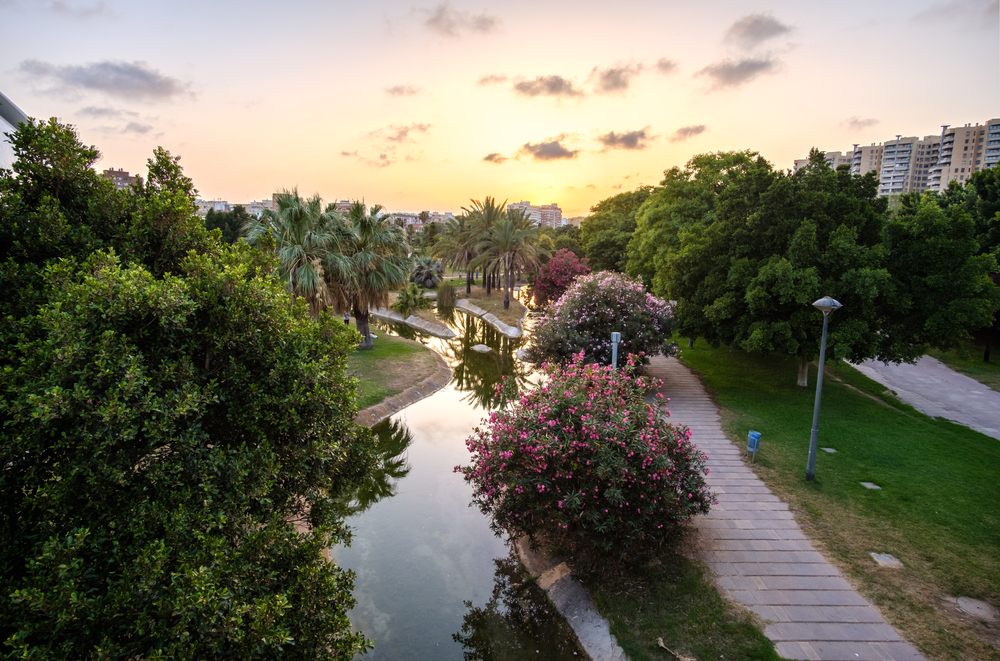
This park is not technically part of the Turia Gardens, but it adjoins them closely and offers a wide range of activities for families. It has a rhythmic gymnastics area, climbing walls for children of all ages, slides and swings, two small zip lines, and a path for bicycles and scooters. There is a bar. Dogs are not allowed in the park.
Parque de Cabecera
Address: Av. Pío Baroja, Campanar
Metro: Nou d’Octubre
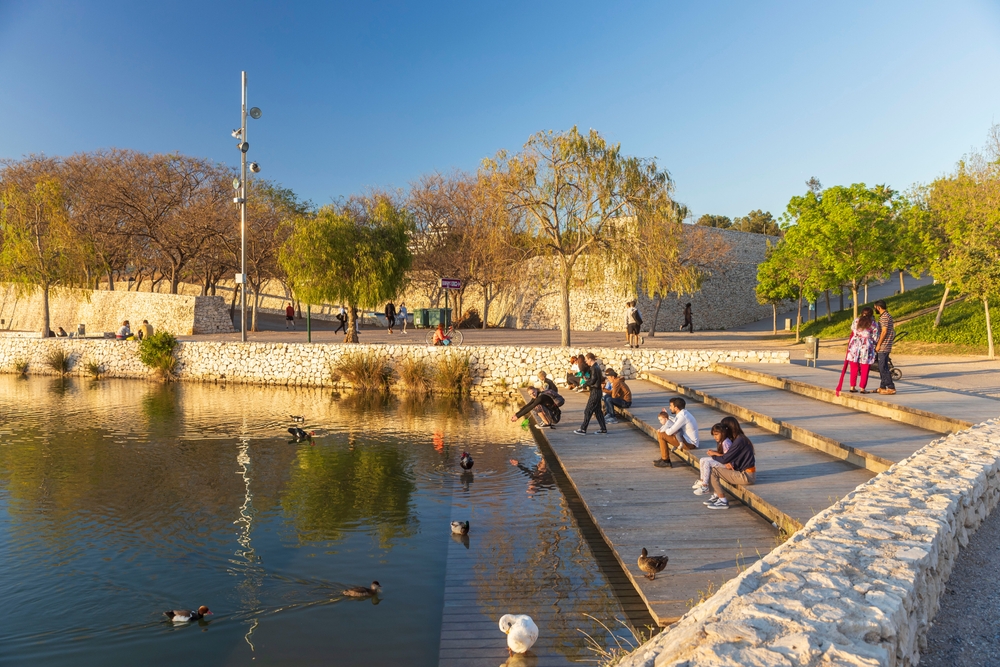
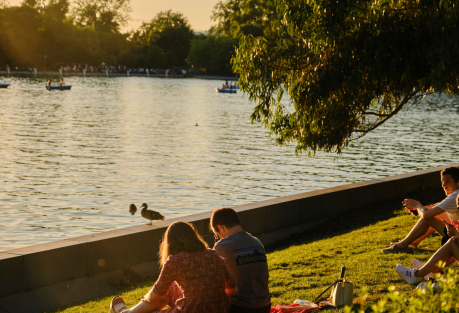
This city park, with superb panoramic views, is the starting point for a walk through the Turia Gardens — a link between natural landscape and the urban layout of the former riverbed, where water is the main element. There is an artificial lake where you can rent swan-shaped pedal boats and watch ducks, coots and other birds. There is a bar by the lake. The park has numerous paths and plenty of spots for picnics and nature breaks.
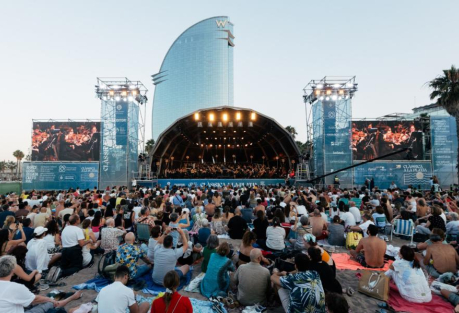
In 2004, a children’s favourite opened here: the “Pirate Ship” playground — a space for imagination and role-play (for children aged 3–12). In summer, open-air concerts are held here.
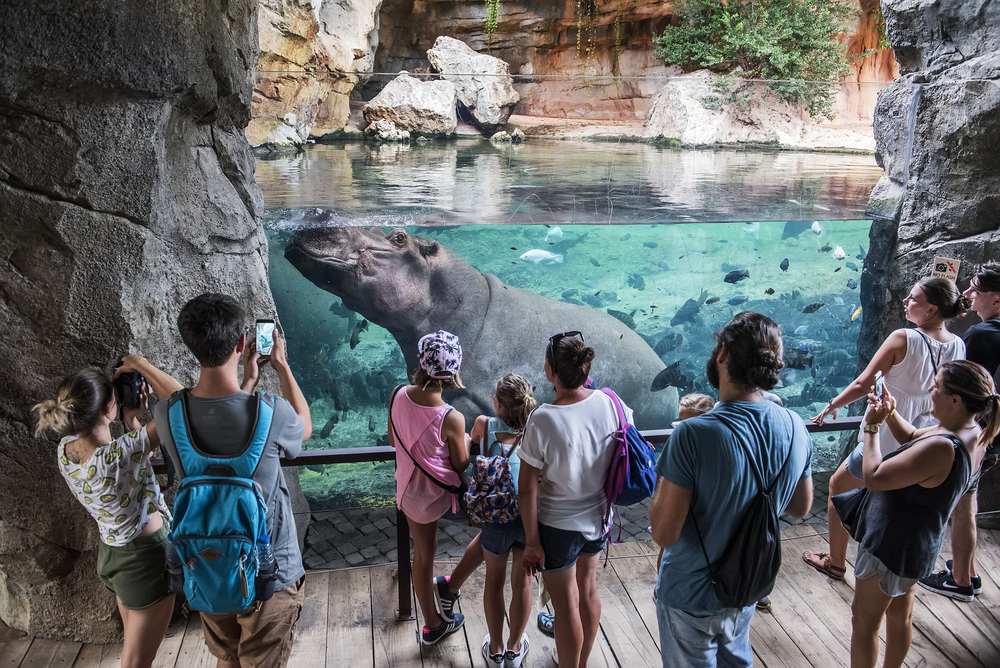
Bioparc — often described as a “new-generation zoo” — is located within Cabecera Park, but formally it is not part of the Turia Gardens. It opened in 2008 on the site of the former zoo. Across roughly 100,000 m², the park recreates natural habitats for many animals, birds, reptiles and fish.
The park is divided into four zones, each representing a distinct African ecosystem: dry savannah, wet savannah, equatorial forests of Africa, and Madagascar. There is also a wetland area recreating cave conditions from Kenya’s Mount Elgon National Park.
Around 120 species coexist here: primates, leopards, white rhinos, giraffes, herds of red buffalo and bongo antelopes, ostriches, elephants, and otters. Visitors can observe the animals at close range without intrusive barriers — from cafés with panoramic windows, across water, plants, or rocks that disguise the boundaries.
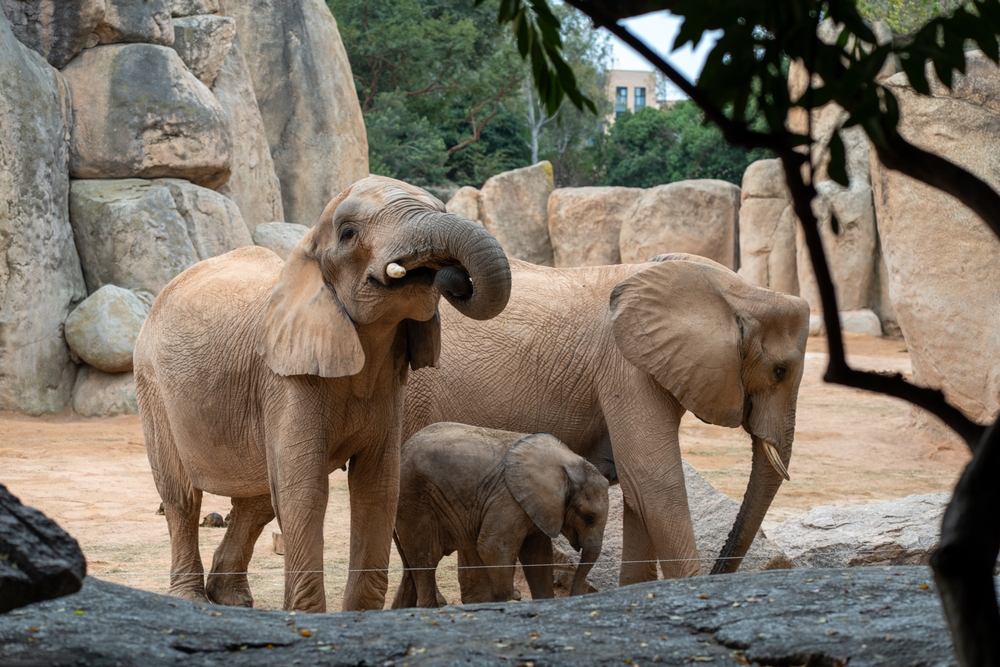
Madagascan lemurs sometimes come within arm’s reach. The park is comfortable even in hot weather: there is plenty of shade and greenery, including a baobab grove, and full family facilities. Bioparc is planning an expansion, with part of the territory to be dedicated to the flora and fauna of South-East Asia and South America.
There is paid underground parking. Bringing your own food is not allowed.
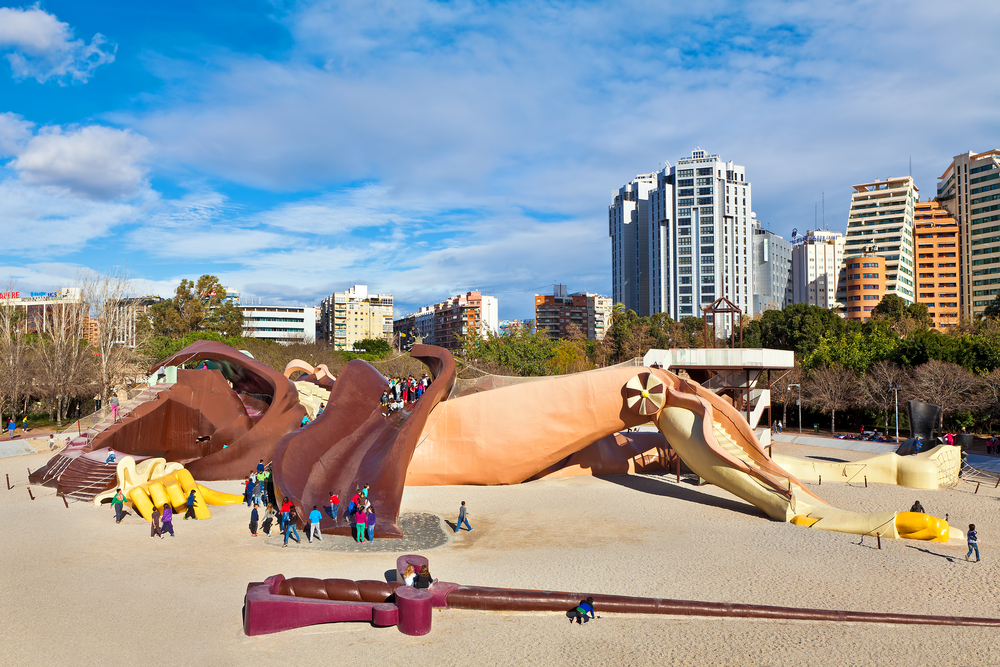
This park was built at the end of 1990 and is located in section 12 of the Turia Gardens. Its main attraction is a giant 70-metre Gulliver sprawled on the ground, having only just reached the shores of Lilliput. His clothes and hair become slides and climbing routes, and children can feel like characters in Jonathan Swift’s novel as they scramble up the giant and slide down again. It is best to come in shoes with non-slip soles, and in clothes you do not mind getting scuffed.
Nearby there is a mini-golf playground and giant chess pieces.
The park is closed on the first Tuesday of every month, and also when the Gulliver figure is wet after rain or when weather forecasts are unfavourable. Check the website for exact opening times.
Recommended age: 5–12.
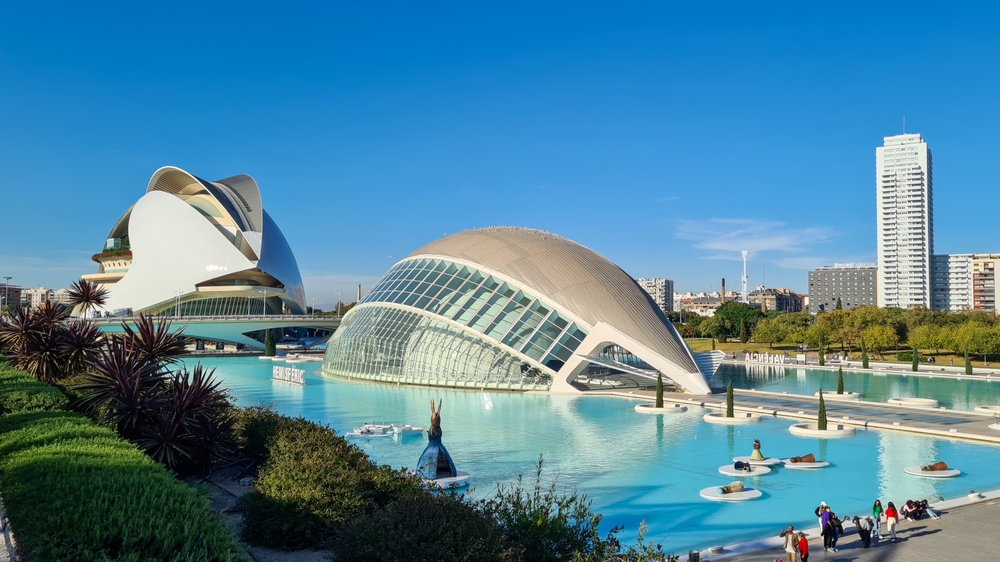
This science-and-culture complex in the Turia Gardens was designed by Spanish architects Santiago Calatrava and Félix Candela. Several themed buildings are located on the site, and some are ideal for family visits. To see the entire complex properly, you will need at least one full day.
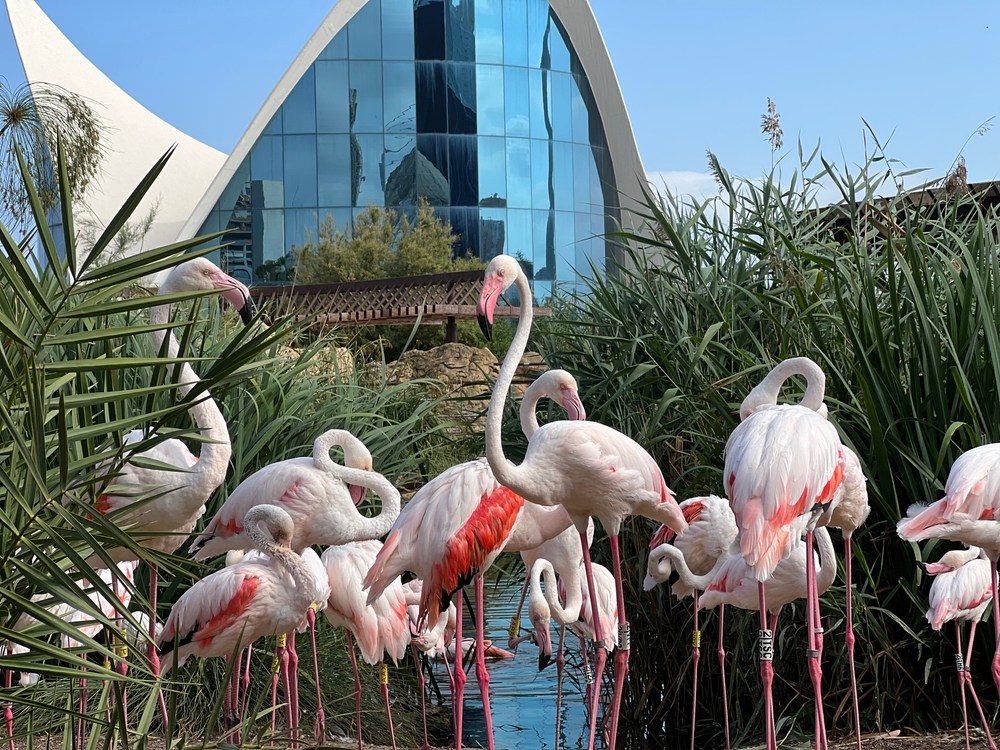
Europe’s largest aquarium is both a tribute to the world’s seas and oceans and an excellent science and education centre. It faithfully recreates major marine ecosystems across the planet: from cold Arctic waters to evergreen mangroves in tidal zones and river deltas; tropical oceans, wetlands, and the deep-sea world are all represented. More than 27,000 animals live here.
Among them are the Atlantic horseshoe crab, blacktip reef shark, Aldabra giant tortoise, beluga, large seahorses, and the blacktail comber. Both children and adults particularly enjoy the underwater tunnels, where sharks and rays swim around you.
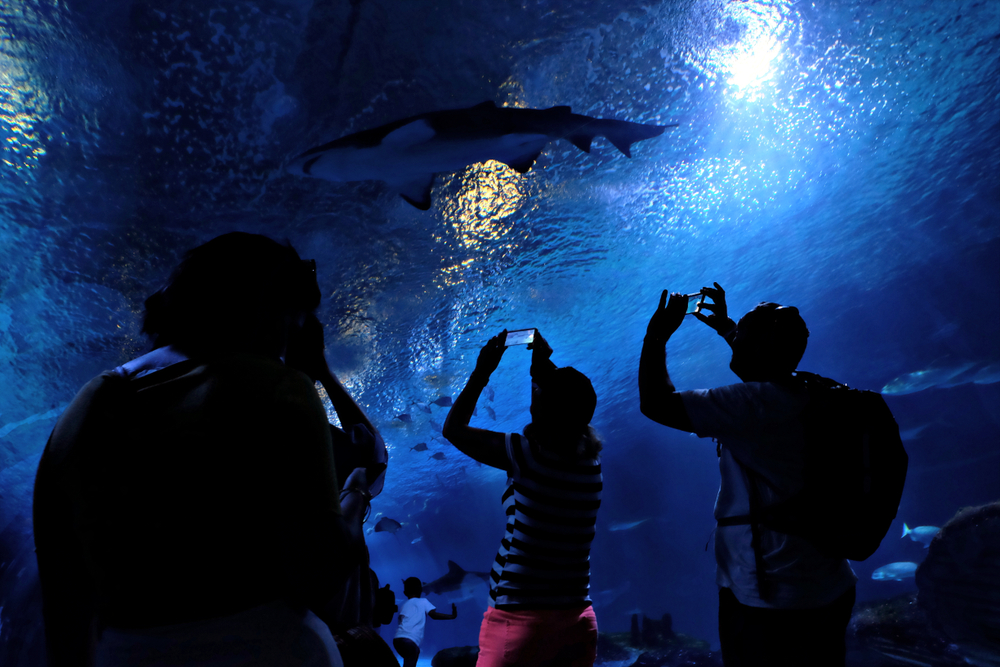
You can do more than walk through the tunnels: the Oceanogràfic offers visitors the chance to spend the night in one of them. The programme is called “Sleeping with Sharks”. Tickets are sold to parents with children aged 4+ and to school groups. The price is €80 and includes the aquarium entry ticket, dinner, breakfast, and sleeping mats. You will need to bring a sleeping bag, toiletries, a change of clothes, a torch, and insect repellent.
With a relaxed pace, a visit can easily take half a day or more.
A schedule of daily activities is available here.
For the dolphin show, it is best to arrive thirty minutes early. It is better to visit the Oceanogràfic in autumn or spring, avoiding heat and crowds.
Museu de las Ciències Principe Felipe
Av. del Professor López Piñero, 7
Tickets: from €7.20
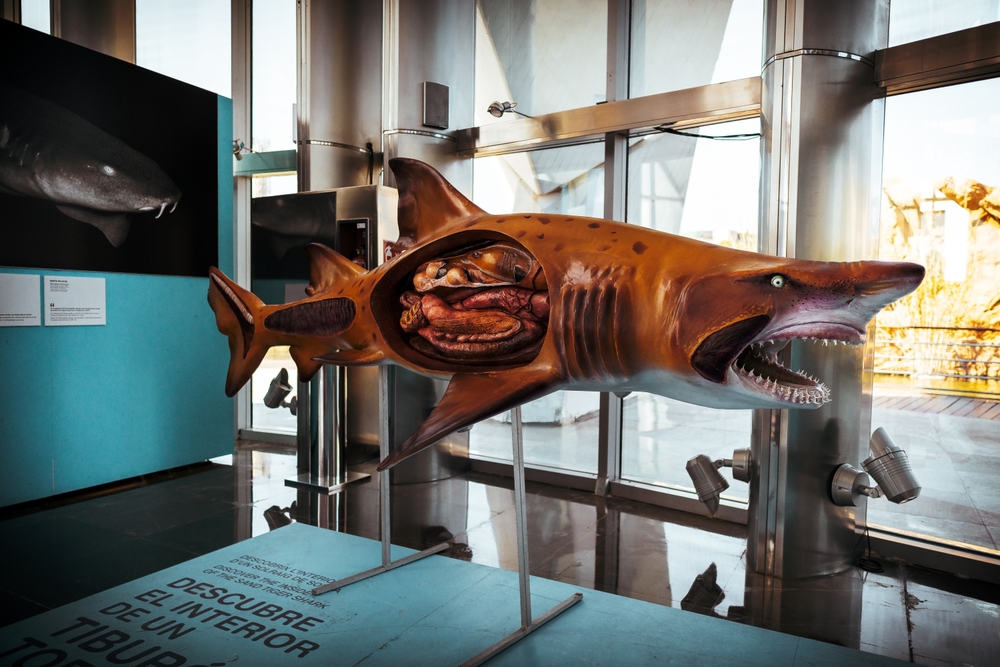
While Valencia may not rival Spain’s biggest, truly flagship natural history museums — which you will find in Barcelona, Granada and San Sebastián — the Prince Felipe Science Museum is still well worth including in a family day out, especially if you are looking for something engaging without committing an entire day. The exhibition is fairly compact and typically takes around two hours, but it offers plenty for children: hands-on physics displays, a striking 15-metre DNA model, a small music-focused section, and, on the third floor, models of space rockets and a shuttle.
Until April 2026, the museum is also hosting a temporary exhibition, “Metamorphosis. The Power of Transformation”, designed to let younger visitors step into a fairy-tale role and explore big questions about how the world — and they themselves — work.
If you do not speak Spanish, you may want to skip the exhibition’s “cinema room” linked to “Leonardo da Vinci: 500 Years of Genius”, as the translations into other languages are not always smooth. Adults, meanwhile, can look out for the museum’s robotics workshops.
Related Articles
Esgarraet: The Valencian Tapa Tourists Overlook
Behind its unfamiliar name hides one of the most recognisable snacks in Valencian cuisine — roasted red pepper and salt cod, torn by hand. Here's where to try it
Loading…
Loading…