







Support La Cotorra on Patreon
Access exclusive content, special perks, and closer connection with us.
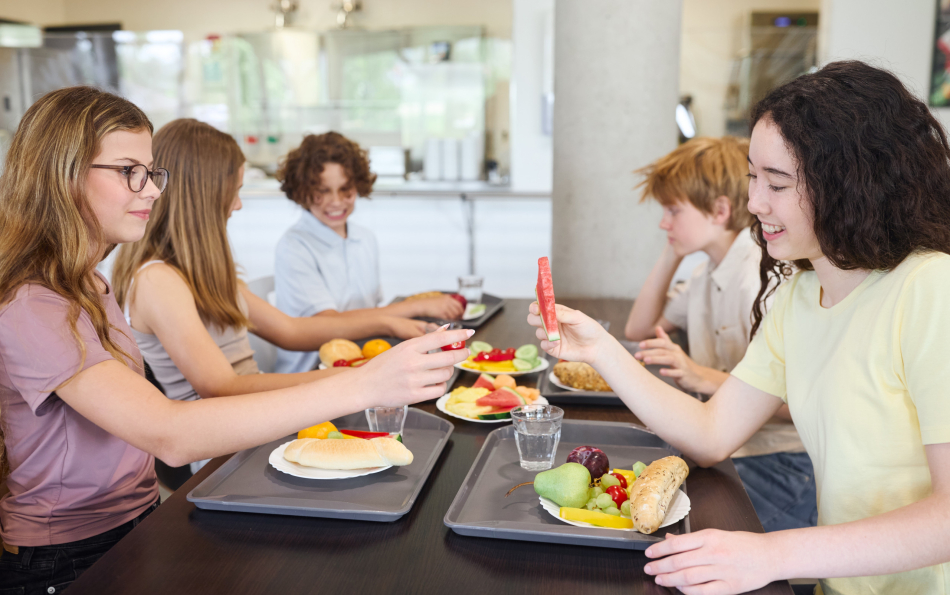
New regulations governing school cafeteria nutrition have entered into force across Spain. The reform, approved by the government, applies to all educational institutions—public and private—including nurseries, primary schools, and secondary colleges.
The new regulation introduces stricter requirements for nutritional quality. Menus must now consist of fresh, seasonal products and include vegetables, fruits, legumes, whole grains, and nuts, as well as fish, eggs, and dairy products. Regarding meat, preference is given to poultry and rabbit. Furthermore, at least 45% of all fruits and vegetables served must be seasonal.
The use of processed foods and fried dishes is significantly restricted. Items such as pizza, croquettes, or empanadas can now be served no more than once a month, while fried foods are limited to a maximum of once a week. Cooking methods are also shifting, with a priority on baking, boiling, stewing, steaming, and grilling. Salt content will be reduced, and water will be the only permitted beverage.
The weekly distribution of food groups is clearly defined: legumes and vegetables must appear up to twice a week, fish up to three times, eggs up to twice, and meat no more than three times. Red meat is limited to once a week, while processed meat can be served no more than twice a month. The use of plant-based proteins is encouraged, particularly in vegetarian menu options.
Special attention is paid to desserts. Fresh fruit must be served up to five times a week, while sweetened dairy products are limited to once a week. Schools are also legally required to provide special menus for children with allergies, food intolerances, or specific religious and ethical requirements.
The changes also extend to school snack bars and vending machines. The sale of products high in sugar, salt, and saturated fats, as well as caffeinated drinks, is now prohibited. Additionally, vending machines must not be freely accessible to preschool and primary students and are forbidden from displaying advertising.
Another key innovation is transparency. Parents will now have the right to review detailed menus in advance, including information on specific dishes, preparation methods, ingredients, and allergens.
Related Articles
Beyond Paella: Discovering All i Pebre, Valencia’s Best-Kept Culinary Secret
Deep in the heart of the Albufera wetlands, the fishing village of El Palmar preserves a traditional, rich garlic and wild eel stew that tourist traps completely miss
Loading…
Loading…