
Support La Cotorra on Patreon
Access exclusive content, special perks, and closer connection with us.
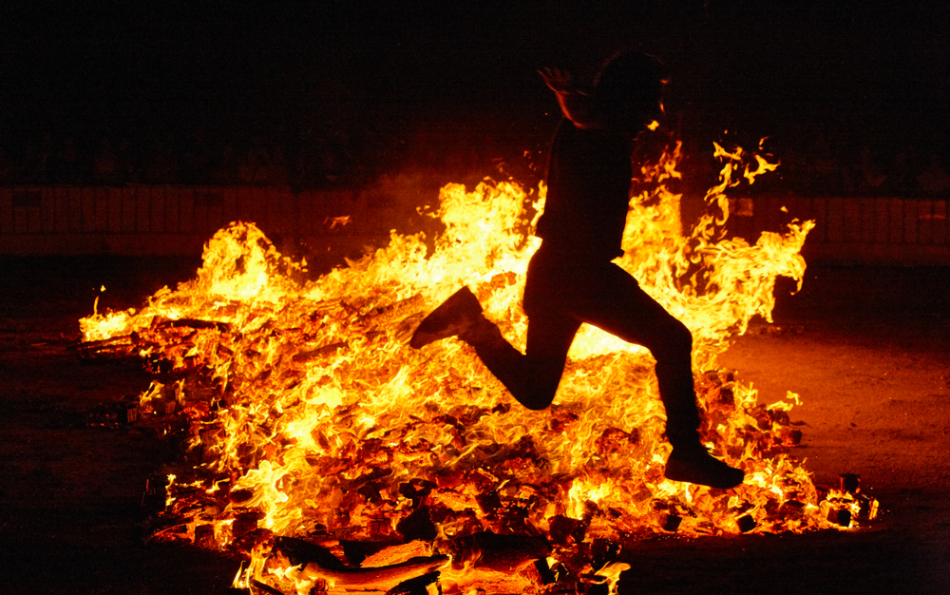
San Juan is one of those festivals that lets you understand just how different Spain can be depending on the region. Formally, the occasion is the same everywhere — the birthday of John the Baptist, falling on one of the shortest nights of the year. Yet it is celebrated differently across Spain. In Alicante, they build and burn figures many metres tall, in Barcelona, they stock up on firecrackers, in Galic, they leave water with herbs out under the open sky overnight, and in Valencia, after midnight, whole families head to the sea to make wishes.
Although San Juan is linked to the birthday of John the Baptist, many of its customs go back to more ancient summer rites. Historians link them to traditions that existed on the territory of Spain long before the arrival of Christianity. Over time, the church incorporated these customs into its calendar, which is how bonfires, night-time bathing, and belief in the special power of this night made their way from antiquity into our own day.
People write down on paper the things they want to be rid of, throw the notes into the fire, jump over bonfires, wash their faces with seawater, or go into the sea after midnight. In some families, these rituals are taken seriously, in others as a beautiful tradition, but on the night of San Juan, even the most rational people usually succumb to the magic of the festival.
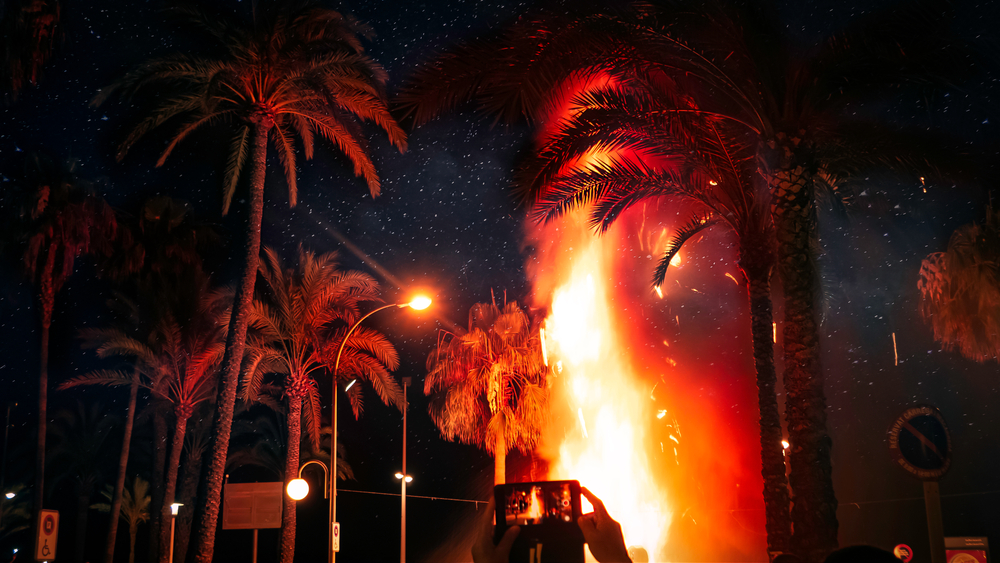
In Valencia, San Juan is celebrated above all on the beach. By the evening of 23 June, the Malvarrosa and Cabanyalbeachesh were filled with groups bringing food, drinks, folding tables, and speakers. People come early, because closer to night it becomes hard to find a spot. Every year, the municipality separately announces the rules: where bonfires can be lit, which zones will be cordoned off, where firewood is distributed, and how transport will be organised.
Firewood for the San Juan bonfires is distributed at special points located along the promenades: usually, it's the remains of trees after municipal pruning. There is a fine for homemade bonfires outside the permitted areas, even on the night of the.
For the festival, in the Valencian Community, they bake cocas de Sant Joan. This traditional pastry is often made with a savoury filling: with tuna, onion, vegetables, or roasted peppers.
Another important part of the Valencian San Juan is the verbenas — folk street festivals with music, dancing, and communal feasting. They are organised by neighbourhood associations and fallas, and for one evening,g the streets turn into open-air dance floors. For many residents, it is precisely the verbenas that mark the start of the festival: neighbours gather here, live music plays, orchestras perform, open-air bars operate, and the festivities continue late into the night. In recent years, the Valencia municipality has issued more than a hundred permits for verbenas in various districts of the city. You can read about safety rules in San Juan on the city hall website.
Traditional San Juan on the Malvarrosa
It is on the Malvarrosa beach that the largest groups gather: families with children, students, and groups of friends.
The noisiest party in the Cabanyal
On the night of San Juan, the Cabanyal district turns into an extension of the beach. There are especially many young people, music, and bars here that stay open until late at night. Many first gather for dinner in the area of the old fishing streets, and then the whole group heads off to the sea to greet midnight.
The atmosphere of a neighbourhood festival in Benimaclet
Benimaclet is considered one of the city's most active districts when it comes to street festivals. It is here that large verbenas with live music, dancing, and long tables right out on the street most often take place. This is one of the best ways to get to know how the Valencians celebrate San Juan.
Music and bars in Russafa
The bohemian district of Russafa usually becomes the centre of fun long before people set off for the beach. Many begin celebrating right here: dining on terraces, dropping into bars, meeting friends, and, closer to midnight,t heading to the sea.[/accordion-item][/accordion]
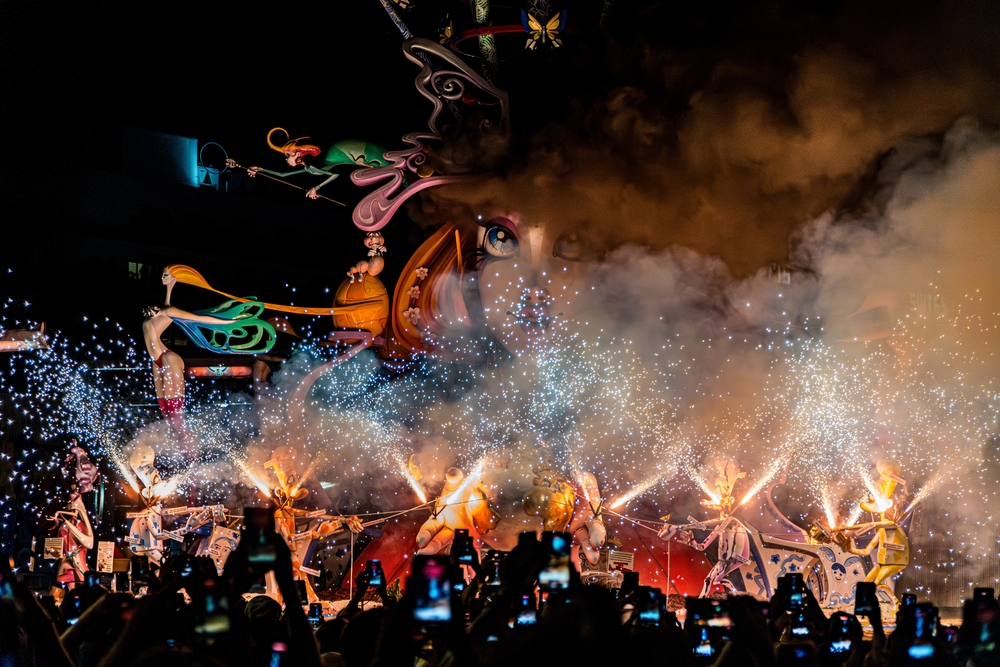
In Alicante, even though it is in the Valencian Community, San Juan is arranged quite differently. The festival is called Hogueras de San Juan and resembles Las Fallas: artists create large satirical figures dedicated to politics, celebrities, urban conflicts, and everything that in Spain it's customary to discuss with humour. The festival lasts several days, each with a packed programme. After the processions and pyrotechnic shows, the festival ends with the burning of the festive figures. Hogueras is considered one of the city's main events; this year's programme can be viewed here.
It's important not to confuse the Alicante Hogueras with ordinary bonfires on the beach. In Alicante itself in 2026, beach bonfires were banned: the authorities explained this by citing issues of safety and cleaning, as well as the fact that such a practice does not belong to the city's local traditions. In the neighbouring town of El Campello, on the contrary, bonfires were permitted, but only in 12 special zones on the beaches.
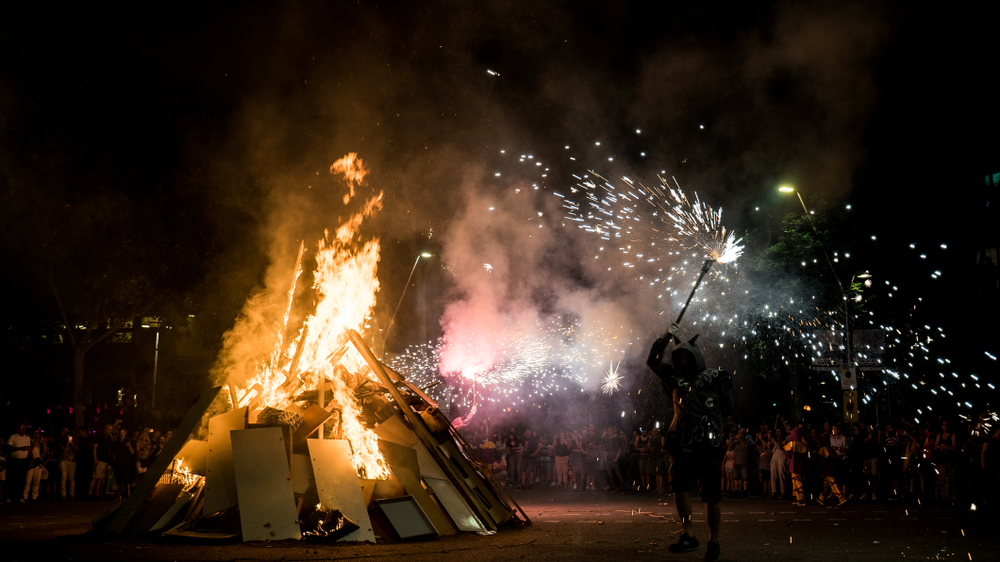
In Catalonia, the festival is called Revetlla de Sant Joan, and for many, its main symbol is not the bonfire at all, but the sound of firecrackers. Already from the first half of the day on 23 June, Barcelona begins to thunder: children set off bangers in courtyards, teenagers compete in the loudness of their firecrackers, and the explosions, which don't die down until late at night, can be heard all over the city. Shortly before the festival, temporary pyrotechnics sales points open all over the city, so by the evening of 23 Jun,e anyone who wants firecrackers has them.
For many Catalans, San Juan is the noisiest night of the year. It is precisely because of this that disputes increasingly arise around firecrackers: residents complain about the noise, and veterinary organisations remind people of the stress on pets. In response, low-noise pyrotechnics are increasingly being promoted in Catalonia, and in Barcelona,na special points selling them have even opened.
In addition to firecrackers and beach parties, Catalonia holds fire processions with pyrotechnics on San Juan. At the same time, some elements of the festival are similar to the Valencian ones: in Catalonia they also eat coca de Sant Joan (though the sweet version — with candied fruit, cream, or pine nuts) and hold verbenas.
The full programme of the festival in Barcelona is here.
In Galicia, the night of San Juan is closely linked to ideas about the connection between humans and nature, witches, protection, and purification. On the eve, Galicians gather herbs — rosemary, St John's wort, fennel, mint, chamomile, and other plants (depending on local custom) — and place them in water, leaving it out under the open sky overnight. The next morning, they wash their faces with this water. It is believed to bring health and beauty and to protect against all things bad.
On the streets and in courtyards, bonfires are also lit, and on the table you'll often find sardines, empanadas, seafood, and local wines.
The full programme of San Juan in A Coruña, the region's capital, can be found via this link.
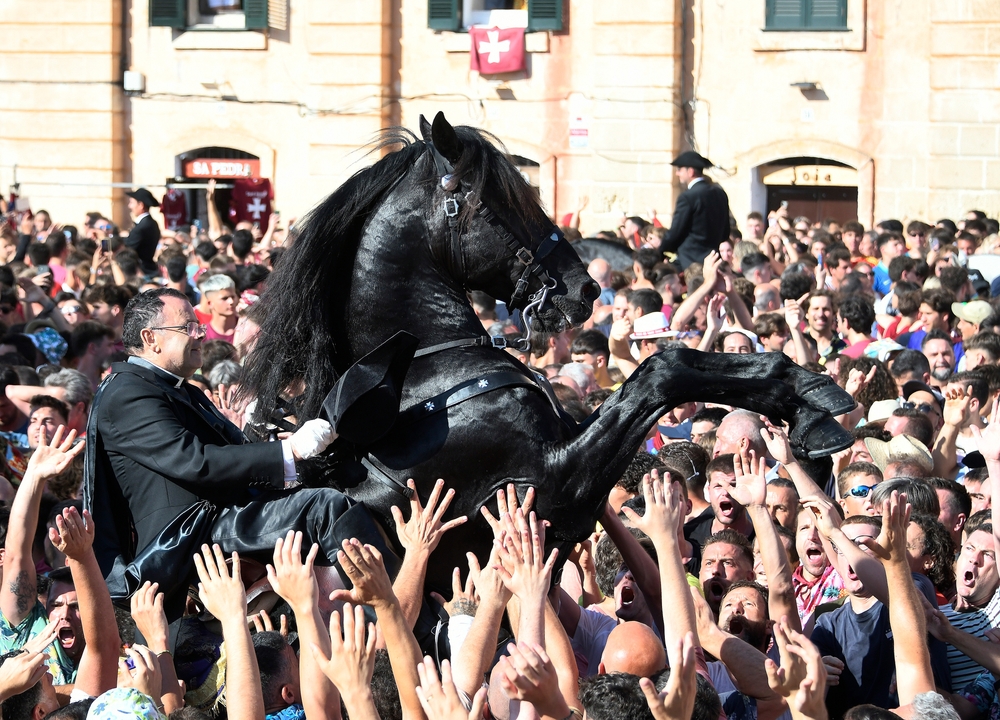
If in most regions San Juan is associated with bonfires and beaches, on Menorca, the festival looks quite different. In Ciutadella (the island's former capital), thousands of people gather in the streets to see the traditional equestrian processions. Riders in historical costumes lead horses through the city centre, and during the famous jaleos (traditional elements of the equestrian festivities), the animals rear up right among the crowd of spectators. It is precisely these scenes that have made the Menorcan San Juan one of the most famous and spectacular festivals in Spain. Although for the locals it is not a tourist show but an important part of the island tradition, which has been preserved for several centuries.
The full programme of the festival on the island can be found on the website.
For those planning to celebrate San Juan in Spain for the first time, the main piece of advice is to check the rules on lighting bonfires in your city in advance. In some places, es fire is allowed only in designated areas, in others it's banned entirely.
It's best to arrive at the popular beaches before dark, otherwise you'll have to spend a long time looking for a spot. You should bring food and water with you, but only in plastic containers: glass bottles are often prohibited. After midnight, transport is usually overloaded, taxis are hard to catch, and in the morning, the beaches look as though they've been through an invasion. So, along with the blankets and picnic food, it's worth bringing rubbish bags. If this is the night for getting rid of everything unnecessary, then let that be the past, and not cans and sweet wrappers left on the sand.
Related Articles
Spain's Heatwave Intensifies — Red Alert in the Basque Country as Temperatures Hit 42°C
AEMET has issued heat warnings across 15 autonomous communities, with the Basque Country on red alert expecting 40–42°C from 1:00 PM. The heatwave is forecast to last at least until Wednesday
Loading…
Loading…