

Support La Cotorra on Patreon
Access exclusive content, special perks, and closer connection with us.
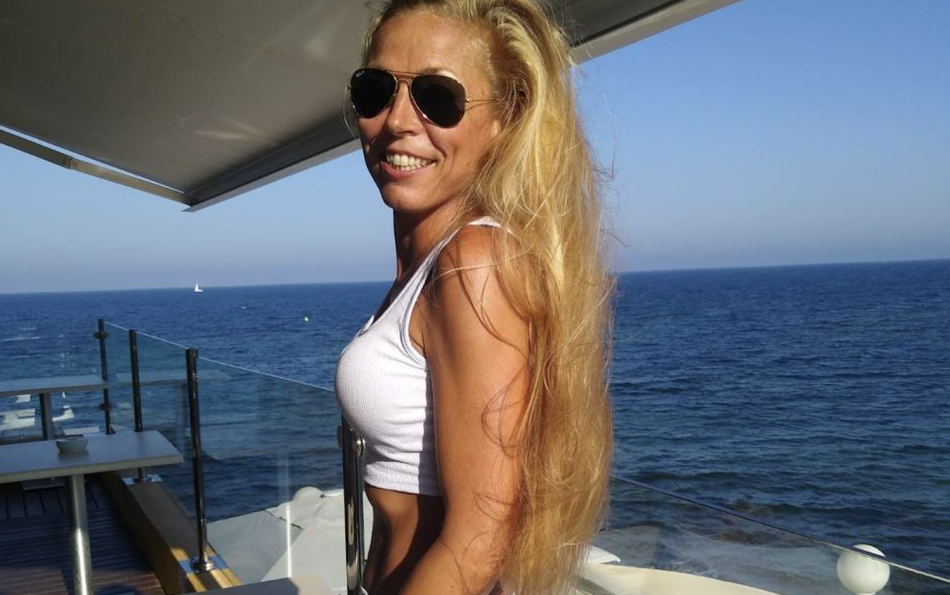
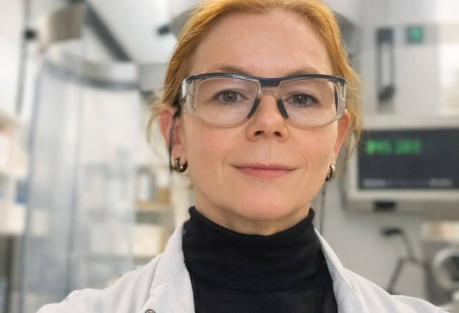
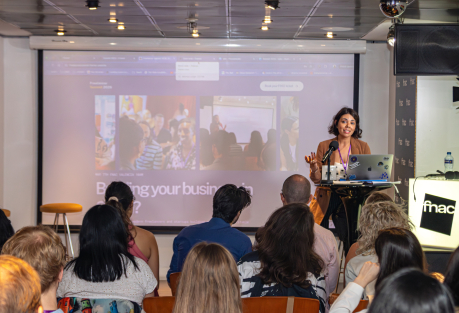
Torrevieja — a city in the province of Alicante — has long been known as "Russian Spain," and since the start of the war in Ukraine, the number of émigrés from former Soviet states has only grown. As of early 2026, officially registered Ukrainians and Russians alone account for almost 16,000 of the city's 110,000 residents. Madrid native Beatriz Saceda settled in Torrevieja in 2019 after returning to Spain from Belarus. La Cotorra spoke with Beatriz about life in a city where Spanish citizens are outnumbered by foreigners (51,000 Spaniards versus 59,000 foreigners), when she relies on Russian-speaking professionals herself, and how paella and prams can spark unexpected misunderstandings.
— When and why did you decide to settle in Torrevieja?
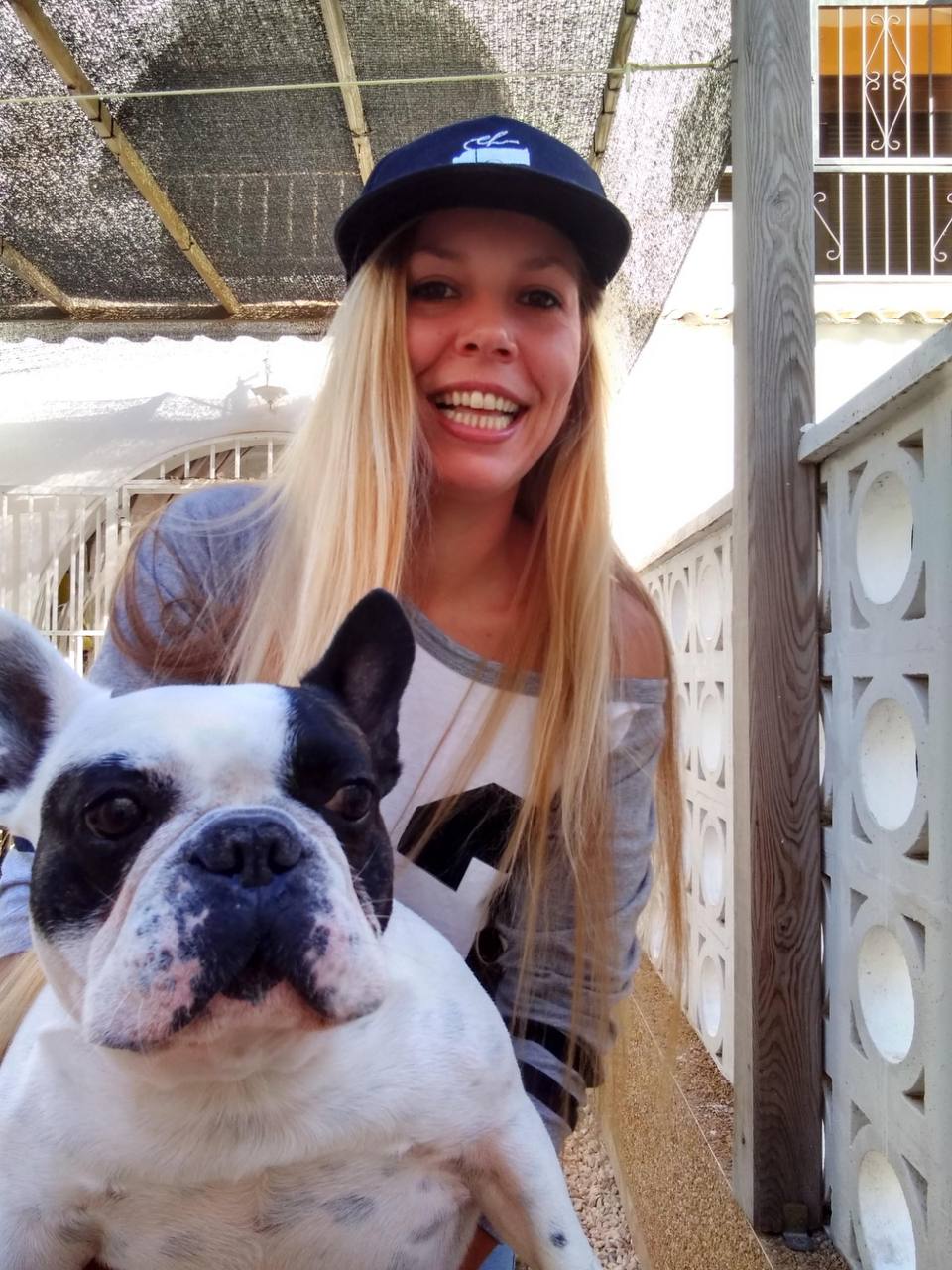
— Before this, I lived for several years in Minsk, where I worked as a volunteer and taught Spanish. After the cold climate in Belarus,s I wanted somewhere warmer — somewhere on Spain's east coast. I have a French bulldog I adopted from a shelter in Minsk, and because it's a brachycephalic breed, flying with him is quite complicated. At the time, the only regular direct flights from Belarus were to Barcelona, but I found a charter company offering very cheap flights to Alicante.
I was looking for rental accommodation in Alicante and Valencia. But one day in class, as I mentioned that I was leaving Belarus, and my students — who are now good friends — offered me their house in Torrevieja.
To be honest, the city doesn't have the best reputation among Spaniards, and I still remembered my first visit to Torrevieja at 17 or 18 — I hadn't liked it at all. But there was a large Russian-speaking community here, which is the demographic I focus on for Spanish lessons.
Tempted by the offer of free accommodation that would give me time to think calmly about the future, I accepted. And I've been in Torrevieja ever since.
— And Madrid?
— It was never part of my plans. The rental prices there are exorbitant and, in my view, the quality of life isn't great — and neither is the climate.
— How has Torrevieja changed during your time here?
— The city itself is much the same — its population, on the other hand, isn't. Since the war began, a large number of Ukrainians and Russians have arrived, and you can see it on the streets. Ukrainians in Spain, incidentally, also speak mostly Russian. In any case, for most Spaniards, they all blur into people from the former USSR.
For me, the main draws of Torrevieja are the climate, the quality of life, and of course my Spanish lessons with Russian-speaking clients.
Their numbers grew not only because of the war, but also because of the coronavirus. There were many people here with residency who didn't want to apply for citizenship. But during the pandemic, some of them decided to start learning Spanish — to obtain citizenship, you have to pass a language exam at the A2 level.
I see no real downsides to the city: there are both private and public hospitals. Maybe for families with older children, there aren't enough universities, but the drive from Torrevieja to Alicante or Murcia takes about an hour by car — about the same time it can take to cross a big city from one end to the other.
For now, I'm comfortable here. But I don't rule out moving in the future.
— Right in the centre of Torrevieja, you find shops called "Kalinka" and "Malinka," shashlik stalls, cafés serving honey cake and syrniki. How do you feel about that?
— For me, the big plus is being able to practise and improve my Russian every day. Even after five years living in Minsk, my conversational level still leaves something to be desired. Russian is naturally in demand in Torrevieja, in almost any profession that involves dealing with the public.
There's a great joke in Torrevieja that at weddings the line at the end goes: "I now pronounce you husband and wife — until a Russian or Ukrainian woman do you part." I've lived in different countries, but I have never felt as foreign anywhere as I do here, in my home country. Sometimes, when I go to bars or to official institutions where I have to translate for friends into Russian or English, I get complimented on my "good Spanish." And when I say I'm from Madrid, people don't believe me, or assume I studied in Madrid or married someone from there. I'm blonde, so in Torrevieja — and only in Torrevieja — people see me as a foreigner.
— How is the Ukrainian, Belarusian, and Russian community in Torrevieja different from other immigrants here?
— I think Russian-speakers know how to stick together in cities and countries with a large influx of their compatriots. I've never seen this to the same extent with any other nationality or language group. I even rely on their services when I need a plumber or an electrician, for example. The prices are far better, and they're more punctual. A Spanish or English plumber would charge twice as much as a Russian-speaking one — and would turn up late. Or tomorrow. Or the day after.
But sometimes the immigrant community grows so large that it closes itself off from the local population. Some people have been living in Torrevieja for 20 years and know just a few words of Spanish, because they always go to "their" cafés and shops, and use "their" professionals and translators.
— What benefits has Torrevieja gained from this influx of Ukrainians and Russians?
— A multicultural environment. As I mentioned, being able to practise other languages almost constantly helps me keep them up. I think the level of service has gone up, too. Russian-speaking technicians do excellent manicures at very attractive prices — I'd never go to a Spanish, Thai, or Chinese woman.
— And what about the downsides? Does anything frustrate you in the behaviour of newcomers?
— When I lived abroad, I always had to learn the language and adapt to the new culture myself.
But in Torrevieja, and across Spain in general as far as I can see, the locals adapt to the immigrants and tourists rather than the other way around.
It feels strange to me, in my own country, to walk into bars, clinics, and other places where they don't speak Spanish, or to see notices in town halls and schools in Russian, Romanian, and Arabic. Fortunately or unfortunately, I never experienced this in any other country I lived in — life was much harder without knowing the language at first, but I learned everything I needed quickly.
— Have you met Spaniards who complain about the large number of immigrants in Torrevieja?
— Yes, this happens. I've witnessed conflicts in hospital waiting rooms over foreigners being seen before locals. And as I said, people don't much like walking into a place and finding that nobody speaks Spanish, particularly given that Spaniards' general level of foreign languages is quite low. Geography isn't always a strong point either. Only since the war started have some people begun to grasp the difference between Ukraine and Russia. As for Belarus, hardly anyone has even heard of it.
— Have you ever experienced conflicts in everyday life because of the war in Ukraine?
— In daily life, mostly no. But on social media, all sorts of things happen. Some Ukrainians refused to work with me because I was advertising in Russian. But I can understand the emotions, as long as it doesn't cross the line.
— Do you see any problems with the integration of immigrants? Is the city's infrastructure ready for the influx?
— I think the situation here is much better than in many other cities. There are Russian-speaking civil servants, signs and information available in Russian. From what I know, free Spanish-language courses are also organised for Ukrainians.
It's harder to say about the rest. But in my view, public infrastructure in Spain — whether national, regional, or local — isn't generally known for efficiency or speed. And with the influx of immigrants, the situation has only worsened. In some places, there may be just a handful of staff handling document processing.
— You lived for several years in Belarus, and have travelled a lot. Do you understand the "Slavic" mentality better as a result?
— Yes, definitely. For example, our ideas about masculinity (chivalry) and femininity differ quite significantly. That doesn't mean one is better or worse — we are simply, undoubtedly, very different.
I'm used to the disappointment of Russian-speaking students or friends who are upset because their boyfriends or husbands from Spain don't bring them flowers.
I have to explain that this isn't very common here, that for us it makes no difference whether the bouquet has an even or odd number of flowers, and that carnations — especially red ones — are one of Spain's national symbols, part of many regional costumes. Also, here the man isn't expected to pay for everything, as is usually the case in Belarus on dates. It's easy for me to explain and to understand these things, since I'm familiar with both perspectives.
— What advice would you give to those just planning to move to Torrevieja?
— I think the city has already adapted to foreigners, but not all foreigners are equally willing to adapt to the Spanish language, culture, customs, or schedule. For example, we usually have dinner between 9:00 PM and 10:30 PM, and restaurant kitchens often don't open before then. That said, in Torrevieja, there are plenty of places where you can have dinner from 4:00 PM.
Newcomers should know that Spaniards rarely eat paella for dinner. It's no use expecting — and I've heard plenty of complaints on this front — that you can order it after 3:00 PM in non-touristy towns or neighbourhoods. For us, it's far too heavy for an evening meal.
I also sometimes notice ththat someussian sspeakerslike to decorate their apartment windows with red lightbulbs in winter. To Spaniards, that means there's a brothel inside.
And finally: if people want to keep their prams, bicycles, and shoes intact, they shouldn't leave them in entrance halls and on stair landings. It's simply illegal in Spain.
Related Articles
Valencia Commissions Paco Roca to Create a Monument to DANA Volunteers
The city has tasked the renowned Valencian comic artist with a memorial to those who helped victims of the catastrophic October 2024 flood
Loading…
Loading…