

Support La Cotorra on Patreon
Access exclusive content, special perks, and closer connection with us.
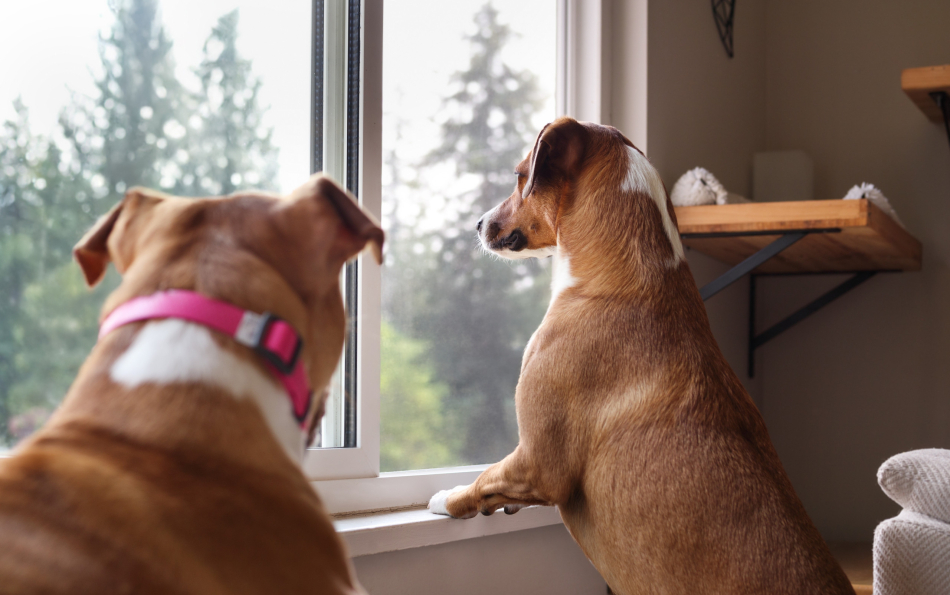
For many pet owners, Valencia's main festival, Las Fallas, is not a joyful event, but serious trouble, because it is accompanied by very loud firecrackers. Dogs are often afraid of loud noises; they run away in fear of explosions, and sometimes even become ill because of stress. There is a debate about what is more important: preserving traditions or the safety of pets? La Cotorra asked dog owners what they do during Las Fallas and spoke to dog trainers who gave advice on ways to help animals.
Natalia, who moved to Spain in 2023 and lived in the town of Guardamar del Segura in the province of Alicante for eight months, had two Irish wolfhounds. One of them, an eight-year-old dog named Morgan, was once badly frightened by children setting off a firecracker next to him, according to Natalia. After that, she says, Morgan refused to go outside.
"Our walks went like this: he would hold out until the last minute, then panic at the door. We would run to the nearest lawn, and then he would rush back home. This is a male dog, 96 centimetres tall and weighing 80 kilograms, so it is incredibly difficult to control him when he is in a state of panic. Often, I didn't have time to clean up after, so I had to go back after taking Morgan home," says Natalia.
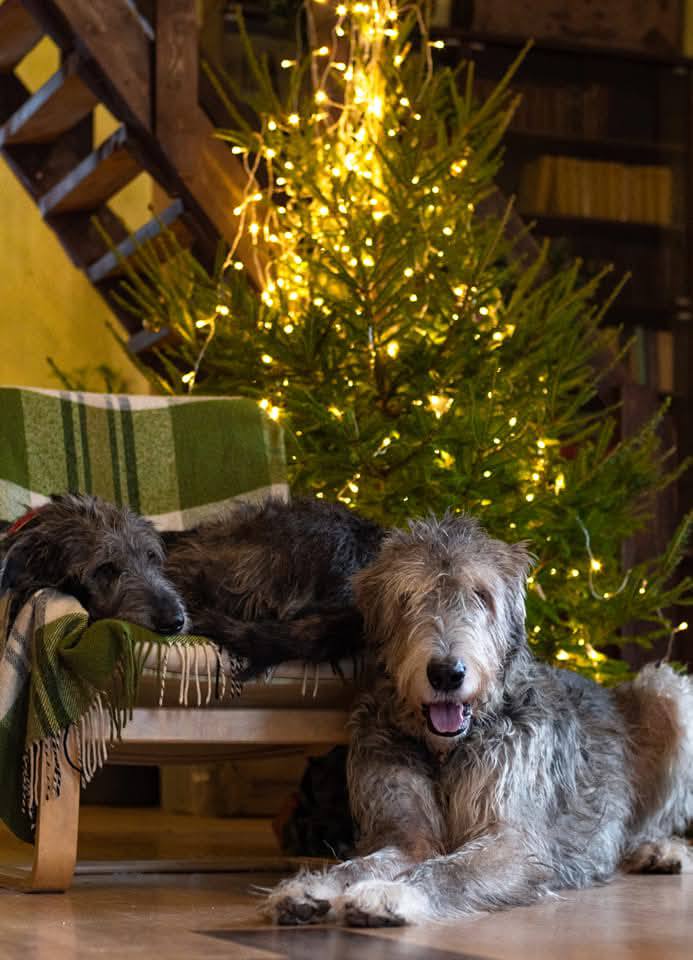
On the advice of a vet, she tried giving the dog sedatives, but one of them caused the animal to suffer from coordination problems and urinary incontinence — she even had to use nappies. Another medicine was not very effective.
Natalia tried to help Morgan in every way possible: she bought a collar with calming components, covered his ears with a fluffy bandage, and wrapped him in wool blankets during anxiety attacks. But, according to her, Morgan eventually fell ill due to prolonged stress.
"Despite the efforts of veterinarians and serious surgery, Morgan died. If I had known in advance about the problems associated with firecrackers and fireworks, I would have chosen a remote village to move to instead of a city. It is very hard to calm a dog during explosions. Medicines, in fact, did not help. They may even have done more harm than good," says Natalia.
After Morgan's death, Natalia's family moved to a village in Galicia, far away from the noise of big city celebrations.
A Valencia resident named Amparo has two dogs, a hunting setter named Gucci and a collie named Luna.
Luna finds the period of Las Fallas the most difficult to cope with. Loud bangs cause panic: she runs around the flat and cannot calm down.
«We went to the vet, and he prescribed a sedative for our dog,‘ says Amparo. ’We gave it to him every day for a month. I also made him drink water with chamomile. It helped a little, but it didn't completely relieve his anxiety. This is a big problem for our family.»
Many Valencian dog owners leave the city during the festival or send their pets to live with relatives in other regions. This is especially true for residents of the Rusafa district and the centre of Valencia, where the noisiest events take place.
Some dog owners get together with others to organise a full-fledged retreat during Las Fallas. There are specialised Facebook groups which help dog owners to rent a house outside the city together. Anna, a regular participant in such trips, came to Valencia from Kyiv four years ago with her corgi named Nota.
"Our first Las Fallas experience was very difficult. We weren't prepared for it, we lived in the centre of Valencia, and the dog was very nervous. In the following years, we tried to leave the city for the last, most intense week of the festival. And recently, we brought another corgi, Busya, to Valencia, who had been left without owners in Kyiv. There, she heard explosions and air raid sirens, and she is very sensitive to loud noises," says Anna.
The cost of a week-long dog retreat is up to €600.
According to Anna, many people are willing to pay a lot of money to spend the noisiest days of the holidays away from Valencia.
In turn, for those who stay in the city with their sensitive dogs, a symbol has been devised — a green scarf that is worn around the dog's neck. It means that the animal is sensitive to the noise of explosions.
Dog trainer Victoria Rubio believes that city authorities could pay more attention to the safety of animals and people during the festive season.
"To be honest, this issue is not considered important. It's not just dogs and cats that suffer from fireworks: it also affects people with autism and families with young children. This problem is much broader than it seems at first glance," she says.
According to Victoria, the situation has only worsened in recent years: fireworks displays are held not only during Las Fallas, but on other days as well.
People enjoy not only the fireworks and lights, but also the sound of the explosion, the sound itself. If you remove the sound, it's not the same. If you make it quieter, it's also different," explains Rubio.
It is really difficult for animals to cope with this kind of stress. ‘A dog doesn't just get scared once. It lives in a state of constant tension for a long time afterwards. Even if it's quiet today, it's still waiting for the next explosion,’ says Rubio.
According to her observations, recovery can take weeks — the holidays end, but dogs continue to be afraid to go outside until they get used to the quiet again.
Zoopsychologist Velina Mukhtarova explains a dog's reaction to loud noises, comparing them to humans: ‘The range of audible frequencies for dogs is up to 45-60 kHz, while humans can only hear up to 20 kHz. Therefore, what we perceive as a loud bang may feel like a real explosion to a dog.’ According to her, dogs can pick up additional sharp sounds of fireworks that are simply inaccessible to humans.
‘Fear of fireworks is one of the most common types of sound sensitivity in dogs. And most often, the problem is not related to improper training,’ says Velina.
Kirill's family has two dogs, and one of them, Hannah, finds the fireworks season harder to cope with. According to him, the basic recommendations are quite obvious.
"We just do everything that dog trainers recommend: we close the windows to reduce noise and flashes, and turn up the usual background noise in the house — music or a TV series — to drown out the bangs. And most importantly, don't show that anything extraordinary is happening, but if the dog is clearly upset, you need to calm it down. Plus, give him treats, of course. An anti-stress vest also helped us. It gently presses on the body — as if the dog is being lightly hugged all the time," says Kirill.
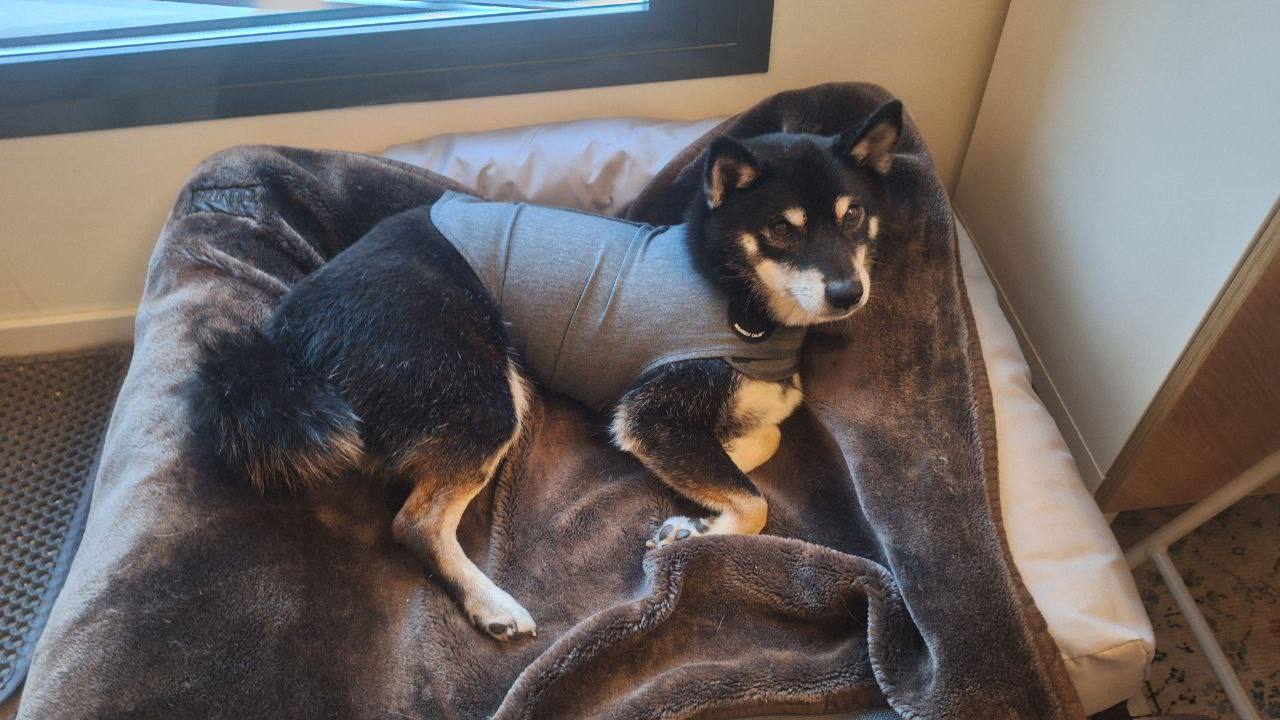
According to him, the second dog, Ichigo, ‘just moves away from the windows, for example, to the bathroom, and sleeps there.’
The last three days of Las Fallas are the most difficult when there are more fireworks and firecrackers than usual. Kirill tries to spend this time at home so he can be with his dogs.
Some of his colleagues book places in country hotels for animals in advance — there are usually few places available in such establishments, so it is necessary to book in advance.
Victoria Rubio believes that it is best to work with your dog all year round, with the support of dog trainers and animal behaviour specialists. During the holidays, she says, it is best to keep windows and blinds closed, turn on background music or the television, and use special headphones or anti-stress vests.
Medication should only be used under the supervision of a vet. At home, you can set up a safe haven — preferably in the bathroom, where street noises are less audible: a bed, water and a feeling of security. And it is extremely important that the dog is not left alone. When it is scared, it needs to feel that it has not been abandoned.
Velina Mukhtarova notes that you should not test a dog's courage — according to her, getting used to noise can not happen by putting the dog in a frightening situation without a choice. It is also not worth scolding the dog for being scared or ignoring its fear in the hope that it will get used to it.
According to her, you should not pick up your dog immediately after the fireworks start — in such a situation, the animal needs to maintain its footing and feel the ground. If the animal is scared, the best strategy is to go home immediately.
If your puppy is hearing fireworks for the first time, it is important to learn the early signs of stress: freezing, tense posture, trembling, attempts to hide, heavy breathing, open mouth or drooling, refusal to eat or play.
This is not the time for training, says Mukhtarova. At this point, you need to quickly go to a quiet place in the house, turn on white noise, calm music or the television, sit down nearby and wait until it becomes quiet.
If a puppy does not panic when it hears a loud noise, you can reinforce a positive association: praise it, scatter a handful of treats on the ground, or engage it in some kind of game.
One of the training tools is pattern games, which help distract the dog from loud noises. For example, the game ‘1-2-3’ by the famous American dog trainer Leslie McDevitt helps anxious dogs cope with stress. The owner counts aloud, and on the count of ‘three’, a pet receives a treat, which creates a sense of predictability and reduces the stress on the animal's nervous system.
The main safety rule is to keep your dog on a leash and make sure that the animal cannot slip out of its collar or harness if it gets scared. The dog must also wear an ID tag so that the owner can find it more easily if it runs away.
Related Articles
Beyond Paella: Discovering All i Pebre, Valencia’s Best-Kept Culinary Secret
Deep in the heart of the Albufera wetlands, the fishing village of El Palmar preserves a traditional, rich garlic and wild eel stew that tourist traps completely miss
Loading…
Loading…