








Support La Cotorra on Patreon
Access exclusive content, special perks, and closer connection with us.
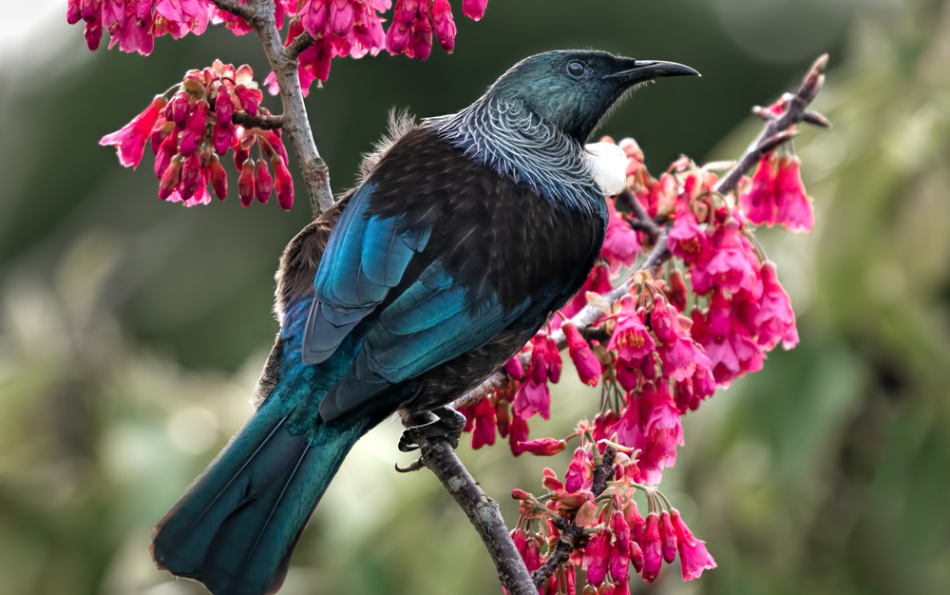
You go out for a walk and suddenly notice a beautifully flowering shrub. Or you look at a tree in the garden and spot an astonishingly elegant bird. Who is she — who knows — but you can’t take your eyes off her. Be honest, it has happened. La Cotorra has gathered a selection of apps that will help you avoid awkward moments, learn the names of Spain’s rarest birds and plants, and generally deepen your understanding of the region’s biological diversity.
According to Spain’s ornithological organization SEO/BirdLife, 664 bird species have been recorded within the Kingdom of Spain. Even Spaniards themselves are unlikely to know them all. This spring, Valencian community groups were filled with posts about an eagle owl terrorizing an entire street — residents called the police, convinced that some troublemaker was shouting nearby. Local scops owls can meow quite convincingly, and without knowing that, one could spend hours in an evening park trying to “rescue an invisible kitten.”
So, who is doing all this chirping? Specialized apps can provide the answer.
Merlin Bird ID
A free app that allows you to identify a bird not only by appearance but also by sound. It uses the large global eBird observation database. Recordings can be made offline.
Aves de España
A specialized reference guide to Spain’s birds. Ideal if you want to study the subject seriously: it contains descriptions of nearly all 664 species.
Spain is a paradise for botanists. Almost a quarter of all plant species found here are endemic — meaning they grow only in Spain. This is largely due to the country’s diverse climate: there are the wet forests of Galicia, the dry plains of La Mancha and the subtropics of the Canary Islands.
If you’d prefer not to say “those purple flowers” instead of “jacaranda”, download apps that can help you identify plants.
PlantNet
A free, science-focused plant-identification app based on a citizen science project: your photos help researchers. You can photograph different parts of a plant (leaf, flower, fruit, etc.), upload the image, and receive an identification.
Arbolapp
A free app created by CSIC (Spain’s National Research Council) and the Royal Botanical Garden of Madrid. It specializes in trees of the Iberian Peninsula and the Balearic Islands. It includes offline access, so you can identify trees from almost any location.
Spanish forests are full of mushrooms. Some species, like porcini, are widely known. But what if you come across a mushroom you’ve never seen before? It is certainly not necessary to eat it immediately — but studying it is another matter. Even familiar mushrooms are worth checking for toxicity.
ShroomID
Users photograph the mushroom from various angles, and the neural network identifies the species by comparing it with previously uploaded images. The app uses artificial intelligence to improve and refine its model. It works both online and offline, making it suitable for mushroom enthusiasts who gather in the mountains.
Mushroom ID
This app also identifies mushroom species from photos and can warn users about potential toxicity. Even though these apps can expand your knowledge, La Cotorra does not recommend relying solely on app-based mushroom identification if you intend to eat what you have found. According to French media, up to 10% of poisoning cases involve people who trusted app recommendations alone.
Related Articles
Valencia Approves €340K Las Fallas Funding for 2027–2029 but Rejects 3-Day Ofrenda Proposal
Prizes for Fallas committees will see a major boost, while the iconic flower offering stays locked into its traditional two-day schedule on March 17–18
Loading…
Loading…