



Support La Cotorra on Patreon
Access exclusive content, special perks, and closer connection with us.

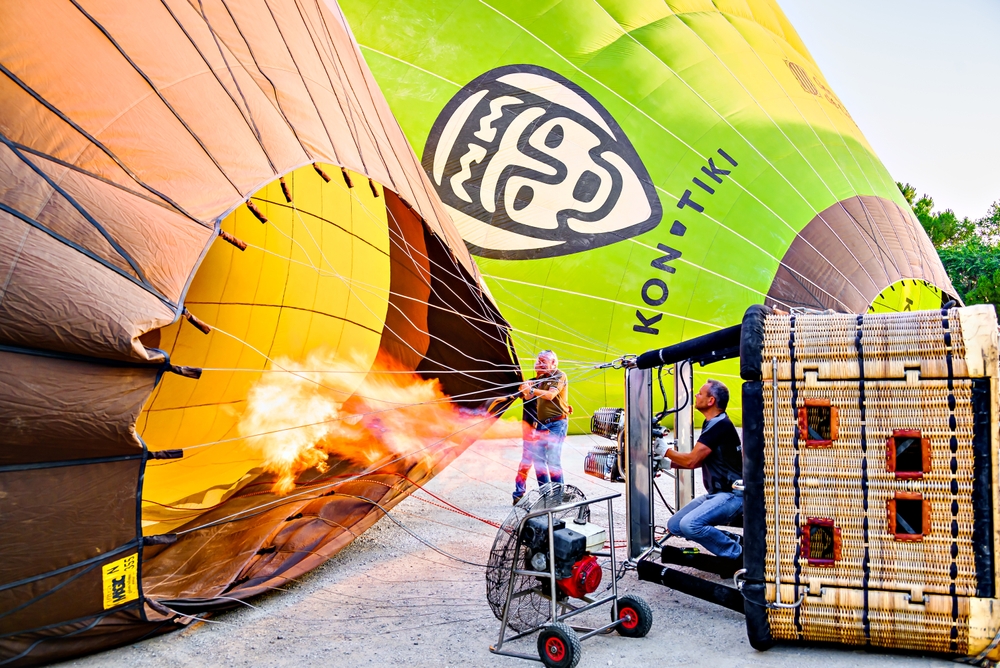
From July 8 to 12, the Catalan town of Igualada will host the European Balloon Festival—the largest hot air balloon festival in southern Europe. The sky will be painted by half a hundred aerostats from various regions of Spain and abroad. The event, which has been held since 1997, attracts thousands of spectators every year. Some of them don't just watch the spectacle from the ground but take off into free flight. Just a few days later, on July 17, the festival kicks off in Segovia (Castilla y León)—the city where aerostats appear in the Spanish sky more often than anywhere else.
La Cotorra correspondent Pavel Tarasenko spent many years in aeronautics, and his first time in Spain was as a member of the Russian national team at the World Air Games—the aviation sports equivalent of the Olympics. In his article, he shares how balloon flights work, the best places in Spain to take to the skies, and why this experience is entirely unique.
Early in the morning on July 9, around fifty hot air balloons will rise into the sky over Igualada, a town 57 kilometers west of Barcelona. Teams from various corners of Spain and other countries will gather for the festival (with entries confirmed from Monaco, Switzerland, the UK, Italy, France, Turkey, Germany, Ireland, Bulgaria, Brazil, and India). Among the participants is one of the world's most decorated pilots, British flyer David Bareford, a three-time European champion and two-time world champion. Judging by past experience, more than 25,000 spectators will gather to watch the flights.
Whether the organizers can pull off everything they have planned depends, as always in ballooning, entirely on the weather. Flights are intentionally scheduled for early morning and late evening (6:30 AM and 7:30 PM in the case of Igualada) because winds are usually lighter during these hours, making flying safer. However, even then, no one is immune to poor weather conditions, such as rain or strong winds exceeding 7 meters per second.
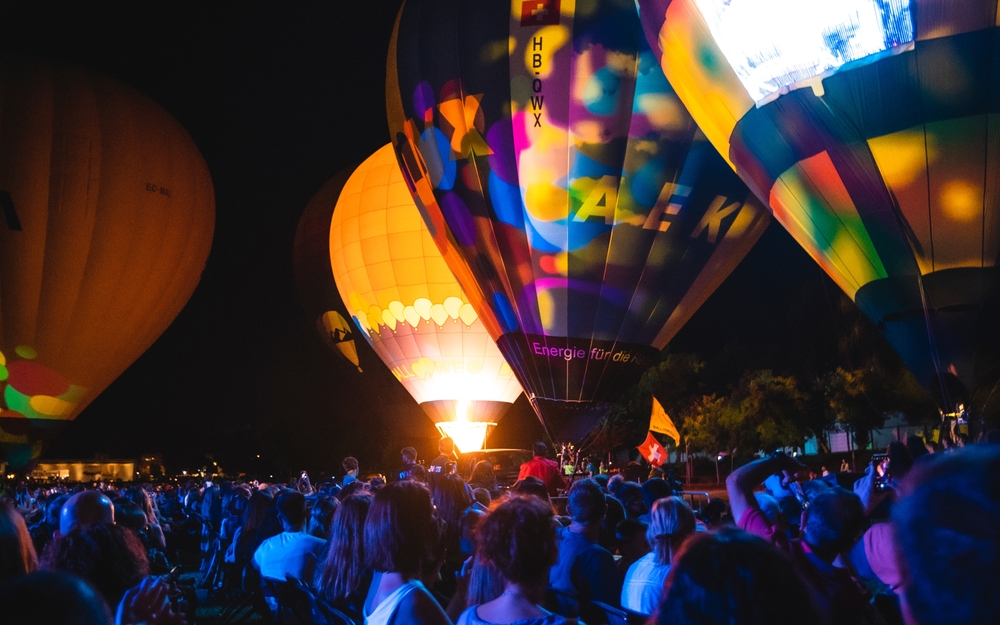
The organizers of the European Balloon Festival have announced opportunities to fly during the event and suggested that interested visitors contact one of the local ballooning companies. For instance, Camins de Vent offers the following package:
The entire experience takes about three hours. The price depends on the festival day and the time of the flight (morning or evening), ranging from €139 to €179 per person. In case of bad weather, your money won't go to waste: the organizers will reschedule the flight for another day.
Another company, Globus Kon-Tiki, offers a similar program. Their rates are as follows: adults pay between €150 and €180, teenagers (11–14 years old) cost €130–150, and children (5–10 years old) are €100–110.
Those who prefer not to spend money will still find plenty to do. Admission to the main launch site—the city's central park—is free. Moreover, this setup is incredibly convenient for spectators, as balloons often launch from distant fields outside populated areas rather than right in town. Between flight slots, visitors can enjoy a packed program featuring a food market, art installations, live concerts, poetry readings, workshops for all ages, and other staples of traditional Spanish fiestas.
On Saturday evening, July 11, after sunset, a special spectacle called the "Night Glow" is scheduled. Music will fill the square, and the pilots will fire their burners in sync with the rhythm, beautifully illuminating their aerostats before plunging them back into darkness.
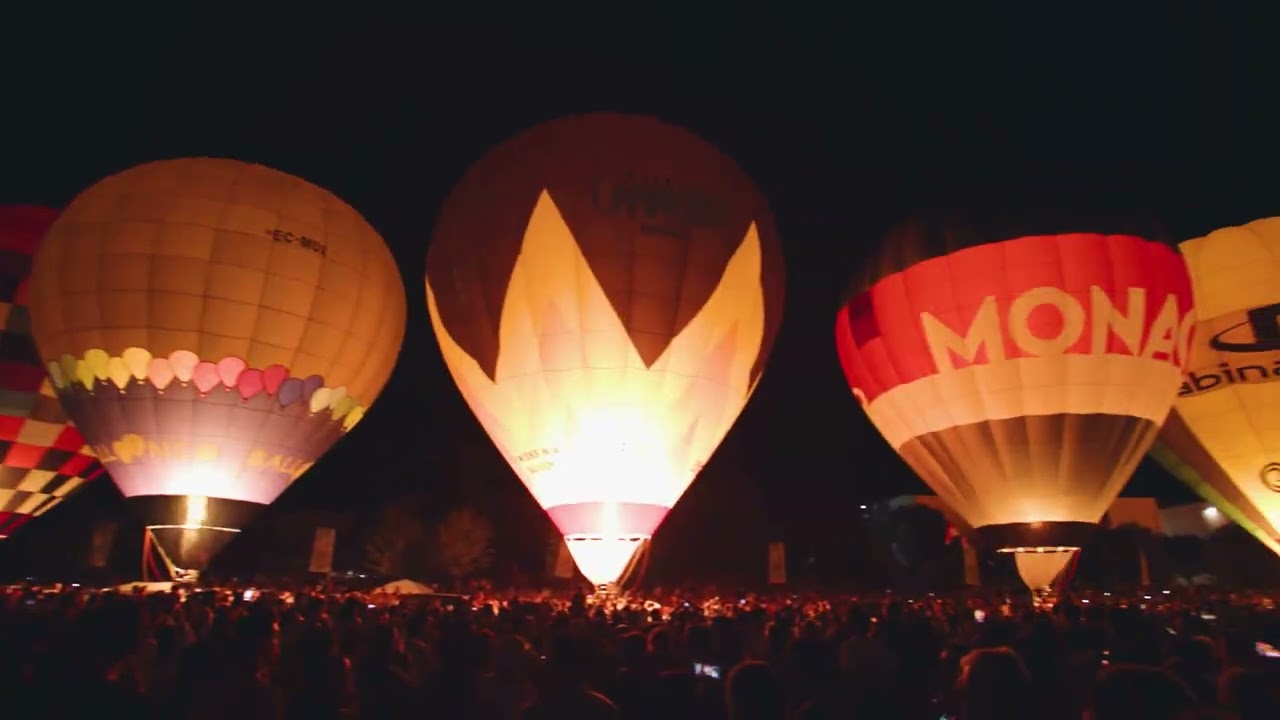
The choice of venue is no coincidence: Igualada is home to Ultramagic, the world's second-largest manufacturer of hot air balloons. Its history dates back to 1979 when company founder Josep Maria Lladó built his first aerostat. "In terms of technology and export operations, only the British company Cameron Balloons and ourselves are in the first division; the rest follow behind," the company's commercial director, Carles Lladó, once noted.
According to company data, one out of every six hot air balloons in the world rolls out of the workshop in tiny Igualada—averaging about 80–100 units per year. Ultramagic balloons fly in more than 60 countries, gliding over the Egyptian and Mexican pyramids, as well as Turkey's Cappadocia, where hot air ballooning has long been the primary tourist draw.
Hot Air Ballooning FAQs
The Igualada festival is just one of many ways to view Spain from a bird's-eye perspective. Commercial flights operate in nearly every second autonomous community, and flights run year-round in most areas.
In the Valencian Community, the leading operator is Totglobo, which has been flying since 1998. Instead of flying directly over the city, they launch further south: their primary flight zone is the Serra de Mariola Natural Park, nestled between southern Valencia and northern Alicante. On clear mornings, you can see the Mediterranean Sea from the basket at sunrise.
Prices here remain at the lower end of the spectrum for Spain. The Valencia province tourism portal states that the experience is available year-round starting at €199. The package includes breakfast, the flight itself, a glass of cava, lunch, a certificate, and souvenir photos.
While the region doesn't currently host major ballooning festivals (Castellón hosts the International Wind Festival every June, but it centers on kites), visitors can still wait in line to experience a short tethered balloon ride at local events.
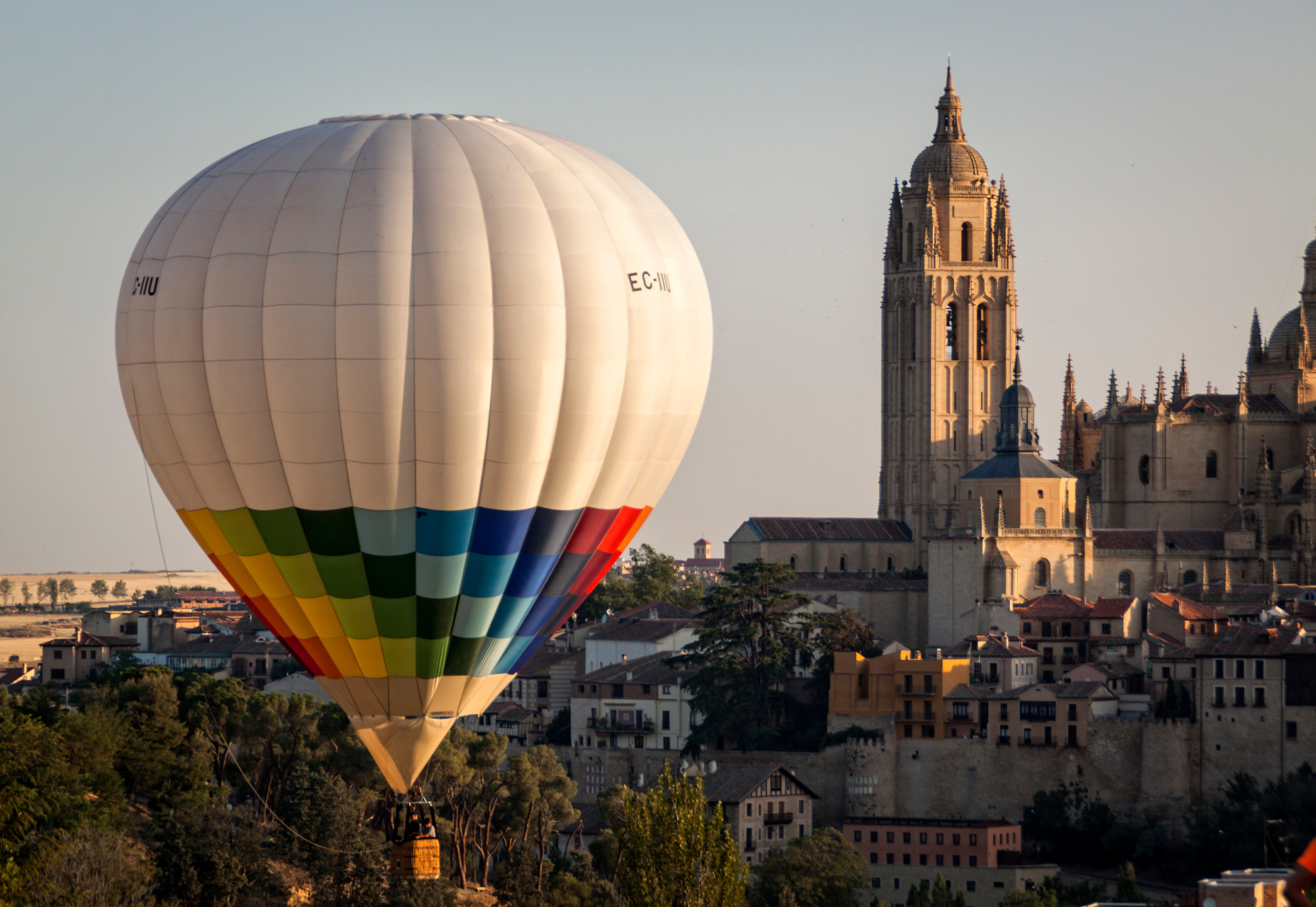
Segovia (Castilla y León) is a completely different story. According to the travel blog SaltaConmigo, this specific location leads all of Spain in the total number of hot air balloon flights. The main reason is the pure visual drama of the route: balloons float right past the ancient Roman aqueduct (a UNESCO World Heritage site), the soaring Gothic cathedral, and the fairy-tale Alcázar castle. According to the city's official tourism portal, a one-hour flight complete with cava, a picnic, and a certificate costs €205 for adults and €165 for children under 12.
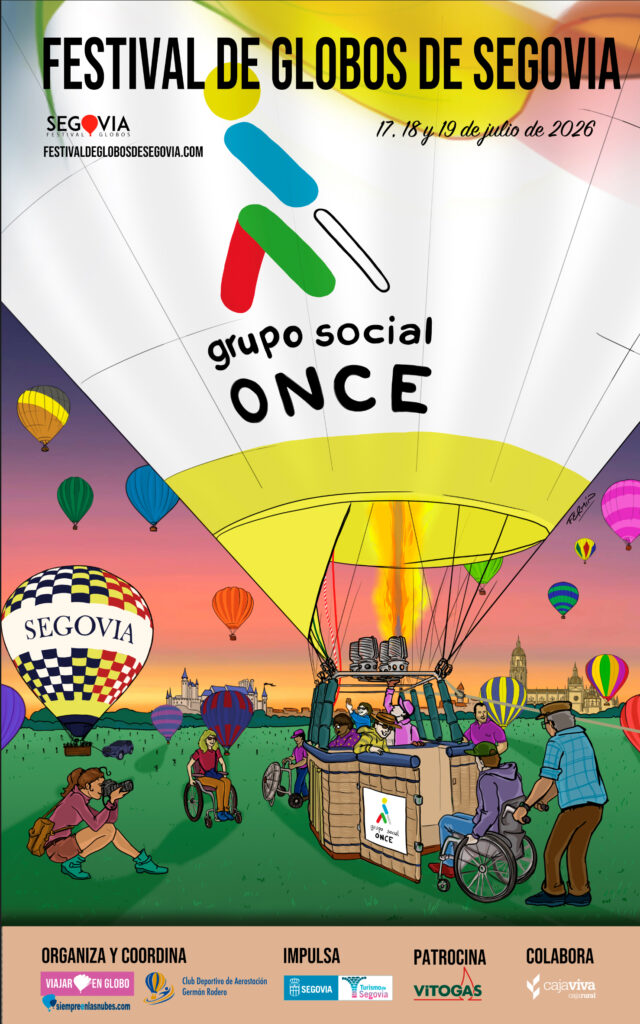
Segovia also hosts its own major balloon festival once a year, offering the chance to fly alongside dozens of other colorful envelopes. In 2026, the festival runs from July 17 to 19. While 2026 prices haven't been finalized, 2025 rates stood at €225 for adults and €180 for children. The event features daily mass ascents (at 7:00 AM and 7:30 PM), paragliding displays, a themed photo exhibition titled "Segovia: City of Balloons," and a Night Glow. "When night falls and the stars light up over Segovia, the city turns into a unique stage: balloons illuminated from within dance to the beat of the music against the backdrop of majestic historical monuments," the organizers explain.
The festival also offers a rare interactive experience: visitors can walk barefoot inside a massive balloon envelope while it is being cold-inflated on the ground (before the burners are lit) to take incredible, colorful photographs.
Segovia also places a heavy emphasis on accessibility. While standard wicker baskets require passengers to step into foot slots to climb over the edge, the Segovia festival features specialized baskets with a side door that opens completely, allowing wheelchair users to roll right inside.
Just outside Madrid, operators frequently fly over historical Toledo (Castilla-La Mancha) and Aranjuez. The company EoloFLY prices these flights at €215 for adults and €175 for children under 12. Aranjuez also hosts a beautiful autumn festival. While this year's dates haven't been finalized, it promises an incredible view as the balloons launch directly from the grand courtyard of the famous Royal Palace.
In Andalusia, the widest selection of routes belongs to Granada-based operator Glovento Sur, which takes passengers over the Guadix Geopark, downtown Granada, Seville, Antequera, Arcos de la Frontera, and Ronda. Standard flights cost €185, but the iconic Ronda route is priced higher at €220. It is well worth the premium: the basket floats directly over the 100-meter-deep El Tajo gorge and the historic bullring. The flight lasts an hour, with the full experience taking 3 to 4 hours.
The island of Mallorca (Balearic Islands) is another major epicentre of Spanish ballooning. Operator Mallorca Balloons charges a standard rate of €190 per person for morning flights, while a private flight for two costs €780. They are also offering an exclusive booking window for the upcoming European Balloon Championship, which will take over Mallorca from October 12 to 16, 2027. Around 120 balloons steered by Europe's top pilots will fill the Mediterranean sky. While it doesn't match the world-record mass ascents of Albuquerque, New Mexico (which saw over 1,000 balloons in 2000), it promises to be an absolute bucket-list spectacle.
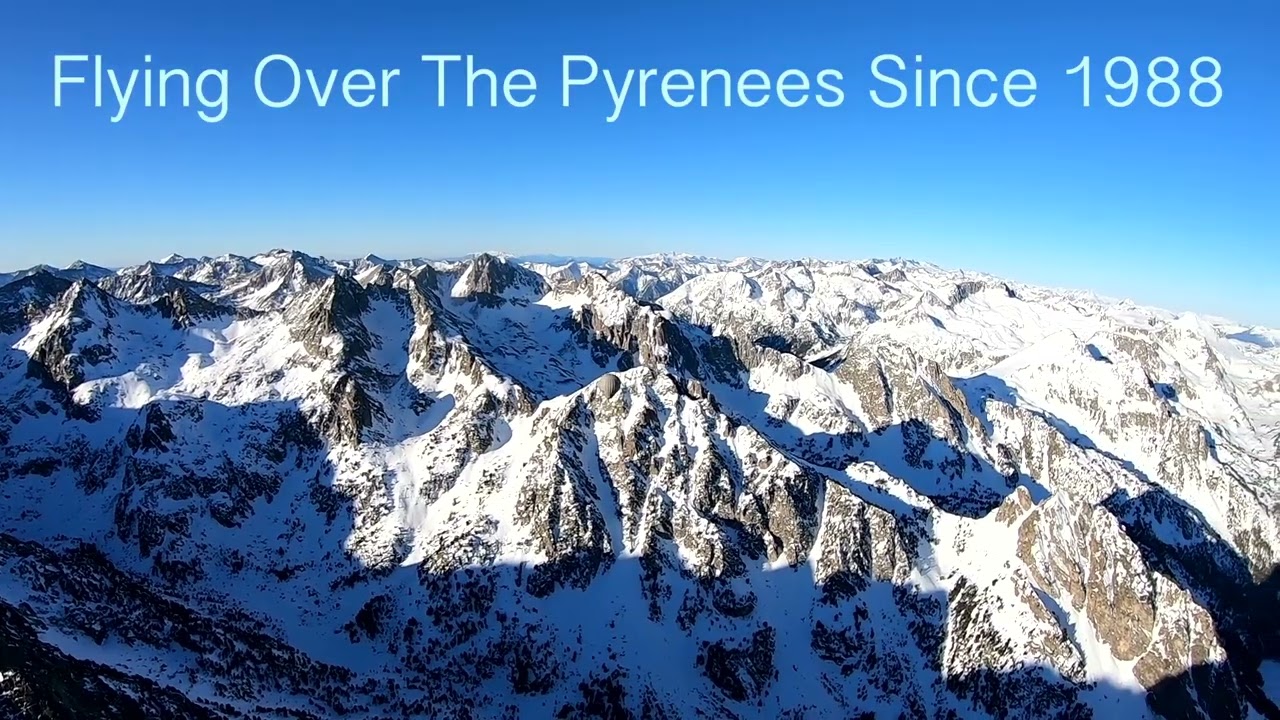
For true aviation enthusiasts looking for something beyond a standard one-hour flight, Globus Kon-Tiki offers a 6-to-7-hour trans-Pyrenean expedition (with 3 to 4 hours spent in the air), climbing to altitudes of 4,000 to 5,000 meters. Launching from the stunning Val d'Aran (Catalonia), these flights operate strictly in the winter, as freezing temperatures maximize fuel efficiency for long-endurance flights. Prices start at €590.
Lastly, there is the "wine flight" genre. In the famous Rioja wine region, balloons lift off right over the rolling vineyards of Haro. The Bodegas Muga winery integrates the flight into an upscale wine tourism experience: for €205 (or €225 including an estate tour), guests enjoy a morning flight over the vines, a traditional Riojan breakfast, and a traditional aeronautical "baptism" ceremony.
What is the Balloonist Baptism Ceremony?
Spain was the third country in the world—following France and Great Britain—to witness an aerostat flight. On November 28, 1783, at the estate of Infante Don Gabriel in Aranjuez, scientist Agustín de Betancourt launched an unmanned hot air balloon in the presence of King Charles III. This was the very same multi-talented Betancourt who would later move to Russia in 1808, living there for 16 years and overseeing monumental engineering projects like the construction of Saint Isaac's Cathedral and the Alexander Column in Saint Petersburg, eventually serving on Alexander I's Committee of Ministers.
The first manned flight on Spanish soil took place shortly after on June 5, 1784, in Aranjuez. A French aeronaut ascended in a hot air balloon, but the flight ended in disaster when the envelope collapsed during the climb, injuring the pilot. The dramatic scene was immortalized by painter Antonio Carnicero in a canvas displayed today in Madrid's Prado Museum—though some historians argue that the painting actually depicts Betancourt's historic unmanned launch.
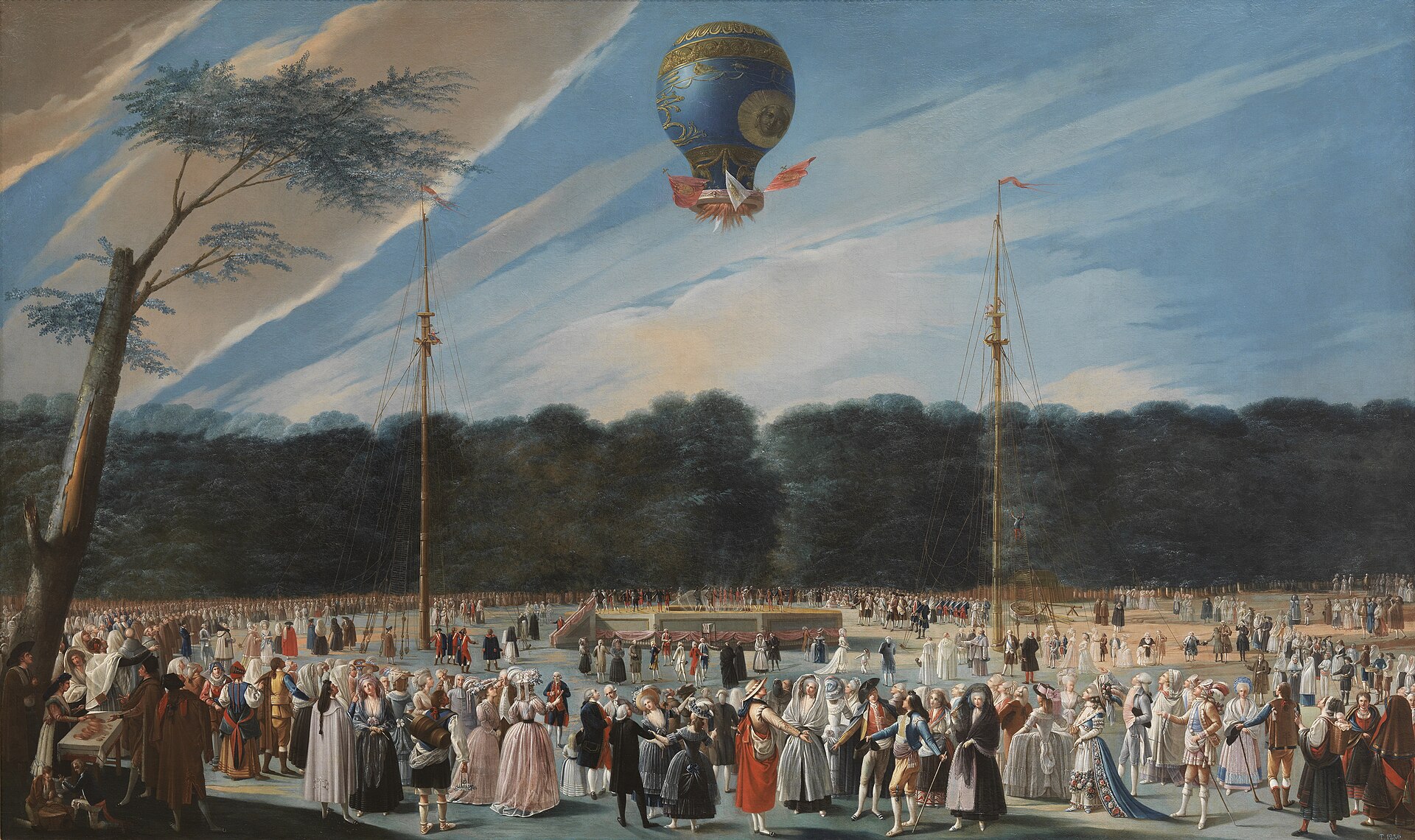
As noted by researchers, King Charles III was a passionate advocate for Spanish aeronautics, but his death in 1788 stalled progress. His successor, Charles IV, fell under the heavy influence of his prime minister Manuel Godoy, who exiled brilliant progressive minds, including Betancourt. According to a study by the ENAIRE Foundation, this political shift "put a brake on Spanish ballooning development, forcing the country to rely on foreign experts once again." One such expert was Italian aeronaut Vincenzo (Vicente) Lunardi, who on August 12, 1792, ascended from Madrid's Retiro Park in front of Charles IV and landed safely in Daganzo de Arriba, where locals celebrated him with wine and put him up at the local priest's home, marking Spain's first fully successful manned flight.
For a long time, balloons remained a thoroughly alien sight to the public. This is vividly captured in Francisco Goya's painting "The Balloon", created between 1812 and 1816. Unlike Carnicero's festive, celebratory atmosphere, Goya depicts a crowd running in panic beneath the floating orb, capturing a distinctly ominous and anxious mood.
This shifting public perception was partly due to balloons being increasingly adapted for military reconnaissance rather than entertainment. The cradle of Spanish military ballooning was established in Guadalajara (Castilla-La Mancha), where the Military Aerostatic Service was founded on September 30, 1896, under Major Pedro Vives. In a poetic twist of history, Vives—an aeronaut who would later become the first Spaniard to fly a plane and the founder of the Spanish Air Force—was born in none other than Igualada.
As heavier-than-air machines gradually dominated the skies, hot air balloons found a brand-new lease on life. In 1960, American engineer Ed Yost made the first successful flight using his revolutionary invention: the modern, propane-heated hot air balloon. A decade later, these modern envelopes returned to Spain, and the country's first contemporary hot air balloon pilot's license was officially issued in 1973.
In 1978–1979, three friends from Igualada—Josep Maria Lladó, Joan Comellas, and Jaume Llansana—began flying a secondhand balloon. By 1979, Lladó built his own envelope from scratch. This passionate hobby served as the prelude to Ultramagic, founded four years later, effectively cementing the small town's status as the undisputed capital of Spanish ballooning.
Related Articles
Spain Tops Europe for Pet Abandonment, New Report Finds
Shelters recorded 285,000 abandoned animals in 2025 — barely down on 2024, in figures the Affinity Foundation calls stagnation rather than real improvement
Loading…
Loading…