




Support La Cotorra on Patreon
Access exclusive content, special perks, and closer connection with us.
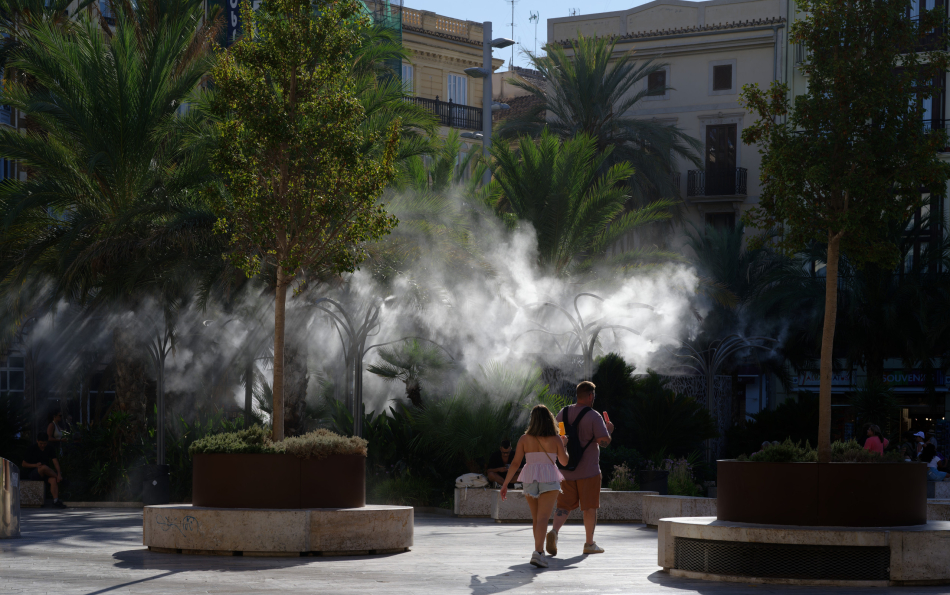
Over the weekend, a new wave of extreme heat swept over Spain. Warnings have been issued in 14 autonomous communities, and in the valleys of the Tagus, Guadiana, and Guadalquivir rivers, the temperature will rise to +42 degrees. According to AEMET, the heat will last at least until Tuesday.
Orange-level warnings, meaning "significant danger," are in effect in Andalusia, Aragon, Castilla-La Mancha, Catalonia, Extremadura, Galicia, and Madrid. There, the thermometers are holding at +40 degrees and above. Seven more regions have a yellow-level warning. These are Asturias, the Balearic Islands, Castilla y León, Navarre, the Basque Country, La Rioja, and the Canary Islands, where the warning applies only to Gran Canaria and Fuerteventura, with highs of up to +35 degrees.
Across most of the peninsula, the temperature will range between +36 and +39 degrees. The highest values are expected in the valleys of the Ebro, Tagus, Guadiana, and Guadalquivir, in western Andalusia, and in certain areas of Galicia — up to +41 degrees. AEMET stresses that such values are "highly unusual" for several areas in Spain and southwestern Europe as a whole.
The cause of the anomaly is a combination of an anticyclonic ridge and a low-pressure area to the west of the Iberian Peninsula. Together with intense sunshine, a stable atmosphere, and weak winds, this configuration is producing a very dry and scorching air mass.
Even the nights won't bring relief. On the Mediterranean coast, in the southwest of the peninsula, and in the Ebro valley, the minimum temperature won't drop below +20 degrees — meteorologists call such nights "tropical." And in the valleys of the Tagus, Guadiana, and Guadalquivir, "torrid" nights are expected, with lows above +25 degrees.
AEMET is also warning of a sharply increased risk of wildfires. From Monday, the extreme heat will be joined by possible thunderstorms and gusty winds, and in the Strait of Gibraltar, gusts of easterly wind could exceed 80 kilometres per hour. The situation is being made worse by a moisture deficit that had already built up in June.
Meteorologists remind the public that high temperatures are especially dangerous for vulnerable groups and for those working or exercising outdoors in the middle of the day.
According to the assessment of the MoMo mortality monitoring system at the Carlos III Health Institute, 62 deaths in the Valencian Community in June were linked to the heat. For comparison: in 2024 there were seven such cases, in 2023 there were 11, and in 2022 there were 20.
Most of the deaths (47) occurred during the week of June 22 to 28, right after the peak of the previous heatwave, when temperatures in the region's interior reached +40 degrees. Most of those who died were people over 65. By province, the cases broke down as follows: 27 in Alicante, 18 in Valencia, and 17 in Castellón.
According to MoMo's estimates, 1,092 people died from the heat across all of Spain in June 2026.
In late June, Valencia's authorities activated a heat-impact prevention program. It's recommended to avoid being out in the sun during peak hours, stay hydrated, reduce outdoor physical activity, and favour light meals with an emphasis on fruits and vegetables.
Other recommendations include:
— if you're outside, look for shade;
— drink plenty of water, even if you don't feel thirsty;
— wear light, light-colored, breathable clothing;
— use sunscreen;
— ventilate your home;
— pay close attention to elderly people and those with chronic illnesses.
Related Articles

Chasing the Wind: Your Ultimate Guide to Spain’s Spectacular Hot Air Balloon Festivals This July
From July 8 to 12, Igualada hosts southern Europe's largest balloon festival, followed by Segovia's on July 17 — La Cotorra's Pavel Tarasenko, a longtime balloonist, explains how flights work and where to fly in Spain
Spain Tops Europe for Pet Abandonment, New Report Finds
Shelters recorded 285,000 abandoned animals in 2025 — barely down on 2024, in figures the Affinity Foundation calls stagnation rather than real improvement
Loading…
Loading…