




Support La Cotorra on Patreon
Access exclusive content, special perks, and closer connection with us.

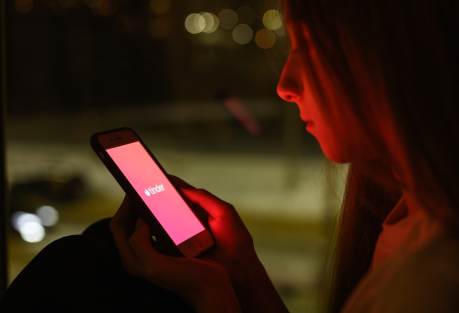
A noble werewolf pack leader finds his true mate. A poor orphan turns out to be the heir to a business empire. All in 90 seconds, on your phone. We look at micro-dramas: what they are and how the format is developing in Spain.
A series where each episode lasts a minute and a half, and you have to pay to keep watching, sounds strange. And yet this is exactly how one of the fastest-growing segments of the mobile market works — micro-dramas.
In just a few years, micro-dramas have made a remarkable journey from "a format inside Chinese social media" to a multi-billion-dollar industry. They are now taking not just users' attention away from mobile games, but their money too.
Micro-dramas are vertical series created specifically for viewing on a phone. A single episode runs from 30 seconds to two or three minutes, and an entire story can span dozens of episodes. Each one ends on a cliffhanger — and to find out how, say, the scheming mother-in-law's quarrel with the poor put-upon daughter-in-law resolves, you'll need to pay.
The format originated in China within short-video platforms — primarily Douyin and Kuaishou. At first, these were standalone narrative clips, then mini-series, and by 2022–2023, standalone apps like ReelShort and DramaBox. That was when micro-dramas became not just a format, but a full-blown industry. According to Omdia, its value reached approximately $11 billion in 2025, with other estimates ranging from $7 to $15 billion.
Adapted dramas, werewolf romances, fairy tales about wealthy heirs and scheming rivals — every micro-drama service offers thousands of mini-series for your phone. So who are the people behind this content?
Interestingly, the storytelling behind micro-dramas didn't begin with producers or streaming platforms, but with writers publishing a chapter a day on platforms like Dreame, Webnovel, and Wattpad. These aren't established, recognised authors — they're thousands of semi-professional writers with one simple goal: keep the reader hooked until the next instalment. The system grew largely out of fanfiction culture, particularly romantic and fantasy stories published in serial form. When these stories began to be adapted into video, it turned out they barely needed rewriting — they were already broken into short, high-tension fragments. All that remained was to trim them to a minute and add a "watch more" button.
Micro-dramas transferred these texts to video and figured out how to make serious money from them. The quality of the content draws criticism even from the Chinese press — micro-dramas are frequently described as primitive and trashy — though this has done nothing to dent their profitability.
The economics of micro-dramas closely mirror the mobile gaming model: users get in for free, watch the first few episodes, then pay for access to subsequent ones or take out a subscription. A single episode costs on average €0.30–0.50, and a full season around €10–15.
Precise European ARPU data is not yet available, but user behaviour gives a fairly clear picture of spending levels. According to Business Insider, the typical figure is $5–10 per week, with around 30% of the audience spending $25-$100 per month. In some cases, spending can exceed $200, reports The Washington Post.
In euros, this works out to roughly €35–75 per month for an active paying user, and more for the most engaged. For comparison, a monthly Netflix subscription in Spain costs between €8.99 and €21.99 (the premium, multi-device, ad-free plan).
A pregnant heroine suddenly discovers her husband has been unfaithful — and the episode cuts off right there. Every 60–90 second instalment ends at the moment of maximum tension, with the plot delivering twist after twist. This short cycle of anticipation and reward stimulates dopamine and keeps users' attention firmly managed. The primary target audience for micro-dramas is women aged 30–55, accustomed to series and dramatic storylines. It's the same audience that used to watch telenovelas — only now they're watching on their phone.
Micro-dramas only arrived in Spain at the end of 2025: Atresmedia launched Una novia por Navidad — the first vertical series created specifically for mobile viewing. RTVE also began producing its own projects in the format in late 2025. The deep-rooted telenovela culture across Spanish-speaking countries makes this one of the most promising formats in the near term.
Three major global players of Chinese origin currently dominate Spain's micro-drama market: DramaBox with around 34% market share, ReelShort with around 27%, and NetShort with around 22%. The remaining audience is split across a range of other apps — GoodShort, FlickReels, MoboReels, DramaBite, DramaPops, and others.
Production itself is already beginning to change: micro-dramas are still shot with human actors, but more and more stages of the process — from scriptwriting to editing and translation — are being accelerated with AI, lowering the barrier to entry still further and driving up the sheer volume of content.
Related Articles
Valencia Approves €340K Las Fallas Funding for 2027–2029 but Rejects 3-Day Ofrenda Proposal
Prizes for Fallas committees will see a major boost, while the iconic flower offering stays locked into its traditional two-day schedule on March 17–18
Loading…
Loading…